


Business
Economy Minister congratulates Celtic Freeport consortium on winning bid


ECONOMY MINISTE, Vaughan Gething, was in Port Talbot today to congratulate the Celtic Freeport consortium on their successful bid to be Wales’ first freeport, which is set to deliver tens of thousands of new, high-quality jobs in south west Wales.
Last week, the Welsh and UK governments jointly announced the Celtic Freeport in Milford Haven and Port Talbot, and Anglesey Freeport on Ynys Mon, have been chosen as Wales’ first freeports.
The two freeports aim to collectively create around 20,000 jobs in the green industries of the future by 2030 and attract up to £4.9 billion in public and private investments.
The Celtic Freeport will be based around the port of Port Talbot in Neath Port Talbot, and the port of Milford Haven in Pembrokeshire.
The freeport plans focus on low carbon technologies, such as floating offshore wind (FLOW), hydrogen, carbon capture, utilisation, and storage (CCUS) and biofuels to support the accelerated reduction of carbon emissions.

The freeport aims to attract significant inward investment, including £3.5 billion in the hydrogen industry as well as the creation of 16,000 jobs, generating £900 million in Gross Value Added (GVA) by 2030, and £13 billion by 2050.
The Minister visited the port of Port Talbot earlier today, which will become one of the focal points of the new Freeport – which is expected to be operational later this year.
Speaking during a visit to Port Talbot, Economy Minister, Vaughan Gething said: “It was great to be in Port Talbot today to congratulate the Celtic Freeport team on their successful bid.
“From off-shore energy to advanced manufacturing, the Celtic Freeport will help create tens of thousands of new, high quality jobs in the green industries of the future. it will support our highly ambitious plans to reach net zero by 2050, while also supporting our young people to plan their futures here in Wales.
“All this will help us transform the economy of south west Wales, helping us create a stronger, fairer and greener future for local people and communities.”
Roger Maggs MBE, Chair of the Celtic Freeport consortium said: “Wales is on the cusp on an exciting green journey.
“The freeport decision will cause a chain reaction.

“Upgrading our major energy ports in Milford Haven and Port Talbot will enable floating offshore wind, create the cradle to nurture new green tech companies and take a step on the path to greening Wales’ steel industry.
“Now is the time for action so that Wales captures the renewable energy supply chain.”
Andrew Harston, Director, Wales and Short Sea Ports, Associated British Ports (ABP) said: “The roll-out of floating offshore wind, or FLOW, in the Celtic Sea provides a once-in-a-lifetime opportunity for Wales. Port Talbot is the ideal location for the deployment of FLOW, and ABP is ready to invest over £500m in new and upgraded infrastructure to enable this and to ensure first-mover advantage to capture this global market. The Celtic Freeport provides a huge opportunity, and not just for FLOW, but for sustainable fuels and hydrogen too.


INSOLVENCY figures fell in May, but businesses across Wales remain under serious financial pressure, according to restructuring specialists.
Official figures show there were 1,868 corporate insolvencies in May 2026, down 10.5% from April and 16.3% lower than in May last year.
Andy McGill, restructuring and insolvency partner at Azets, which has offices in Cardiff, Swansea and St Asaph, said the fall was welcome but should not be mistaken for a sign that firms are out of difficulty.
He said: “Directors running out of fight, firepower and finance is still a problem, and creditors remain willing to turn to the courts to recover monies owed — and neither of these are going to change in the short term.
“The reality is that despite the fall in insolvencies compared to last month and last May, numbers are still high and businesses are still struggling, with many facing an uncertain future.”
Mr McGill said firms were being hit by a combination of geopolitical uncertainty, rising costs, political instability, a lack of affordable finance and creditors chasing overdue debts.
He added: “Unless the climate becomes easier and some way is found of lightening the cost load on businesses, it’s likely demand for advice and support will remain high in the coming weeks and months.”
Cost pressures continue
BUSINESSES are also facing rising employment costs, higher business rates and renewed pressure from energy bills.
Mr McGill said many firms were being “sandwiched” between their own higher costs and customers cutting back on spending.
He said the hospitality, retail and construction sectors remained among the hardest hit.
He added: “The fact that several household names have entered restructuring or insolvency processes recently shows the strain on the restaurant sector is becoming unbearable as the double blow of increased expenses and cautious consumers continues to affect it.

“Despite a rise in footfall and sales, retailers continue to be crushed by costs.”
He also pointed to the planned restructuring of TG Jones as evidence that even long-established high street names were not immune from financial distress.
Construction firms under strain
THE construction industry continues to face pressure from rising labour costs, higher material prices and late payment.
Mr McGill said tight margins and cashflow difficulties were pushing more firms towards financial distress.
He said: “Our advice to anyone who is worried about their business is to pick up the phone and speak to an adviser.
“It’s incredibly hard to voice your concerns about your finances, but the earlier you do, the more potential solutions you have open to you and the more time you have to consider how you move forward.”


A CALL to convert a former Pembrokeshire farmhouse and guesthouse into housing units has been given the go-ahead by county planners.
In an application to Pembrokeshire County Council, Dan Hildebrand, through agent GMW Design, sought approval for the subdivision of Torbant Farmhouse, Croesgoch, near Haverfordwest, to form four residential units.
A supporting statement through Johnston Planning on behalf of the applicant and agent said: “The property has historically been run as a successful guesthouse for a number of years but has recently come under new ownership. The new owner wishes to maximise the potential of the existing residential floor space through the subdivision of this generous property into four units.”
It added: “Whilst the intention is to utilise the subdivided property for residential purposes due regard is given to the 2022 changes to the use class order which in effect created new residential classes for new development in an effort to control unrestricted holiday uses in sensitive locations.
“As such a ‘free use’ is sought within use classes C3 (use as a sole/main residence), C5 (use as otherwise as a sole/main residence) and C6 (use as a commercial short term let).
“These proposed uses, which are considered to be reasonable and to be fully compliant with current planning policy (especially when one has regard to the existing use) will provide the owner with flexibility in terms of proposed occupation. Ensuring full and meaningful use of the property in the future.”
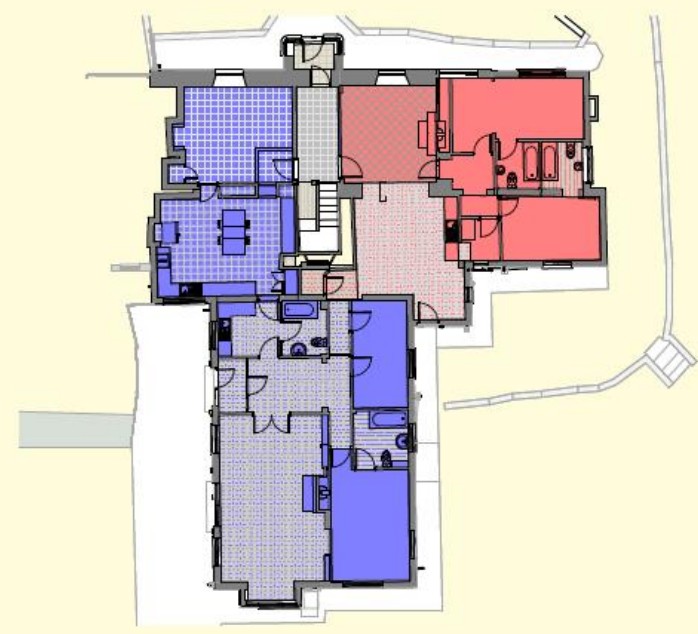
It said the property was once part of Torbant Farm, now been broken up into a number of separate properties, including Torbant Caravan Park immediately to the north.
It added the works to the property “are minimal and will have a negligible impact externally,” adding: “Internally whilst the layout will alter marginally no structural works to the property are proposed.
“In character terms therefore, there will be no discernible physical impact either to the dwelling itself or to the wider locality.”
Six objections to the scheme were received, raising concerns including harm to visual and residential amenity, ecological impact, infrastructure constraints, and claimed inaccuracies in the submitted application, as well as the application overstating available parking space “which would encroach onto shared access areas, causing obstruction and conflict between users”.
An officer report recommending approval said the scheme was amended to move car parking provision within land under the applicant’s control.
It concluded the scheme represented “an efficient use of the existing building stock,” and it “would not result in any external alterations to the host building and would not give rise to unacceptable harm to the character or appearance of the building or its wider rural setting nor the residential amenities of neighbouring occupiers”.
The application was conditionally approved by county planners.
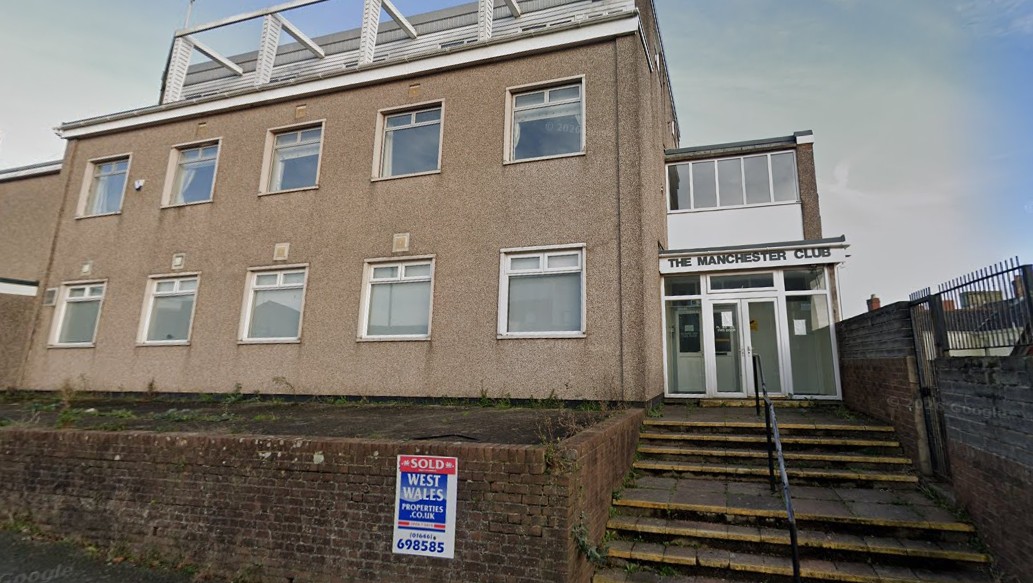
PLANS to convert a former Pembrokeshire town centre social club into council owned social housing have been given the go-ahead.
In an application to Pembrokeshire County Council, the authority itself, through agent KEW Planning, sought a change of use of the former Manchester Club social club, Fulke Street, Milford Haven to seven social rented residential units.
The Manchester Club public house/social club closed in March 2024 due to the cost of operations rising to be more than the monetary value that the club delivered, remaining vacant since this time, and was marketed for sale before an offer from the council was accepted.
The council scheme will provide five one-bed flats, one two-bed, and one studio flat; an amended scheme from discarded initial options which included one for 12 apartments and two studio flats. The scheme revised to restrict proposed alterations to the existing building to a minimum.
The proposal includes the demolition of the single storey garage to the front, and a single-storey extension at the rear, which will allow a communal amenity area.

A supporting statement said: “The vision for this project is to provide social housing to address housing stock shortages and to give a new life to a vacant building in a central location of the town. The property will be rented to mixed aged tenants, with PCC as the corporate landlord.”
An officer report recommending approval said the site had been marketed since 2024 at £170,000, with a £150,000 offer made but was unable to be proceeded with, the price later reduced to £150,000, three offers later received including £140,000 from the council, which was accepted in April 2025.
“For the two years that this property has been marketed the market response to the property has been limited with no viable interest in retaining the building for its existing community facility use,” the report said.
It concluded: “The loss of the former community facility has been robustly justified in accordance [with planning policy], and the scheme would deliver social and economic benefits through the provision of additional housing and the re-use of a vacant building.
“The proposal would enhance the visual appearance of the site, provide an acceptable standard of residential amenity for future occupiers without undue harm to neighbouring properties, and would not give rise to unacceptable impacts in respect of highway safety, drainage, biodiversity or the historic environment.”
The application was conditionally approved.



News10 hours ago
Tragic tribute paid to Haverfordwest man after A4075 collision
FAMILY REMEMBERS “KIND AND LOVING” CALLUM HANSON THE FAMILY of a 22-year-old man from Haverfordwest who died following a road...


News1 day ago
Motorcyclist, 22, dies in A4075 crash in Pembrokeshire
A 22-year-old woman remains in hospital after two-vehicle collision A MOTORCYCLIST has died following a serious two-vehicle crash on the...


Community1 day ago
Why police will be visiting every home in Pembrokeshire
New operation aims to knock on more than 257,000 doors across Dyfed-Powys over the next three years DYFED-POWYS POLICE has...


Crime2 days ago
Prisons at breaking point: MPs warn Wales is paying the price of a failing system
Frozen healthcare budgets, overcrowded jails, homelessness on release and mounting pressure on staff are undermining rehabilitation across Wales, according to...


News2 days ago
Brexit at 10: How Britain was sold a dream that cost us dearly
A decade after the referendum, the promised benefits remain hard to find while the economic costs are increasingly difficult to...


Crime2 days ago
Worcestershire man jailed after violent attack on woman in Tenby
Defendant was already serving a suspended sentence when serious assault took place A WORCESTERSHIRE man has been jailed for more...


Climate2 days ago
Offshore wind ‘could bring new generation of jobs to Milford Haven’
Pembrokeshire ports and Celtic Sea projects placed at centre of Wales’ green energy ambitions MILFORD HAVEN and Pembroke Dock could...


Community3 days ago
Police officer hailed hero after midnight sea rescue in Milford Haven
PC swam 100 metres offshore to save distressed woman heard calling for help in darkness A DYFED-POWYS POLICE officer has...


Local Government3 days ago
Security privately arranged by Mayor at Beating of the Bounds
HAVERFORDWEST TOWN COUNCIL has confirmed that security personnel seen at this year’s Beating of the Bounds were privately arranged and...


Business4 days ago
Celtic Freeport five-year plan puts Milford Haven at centre of green energy future
Strategy promises investment, skilled jobs and new supply chains, but major barriers remain over grid connections, planning and delivery THE...
-

 Community5 days ago
Pembrokeshire Chess Club crowned Welsh champions
-

 Crime2 days ago
Milford Haven man jailed for breaching domestic violence protection order
-
Local Government3 days ago
Security privately arranged by Mayor at Beating of the Bounds
-

 News1 day ago
Crash on Freeman’s Way causes school-run chaos across Haverfordwest
-

 Crime3 days ago
Man wanted by court after failing to attend hearing over alleged shop thefts
-

 Crime3 days ago
Man jailed after admitting strangulation and assaults
-
 Crime3 days ago
Man banned from roads after drink-driving offence
-

 Crime3 days ago
Man sentenced over stalking campaign and lock knife offence