


News
Farmer’s suspended jail sentence for horse cruelty

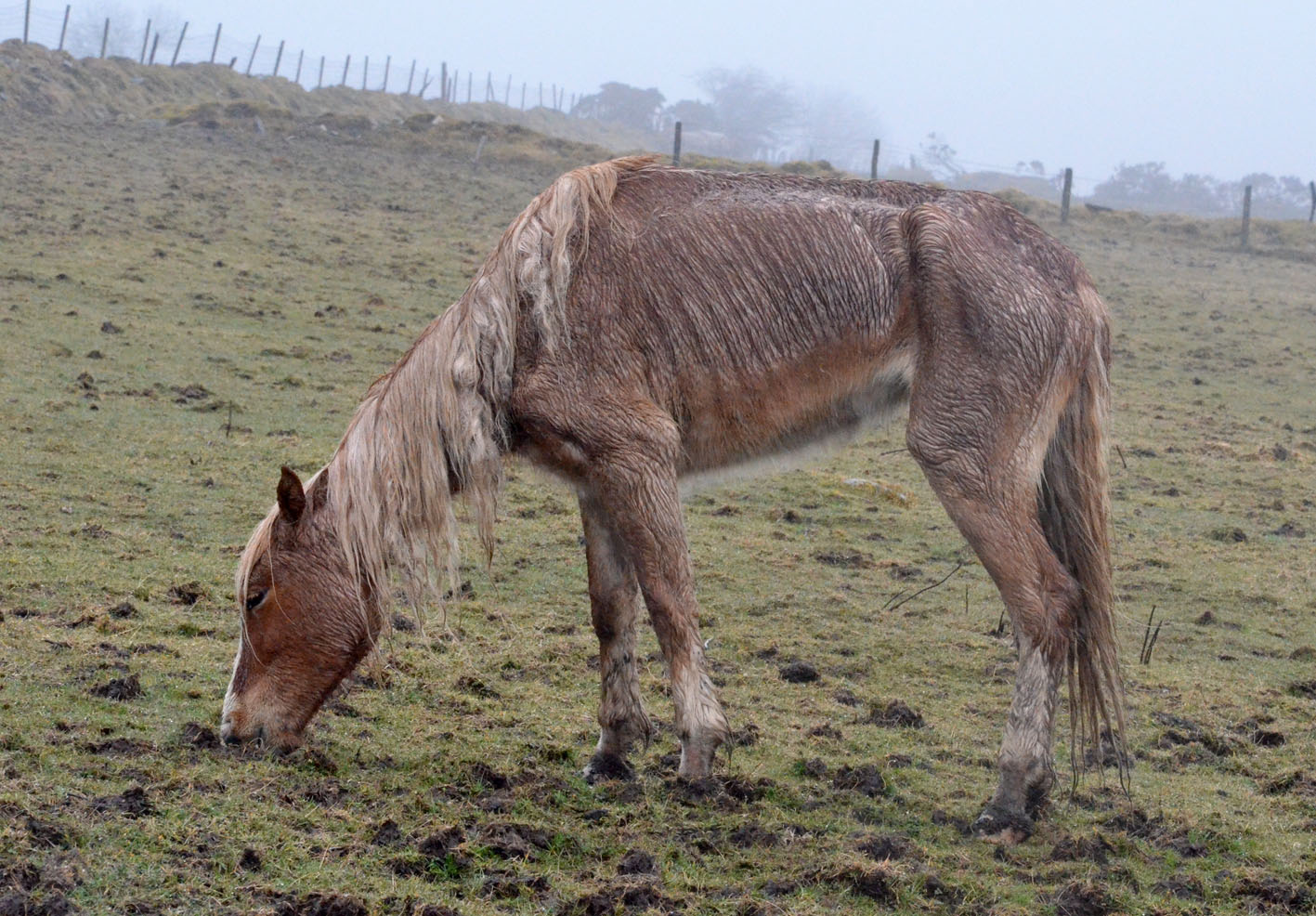
 A PEMBROKESHIRE farmer has narrowly avoided a custodial sentence after admitting cruelty to animals.
Gwilym Gilmour Thomas, 42, of Lodor Fach, Maenclochog, sat with his head bowed, as the three charges of causing unnecessary suffering under the Animal Welfare Act 2006 were read out.
Thomas pleaded guilty at the first opportunity to failing to adequately care for a Palomino Stallion, a Strawberry Roan mare and a Strawberry Roan horse.
There were emotional scenes in the court room as the defendant, from the dock, and his wife, from the public gallery, sobbed uncontrollably throughout the proceedings. His wife was comforted by a member of court staff.
Prosecutor Jon Tarrant told Haverfordwest Magistrates that this was the worst case of neglect of horses that the informing RSPCA officer, Mr. Abbott, had ever come across in all his years of experience.
Jon Tarrant told the court: “On April 11 the RSPCA visited a parcel of land in the vicinity of Rosebush, south of the Preseli’s. An officer photographed and videoed three horses, and a pony.”
“One animal had already died, while another was close to death, and the other two were severely malnourished; being 50-60% underweight” he added.
John Tarrant continued: “The first field the officer entered was extremely bare, and there appeared to be an area where a bail of hay had been put out previously. In that field the officer saw one horse which was struggling to lift its head and looking disorientated”
“He also found an empty bath tub which had barbed wire in the bottom of it, which had previously been used for water for the animals” he said.
John Tarrant continued: “On attempts to recover the surviving animals, one of those horses tried to evade capture – but it had to stop every so often as a result of its poor condition.”
“The fourth horse, found in another field, was estimated to have died 24 to 48 hours previously.
In a recorded interview with RSPCA officers, Thomas simply said: “I’ve failed them, I can’t forgive myself – I never realised they were struggling, I failed them.”
Defence solicitor Richard Griffiths asked “whose responsibility is it in the main to look after the horses?”
Mr Thomas’ father owns the field and the horses but generally asks his son to feed the animals.
In interview, Thomas senior said: “If I had any idea they were going down, I would have done something”.
Defending, Richard Griffiths, told the court: “My client has admitted his guilt. In interviews he was extremely sorry for what had happened to the horses.
“However, whilst admitting responsibility, you will notice from the bundle that there were two people interviewed under caution,” he said.
Mr Griffiths continued: “The defendant’s father also admitted he was at fault, but because of his age and ill health, it was decided not to be in the public interest to prosecute him.”
Mr Griffiths read out extracts of the interview between the RSPCA and the defendant’s father, Thomas senior. Mr Griffiths told the court: “It seems that the defendant’s duty was to bring food to the horses on an ‘as and when’ basis, on the instructions of his father.”
“His father suffered from chest pains and was unable to walk the length of the paddocks,” he added.
“A lady, who also had horses in the paddock, had been helping as well with the care of the animals,” he said.
“Once the lady had taken her horses away Thomas senior had forgotten to inform anyone including the defendant. This is the reason why the animals became malnourished,” Mr Griffiths explained.
“Despite viewing the animals daily, Thomas senior could only do so from a distance because he was unable to walk far. It seems that the majority of the responsibility rests with someone who is not before the court, and the defendant only played a minor role,” he said.
Mr Griffiths went on to say: “In fact, the defendant is in charge of a thousand livestock and has an excellent record.
“Last winter, one of the worst on record, he did not lose a single animal. This is testament to his attention and care of the animals he is fully responsible for.
‘’My client lives in a static caravan with his wife on the farm,” he said.
“He shares the facilities of the main house, but only receives £25 per week allowance from the business, despite working up to 17-hour days,” he told the court.
The clerk of the court told the magistrates: “This is an offence where you have to impose a custodial sentence. You have to follow your guidelines, you have no option
“However, it is within your powers to suspend the sentence,” he added.
Thomas was given a one year suspended jail sentence, ordered to undertake 300 hours of unpaid work and was disqualified from keeping horses for five years. He was ordered to pay prosecution costs of £1102.60.
Speaking after the hearing Richard Abbot said “The decision to prosecute Gwilym Thomas was one which was made by a case management officer at RSPCA headquarters.”
“It is my view that he should not have been prosecuted without his father being before the court as well.”
“Animals have suffered over a long period of time. Usually in cases like this people deserve to go to prison.
I was however, worried in court that William Thomas would get a prison sentence as this is not what he deserves.”
Speaking to The Herald, John Tarrant said: “The RSPCA is stuck between a rock and a hard place. They would be criticised for prosecuting and they would have been criticised for not prosecuting this case.”
CAPTION: One of the surviving horses, two died. Some of the photos are too shocking to publish.


Party calls for UK to rejoin Single Market as Brexit anniversary approaches
THE LIBERAL DEMOCRATS have called for Britain to rebuild closer links with Europe, saying a return to the Single Market and Customs Union could help businesses, exporters and major energy projects in Pembrokeshire.
The party says its proposed “Growth and Defence Partnership” with the European Union would cut trade barriers, strengthen national security and help repair what it describes as the economic damage caused by Brexit.
The announcement comes ahead of the tenth anniversary of the 2016 referendum, which saw the UK vote to leave the EU.
For Pembrokeshire, the debate has particular relevance. The county’s economy is closely tied to agriculture, food production, tourism, ports, energy and international trade. Businesses exporting goods into Europe have faced additional paperwork and costs since Brexit, while major projects around Milford Haven, the Celtic Freeport and offshore wind are expected to depend heavily on international investment and cooperation.
Liberal Democrat leader Sir Ed Davey is expected to use a speech to the European Movement to call for immediate talks with the EU on a new deal.

The party wants the UK to join the Single Market through the European Economic Area, alongside countries such as Norway, Iceland and Liechtenstein. It is also calling for a new customs union with the EU.
The Liberal Democrats say this would remove many of the barriers currently faced by businesses trading with Europe.
Welsh Liberal Democrat Westminster spokesperson David Chadwick MP said Wales had been badly affected by Brexit.
He said: “Wales was one of the hardest hit parts of the UK by the failed Brexit experiment that was masterminded by the likes of Nigel Farage and Boris Johnson.
“We shouldn’t have to live with the bad deal they’ve lumped us with. People deserve far better than that.
“That’s why we are calling for a bold new deal with Europe to boost growth, create jobs and keep our country safe.”
The party is also calling for closer defence cooperation with European allies, including a new European Security Council and greater joint procurement.

Sir Ed is expected to argue that the threat from Vladimir Putin’s Russia, together with uncertainty over American foreign policy under Donald Trump, makes closer UK-European defence cooperation essential.
The proposals are likely to reopen political arguments over Brexit. Labour has so far ruled out rejoining the Single Market or Customs Union, while the Conservatives and Reform UK remain opposed to reversing Brexit.
But the Liberal Democrats say the economic case for closer European ties is now impossible to ignore.
For Pembrokeshire, the question is not only ideological. Farmers, food producers, hauliers, tourism businesses, port operators and energy companies all depend on smooth trading links, investment confidence and international cooperation.
Ten years after the referendum, the party says Britain must stop treating closer European cooperation as a taboo and start focusing on what would help communities, businesses and public services.
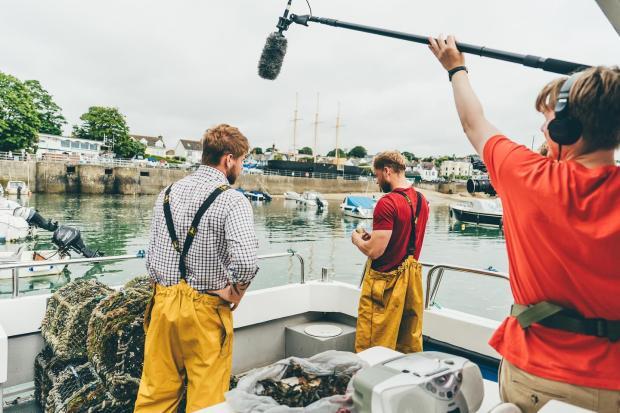
A PEMBROKESHIRE-made feature film is to receive its big-screen premiere next month in the very harbour where much of it was shot.
Near and Distant Things, written and directed by Saundersfoot filmmaker Emily Batty, will be shown outdoors at Saundersfoot Harbour on Saturday, July 18, as part of the Torch Theatre’s Sunset Cinema series.
The drama, filmed in summer 2025, tells the story of a grieving fisherman trying to support his daughter after she returns home, while experiencing dreamlike visions of his late wife.
The film makes strong use of the Saundersfoot landscape, with scenes filmed at the harbour, The Royal Oak pub, Monkstone Point and other familiar local locations.
Emily, 22, who grew up in Saundersfoot and recently graduated from the University of Oxford with a geography degree, has described the project as “a love letter to home”.
She said: “Watching a film set in Saundersfoot, with recognisable faces and locations on screen, in the heart of the harbour itself where we filmed many scenes, feels incredibly full-circle.
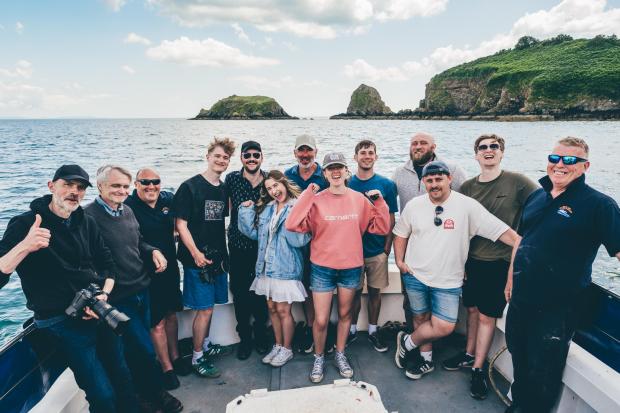
“I can’t wait to share that experience with people.”
The film was made with the support of a small team and a largely local cast and crew.
Emily said the production had only been possible because of the “incredible amount of local support” received during filming.
She also praised composer and sound designer Zach Worthington, whose work helped shape the atmosphere of the film.
She said: “The score and soundtrack feel so entangled with the landscape of home.
“It’s a little bit folk, a little bit Celtic, and rather emotional.”
Emily, who has written and directed the film under the name Emily Florence, said some of the ideas behind the film had been with her for several years.
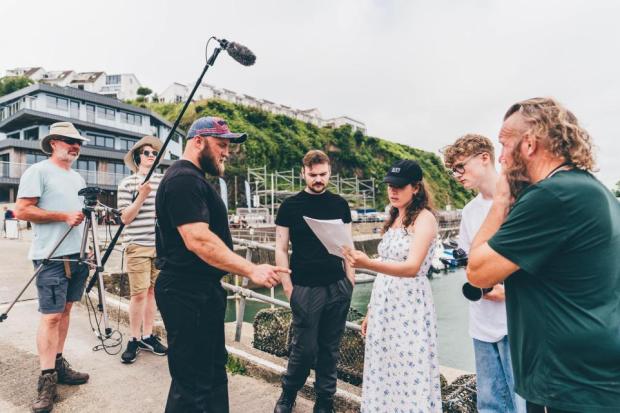
She said: “Some of the images within the film have been in my head since I was 18.”
She added that Pembrokeshire remains a major source of inspiration for her future work.
“I have a couple of screenplays in the works – I never stop writing – and I’m looking to get agented,” she said.
“I’m excited to continue to tell stories, in whatever capacity that may be.
“I can say that Pembrokeshire is still my muse, and I don’t think I’m done telling stories about home.”
The outdoor screening will take place on the harbour decking, with gates opening at 6:00pm and the film beginning at 7:00pm.
The film is rated PG, but includes themes of bereavement, mental health, domestic abuse and references to suicide which some viewers may find upsetting.
Emily said she hoped the premiere would be a moment of shared pride for the village.
She said: “So many people helped bring this film to life.
“There’s something very special about sharing a story set in Saundersfoot, surrounded by the landscape that inspired it.”
Tickets are available through the Torch Theatre website, with advance booking recommended.

LEASEHOLDERS in Wales could be protected from unfair building safety costs under new Welsh Government proposals.
A consultation has been launched on the first steps to implement the Building Safety (Wales) Act 2026, which was passed unanimously by the Senedd.
The proposals are aimed at residents living in multi-occupied buildings and focus on who should pay when safety defects need to be put right.
The consultation covers three main areas: limiting the costs that can be passed on to leaseholders for remediation work, creating a tribunal-based system for remediation orders and remediation contribution orders, and setting out how the height of regulated buildings should be calculated.
The Welsh Government says the aim is to ensure residents are not left paying for building safety failures they did not cause.
Cabinet Minister for Local Government, Housing and Planning, Siân Gwenllian said: “No leaseholder in Wales should pay for building safety failures they did not cause, and those failures should be rectified as soon as possible.
“This consultation is a crucial step in making sure the Building Safety (Wales) Act 2026 delivers real protection for the people it was designed to serve.
“As we mark the ninth anniversary of the Grenfell Tower tragedy, we have a duty to turn this legislation into lasting change — and this Welsh Government is determined to work with partners to make that happen as quickly as possible.”
The consultation is open to residents, leaseholders, building owners and other interested parties.
It closes on September 7, 2026.



News8 hours ago
Brexit at 10: How Britain was sold a dream that cost us dearly
A decade after the referendum, the promised benefits remain hard to find while the economic costs are increasingly difficult to...


Crime10 hours ago
Worcestershire man jailed after violent attack on woman in Tenby
Defendant was already serving a suspended sentence when serious assault took place A WORCESTERSHIRE man has been jailed for more...


Climate12 hours ago
Offshore wind ‘could bring new generation of jobs to Milford Haven’
Pembrokeshire ports and Celtic Sea projects placed at centre of Wales’ green energy ambitions MILFORD HAVEN and Pembroke Dock could...


Community1 day ago
Police officer hailed hero after midnight sea rescue in Milford Haven
PC swam 100 metres offshore to save distressed woman heard calling for help in darkness A DYFED-POWYS POLICE officer has...


Local Government2 days ago
Security privately arranged by Mayor at Beating of the Bounds
HAVERFORDWEST TOWN COUNCIL has confirmed that security personnel seen at this year’s Beating of the Bounds were privately arranged and...


Business3 days ago
Celtic Freeport five-year plan puts Milford Haven at centre of green energy future
Strategy promises investment, skilled jobs and new supply chains, but major barriers remain over grid connections, planning and delivery THE...


Education3 days ago
Closure of Ysgol Clydau approved after emotional council debate
COUNCILLORS WARNED RURAL COMMUNITIES WILL REMEMBER DECISION PEMBROKESHIRE councillors have voted to close Ysgol Clydau following an emotional debate over...


Education3 days ago
Manorbier school closure process to continue after narrow council vote
Questions remain over insurance, rebuilding costs and possible legal action by Diocese PEMBROKESHIRE councillors have voted to press ahead with...

Community3 days ago
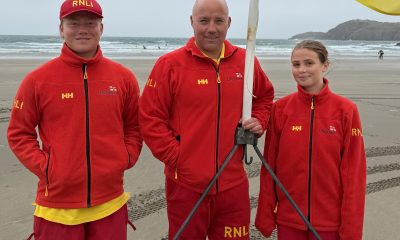
The father, son and daughter lifeguard trio saving lives in Pembrokeshire
A FATHER, son and daughter are preparing to help keep beachgoers safe on the Pembrokeshire coast this summer as part...

Community3 days ago
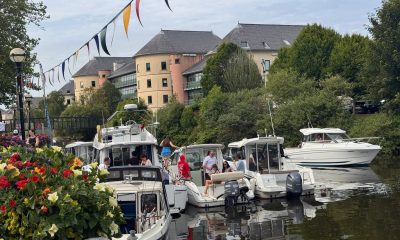
Beating of the Bounds brings music, boats and tradition to Haverfordwest
CENTURIES-OLD CEREMONY DRAWS FAMILIES TO THE RIVERSIDE HAVERFORDWEST’S historic Beating of the Bounds returned on Sunday (Jun 14), with boats,...
-

 Community3 days ago
Pembrokeshire Chess Club crowned Welsh champions
-
Local Government2 days ago
Security privately arranged by Mayor at Beating of the Bounds
-

 Crime7 days ago
Pembroke Dock teenager sentenced over train strangulation attack
-
 Education5 days ago
Diocese threatens legal action as Manorbier school closure battle intensifies
-

 Crime7 days ago
Man accused of six rapes including alleged Haverfordwest offence
-

 Crime1 day ago
Man wanted by court after failing to attend hearing over alleged shop thefts
-

 Local Government6 days ago
Taxi suspended after county-wide licensing checks
-
 Crime7 days ago
Brothers found guilty of causing death of Welsh dad in ‘reckless’ race