


Crime
Victims of child sexual abuse face growing court delays figures show

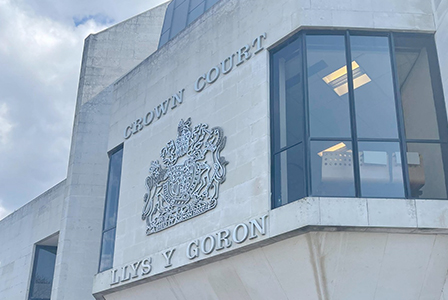
AVERAGE number of days between a defendant being charged in child sexual abuse cases in England and Wales and the criminal trial starting has risen from 273 days in 2017-18 to 423 days in 2022-2023.
Drawn out justice process without the necessary therapeutic support hampering recovery of victims of child sexual abuse.
NSPCC is calling on the UK Government to strengthen the Victims and Prisoners Bill so it invests in reforming the criminal justice system and offers sufficient support to child victims
Victims of child sexual abuse are facing lengthening delays for their case to reach the courts due to UK Government failures to address a backlog of court cases.
New data from the Ministry of Justice shows a record high with the average number of days between a defendant in child sexual abuse cases in England and Wales being charged and the criminal trial starting increasing by 55% in the last five years, from 273 days in 2017 – 2018 to 423 days in 2022/2023.
This means that of the 5,513 outstanding child sexual abuse cases going through the crown courts this year, a 16% increase on the previous year, victims will wait on average almost 14 months before their case even goes to trial.
For a child who is already experiencing depression, suicidal thoughts or PTSD as a consequence of sexual abuse, the drawn-out process of waiting for a trial to start let alone come to completion can be extremely distressing.

Meanwhile, access to specific support to help them recover from the abuse can be scarce. Earlier this year, the NSPCC revealed that only 23% of local authorities say they offer specialised support for children in the form of independent and specially trained advisors.
Many child victims of abuse who contact Childline worry about the court process. One girl who contacted Childline* said: “I have a court case next month and I’m so scared. I don’t want to see the man who attacked me. I do have a social worker, but I don’t feel supported and I’m worried that if I tell them everything that I’m feeling that they might stop the court case. If I’m too scared to see him, what if I can’t speak in court and this has all been for nothing”.
The NSPCC coordinates a coalition of leading children’s charities committed to protecting children and strengthening the criminal justice response.
Together, NSPCC, Barnardo’s, Action for Children, The Children’s Society and the National Youth Advocacy Service urge the UK Government to use the opportunity afforded by the Bill to create a child-centred, sufficiently resourced and accountable justice system. This can be achieved through amendments to the Victims and Prisoners Bill which is currently making its way through Parliament.

Ahead of the Bill’s second reading in the House of Lords on Monday 18 December, the children’s charities want to see a commitment to improving support for children experiencing abuse and exploitation including providing sufficient and specific support to child victims as they go through the court process.
In addition, the NSPCC is calling on the UK Government to overhaul the criminal justice system, provide significant investment to address the current backlogs in the court, and fast-track cases involving young witnesses and victims.
The charity believes action is urgently needed because of the impact on children and young people.

Poppy, now 19, was sexually abused by her grandfather and disclosed her abuse age 11. It took 18 months for her case to reach trial and 5 months for her to receive counselling.
Now, Poppy and her mum Miranda want there to be more support available for child victims earlier on in the court process. Poppy said: “It was two years until my case came to trial which had a huge impact on me. I have blocked a lot of it out. It was strange going into court knowing it was the day. I was so desperate to fight my own corner and there was a good amount of anger behind me on that day. Telling my side of the story was incredibly important.
“I want all children who have gone through this to get the counselling they need and the support they deserve. It took five months for me to get my first counselling session after I disclosed the abuse, but the wait is so much longer now.”
Miranda added: “It was incredibly difficult for our whole family to watch Poppy go through the court process but the one-to-one counselling we received became a vital support, enabling us to cope effectively. It is unthinkable that some children do not get the same access to services that can help build their resilience and help them move on with their lives.”
Clare Kelly, Associate Head of Policy & Public Affairs at the NSPCC said: “Going through the criminal justice system can be a painful process for children who have experienced abuse. This can be made worse by consistent delays which leave children in limbo, without access to support designed for them to support their recovery.
“Year on year we see court waiting times increase as the courts continue to battle a backlog of child sexual abuse cases. This has been a problem well before the pandemic but has been exacerbated by various lockdowns and court closures over the last five years.
“The Government have said they are committed to supporting victims of child sexual abuse but they must follow through by taking action on these long, distressing court waiting times. This could be achieved partly through the Victims and Prisoners Bill by enshrining a commitment to upholding children’s rights as victims as they go through the courts.
“However, to turn this deteriorating situation around, the Government must also invest in the criminal justice system to ensure these cases are progressed by police
and prosecutors, young witnesses have support to give their evidence and their cases are heard by courts as speedily and effectively as possible”.
Today’s courts backlog data reveals an alarming rise in the overall caseload to over 66,500 – a new record high.
Further, the proportion of cases outstanding for over a year also continues to increase. It is now also at a new record high.
The Victims’ Commissioner calls for “urgent and creative intervention” to address this “crisis.
The Victims’ Commissioner for England and Wales, Baroness New love, said: “For the second straight quarter in a row, we are witnessing a new record high in the number of outstanding cases in the Crown Court. This is of grave concern.
This cannot be solely attributed to the barristers’ strike, which concluded more than a year ago, or the pandemic. It suggests there are wider systemic problems in our justice system, and I am concerned that chronic and unacceptable delays are becoming ingrained in the system. This must never be normalised nor tolerated.
Over a quarter of all cases are now outstanding for over a year and this proportion is steadily increasing. This is causing victims real and undue distress, as it potentially means they face a wait of months and possibly years before they see justice being done. This has real consequences for our justice system, with many victims unable to last the distance, resulting in prosecutions having to be dropped.
Urgent and creative intervention is needed to address this crisis. No victim should be expected to wait years before their case gets to court.


ARMED police were deployed to a residential street in Fishguard this evening following reports of a teenage boy with a knife.
The incident happened in the Dan y Bryn area on Sunday evening (Mar 23).
Armed police negotiated with the suspect, persuading him to hand over the weapon. He was subsequently detained, handcuffed, and taken away in an ambulance.
The situation was brought under control without any reported injuries.
The police told The Herald: “Officers attended the Dan Y Bryn area, Fishguard on the evening of Sunday, March 22 following concerns of an individual reported to be in possession of a knife.
Officers have attended the location and secured the knife.
“The incident cleared with the individual taken to receive further care in hospital.
“Enquiries are ongoing.”


Registered sex offender Wayne Evans, who moved to Carmarthenshire for a fresh start, was caught after the National Crime Agency flagged activity linked to a Kik account
A CONVICTED child rapist who moved to rural west Wales in an apparent attempt to start over was found with indecent images of children on his phone after his online activity was flagged by the National Crime Agency.
Wayne Evans, 59, of Pentrecourt Road, Llandysul, appeared before Swansea Crown Court after officers discovered the images during an investigation triggered by the NCA.
The court heard that in January last year, the NCA alerted Dyfed-Powys Police to a Kik messaging account involved in downloading indecent images of children. The email address linked to the account was already known to police and belonged to Evans, a registered sex offender.
Officers went to his home on January 28 and arrested him. Evans told police he had not downloaded the images himself and claimed they had appeared in a Kik group he was part of, adding that the group had since been shut down.
Police seized six devices from the property and Evans handed over the pin numbers for his phones and tablets. He later answered “no comment” to questions in interview and was released under investigation while the devices were examined.

A forensic analysis of his Samsung Galaxy phone uncovered 13 Category A images, eight Category B images and two Category C images. The material involved children aged between four and 12.
Category A images are considered the most serious and involve the gravest forms of sexual abuse.
The court was told Evans has six previous convictions covering 23 offences. In 1990, he was convicted of gross indecency with a child and indecent assault of a child. In 2002, he was jailed for 15 years for raping a child under 16, attempted rape, gross indecency and five further counts of indecent assault. He was placed on the sex offenders register for life and released from prison in 2011.
Evans had admitted three counts of making indecent images of children, covering Categories A, B and C.

Emily Bennett, representing Evans, said her client knew the court would view the offences in the “dimmest of lights”. She said he had moved to a rural part of Wales where he kept himself to himself and had taken steps to reduce his contact with females.
She also told the court Evans accepted that he still had an inappropriate sexual attraction to children, and said he was in a long-term stable relationship with a partner who knew about his past offending.
Sentencing Evans, Recorder Mark Powell KC said he accepted that the defendant had taken some steps to change his life, but said it was clear he continued to have a sexual interest in children.

The judge said his priority was to pass a sentence which reduced the risk Evans posed. He said an immediate prison term available under the guidelines would be relatively short, could be destabilising, and might even increase the danger to the public.
With credit for his guilty pleas, Evans was sentenced to 16 months in prison, suspended for 18 months. He was also ordered to complete a rehabilitation activity requirement, a Building Choices programme, and 100 hours of unpaid work.
A Sexual Harm Prevention Order was imposed for 10 years, and Evans will remain on the sex offenders register for life.
Photo caption:
Wayne Evans was sentenced at Swansea Crown Court after indecent images of children were found on his phone
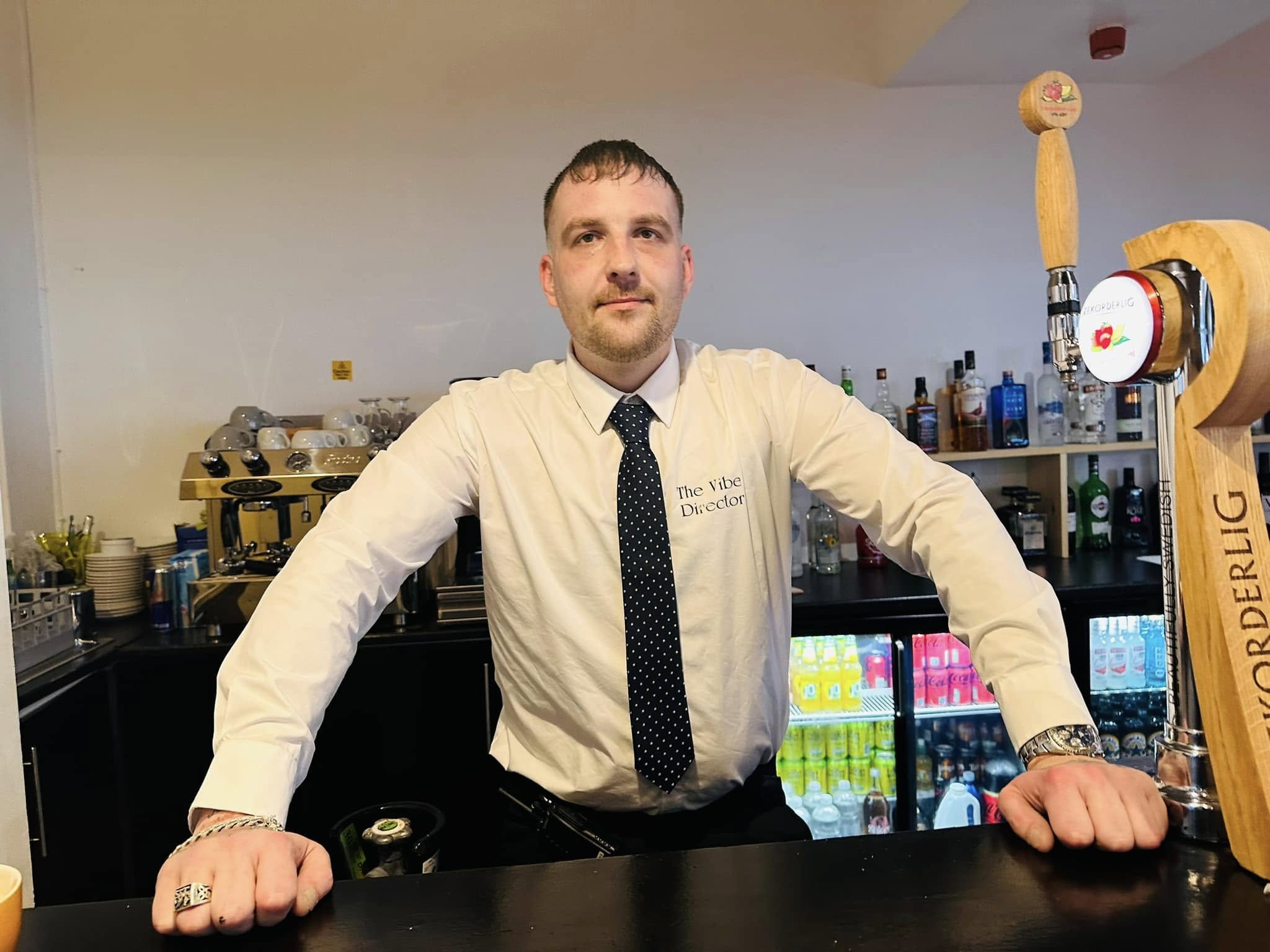
Dealer who claimed £160,000 profits was later calling police for protection as threats escalated over money he owed to his suppliers
A MILFORD HAVEN drug dealer who bragged he had “the best coke out there” and claimed to have made up to £160,000 in just four months has been jailed for six years.
But behind the image of a confident, high-earning operator, the reality was starkly different — a man in debt, under threat, and repeatedly calling police for protection as his world closed in.
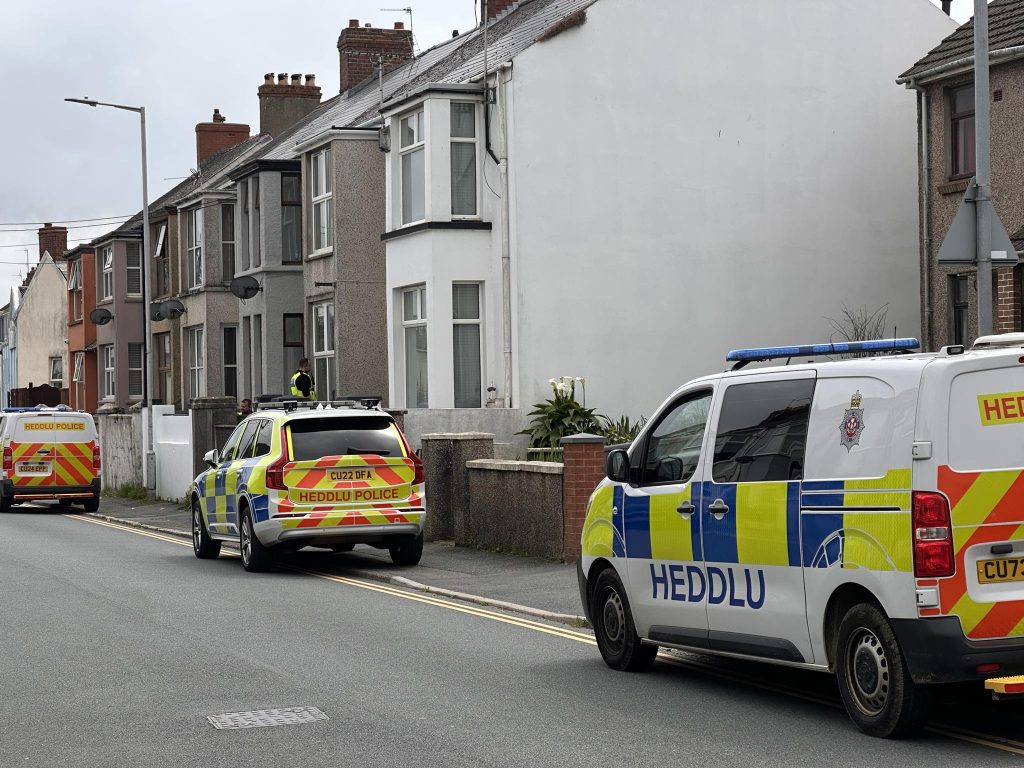
The 35-year-old defendant admitted multiple offences relating to the supply of cocaine and cannabis when he appeared before Swansea Crown Court.
The court heard he played a significant role in the supply of Class A and Class B drugs, purchasing large quantities — including claims he was buying cocaine by the kilogram — and maintaining contact with upstream suppliers.
In messages shown to the court, he boasted about his profits, claiming to have made £38,000 and suggesting that far larger sums were within reach. He also claimed to have earned £160,000 in just four months and said he had bought two houses.
He told customers he had “the best coke out there” and responded aggressively to complaints, stating: “Out of £30,000 worth, you’re the only one to complain,” before adding: “Bad mouthing me is a bad idea you little slag.”
Violence and intimidation
The court was also shown chilling footage of a confrontation at a property on the Mount Estate, where the defendant was heard directing violence over a debt.
In the video, he shouted: “I got boys, yeah, I got boys,” before telling others to “kick his head in” as the attack unfolded inside the victim’s home.
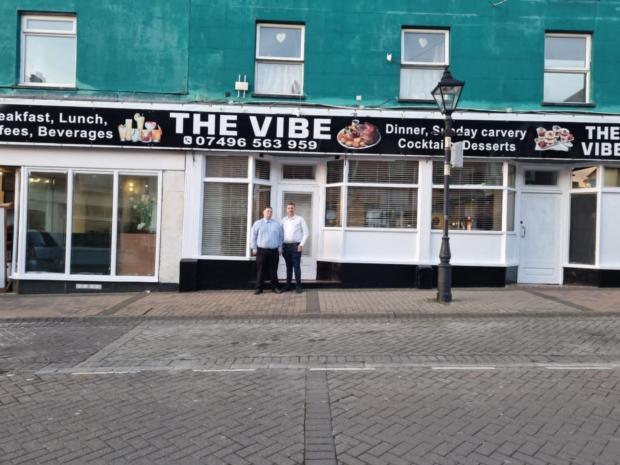
Witnesses described him as having become a “kingpin” in Milford Haven’s drug scene, operating from The Vibe public house, which they claimed was used as both a legitimate business front and a base linked to drug dealing.

Fear behind the façade
Yet the court heard that behind the bravado, the defendant was living in fear.
He had accumulated drug debts estimated at between £18,000 and £26,000 and was being threatened by those higher up the supply chain. His partner reported people turning up at their home, with threats including claims it would be bombed or burned down.
The Herald attended his home address on multiple occasions to report on police activity after he called officers for protection.
In a direct call to this newspaper during the period, he said: “There are threats to my life — people want me dead, dead. I don’t want this in the paper. It’s over money… hundreds of thousands of pounds.”
Documents reveal further pressure
The Herald can also reveal that the defendant was served with a statutory demand in late 2025 over an alleged unpaid debt relating to stock, fixtures and fittings following his takeover of The Vibe public house in March 2024.
Documents seen by this newspaper indicate the financial pressures he was under extended beyond drug debts.
National attention
The case has already drawn national interest, with Channel 4 making a documentary featuring the defendant after interviewing local people in Milford Haven over recent months.
‘Significant role’ in drug trade
Police arrested the defendant on January 5 last year on suspicion of being concerned in the supply of Class A drugs. A search of an address on Priory Road uncovered 18 grams of cannabis, while a separate incident involving a vehicle led to the discovery of 73 grams of cocaine and cannabis.
Prosecutors said he was actively involved in the supply of drugs and purchasing large quantities, describing him as a key player in the local trade.
He has 57 previous convictions, mostly for theft-related offences.
‘Only a custodial sentence’
Defending, Mr Ibrihim described his client’s background as a “tale of woe,” telling the court his father was addicted to heroin and his mother struggled with alcohol. His younger sister died in 2022.
The court heard he had gone “off the rails” in his late teens and that his drug dealing was linked to debts, including those connected to his father. It was also said that many of his claims about wealth were exaggerated and amounted to “bravado”.
Sentencing, the judge said: “The seriousness of this offending means that only an immediate custodial sentence is appropriate.
“You played a significant role in drug dealing. What is clear is that you were dealing with a lot of cocaine.
“I have no doubt that some of what you did was due to pressure, but some of it was for your own gain.”
The judge added that despite the defendant’s claims of wealth, “you haven’t got hardly anything left”.
For the supply of cocaine, he was sentenced to six years in prison, with a concurrent sentence of 30 months for supplying cannabis.
He will serve at least half the sentence in custody before being eligible for release.
A victim surcharge of £228 was also imposed.



Business48 minutes ago
Could Primark be coming to Haverfordwest? Major retailer in talks for former Wilko site
Council confirms advanced discussions as speculation grows over high street boost HAVERFORDWEST could soon see a major high street revival,...


Business1 hour ago
Rail investment ‘could unlock 40,000 jobs and £11bn for Wales’ says new report
RAILWAY stations across Wales could help unlock around 40,000 jobs and more than £11 billion for the economy by 2036,...


Local Government2 hours ago
Milford Haven set for £200m investment with schools, leisure centre and rail upgrade
Council outlines major plans for town with backing from Welsh Government MILFORD HAVEN is set for a major transformation with...


Community20 hours ago
Broad Haven volunteers secure ‘national asset’ status for nature reserve
A SMALL stretch of woodland and former opencast coal mine has been transformed into a nationally recognised biodiversity site, in...


Entertainment2 days ago
Tenby steams up in spectacular style as crowds flock to festival
Colourful parade, towering creations and Victorian flair bring town centre to life TENBY was transformed into a vibrant Victorian fantasy...

Crime3 days ago
Publican jailed for six years for supplying cocaine and cannabis
Milford Haven man sentenced at Swansea Crown Court following drug dealing operation A MILFORD HAVEN publican has been jailed for...


Local Government3 days ago
Poverty summit highlights support efforts across Pembrokeshire
A SUMMIT bringing together key organisations from across Pembrokeshire has highlighted both the scale of local poverty and the work...


Education4 days ago
Milford Haven school plans unveiled but funding not yet secured
PLANS for a new £100 million school in Milford Haven have been unveiled, but the project has not yet secured...


News4 days ago
Council unveils plans for new state-of-the-art secondary school in Milford Haven
PEMBROKESHIRE COUNTY COUNCIL has revealed plans for a new state-of-the-art school in Milford Haven, promising modern, inspiring learning spaces for...


Health4 days ago
NHS waiting list falls — but cancer delays and diagnostic backlog worsen
Record progress claimed by Welsh Government as critics warn key targets are still being missed THE NHS in Wales has...
-

 News6 days ago
Emergency services flood Haverfordwest after reports of person in river
-

 Crime5 days ago
Mother given community order after admitting child cruelty offence
-
Health4 days ago
NHS waiting list falls — but cancer delays and diagnostic backlog worsen
-

 News6 days ago
Senedd vote to ban greyhound racing hailed as ‘landmark moment’ by charities
-
 News6 days ago
Senedd votes to ban Greyhound racing in Wales to protect animal welfare
-

 News5 days ago
Reform secures first Pembrokeshire councillor in Hakin by-election win
-

 News6 days ago
Could Pembrokeshire hold the key to St Patrick’s lost birthplace?
-

 Crime5 days ago
Woman stole from pharmacy despite ban, court hears