
News
The Energy Conundrum: Bitcoin vs. Traditional Banking


The financial sector is facing significant energy challenges, with both Bitcoin and traditional banking contributing to environmental concerns. This article explores innovative solutions aimed at reducing the energy consumption and carbon footprint of these financial activities, highlighting the importance of sustainability in the industry. For cutting-edge strategies and initiatives addressing the energy challenges in the financial sector, visit the Terranox Website to learn about innovative solutions promoting sustainability and environmental responsibility.
The Energy Dynamics of Bitcoin
The energy dynamics of Bitcoin are a complex interplay between the technology’s innovative potential and its environmental impact. Bitcoin mining, the process that keeps the Bitcoin network secure and functional, is at the heart of these energy dynamics.
This process involves solving complex mathematical puzzles to validate transactions and add them to the blockchain, a task that requires significant computational power. As a result, Bitcoin mining operations often use large arrays of specialized hardware known as ASICs (Application-Specific Integrated Circuits), which consume substantial amounts of electricity.
The high energy consumption of Bitcoin mining has raised concerns, especially as the network grows and the difficulty of mining increases. Critics argue that the environmental cost of Bitcoin mining could outweigh its benefits, particularly in regions where electricity is generated from fossil fuels, contributing to greenhouse gas emissions and climate change.
However, proponents of Bitcoin argue that the network’s energy usage is a necessary investment in a decentralized and secure financial system, and that it is comparable to or even less than the energy consumption of traditional financial systems when considering the full lifecycle of money, including printing, transportation, and storage.
Furthermore, the Bitcoin community is actively seeking ways to reduce its environmental impact. One approach is the increasing use of renewable energy sources for mining operations. Hydroelectric power, solar energy, and wind energy are becoming more common in Bitcoin mining, particularly in regions where these resources are abundant and cheap.
The Environmental Footprint of Traditional Banking
The environmental footprint of traditional banking is a multifaceted issue that encompasses various aspects of the banking sector’s operations. Unlike the digital realm of cryptocurrencies, traditional banking relies heavily on physical infrastructure, including bank branches, ATMs, and the production and transportation of currency. These elements contribute to the sector’s energy consumption and carbon emissions.
Bank branches and ATMs are ubiquitous, and their operation requires energy for lighting, heating, cooling, and running electronic systems. The energy used in these facilities often comes from non-renewable sources, contributing to the carbon footprint of the banking sector. Additionally, the construction and maintenance of physical banking infrastructure involve the use of materials and resources, further adding to the environmental impact.
The production and transportation of physical currency are other significant contributors to the environmental footprint of traditional banking. The process of printing banknotes and minting coins requires energy and resources, and the transportation of currency between banks, businesses, and consumers generates carbon emissions. The management of cash, including its storage and security, also entails energy consumption.
In response to these environmental concerns, the banking sector is increasingly adopting sustainable practices. Many banks are investing in energy-efficient buildings and technologies to reduce their carbon footprint. Digital banking is being promoted as a more environmentally friendly alternative to physical banking, as it reduces the need for paper and physical infrastructure. However, digital banking is not without its environmental impact, as data centers and network infrastructure require energy to operate.
Innovations and Solutions
In addressing the energy challenges associated with both Bitcoin and traditional banking, several innovations and solutions are being explored and implemented. These efforts aim to reduce the environmental impact of financial activities while maintaining or even enhancing the efficiency and security of transactions.
In the realm of Bitcoin, one significant innovation is the development of more energy-efficient mining hardware. Advances in technology have led to the creation of mining rigs that require less electricity to perform the complex computations necessary for securing the blockchain.
Solar, wind, and hydroelectric power are increasingly being harnessed to provide the electricity needed for mining, thereby reducing the reliance on fossil fuels and mitigating the carbon footprint of the cryptocurrency. Some mining facilities are even being set up in locations with excess renewable energy, such as regions with abundant hydroelectric power, to take advantage of lower energy costs and contribute to a more sustainable mining ecosystem.
Digital banking is one such innovation, as it reduces the need for physical infrastructure and the associated energy consumption. By enabling customers to conduct transactions online or through mobile apps, banks can decrease the usage of paper, lower the energy required for operating branches, and minimize the carbon emissions from commuting to and from bank locations.
Conclusion
In conclusion, the financial sector is actively seeking ways to address its environmental impact. Through advancements in technology, the adoption of renewable energy sources, and the promotion of green finance, both Bitcoin and traditional banking are making strides toward a more sustainable future.



Council admits demand exceeds supply as housing issues contribute to hospital discharge delays
PEMBROKESHIRE COUNTY COUNCIL has acknowledged that there is not enough suitable accessible housing in the county to meet demand, with more than 400 people currently waiting for accommodation that meets their needs.
The admission came in response to questions from The Pembrokeshire Herald about housing, health and accessibility in Pembrokeshire.
The council revealed that 403 people are currently registered on the Pembrokeshire Accessible Housing Register waiting for accessible social housing.
Of those, 81% are in the highest-priority gold band, while 62% require one-bedroom accessible accommodation.
The authority also disclosed that 111 cases are currently awaiting occupational therapy assessment through to approval of assessed works under Disabled Facilities Grants and discretionary disabled assistance grants.
The figures highlight growing pressure on housing services in a county with an ageing population and increasing demand for homes that can accommodate people with disabilities, mobility problems and long-term health conditions.
A council spokesperson said: “Within Pembrokeshire, we recognise that there are challenges around unsuitable housing, often linked with an ageing housing stock across all tenures of accommodation.
“We recognise that poor and inaccessible housing can be a contributing factor to ill health and increased demand on housing, health and social care services.”
Hospital discharge concerns
The council also confirmed that housing-related issues can affect hospital discharge planning.
Officials said there had been an increase in housing-related discharge delays in recent years, often because people leaving hospital require home adaptations or alternative accommodation that better suits their needs following changes in their health or mobility.
The spokesperson said: “There are concerns related to housing-related delays which impact hospital discharge planning locally.
“There has been an increase in housing related delays due to a range of factors, including the need for suitable accommodation following changes in an individual’s health or functioning, which subsequently can lead to a need for home adaptations, or alternative accessible accommodation sourced.”
The council stressed that housing-related factors still represent a relatively small proportion of overall discharge delays in Pembrokeshire.
Shortage recognised
Asked whether enough suitable housing exists locally for older residents and people with disabilities or long-term health conditions, the council accepted that current provision falls short of demand.
The spokesperson said: “Given the numbers we have on our Accessible Housing Register as well as the ageing population in the county, we acknowledge that there is insufficient suitable accessible housing to currently meet demand.”
The authority said the issue has already been identified within the Local Housing Market Assessment 2023 and the Pembrokeshire Housing Strategy 2024-2027.
Working to improve provision
The council said its Occupational Therapy Service works closely with housing providers across Pembrokeshire to assess needs and support the delivery of appropriate housing solutions, including adaptations to existing homes and the development of adapted properties.
For social housing tenants requiring adaptations, needs are assessed by occupational therapists, with work either carried out by landlords or, where necessary, alternative accommodation sought.
The authority also said that new social housing developments are designed to meet Lifetime Homes standards under Welsh Government housing requirements.
Housing and social care teams work together to help shape the type and design of new homes being developed in the county, using information from the Accessible Housing Register to identify future demand.
The comments come amid growing national concern over the impact of unsuitable housing on health, independence and demand for public services, particularly as Wales’ population continues to age.
This is a cleaner local government/housing story that stands on its own and avoids repeating the earlier Welsh Government/NHS-focused piece.

Cancer treatment targets missed again as opposition says Plaid must share responsibility for health service performance
NHS WALES is facing renewed pressure after the latest performance figures showed waiting lists rising, cancer treatment targets being missed again and more patients waiting over 12 hours in emergency departments.
The figures come as the Welsh Government announced an additional £145m for NHS Wales, including £100m to reduce waiting times and £25m for new surgical hubs.
In April, performance against the 62-day target for patients starting cancer treatment fell to 56.7%, well below the 75% target.
In Swansea Bay, just 48.4% of cancer patients began treatment within the target time.
Treatment waiting lists also increased, with 680,003 patient pathways recorded in April. The estimated number of individual patients waiting for treatment stood at 536,500.
Two-year waits rose to 3,694. In England, the comparable figure was 191.
Emergency care also came under further strain in May. The proportion of patients spending less than four hours in Welsh emergency departments fell to 64.4%, against a target of 95%.
A total of 11,066 patients waited 12 hours or more before being admitted, transferred or discharged, up from 10,287 in April. The target is zero.
Ambulance performance remained under pressure. For red calls, the median response time improved to nine minutes and 12 seconds, but the 90th percentile increased to 22 minutes and 39 seconds, meaning response time targets were still not met.
Welsh Conservative criticism
The Welsh Conservatives said the figures showed a “worrying backslide” in NHS performance and accused Plaid Cymru of sharing responsibility for the state of the health service.
Natasha Asghar MS, Welsh Conservative Shadow Cabinet Secretary for Health and Social Care, said: “These figures show a worrying backslide in NHS performance in Wales. Cancer treatment times have fallen, waiting lists have risen, two-year waits are up and more patients are being left waiting over 12 hours in emergency departments.
“Plaid Cymru cannot escape responsibility for this. They propped up the previous Welsh Labour Government by backing their budgets and are now in Government themselves. Patients across Wales need action, not more talk of improvement.
“Whilst any extra funding for the NHS is welcome, £145m will not be enough unless it is accompanied by urgent reform, a comprehensive workforce strategy and real delivery for patients.
“The Welsh Conservatives have been clear that the Welsh Government needs to declare a health emergency in our NHS. We need more beds in our hospitals, a robust NHS workforce and a serious plan to cut waiting lists and to support our emergency departments.”
Funding announced
The Welsh Government says the extra £145m will support work to reduce waiting times and improve access to treatment.
Of that, £100m has been allocated to reducing waiting lists, while £25m will be invested in new surgical hubs.
Health leaders have welcomed the additional funding, but warned that money alone will not solve the pressures facing hospitals, GP services, social care and emergency departments.
The latest figures are likely to increase pressure on ministers to show clear progress before the winter, when demand on the NHS is expected to rise further.
Welsh Government response
The Welsh Government said the figures related to April, before the new administration took office, and showed that both treatment waiting lists and the longest waits had increased.
Health and Care Minister Mabon ap Gwynfor said too many people were waiting too long for treatment, and said emergency care performance was not yet at the level patients and staff should expect.
He said: “Our focus is clear — cut waiting times, prioritise those who have been waiting the longest, improve access to services and build an NHS that can keep up with demand in the long term.
“To bring waiting times down and keep them down, we need to change the way the NHS works — making sure patients move through the system more smoothly, from their first referral all the way to treatment.
“We’ve got a plan to do this, working with the fantastic NHS staff right across Wales. The £145 million we’re announcing today will be important in tackling the waiting list and waiting times and helping people be seen quicker.”
The Welsh Government said £100m would be used to help reduce waiting lists and waiting times, £25m would be invested in new surgical and diagnostic hubs, and £20m would go towards essential maintenance across the NHS estate.
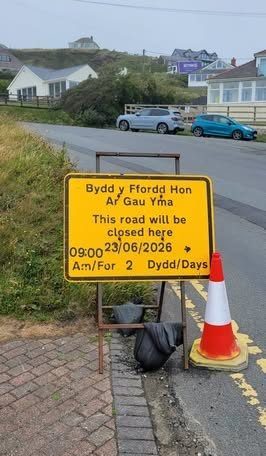
A STRETCH of road at Newgale will close for two days next week while resurfacing works are carried out.
The closure is planned for Tuesday (Jun 23) from 9:00am to 3:30pm, and Wednesday (Jun 24) from 9:00am to 4:00pm.
The affected section runs from Penycwm to just above Beachcroft bungalow in Newgale.
Traffic will be diverted via Roch Bridge and Eweston, between the Victoria Inn and Penycwm.
Businesses including the campsite, Landsker Line, Newsurf, Sands Café and the hardware shop are expected to remain open as normal. The car parks and the Welsh Road will also remain accessible, but traffic will not be able to travel up the hill towards Solva after the shop.
School buses are expected to run as normal, but the T11 service will operate to a special timetable between Haverfordwest and Roch. There will be no T11 service from Newgale to St Davids during the works. The 400 service will run as normal, but via the diversion route.
Cllr Mark Carter said he had asked for signs to be placed at Haverfordwest and St Davids, advising larger vehicles and those towing to consider using the A40 via Letterston, Mathry and St Davids instead.
An alternative route is via Crowhill, Hayscastle and Llandeloy crossroads, before rejoining the A487 at the top of Solva Hill.
Cllr Carter warned that the diversion route is likely to be busy, adding that drivers may need to reverse in places. He said the route had been cut back and overhanging branches removed.
Motorists are being urged to follow the signage and not to enter any road marked with a no-entry sign.
The closure times are a guide only, as resurfacing may take longer if the tarmac is slow to set in hot weather or if there is a mechanical breakdown.


Motorcyclist, 22, dies in A4075 crash in Pembrokeshire
A 22-year-old woman remains in hospital after two-vehicle collision A MOTORCYCLIST has died following a serious two-vehicle crash on the...


Why police will be visiting every home in Pembrokeshire
New operation aims to knock on more than 257,000 doors across Dyfed-Powys over the next three years DYFED-POWYS POLICE has...


Prisons at breaking point: MPs warn Wales is paying the price of a failing system
Frozen healthcare budgets, overcrowded jails, homelessness on release and mounting pressure on staff are undermining rehabilitation across Wales, according to...


Brexit at 10: How Britain was sold a dream that cost us dearly
A decade after the referendum, the promised benefits remain hard to find while the economic costs are increasingly difficult to...


Worcestershire man jailed after violent attack on woman in Tenby
Defendant was already serving a suspended sentence when serious assault took place A WORCESTERSHIRE man has been jailed for more...


Offshore wind ‘could bring new generation of jobs to Milford Haven’
Pembrokeshire ports and Celtic Sea projects placed at centre of Wales’ green energy ambitions MILFORD HAVEN and Pembroke Dock could...


Police officer hailed hero after midnight sea rescue in Milford Haven
PC swam 100 metres offshore to save distressed woman heard calling for help in darkness A DYFED-POWYS POLICE officer has...


Security privately arranged by Mayor at Beating of the Bounds
HAVERFORDWEST TOWN COUNCIL has confirmed that security personnel seen at this year’s Beating of the Bounds were privately arranged and...


Celtic Freeport five-year plan puts Milford Haven at centre of green energy future
Strategy promises investment, skilled jobs and new supply chains, but major barriers remain over grid connections, planning and delivery THE...


Closure of Ysgol Clydau approved after emotional council debate
COUNCILLORS WARNED RURAL COMMUNITIES WILL REMEMBER DECISION PEMBROKESHIRE councillors have voted to close Ysgol Clydau following an emotional debate over...
-

 Community4 days ago
Pembrokeshire Chess Club crowned Welsh champions
-
Local Government2 days ago
Security privately arranged by Mayor at Beating of the Bounds
-

 Crime10 hours ago
Milford Haven man jailed for breaching domestic violence protection order
-

 Education6 days ago
Diocese threatens legal action as Manorbier school closure battle intensifies
-

 Crime2 days ago
Man wanted by court after failing to attend hearing over alleged shop thefts
-

 Local Government6 days ago
Taxi suspended after county-wide licensing checks
-
 Crime2 days ago
Man banned from roads after drink-driving offence
-

 Crime2 days ago
Man jailed after admitting strangulation and assaults