


Business
A quick and effective solution for site security: Temporary fencing


BUSINESSES always seek an efficient solution when ensuring site security. Temporary fencing has become a wise choice for companies aiming to protect their sites effectively. This adaptable option offers a range of advantages, from its installation process and versatility to its security features. This article will explore the benefits of using fencing for site security.
Security
The main objective of installing temporary site fencing is to boost security levels. Temporary fencing adds a layer of protection by creating barriers that discourage unauthorised access and potential intruders. With its robust build and flexible design, temporary fencing is a deterrent against theft, vandalism and other forms of trespassing. By securing the perimeter, businesses can gain confidence in the safety of their assets.
Versatility in Design
Temporary fences are available in various styles and configurations to meet needs and surroundings. Whether you prefer chain link fencing or mesh panels, its modular structure allows for customisation based on the size and layout of your site. This adaptability enables businesses to adjust their security measures as circumstances change.

Quick and Easy Setup
One of the perks of using temporary fencing is its installation process. Unlike structures that demand groundwork and longer construction time, you can swiftly assemble temporary fences based on the area’s size. This speedy setup helps businesses save time, allowing them to focus on urgent matters related to their operations.
Cost-Effective Solution
Temporary fencing provides security and is a budget-friendly option compared to permanent installations or alternatives, like hiring private security or investing in alarm systems. The affordability stems from the purchase or rental costs and long-term savings associated with maintenance and potential reuse on different projects or sites.

Versatility
You can’t confine temporary fences to one security application. They can cater to needs across industries. Construction sites, outdoor events, festivals, parking lots, and sports events are examples of functional temporary fencing. Its versatility allows businesses to meet their security requirements regardless of their industry.
Efficient Crowd Management

Besides site security, temporary fencing excels in crowd control and managing access points during large-scale events or scenarios with high foot traffic. By marking areas for entry and exit, temporary fences play a crucial role in guiding people safely and reducing the risk of overcrowding or confusion, helping create a stress-free experience for event participants and organisers.
Adherence to Regulations
Specific industries have rules to follow regarding site security. Temporary fencing makes it easier to meet these requirements as it complies with safety standards set by authorities. Whether it’s ensuring privacy, managing noise levels or securing zones, there are temporary fence designs that meet regulatory needs such as height limits or visibility criteria.
Simple Upkeep
Temporary fencing offers lower maintenance benefits compared to permanent security solutions. If any part gets damaged, you can quickly replace individual panels without extensive or expensive repairs. Regular cleaning and checks help keep the fence in condition, extending its lifespan and enhancing its effectiveness as a security measure.
Visual Warning
The presence of fencing serves as a warning to potential trespassers or intruders. It communicates that the area remains safeguarded and monitored, making it less appealing to entry or criminal behaviour. The fence visibility also enables security personnel or cameras to monitor activities within the enclosed area.
In Summary
Temporary fencing is an efficient solution for site security because of its features, adaptable design, simple installation process, cost-effectiveness, applicability across various industries, effective crowd management capabilities and adherence to regulations. Companies that are looking for a reliable method of safeguarding their premises should consider temporary fencing a dependable choice that meets their immediate requirements and long-term expectations for robust security measures.



PLANS for what would be the first drive-through Starbucks coffee shop in Pembrokeshire, and a Greggs bakery, on the site of a car dealership have been submitted to the county council.
Birmingham-based GC No.9 Ltd, through agent Simply Planning, seeks permission for the demolition of the existing building, and the erection of a drive-thru Starbucks coffee shop, a Greggs baked goods food store, along with electric vehicle charging points at the PMS dealership, Salutation Square, Haverfordwest.
It includes 35 parking spaces and eight EV charging bays.
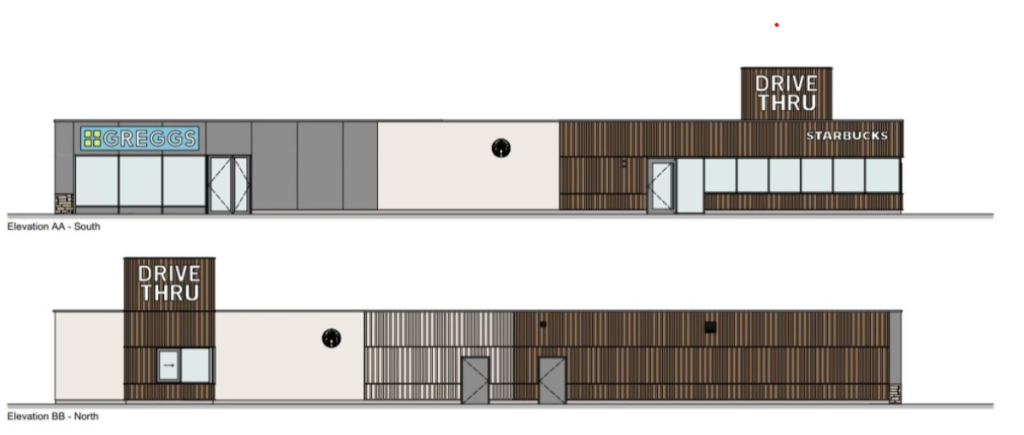
If approved, it is hoped some 30-40 jobs will be created; the Starbucks coffee shop would be the only such outlet for the general public in the county, with Pembrokeshire College having a Starbucks for students.
Back in 2024, permission was granted for a drive-thru Starbucks coffee shop on land adjoining Days Garage, Fishguard Road, Haverfordwest, but was never progressed; the operator for that scheme since confirming they would not be proceeding with that option, preferring the PMS site close to the town centre, a supporting statement says.
It adds: “The drive-thru unit will be occupied/operated by Starbucks, a national coffee retailer. Starbucks are one of the principal coffee shop operators in the UK, providing the public with a high-quality offer of hot and cold drinks, cafes and pastries and a limited range of related foods. As such, it will provide an attractive social setting for people to meet and will provide in the region of 20-25 jobs, principally available to local people.
“The store will be operated by The Magic Bean Company, the first licensee of Starbucks to open a drive thru. Established in 2014, The Magic Bean Company is a business founded in South Wales that employs local people. They are Starbuck’s only national growth partner covering England and Wales, developing the green electric vehicle Starbucks platform.
“The other proposed unit will be occupied/operated by Greggs plc. Greggs plc is the UK’s leading bakery retailer, famous for its baked goods, sandwiches and sweet items. The commercial unit will offer fresh, affordable food ‘on-the-go’ and create a further 15 full-time equivalent jobs. As with Starbucks, the jobs will primarily be provided to local people.
“The proposed operators have confirmed that no existing stores would close as a result of these proposals.”

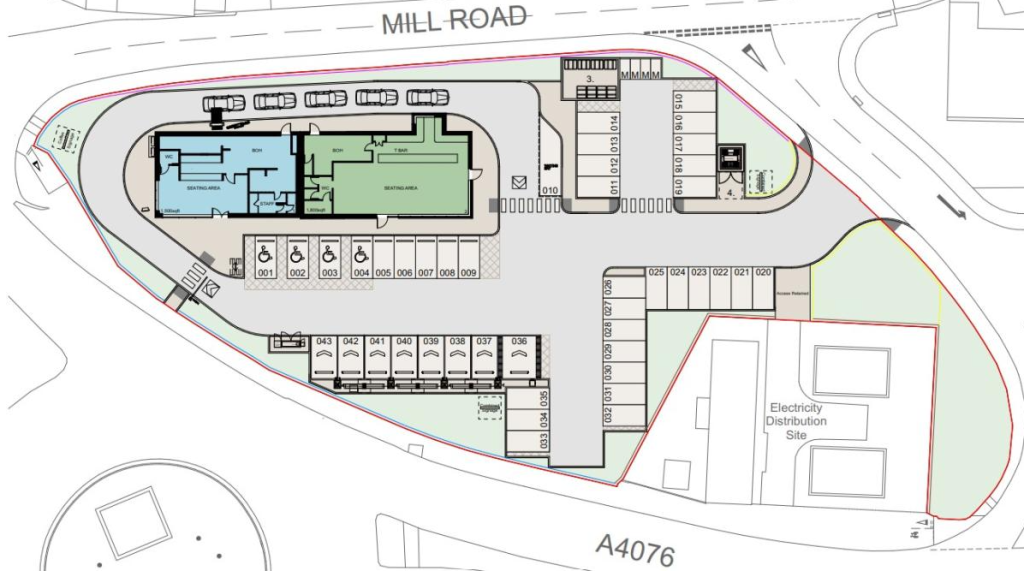
It adds: “Given that Greggs intend to retain their town centre format store within Haverfordwest town centre, it is considered that there will not be any impact to the health of the designated town centre as a result of the proposed development.”
Comparing this scheme to the previously-approved site, it said the “limited negative impacts” of that scheme would be lessened by the new proposal, which would also support the nearby town centre, “given the ease of pedestrian access from the site”.
It added: “It should also be noted that there is a dearth of comparable roadside provision along the A40 as a whole. The nearest comparable units are in St Clears, Carmarthenshire and are located outside the designated town centre.
“The proposals would not compete with the town centre units in Haverfordwest and will invariably also help to retain lost expenditure within Pembrokeshire itself.”
The application will be considered by county planners at a later date.

A CALL to keep a holiday pod sited on a Pembrokeshire farm, as part of a wider holiday pod farm diversification over two areas which saw the larger part supported, has been submitted to county planners.
In an application to Pembrokeshire County Council, Bill Ridge of Vaynor Farm Ltd, Bethesda, through agent Gerald Blain Associates Limited, seeks retrospective permission to keep a self-catering pod at Broomley Farm, Sodston, Narberth, works having been completed in 2022.
The application is part of a wider scheme of holiday pods diversification encompassing two farms.
Back in December, Pembrokeshire County Council’s planning committee granted delegated retrospective permission to Vaynor Farm Ltd for the siting of two self-catering holiday accommodation pods at The Cart House, Vaynor Farm, Bethesda, near Narberth as part of a farm diversification enterprise.
A supporting statement accompanying the latest application says: “Vaynor farm is a 400-acre working dairy farm with a herd of 700 milking cows. The enterprise comprises of three self-catering pods. Two of the pods are situated at the Vaynor homestead and another at the opposite end of the holding at Broomley farm.
“The first unit was sited adjacent to Vaynor farm stead some four years ago and a further two added in subsequent years. The units have enjoyed successful occupancy rates over several years offering a unique secluded tourism offer on a working dairy farm, more detail of which is outlined within the supporting business plan.”
It says the Broomley farm application is a resubmission of a previously refused scheme, adding: “It should be noted that this application was originally part of [the application] which was recommended approval at planning committee in December 2025. This element however was separated due to its location on another part of Vaynor farm deeming it not possible to be considered under the same application.”
At the December meeting, an officer report said: “A business plan has been submitted with [that] application, which explains that due to uncertainties associated with dairy farming, the applicant has sought to diversify the farm enterprise to incorporate tourism accommodation.
“The application makes the case that the proposed development represents farm diversification. It is acknowledged that the development has resulted in the provision of an alternative type of holiday accommodation for which it has been demonstrated there is a demand, contributing to the diversity and quality of accommodation available within the county and supporting an existing farm business, with consequent economic and social benefits.

“Evidence has been provided that demonstrates the extent to which the pods have provided income which has been used to support the farm business.”
That application was conditionally approved; the latest part to be considered by planners at a later date.
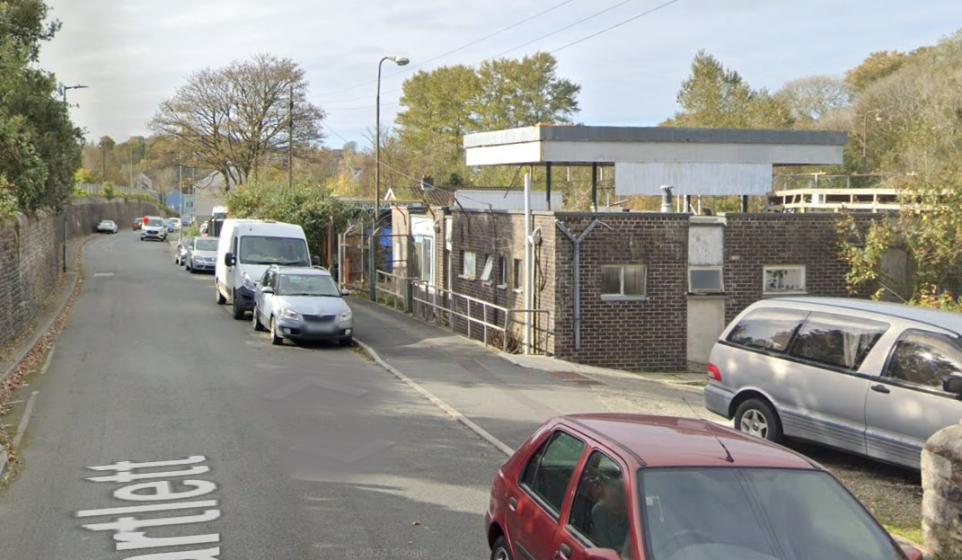
A CALL for the retrospective conversion of office space previously connected to a Pembrokeshire car hire business to a chocolate factory, a beauty salon and a laundrette has been refused by county planners.
In an application to Pembrokeshire County Council, Mr M Williams, through agent Preseli Planning Ltd, sought retrospective permission for the subdivision of an office on land off Scotchwell Cottage, Cartlett, Haverfordwest into three units forming a chocolate manufacturing, a beauty salon, and a launderette, along with associated works.
A supporting statement said planning history at the site saw a 2018 application for the refurbishment of an existing office building and a change of use from oil depot offices to a hire car office and car/van storage yard, approved back in 2019.
For the chocolate manufacturing by ‘Pembrokeshire Chocolate Company,’ as part of the latest scheme it said: “The operation comprises of manufacturing of handmade bespoke flavoured chocolate bars. Historically there was an element of counter sales but this has now ceased. The business sales comprise of online orders and the delivery of produce to local stockist. There are no counter sales from the premises.”
It said the beauty salon “offers treatments, nail services and hairdressing,” operating “on an appointment only basis, with the hairdresser element also offering a mobile service”. It said the third unit of the building functions as a commercial laundrette and ironing services known as ‘West Coast Laundry,’ which “predominantly provides services to holiday cottages, hotels and care homes”.
The statement added: “Beyond the unchanged access the site has parking provision for at least 12 vehicles and a turning area. The building now forms three units which employ two persons per unit. The 12 parking spaces, therefore, provide sufficient provision for staff.
“In terms of visiting members of the public the beauty salon operates on an appointment only basis and based on its small scale can only accommodate two customers at any one time. Therefore, ample parking provision exists to visitors.
“With regard to the chocolate manufacturing and commercial laundrette service these enterprises do not attract visitors but do attract the dropping off laundry and delivery of associated inputs. Drop off and collections associated with the laundry services tend to fall in line with holiday accommodation changeover days, for example Tuesday drop off and collections on the Thursday.
“With regard to the chocolate manufacturing ingredients are delivered by couriers and movements associated with this is also estimated at 10 vehicular movements per week.”

The application was refused on the grounds it represents an unjustified out of centre use with regard to the salon and nail bar, “insufficient information has been provided to justify the loss of B1 employment floorspace,” and “the introduction of a hairdressing salon and nail bar, uses typically found within established shopping centres, into this out of centre location would undermine the strategic role, vitality, and viability of Haverfordwest town centre”.



Health3 hours ago
GP crisis driving NHS pressure in Wales, Senedd report warns
Falling GP numbers and funding gaps blamed for worsening hospital delays THE NHS crisis highlighted earlier this week is being...


News20 hours ago
Reform reveals west Wales candidates for Senedd battle
Monkton councillor tops Pembrokeshire list as party confirms Carmarthenshire names and includes Haverfordwest councillor in unwinnable Swansea spot REFORM UK...


Health1 day ago
Clash over Withybush Hospital services as Paul Davies challenges First Minister
A HEATED exchange in the Senedd has laid bare growing tensions over the future of hospital services in west Wales....


Crime2 days ago
Police stop car in Pennar as three arrested in drugs investigation
Suspected drug driver report leads to major police response and multiple arrests DRAMATIC scenes were reported in Pennar on Monday...


Business2 days ago
New pilot vessel Llanion arrives at Milford Haven
State-of-the-art 22-metre craft marks reset after £3.6m pilot boat controversy THE PORT OF MILFORD HAVEN has taken delivery of a...


Community2 days ago
Sycamore Gap legacy tree to take root in Pembrokeshire landscapes
A SAPLING grown from the famous Sycamore Gap tree is set to become part of Wales’ protected landscapes — with...


Business3 days ago
Could Primark be coming to Haverfordwest? Major retailer in talks for former Wilko site
Council confirms advanced discussions as speculation grows over high street boost HAVERFORDWEST could soon see a major high street revival,...


Business3 days ago
Rail investment ‘could unlock 40,000 jobs and £11bn for Wales’ says new report
RAILWAY stations across Wales could help unlock around 40,000 jobs and more than £11 billion for the economy by 2036,...


Local Government3 days ago
Milford Haven set for £200m investment with schools, leisure centre and rail upgrade
Council outlines major plans for town with backing from Welsh Government MILFORD HAVEN is set for a major transformation with...


Community4 days ago
Broad Haven volunteers secure ‘national asset’ status for nature reserve
A SMALL stretch of woodland and former opencast coal mine has been transformed into a nationally recognised biodiversity site, in...
-

 Crime6 days ago
Pembroke man remanded in custody over knife threat, assault and damage allegations
-

 Crime6 days ago
Broad Haven man remanded in custody over sexual harm prevention order breach
-

 News7 days ago
Council unveils plans for new state-of-the-art secondary school in Milford Haven
-

 Farming7 days ago
£3 million secured to continue Welsh sheep genetics programme
-

 Education7 days ago
Milford Haven school plans unveiled but funding not yet secured
-

 Crime6 days ago
Publican jailed for six years for supplying cocaine and cannabis
-

 Community7 days ago
Former Neyland police officer Louis Knight dies aged 83
-

 Cymraeg7 days ago
National Eisteddfod unveils legacy framework to boost Welsh language and communities