


Politics
King Charles III addresses Senedd to mark 25th anniversary of Welsh devolution


KING CHARLES III addressed the Welsh Parliament on a visit to celebrate 25 years since the then-National Assembly for Wales was established in 1999.
His Majesty said: “I’m so delighted to join you today as we mark this significant milestone in our history – the 25th anniversary of Welsh devolution.
“It is a milestone on a journey which it has been my privilege, all my life, to share with you during times that have seen great change, profound sorrow and tremendous achievement.
“Through it all my respect and affection for the people of this ancient land have deepened with every passing year.”
Speaking in Welsh, which he learned at Aberystwyth University ahead of his investiture as Prince of Wales, he said: “It is a privilege to share your love for this very special nation.”


The King said it has given him great pleasure to see the bond continue, with the Prince returning to Ynys Mon this week – “a place which I know means so much to him”.
He told the debating chamber or Siambr: “It is with countless special memories and particular pride that I join you as we reflect on the past quarter century of the history we have shared, which you in your work in this Senedd have the great responsibility of making.
“In 1999, when the National Assembly was established, we could not know what lay ahead but we trusted that the common desire for the welfare of the people of Wales would be the surest guide for those who would create, shape and develop this new national institution.
“Looking back … I hope you can feel a real sense of pride in the respect that has been earned and in the contribution that has been made to the lives of so many.
“Welsh minds have indeed been directed to Welsh matters and the distinct voice of Wales is heard with clarity and purpose.
“We look back at the journey so far and we look forward to the journey yet to come.”
Looking to the Plaid Cymru benches in the Siambr, the Kind said: “Now, of course, a parliament would not be worthy of the name were there not differences of opinion.

“But it is a tribute to that spirit of community – so evident to all who love Wales, as we do – that this has been managed with an inclusivity the very shape of this chamber symbolises.”
His Majesty described Wales as a “unique mosaic of places, landscapes and cultures”.
Turning back to Welsh, he said: “It is wonderful to see that the Senedd uses the Welsh language so often – not just as a symbolic act but as its foundation.
“The greatest honour is its use.”
The 25th anniversary coincides with the passing of a law which will see the Senedd expanded from 60 to 96 members elected under a new voting system from 2026.
King Charles said the Senedd has become more than a symbol over the past 25 years: “It has become essential to the life of Wales.
“And as we look back … I offer you heartfelt congratulations on all you have achieved.
“We now look forward to the tasks that we face in the next quarter century – not least the challenge we all share as inhabitants of this threatened planet.
“A challenge which I know you are seeking to meet with energy and determination.
“A great milestone has been reached: there are many more ahead: but you do not travel alone. The strength, resilience and aspiration of the Welsh people will help to sustain you.
“You take with you the goodwill and support of all who have the interests of Wales at heart – they will be equal to any task.
“With those interests in mind, I pray that in the years to come you will achieve even more – overcome even more challenges and find even more causes for celebration.

Elin Jones, the Senedd’s speaker or Llywydd, is one of a few remaining members of “class of ‘99” who have served for the full 25 years since the then-National Assembly was set up.
Ms Jones said: “We’d come to build Wales and change the world but, as with life, we were soon deflated by the mundane and sometimes bizarre – nothing more so than our annual scrutiny of the potatoes originating in Egypt regulations.
“Those early years demonstrated the inadequacy of our powers and the aspiration to do more. The people of Wales in 2011, by referendum, supported granting primary law-making powers to the Senedd.
“And we have been pioneering and ambitious in the use of those powers…. we’ve been innovative in how we do our politics, with coalitions, co-operation and joint working.”
The speaker quoted Steffan Lewis – her Plaid Cymru colleague who died in 2019 – who urged Senedd members to “always say what you believe and believe what you say”.
In closing, Ms Jones said. “The class of ’99 and the class of today will come and go.
“In our time of service we are merely custodians, as this Senedd is in the permanent and precious ownership of the people of Wales.”
Vaughan Gething told the Senedd 1999 feels like a lifetime ago and he was still a student about to graduate from Aberystwyth University.
Wales’ first minister said: “While I was sitting my final exams, another former student of that great Welsh university – another former resident of Pantycelyn hall of residence – was addressing the first National Assembly.
“Your majesty told members: in the Assembly the voice of Wales will have its authentic and vigorous expression, in ways not possible before Welsh minds will be directed to Welsh matters. Indeed, this was the very aim of devolution then as it is now.”
Mr Gething said devolution has evolved into an established part of the constitutional fabric of the UK over the past quarter of a century.
The first minister said Queen Elizabeth told the Senedd in 2003 that it is vital to the health – both of the UK and Wales – that democratic institutions flourish and adapt.
“And adapt we have,” said Mr Gething, pointing to the move to law-making powers and the introduction of the first Welsh taxes in 800 years as examples.
Looking to the future, he said: “Yma o hyd [still here] is not enough. Beth nesa and what is next must always be our mission.”
Europe’s first black leader told the Siambr part of the challenge is to ensure institutions reflect and represent all the communities of Wales.
He said: “As a black person and leader of my country, I know the responsibility I have to open doors for people who look like me to have the same opportunity to serve.”
In closing, the former lawyer said: “As we move to the next chapter in the history of devolution, I hope those of us here today will continue … to discharge our responsibility to improve the lives that it is our privilege to serve.
Andrew RT Davies, leader of Conservative opposition, said the Senedd has grown into a mature and developed parliament that the people of Wales are proud of.
Mr Davies told the chamber: “Ultimately, this institution over the past 25 years, has endeared itself to the fabric and make-up of Wales.”
He said: “It is a huge privilege for me to stand here as leader of the Conservative group.
“25 years ago I was milking cows – 27 years ago when the referendum took place, I did not vote for the establishment of this place because I was not interested in politics at that time.
“But I fully agree that this institution, this parliament is now where the beating heart of Welsh democracy lies … let’s develop a democracy here in Wales we can all be proud of.”
Rhun ap Iorwerth echoed the King’s words on the opening of the National Assembly in 1999: “This body is the modern expression of the spirit of Wales which has flourished through the centuries like a grand and sturdy tree.”
The Plaid Cymru leader, who was a political journalist at the time, described the the spirit of hope and sense of confidence in 1999 as electrifying
Mr ap Iorwerth said: “We must always sow new ideas and harvest change that makes a positive difference and genuine difference to the lives of our citizens.”
“In two years’ time this will become an even stronger, fairer parliament – more representative and more able to meet our citizens’ aspirations for the future.
“As we look ahead to the next 25 years and beyond, I hope we can all resolve to pursue those aspirations and continue to nurture our Senedd – our democracy – in a way that is truly worthy of the people of Wales.”






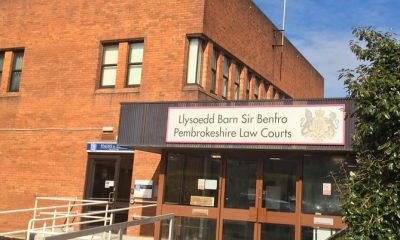



FOLLOWING a recent Church in Wales legal threat against Pembrokeshire’s council over plans to remove church status from Cilgerran’s school, Wales Humanists has supported the council plans.
The Humanist support comes after the Church in Wales issued a formal notice that it will take legal action against Pembrokeshire County Council if it presses ahead with plans to remove church status from Cilgerran Voluntary Controlled Primary School.
Back in May, the council voted to remove the Voluntary Controlled status of the Welsh-speaking rural school and to establish it as a 3-11 community school despite 97 per cent of the responses to a consultation about its potential discontinuation opposing it.
That consultation followed a review which “considered the extent of surplus school places in the area, set against a significant decline in the pupil population,” the council has previously said.
Hundreds opposed the proposed changes, with a petition on the council’s own website gaining 391 signatures.
During the consultation, 203 responses were received; 97 per cent (197 responses) against the proposal, with just 1.5 per cent (three) in favour.
Following this, a letter was sent to council officers on behalf of the Diocese of St Davids and the Church in Wales saying that, if the council persists with this course, the Church will take legal action on the grounds of claims of “public misrepresentation and unqualified legal assertions made by Pembrokeshire County Council officers,” and “discrimination against faith schooling”.
The letter also says that, if the council removes VC status from the school, the Church will not make the site available for a successor school, which it says will render “the case on which the proposed removal of VC status is based untenable”.
The legal warning described “the gratuitous attack on the church status of Ysgol Cilgerran” as amounting to “a targeted assault on the inclusive Christian education which Church in Wales schools have provided to their communities for generations”.
Since then, Wales Humanists has welcomed the move, which would remove church status from Cilgerran Voluntary Controlled Primary School, and has written to Pembrokeshire County Council expressing its support for the proposal “on behalf of the area’s substantial non-religious community”.
It says, according to the 2021 Census, almost half of people in Pembrokeshire identified as having no religion.
Kathy Riddick, Campaigns and Policy Manager for Wales Humanists, said: “Schools should exist to serve their whole community. Where publicly funded schools no longer reflect the beliefs of the communities they serve, it is entirely appropriate for local authorities to consider whether they should continue to have a religious character.

“The question is whether publicly funded schools should continue to be legally designated as belonging to one particular religion when they serve increasingly diverse communities.
“We believe education should be equally welcoming to every child, regardless of their religion or belief, and call on local authorities across Wales to keep the religious character of maintained schools under review so that school organisation reflects local demographics and the needs of modern communities.”
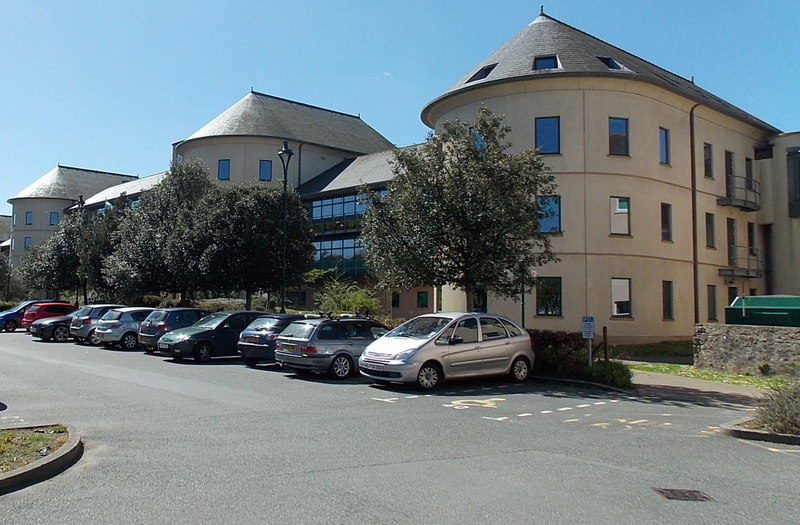
PLANS to upgrade a Pembrokeshire early learning centre so it will comply with fire safety regulations have been given the go-ahead.
In an application to Pembrokeshire County Council, the council, through agent Harries Planning Design Management, sought permission for external and internal improvements for fire safety at Neyland Early Learning Centre, Clements Road, Neyland.
A supporting statement accompanying the application said: “Externally, the building comprises a curtain wall of single glazed windows and doors. These are in a poor state of repair, with some doors no longer opening easily.
“Further to this, the existing fire escape arrangements are unlevel and do not comply with building regulations at present. Therefore, to improve the existing arrangements of the building and to future proof it for continued use, this proposal seeks to replace the existing curtain glazing with like for like double glazed units.
“These will contain outward opening fire escape doors in the same positions as the existing doors. The double glazing will thermally improve the building, and the exits will serve as appropriate means of escape. Further to this, the external path is proposed to be regraded to provide a level threshold for disabled access.
“Overall, this application seeks minor like for like external alterations and necessary upgrades to meet building regulations and comply with both fire safety and means of access requirements.
“The proposal does not seek to introduce a new use or alterations that would impact upon neighbouring and local amenity. To enhance biodiversity on the site a sparrow terrace and rainwater garden is proposed.”
An officer report recommending approval said no response had been received from Neyland Town Council, and no third-party representations about the scheme had been received, concluding: “It is considered that the application would comply with policies of the Pembrokeshire Local Development Plan and that planning permission shall be granted.”
The application was conditionally approved by officers under delegated powers.

Former Greater Manchester mayor promises radical devolution agenda after sweeping Makerfield victory
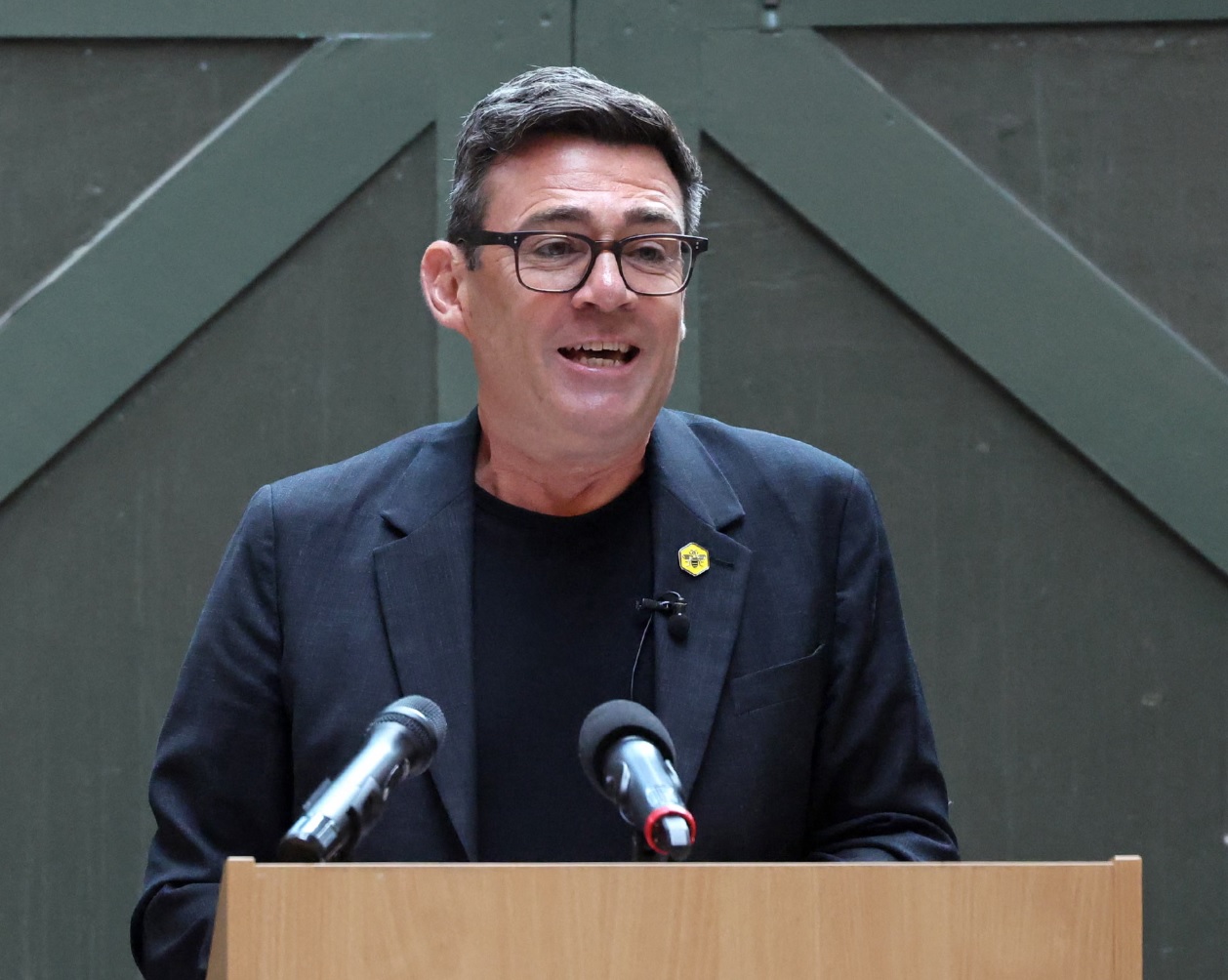
ANDY BURNHAM has used his first major policy speech since returning to Westminster to set out a blueprint for government, promising the biggest transfer of power away from Whitehall in modern times and unveiling plans for a new “No 10 North” in Manchester.
Speaking at the People’s History Museum on Monday, Burnham presented himself as the politician capable of breaking what he described as Britain’s cycle of economic stagnation, political division and over-centralised government.
The speech is widely being seen as his opening pitch to the country ahead of his expected move into Downing Street next month.
Burnham enters the contest from a position of strength after winning the Makerfield by-election earlier this month with a landslide majority. The result marked his return to Parliament and cleared the way for his challenge to succeed Keir Starmer.
At the heart of the speech was a promise to deliver “good growth in every postcode”, with Burnham arguing that Britain can no longer rely on decisions being made almost exclusively in London.
He said the UK remained one of the most centralised countries in the developed world and claimed the current system was failing the north, the south, London and the wider regions alike.
“The whole country suffers when the regions and nations are not meeting their potential,” he said.
Burnham argued that economic growth should be driven from communities and regions rather than directed from Whitehall, promising what he called “the biggest rebalancing of power our country has seen”.
The headline announcement was the creation of a permanent northern operation for the Prime Minister’s Office.
Burnham said a new No 10 North would be based in Manchester, but insisted it would not simply move power from London to one city.
“The job of No 10 North will be to make power flow into the Midlands, into the South West, into the East of England and yes, into London,” he said.
Burnham used the speech to outline what he calls “Manchesterism” — an approach shaped by his years running Greater Manchester.

The model combines sound public finances, local leadership, infrastructure investment, housing, universities, business, public services and trade unions working together to drive growth.
He said his time in Greater Manchester had shown that a different style of politics was possible, based on “place first, not party first” and “problem solving, not point scoring”.
Burnham also attacked Westminster culture, saying Parliament had become increasingly fragmented and disconnected from the communities MPs represent.
He promised a more collaborative style of government and said MPs should be allowed to be “authentic representatives” rather than being controlled by fear of the whipping system.
He also said local government had been left “threadbare”, with councils struggling to meet basic responsibilities while national government had grown larger since the pandemic.
The speech was quickly attacked by Conservative leader Kemi Badenoch, who dismissed Burnham’s proposals as “more public control, more regulation, more taxes”. Reform UK figures also criticised him for not taking questions from journalists after the speech.
For Wales, the speech will be watched closely because of its focus on devolution, regional growth and shifting power away from Westminster.
His argument that decisions should be taken closer to communities is likely to resonate with ongoing debates about transport, healthcare, economic investment and local government powers in Wales.
With Labour’s leadership transition expected to conclude within weeks, Burnham’s Manchester speech offered the clearest indication yet of how he intends to govern: less power concentrated in Whitehall, more influence for regions and nations, and a long-term focus on rebuilding local economies and living standards.



Crime5 hours ago
Judge calls pensioner a ‘dirty old man’ as he avoids jail for exposing himself to women
Judge says 75-year-old Stewart Laugharne behaved ‘disgracefully’ as he avoids jail but is ordered to sign sex offenders register A...

Health5 hours ago
Stroke services consultation reaches halfway point as public urged to have say
HYWEL DDA University Health Board is urging people to take part in its consultation on the future of stroke services,...


Business6 hours ago
Welsh firms eye share of £5bn defence drone boom
WELSH defence and aerospace firms could be in line for a share of billions of pounds in new military spending...

Community2 days ago
Thousands line Cardigan streets for Lord Rhys homecoming parade
THOUSANDS of people lined the streets and quayside in Cardigan on Saturday as the town marked 850 years since Lord...


Crime3 days ago
Dyfed-Powys Police rated only ‘Adequate’ in organised crime inspection
A WATCHDOG has rated Dyfed-Powys Police only “Adequate” in its response to serious and organised crime, despite praise for the...


News3 days ago
Two taken to hospital after aircraft ditches in Cardigan Bay
Coastguard helicopter spotted two casualties after light aircraft came down off west Wales coast TWO people were taken to hospital...


Sport4 days ago
Long Course Weekend gets underway in Tenby as thousands head for county
Three days of swimming, cycling and running begin with The Wales Swim at North Beach THOUSANDS of athletes and supporters...


Climate4 days ago
Welsh waters, Westminster profits: Crown Estate row reignited in Wales
PLAID CYMRU has renewed calls for the Crown Estate to be devolved to Wales after figures showed income linked to...

News4 days ago
Reform MS: ‘I felt like shouting get out of the water’
Paul Marr says children playing in streams at Pembrokeshire beaches deserve better protection from pollution risks REFORM UK MS Paul...
Health5 days ago
Senedd backs call to rule out hospital downgrades after heated NHS debate
Reform UK amendment passes as West Wales hospital fears remain central political issue THE SENEDD has backed a call for...
-
 Crime6 days ago
Milford man threatened to smash parents’ windows, court hears
-

 Crime6 days ago
Haverfordwest father stole groceries amid cost-of-living struggle
-

 Crime6 days ago
Woman sentenced over neglect of child at Haverfordwest property
-

 Crime5 days ago
Police appeal after reported rape at Young Farmers rally
-

 Crime6 days ago
Dock woman given mental health treatment order after supermarket thefts
-

 Crime6 days ago
Hakin man stole Tesco goods to fund drink and gambling addictions
-

 Crime6 days ago
Grandmother banned after cocaine drug-drive offence
-
 Crime7 days ago
Government fraud squad hunts down Covid loan scams