


News
Narberth housing development refused after major concerns


A SCHEME for three houses behind a listed Georgian house in a Pembrokeshire town, which had raised the concerns of the local town council and 15 members of the public, has been refused by county planners.
Sarah Voaden, through agent Robert Davies John West Ltd, sought permission for three three-bed houses on land to the rear of Llwynon, 61 St James Street, Narberth.
A supporting statement said: “The detail and content of the proposal has been well considered and pays good regard to physical constraints/opportunities presented by the site, the character of the area, respects the scale, form, height and appearance of the neighbouring buildings and its wider sensitive heritage setting.”
It says it is not practical to provide affordable housing on the site but a financial contribution of £38,156.25 would be appropriate, adding: “There is no objection to this in principle and a Unilateral Agreement and Certificate of Title will be completed during the application process.”
It concludes: “There are utility connections available within the locality and appropriate sustainable drainage arrangements can be incorporated into the scheme. However, it is recognised there is a current issue with the potential impact of new development on phosphate levels in certain rivers which could be addressed by a future upgrading of the local wastewater treatment works. A Grampian-style condition could be imposed by the council.”

Narberth Town Council’s planning committee has objected to the planning application “as they are extremely concerned over the access for ingress and egress of the neighbouring properties, particularly at the entrance to Tabernacle Lane”.
In its objection, the town council adds: “The council believe that this is an unadopted road and that the entrance into the development is insufficient. The town council notes that there is a children’s nursery in the vicinity, which is heavily used, and the additional properties will increase the amount of traffic which could potentially cause a serious incident. The town council fear that the underground infrastructure may not be able to cope with the demand of three extra properties and feel that the plans do not clearly outline the collection of waste sewage which is a major concern in Narberth.
“The town council believe that this development is overcrowding of the area and is not in keeping with the character of the town.”
15 letters of objection were also received, raising concerns including highway safety and the potential impact on the local nursery, drainage issues, noise and pollution, with one letter of support, saying it would be a good use of the land.
An officer report recommending refusal said the financial commitment to an affordable housing contribution had been offered in principle, but added: “Whilst it is considered that the applicant shows a commitment to making the financial contribution the original signed copies have not been provided to date and as such the application is contrary [to policy].”
It also said the application failed to comply with foul and surface water discharge policies.

Charity
Voices at the Castle hailed a huge success as Russell Watson supports Paul Sartori Foundation


A MEMORABLE evening of music, warmth and community spirit filled Pembroke Castle as Voices at the Castle was hailed a huge success.
The event, held on Saturday (Jun 13), brought together local performers, an international star and a strong audience in one of Pembrokeshire’s most iconic settings, all in support of the Paul Sartori Foundation.
Set against the dramatic backdrop of the historic castle, the evening offered an uplifting celebration of live music and charity. Organisers said the relaxed atmosphere, sunny setting and quality of performances helped make it a night to remember.
The event opened with Pembrokeshire Pop Voices, who entertained the audience with an upbeat set including their charity single Love the Bones of You.
They were followed by Pembroke and District Male Voice Choir, who delivered a rousing selection of classic male voice choir favourites, with many in the audience joining in.
The Paul Sartori Community Choir also impressed in one of its first outdoor performances, with a confident and spirited set which included a standout rendition of an ELO classic.
Bella Voce added to the occasion with a varied programme of melodic songs, their harmonies carrying beautifully around the castle walls.
Headline act Russell Watson brought the evening to a powerful close, captivating the crowd with his humour, warmth and remarkable voice.
His set included a mixture of classical and contemporary songs, with the audience joining him for a singalong of Volare before dancing along as the evening built to its finale.
He ended the night with a moving dedication to Paul Sartori staff, performing Someone to Remember Me.
Organisers also praised compere Rod Haynes, whose warmth, humour and natural stage presence helped the event run smoothly and created a welcoming atmosphere for all.
The charity said it remained extremely disappointed that Rock the Ramparts, due to take place on the Friday evening, could not go ahead.

High winds meant it was not possible to safely install the stage roof and associated sound equipment, forcing the cancellation of the event on health and safety grounds.
The charity thanked the bands The Candy Skulls, The Cleddau Kings, Milly and The Bandits, and Saltwater for their understanding, generosity and the time they had put into rehearsing and preparing.
Thanks were also given to the staging and lighting teams, who worked throughout the day in an effort to make the event happen despite the challenging conditions.
Special thanks were extended to staff at Pembroke Castle for their continued support and for providing the setting, as well as Wayne and the team at EPS, Magnum Sound, Bluesky Marquees, Merts Medical, Elite Security, Joshua Bennet and David Halsted for their contributions to food and drink provision.
The charity also thanked Ian Richards for photographing the event on behalf of Paul Sartori.
A spokesperson said Voices at the Castle stood as a testament to what could be achieved through collaboration, dedication and a shared love of live music, adding that organisers hoped the night would live long in the memory of those who attended.
The Paul Sartori Foundation, which operates as Paul Sartori Hospice at Home, provides end-of-life care and support for people with life-limiting illnesses across Pembrokeshire.
The charity says it is keen to dispel the belief that it is only a cancer charity, with almost a third of those it supports having a non-cancer diagnosis.
It operates an open referral system, with referrals coming from patients, family members, friends, district nurses, palliative care specialists and hospital staff.
The foundation was established in memory of Father Paul Sartori, a much-loved local priest who recognised the need for hospice care before his death from cancer at the age of 39.
Photo caption: Jon Williams from Pembroke Castle with Laura Hugman, CEO of the Paul Sartori Foundation, team members and headline act Russell Watson.

MORE people in Wales recognise alcohol as addictive than anywhere else in Britain, new research has found, but health experts are warning that awareness alone may not be enough to prevent harmful drinking habits.
The findings come ahead of the busy summer period, when pubs, beer gardens, festivals, barbecues and outdoor events often lead to increased alcohol consumption.
According to YouGov data, 86% of people in Wales describe alcohol as addictive — the highest figure recorded across Britain and above the national average of 78%.
Only 14% of Welsh respondents said alcohol was either “not very addictive” or “not addictive at all”.
By comparison, London recorded the lowest level of awareness, with 69% of respondents recognising alcohol as addictive.
Health professionals say the results show that while many people understand the risks, regular drinking can still become habitual, particularly during periods of increased socialising.
Official figures suggest adults consume an average of 10.7 litres of pure alcohol per person each year, equivalent to around 21 UK units per week. That is around nine pints of beer or seven large glasses of wine, and is significantly above the recommended maximum of 14 units a week.
Nearly one in five adults are also said to drink at hazardous levels or above, with men more than twice as likely as women to fall into that category.
Dr Karen Faulkner, Associate Medical Director at Panthera Clinic, said alcohol occupied a “unique place” in British culture because it was both legal and socially encouraged.
She said: “What’s particularly interesting is that most people understand alcohol can be addictive, yet many still underestimate how easily regular drinking can become habitual. Dependence often develops gradually and doesn’t always fit the stereotypes people associate with addiction.
“During the summer months, drinking can become even more normalised through holidays, beer gardens, barbecues, festivals and sporting events.
“The challenge isn’t necessarily a lack of awareness about alcohol’s risks. It’s recognising when a socially accepted habit has crossed the line into something that’s beginning to have a negative impact on your health, wellbeing or daily life.”
Dr Faulkner said people wanting to cut back should consider planning alcohol-free days, alternating alcoholic drinks with water or soft drinks, setting limits before social events, and keeping track of their weekly intake.
She also urged people to watch for signs that alcohol may be becoming more important than intended, including finding it difficult to relax, socialise or enjoy an event without drinking.
Panthera Clinic has launched a free online Alcohol Health Calculator to help people assess how their drinking habits may be affecting their health and wellbeing.
Dr Faulkner added that low and no-alcohol alternatives had become more widely available, making it easier for people to reduce their intake while still taking part in social occasions.

Three days of swimming, cycling and running will once again transform Tenby into one of the UK’s biggest endurance sporting festivals
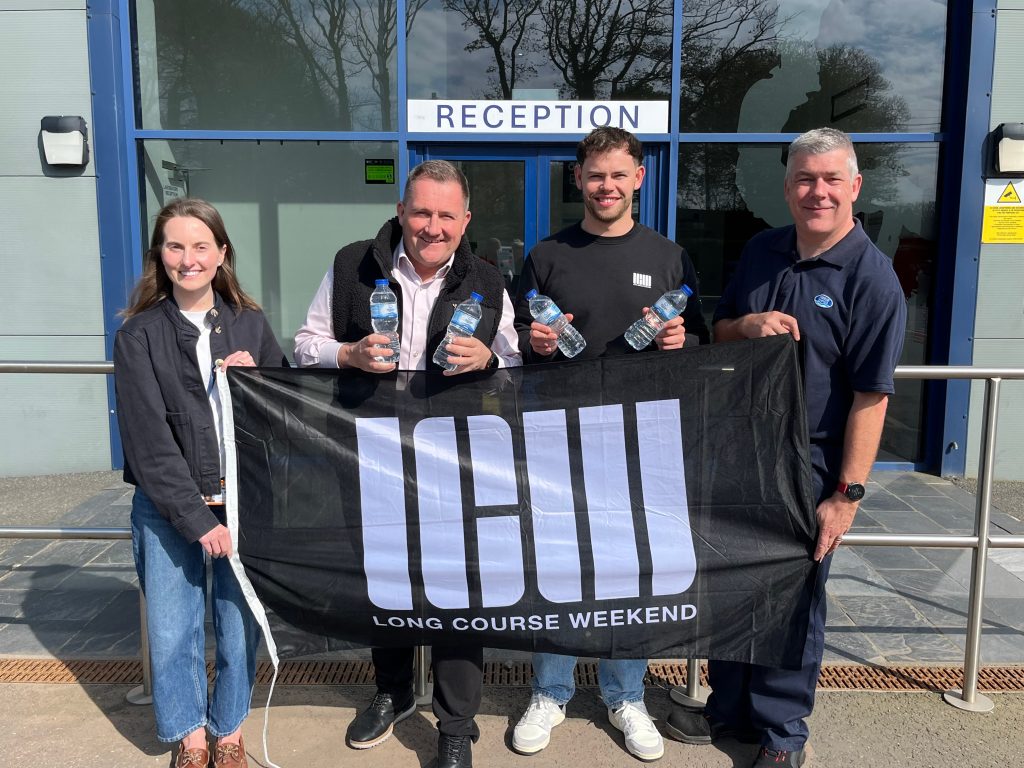
TENBY is preparing to welcome thousands of athletes and spectators from across the UK and around the world as the Long Course Weekend returns to Pembrokeshire from Friday, June 26 to Sunday, June 28.
Now firmly established as one of Europe’s largest participation sporting events, Long Course Weekend Wales combines swimming, cycling and running challenges over three days, attracting everyone from elite athletes to first-time competitors.
Unlike a traditional triathlon, competitors can enter one, two or all three disciplines, choosing distances that suit their ability. Those who complete the full long-course distances across all three days earn the coveted fourth medal, one of the event’s most sought-after prizes.

Three days of endurance
The weekend begins on Friday evening with the Wales Swim off Tenby’s famous North Beach.
Athletes will take to the waters of Carmarthen Bay in a range of distances, including the iconic 2.4-mile swim, while younger participants will have the chance to get involved through the popular LC Kinder event.
Saturday is dedicated to cycling, with thousands of riders expected to tackle the Pembrokeshire countryside during the Wales Sportive. Routes cater for a variety of abilities, from recreational cyclists to seasoned endurance competitors taking on the full long-course challenge.
The weekend reaches its climax on Sunday with a series of running events, including a 5K, 10K, half marathon and full marathon.
The marathon route is regarded as one of the most scenic and demanding road races in Wales, taking runners through some of Pembrokeshire’s most spectacular coastal and rural scenery before the final run back into Tenby and the cheers of thousands of spectators.
A major boost for the local economy
Long Course Weekend has become one of Pembrokeshire’s most important annual events.
Hotels, guest houses, campsites, restaurants, cafés and shops across Tenby, Saundersfoot and the wider county benefit from the influx of visitors, many of whom stay for several nights.
For many businesses, the event provides a welcome boost at the start of the summer season, filling accommodation and generating significant spending across the local economy.
The event has also helped establish Tenby as one of Britain’s leading destinations for endurance sport alongside the annual Ironman Wales competition.

Spectators welcome
One of the defining features of Long Course Weekend is the support provided by local communities.
From the swim start on North Beach to villages along the cycling and running routes, competitors are encouraged by thousands of spectators throughout the weekend.
The finish-line atmosphere in Tenby is widely regarded as one of the highlights of the event, with runners and cyclists greeted by packed crowds as they complete their challenge.
Families, residents and visitors are encouraged to come along and support participants, with viewing areas available throughout the course.

Road closures and travel advice
Residents are being urged to plan journeys carefully throughout the weekend.
Organisers have confirmed that the Wales Sportive cycling event will once again operate without full road closures, although motorists should expect increased numbers of cyclists on roads across south Pembrokeshire and are urged to drive with extra care.
Traffic restrictions and road closures will, however, be in place around Tenby and along parts of the running routes on Sunday.
Drivers should allow extra travel time and check the latest information from organisers before setting out.
Emergency access arrangements will remain in place throughout the weekend and organisers have worked closely with emergency services, local authorities and transport providers to minimise disruption while ensuring participant safety.
What to expect
For three days, Tenby becomes the centre of the endurance sports world.
Visitors can expect a festival atmosphere throughout the town, with athletes arriving from across Britain and overseas, cafés and restaurants bustling with activity, and competitors of all ages taking on personal challenges.
Some will be chasing podium places. Others will simply be aiming to cross the finish line.
Whatever their goal, Long Course Weekend continues to showcase Pembrokeshire at its best, combining world-class sporting competition with some of the finest scenery in Wales.
As thousands gather once again on the county’s coastline this weekend, organisers are promising another unforgettable celebration of endurance, determination and community spirit.
Long Course Weekend 2026 at a glance
Friday, June 26
- Wales Swim
- LC Kinder children’s events
Saturday, June 27
- Wales Sportive cycling events
Sunday, June 28
- 5K run
- 10K run
- Half marathon
- Full marathon
Location: Tenby and surrounding Pembrokeshire routes
Spectators: Free to attend
Advice: Check road closure information before travelling and allow extra time for journeys throughout the weekend.



Community7 hours ago
The gentle giant behind the tattoos
Pembrokeshire security worker Josh Davies praised for professionalism, kindness and proving first impressions can be wrong JOSH Davies is hard...


Charity1 day ago
Toy Story fans fill charity toy box at Haverfordwest cinema
Donations pour in for SNAP Specialist Play as families embrace Toy Story 5 launch A TOY STORY-themed charity appeal at...


Community1 day ago
Lord Rhys emerges from the mist in St Davids
Giant puppet begins historic journey marking 850 years since the first Eisteddfod MIST swirled around St Davids Cathedral on Friday...


News2 days ago
Tragic tribute paid to Haverfordwest man after A4075 collision
FAMILY REMEMBERS “KIND AND LOVING” CALLUM HANSON THE FAMILY of a 22-year-old man from Haverfordwest who died following a road...


News3 days ago
Motorcyclist, 22, dies in A4075 crash in Pembrokeshire
A 22-year-old woman remains in hospital after two-vehicle collision A MOTORCYCLIST has died following a serious two-vehicle crash on the...


Community3 days ago
Why police will be visiting every home in Pembrokeshire
New operation aims to knock on more than 257,000 doors across Dyfed-Powys over the next three years DYFED-POWYS POLICE has...


Crime4 days ago
Prisons at breaking point: MPs warn Wales is paying the price of a failing system
Frozen healthcare budgets, overcrowded jails, homelessness on release and mounting pressure on staff are undermining rehabilitation across Wales, according to...


News4 days ago
Brexit at 10: How Britain was sold a dream that cost us dearly
A decade after the referendum, the promised benefits remain hard to find while the economic costs are increasingly difficult to...


Crime4 days ago
Worcestershire man jailed after violent attack on woman in Tenby
Defendant was already serving a suspended sentence when serious assault took place A WORCESTERSHIRE man has been jailed for more...


Climate4 days ago
Offshore wind ‘could bring new generation of jobs to Milford Haven’
Pembrokeshire ports and Celtic Sea projects placed at centre of Wales’ green energy ambitions MILFORD HAVEN and Pembroke Dock could...
-

 Crime4 days ago
Milford Haven man jailed for breaching domestic violence protection order
-

 Local Government5 days ago
Security privately arranged by Mayor at Beating of the Bounds
-

 News3 days ago
Crash on Freeman’s Way causes school-run chaos across Haverfordwest
-

 Crime5 days ago
Man wanted by court after failing to attend hearing over alleged shop thefts
-
 Crime5 days ago
Man banned from roads after drink-driving offence
-

 Crime5 days ago
Man jailed after admitting strangulation and assaults
-

 Crime5 days ago
Drug trafficker must repay £33,000 after court rules he made nearly £500,000
-

 Crime5 days ago
Man sentenced over stalking campaign and lock knife offence