


Health
‘Serious concerns’ at Welsh mortuary after body mix-ups


ASSESSORS found “evidence of active ongoing risks and significant areas of concern” at a hospital mortuary, five months after the wrong bodies were released to two bereaved families.
As a result, the UK’s national accreditation service has partially suspended its official recognition of mortuary activities at the Grange University Hospital, in Cwmbran.
Aneurin Bevan University Health Board said it has put in safeguards against any further incidents, and is working with the mortuary staff to “deliver continued improvements”.
The two separate incidents occurred at the hospital in November 2023, triggering an internal investigation, as well as inspections by the Human Tissue Authority (HTA), which licenses the health board’s post mortem procedures.
News of the second incident also prompted an unannounced visit from the UK Accreditation Service (UKAS) in early April.

UKAS is not a regulatory body, but acts as a government-recognised, independent organisation commissioned to “assess against nationally and internationally agreed standards”.
At the Grange, its assessors found “evidence of a lack of standardisation” in the procedures for patient release, five months after the two “serious” incidents.
Deceased patients arriving at the mortuary from the community have different identification tags and paperwork from those who arrive there from the hospital, and there is also “inconsistency” with information added into the mortuary register, they said.
UKAS also raised concerns about a “lack of security measures in place”, including CCTV coverage, and no list of personnel with access to the facility.
In all, UKAS found seven “areas of improvement” and decided to partially suspend its accreditation of the Grange’s mortuary service, subject to review, over what an assessor called “serious concerns on security and safe patient management”.
A spokesman for Aneurin Bevan University Health Board said the two “unprecedented” incidents at the mortuary “were found to have the same root cause”.
He said the health board launched its own investigation, audited the department, and introduced safeguards against repeat incidents – and has to date completed 17 of 19 recommendations made by its own investigators.

Five further corrective actions mandated by licensing agency the HTA had been “met satisfactorily across the health board”, he added.
“It is important to note that UKAS is not a regulatory body, and that UKAS accreditation is not a mandatory requirement, but we voluntarily ask them to review our services to maintain good practice,” the spokesman said.
The health board is now making changes at the mortuary, based on several of the investigations’ findings.
“Enhanced CCTV is being implemented”, said the spokesman, adding that “all our mortuary sites are secure, with swipe card access in place”.
“In addition, all relevant procedures have been updated and staff have been given further training to provide additional assurance,” he said.
“We continue to address all recommendations from the HTA and UKAS, and a transformational team is working alongside our mortuary staff to deliver continued improvements.”
Reporting by Nicholas Thomas, Local Democracy Reporter


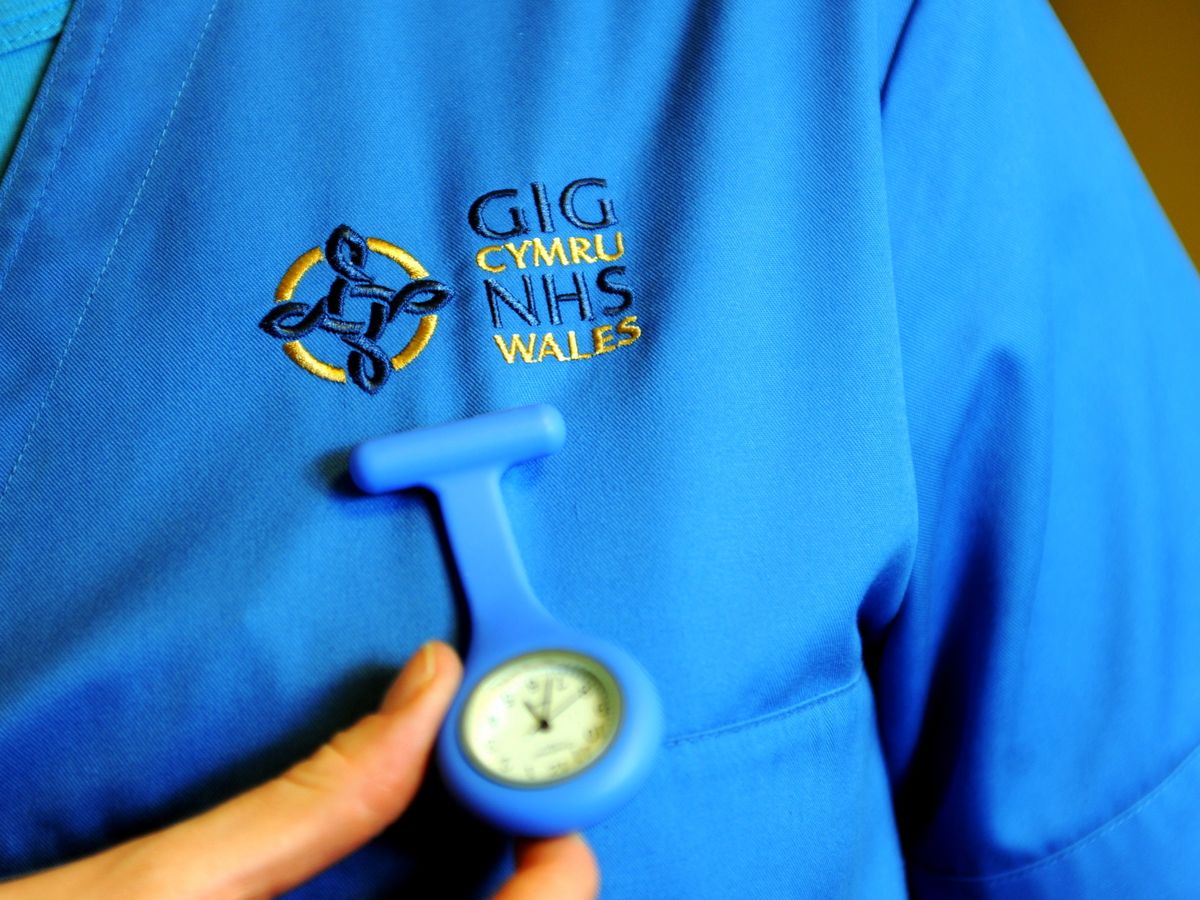
NEW funding of £145 million has been announced for NHS Wales as ministers seek to cut waiting times, improve hospital facilities and increase capacity across the health service.
The package, announced as part of the Welsh Government’s Supplementary Budget for 2026 to 2027, includes money to reduce waiting lists, develop surgical and diagnostic hubs, and carry out essential maintenance across the NHS estate.
Health leaders and nursing representatives have welcomed the investment, but warned that money for buildings, equipment and waiting list initiatives must be backed by a wider plan for staffing, primary care, community services and social care.
The Welsh NHS Confederation said the additional funding was welcome, but called for a “whole-system” approach to health and care.
Its director, Darren Hughes, said: “NHS leaders in Wales welcome this additional funding for the NHS to reduce waiting times and make essential maintenance across the NHS estate.
“We also welcome the Health and Care Minister’s focus on developing a long-term strategy to address waiting times. We agree that a long-term solution is required to build sustainable capacity and drive whole-system improvements.”
Mr Hughes said strengthening primary and community care would be essential, including programmes designed to move more services closer to people’s homes.
He added: “Alongside improvements in primary care, we must also prioritise the social care sector.
“We would also welcome a broader and more balanced approach to how NHS and social care performance is measured and published. Focusing solely on waiting times does not provide a complete picture, and there needs to be more comprehensive data published across the breadth of the NHS and social care services.”
The Royal College of Nursing Wales also welcomed the investment, but warned that new facilities alone would not reduce waiting lists unless there were enough appropriately trained staff to run them.
Nicola Williams, Executive Director of RCN Wales, said investment in surgical and diagnostic hubs and essential maintenance had the potential to reduce delays, improve patient experience and increase NHS capacity.
But she said: “Buildings and equipment alone will not reduce waiting lists.
“Delivering sustainable improvements depends on having the right, appropriately trained and skilled workforce in place, and nurses will play a pivotal role in the provision of safe, effective and efficient care.”
RCN Wales said nursing staff across Wales were reporting rising patient complexity and demand, missed breaks, and difficulty providing the level of care patients need.
The union also raised concerns that newly qualified nurses had faced uncertainty about securing permanent employment, despite continued pressure on services.
Ms Williams said Wales could not afford to lose the talent and commitment of a generation of nursing graduates.
She added that any move towards strengthening primary and community care must be matched by investment in the nursing workforce needed to deliver those services.
The announcement will now raise questions about how much of the funding will reach west Wales, and whether Hywel Dda University Health Board patients will directly benefit from any new surgical or diagnostic hub.
No specific locations for the proposed hubs have yet been confirmed.

NEW NHS funding must be matched by proper workforce planning if it is to cut waiting lists and improve patient care, nursing leaders have warned.
The Royal College of Nursing Wales has responded to a Welsh Government announcement of an additional £145 million investment in NHS Wales.
The package includes £100 million in revenue funding to reduce waiting times, £25 million capital funding for new surgical and diagnostic hubs, and £20 million for essential maintenance across the NHS estate.
The Welsh Government says the investment is intended to increase capacity, speed up diagnosis and help more patients receive planned treatment more quickly.
Up to ten surgical and diagnostic hubs are expected to be developed across Wales over the next four years. These facilities are designed to carry out high-volume planned treatment and tests away from the day-to-day pressure of emergency hospital care.
But RCN Wales said the success of the plan would depend not only on buildings and equipment, but on having enough trained staff to run the services safely.
Nicola Williams, Executive Director of RCN Wales, said: “RCN Wales welcomes this additional investment in NHS Wales and the Welsh Government’s commitment to reducing waiting times and improving patient care and outcomes.
“Investment in surgical and diagnostic hubs, alongside funding for essential maintenance, has the potential to significantly improve our population’s health, reduce delays, improve experiences and increase NHS capacity.
“However, buildings and equipment alone will not reduce waiting lists. Delivering sustainable improvements depends on having the right, appropriately trained and skilled workforce in place, and nurses will play a pivotal role in the provision of safe, effective and efficient care.”
She said robust workforce modelling and planning would be “critically important” if the hubs were to achieve their ambitions.
The announcement comes as RCN Wales joins healthcare leaders, employers and government representatives at a Graduate Summit to discuss employment opportunities for this year’s nursing graduates.
RCN Wales said it welcomed the Welsh Government’s focus on the issue, but warned that newly qualified nurses had faced uncertainty about securing permanent employment despite continuing pressure across NHS services.
Ms Williams said: “Nursing staff are telling us consistently and across Wales that, despite there being no vacancies, there is insufficient staff to meet increasing patient complexity and demand.
“Nurses are going without breaks and feel most shifts that they are unable to give the care that patients need.
“It is therefore deeply concerning that newly qualified nurses have faced uncertainty about securing substantive employment.
“Wales cannot afford to lose the talent, skills and commitment of a generation of nursing graduates that our health and care services desperately need.”
RCN Wales said retaining newly qualified nurses was essential for the future sustainability of NHS and social care services.
The union also welcomed the Welsh Government’s commitment to strengthening primary and community care, but said any shift towards treating people closer to home must be matched by investment in the nursing workforce.
Ms Williams added: “Nurses are central to delivering care closer to home and helping people stay healthier for longer.
“Any shift in resources towards primary care must be matched by investment in the nursing workforce needed to deliver these ambitions.”
The key question for west Wales is whether any of the proposed surgical or diagnostic hubs will be located in the Hywel Dda area, and whether Pembrokeshire patients will see a direct benefit from the new funding.
No specific locations have yet been confirmed.
RCN Wales said it looked forward to working with the Welsh Government and health service partners to ensure the investment delivered lasting improvements for patients and supported the nursing workforce on which those improvements depend.

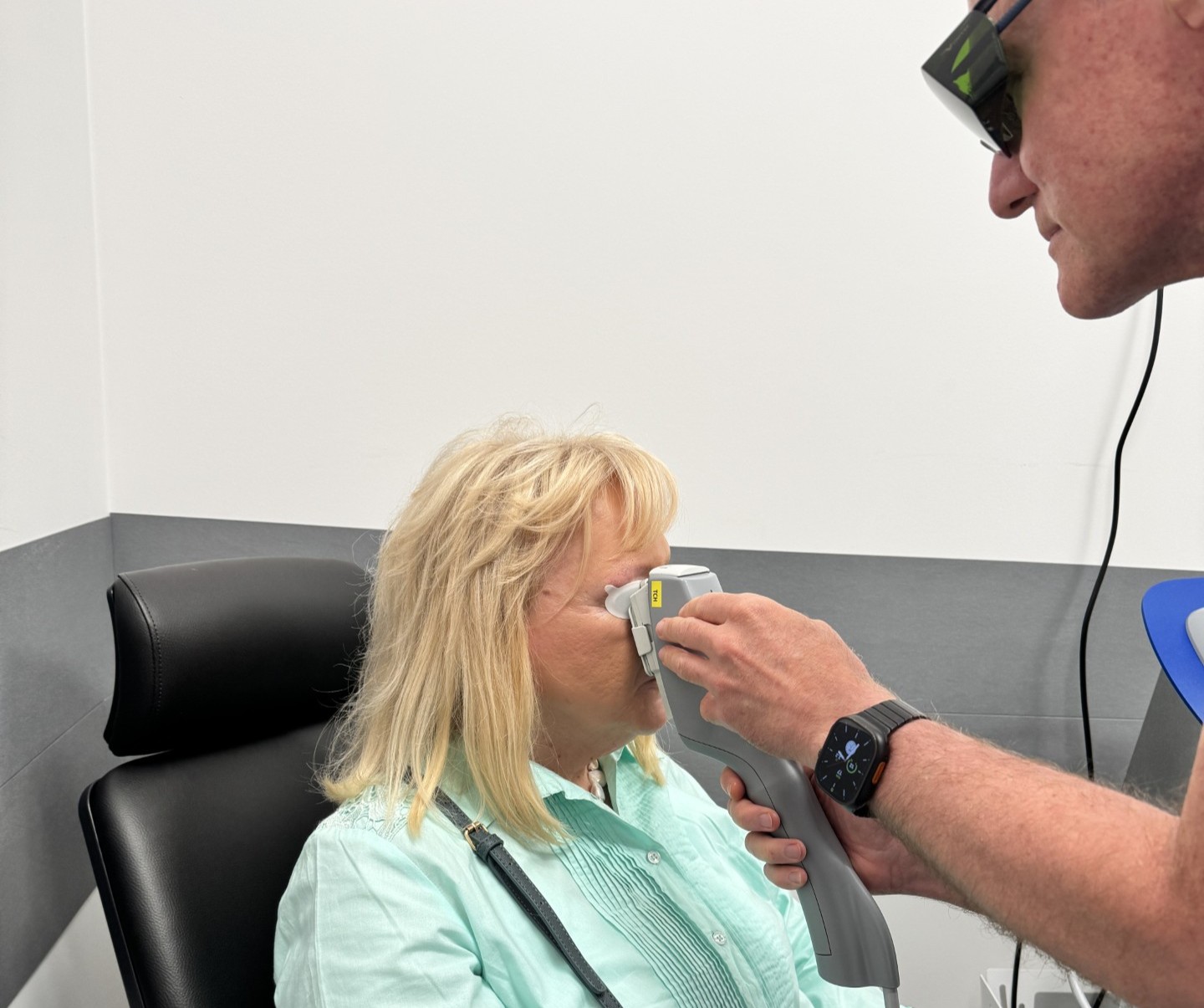
A HAVERFORDWEST opticians has launched a specialist clinic for dry eye disease, offering new support for people living with the common condition.
Specsavers Haverfordwest has introduced its Advanced Dry Eye Clinic to give customers access to in-depth diagnosis and targeted treatment for dry eye.
Dry eye is a common, but often misunderstood, condition where the eyes do not produce enough tears, or the tears evaporate too quickly, leading to discomfort, irritation and sometimes blurred vision.
It can be linked to a range of factors, including increased screen use, contact lens wear, ageing and environmental conditions. As many as one in three people suffer from dry eye and most causes can be treated.
Many people are surprised to learn that watery eyes can actually be a sign of dry eye, as the eyes produce poor-quality reflex tears in response to irritation. The new service provides an in-depth approach to diagnosing and managing the condition.
While many high street opticians now offer dry eye clinics, Specsavers Haverfordwest provides a wider range of specialist treatments and technology that are not commonly available.
Using advanced imaging to assess the eyes and tear glands, the team can identify the underlying cause of symptoms and create a personalised treatment plan for each customer.
Whilst there are a range of different treatments available, the major investment has been in the introduction of eye-light devices, bringing advanced IPL (Intense Pulsed Light) and LLLT (Low-Level Light Therapy) treatments to customers suffering from dry eye symptoms.
Designed to target the underlying causes of dry eye disease, the eye-light device combines clinically proven light-based therapies to help improve tear quality, reduce inflammation, and restore eye comfort. The treatment is safe, non-invasive, and suitable for many patients experiencing irritation, burning, watery eyes or discomfort linked to screen use and modern lifestyles.
The clinic also supports contact lens wearers experiencing discomfort, helping them return to comfortable, everyday use.
Some of the first customers to use the clinic have already noticed improvements in their symptoms.
Danielle Thomas says: ‘I honestly can’t believe the difference. I’d been struggling with sore, gritty eyes for years and had given up wearing my contact lenses altogether – they just became too uncomfortable. I was constantly using drops with very little relief.

‘From the moment I walked into the dry eye treatment room, it felt completely different to a normal appointment. The environment is calm, almost spa-like and the whole experience was surprisingly relaxing. The treatments were comfortable and the team explained everything so clearly. After just three sessions the improvement was notable – my eyes feel normal again.
‘The constant irritation and watering have gone and I’m now back in contact lenses comfortably, which I never thought would be possible. It’s genuinely been life changing. I wish I’d known about it sooner.’
Wayne Jones, optometrist and retail director at Specsavers Haverfordwest, adds: ‘Dry eye is something we see very frequently, yet it’s still widely dismissed as a minor irritation. In reality, it can have a real impact on comfort, vision and overall quality of life.
‘What many people don’t realise is that, in many cases, there is an underlying cause that can be identified and treated.
‘By launching this clinic, we’re able to offer a much more detailed and personalised level of care here in West Wales, helping us support more customers locally. We would encourage anyone experiencing persistent symptoms such as dryness, irritation or blurred vision to have their eyes checked, as there’s often a treatable cause.’
People interested in using the clinic should call Specsavers Haverfordwest on 01437 767788 to book an initial assessment and discuss treatment options.



News2 hours ago
Motorcyclist, 22, dies in A4075 crash
A 22-year-old woman remains in hospital after two-vehicle collision A MOTORCYCLIST has died following a serious two-vehicle crash on the...


Community3 hours ago
Why police will be visiting every home in Pembrokeshire
New operation aims to knock on more than 257,000 doors across Dyfed-Powys over the next three years DYFED-POWYS POLICE has...


Crime5 hours ago
Prisons at breaking point: MPs warn Wales is paying the price of a failing system
Frozen healthcare budgets, overcrowded jails, homelessness on release and mounting pressure on staff are undermining rehabilitation across Wales, according to...


News19 hours ago
Brexit at 10: How Britain was sold a dream that cost us dearly
A decade after the referendum, the promised benefits remain hard to find while the economic costs are increasingly difficult to...


Crime21 hours ago
Worcestershire man jailed after violent attack on woman in Tenby
Defendant was already serving a suspended sentence when serious assault took place A WORCESTERSHIRE man has been jailed for more...


Climate23 hours ago
Offshore wind ‘could bring new generation of jobs to Milford Haven’
Pembrokeshire ports and Celtic Sea projects placed at centre of Wales’ green energy ambitions MILFORD HAVEN and Pembroke Dock could...

Community2 days ago
Police officer hailed hero after midnight sea rescue in Milford Haven
PC swam 100 metres offshore to save distressed woman heard calling for help in darkness A DYFED-POWYS POLICE officer has...


Local Government2 days ago
Security privately arranged by Mayor at Beating of the Bounds
HAVERFORDWEST TOWN COUNCIL has confirmed that security personnel seen at this year’s Beating of the Bounds were privately arranged and...


Business3 days ago
Celtic Freeport five-year plan puts Milford Haven at centre of green energy future
Strategy promises investment, skilled jobs and new supply chains, but major barriers remain over grid connections, planning and delivery THE...


Education3 days ago
Closure of Ysgol Clydau approved after emotional council debate
COUNCILLORS WARNED RURAL COMMUNITIES WILL REMEMBER DECISION PEMBROKESHIRE councillors have voted to close Ysgol Clydau following an emotional debate over...
-

 Community4 days ago
Pembrokeshire Chess Club crowned Welsh champions
-
Local Government2 days ago
Security privately arranged by Mayor at Beating of the Bounds
-

 Crime7 hours ago
Milford Haven man jailed for breaching domestic violence protection order
-

 Education6 days ago
Diocese threatens legal action as Manorbier school closure battle intensifies
-

 Crime2 days ago
Man wanted by court after failing to attend hearing over alleged shop thefts
-

 Local Government6 days ago
Taxi suspended after county-wide licensing checks
-
 Crime2 days ago
Man banned from roads after drink-driving offence
-

 Crime6 days ago
Currys worker denies stealing £2,500 of store stock