


Education
Pandemic impact on Welsh reading standards still felt, says Estyn


A NEW report by Estyn has highlighted the ongoing negative impact of the COVID-19 pandemic on pupils’ Welsh reading skills, emphasising the importance of promoting reading across the curriculum. The report, published today, explores how Welsh and bilingual schools are developing these crucial skills, revealing significant variations in reading standards among pupils aged 10 to 14.
The report, titled Developing Pupils’ Welsh Reading Skills from 10-14 Years of Age, outlines how the pandemic has affected pupils’ confidence and ability to read and communicate in Welsh. The findings indicate that, despite efforts by schools, many pupils continue to struggle with Welsh reading, and wide disparities remain between primary, secondary, and all-age schools.
Owen Evans, His Majesty’s Chief Inspector of Education and Training in Wales, said: “It is unsurprising that we are still seeing the negative impact of the pandemic on pupils’ Welsh reading skills. However, our new report highlights good practice from schools and offers practical toolkits to help teachers develop pupils’ Welsh reading skills.”
The report identifies Welsh lessons and language sessions, as well as humanities subjects, as key areas where the most effective opportunities to develop reading skills occur. While many primary schools, and a few secondary schools, have successfully promoted reading for pleasure, the overall experiences designed to foster reading outside the classroom have decreased significantly, particularly in secondary schools, since the pandemic.
One of the challenges highlighted in the report is the difficulty of co-ordinating the development of reading skills consistently across different subjects and teachers, especially in secondary schools. This contrasts with primary schools, where a more unified approach is typically easier to implement.

Estyn has called for schools to strengthen opportunities for pupils to develop a broad range of reading skills across the curriculum. The inspectorate recommends that local authorities and the Welsh Government support schools in this endeavour. The report also presents a number of practical recommendations for school leaders, including a suite of toolkits designed to help teaching staff promote and enhance pupils’ reading abilities.
Evans added: “There are clear opportunities to improve how clusters of schools can work together to develop pupils’ reading skills and create more purposeful opportunities to nurture Welsh reading across the curriculum. Improving reading standards is a national priority, and we hope this report will help schools plan strategically to boost pupils’ interest, resilience, and confidence when reading in Welsh.”
Estyn’s report serves as a crucial reminder of the long-lasting effects of the pandemic on education, with a focus on how Welsh reading skills can be improved through a more integrated approach across all subjects. The inspectorate hopes that the report’s findings will spur school leaders, teachers, and policymakers to continue efforts in raising the standard of Welsh reading for pupils across Wales.








SCHOOL leaders have called for greater funding and support for Relationships and Sexuality Education in Wales after a new Estyn report found that provision is helping pupils feel safe and respected, but is not yet consistent across schools.
The report looked at how schools are delivering RSE under the Curriculum for Wales, where it is a statutory part of learning for pupils aged 3 to 16.
RSE is intended to help children and young people understand healthy relationships, personal safety, respect, rights and wellbeing in a way that is appropriate to their age and stage of development.
However, the subject has also been one of the more controversial parts of the new curriculum, with some parents and campaigners raising concerns about transparency, age-appropriateness and the removal of the parental right to withdraw children from lessons.
Supporters argue that high-quality RSE helps pupils recognise healthy and unhealthy behaviour, challenge bullying and harassment, and build respect for others. Schools and unions say the difficulty is not the principle of the subject, but the uneven level of support available to staff expected to deliver it.
Responding to Estyn’s findings, Laura Doel, national secretary of school leaders’ union NAHT Cymru, said the report highlighted both strong practice and areas where improvement was still needed.
She said: “We welcome the spotlight Estyn has shone on RSE in Wales, including both the examples of really positive practice and areas for improvement.
“One of the issues is that many schools are left to develop their own practice and programmes due to a lack of funding and investment in effective professional learning or collaborative work for local clusters of primary and secondary schools.
“At a time when schools are facing unprecedented financial shortfalls, it feels as though areas like this in the school curriculum have not been prioritised, and we urge the new Welsh Government to put this right.”
NAHT Cymru said schools need more investment in training, resources and collaborative working so that pupils receive high-quality RSE regardless of where they live or which school they attend.
The union’s comments come as schools continue to face wider pressures, including budget shortfalls, staff workload, additional learning needs reform and post-pandemic challenges around pupil wellbeing and attendance.
The Welsh Government has previously said RSE must be developmentally appropriate and delivered in line with statutory guidance. It says the aim is to support learners to form and maintain healthy relationships, understand their rights and responsibilities, and stay safe.

Estyn’s findings are likely to increase pressure on ministers to ensure schools are not left to interpret the curriculum alone, particularly in an area where public concern and political debate remain high.
The Herald has approached the Welsh Government for comment.


FOLLOWING a recent Church in Wales legal threat against Pembrokeshire’s council over plans to remove church status from Cilgerran’s school, Wales Humanists has supported the council plans.
The Humanist support comes after the Church in Wales issued a formal notice that it will take legal action against Pembrokeshire County Council if it presses ahead with plans to remove church status from Cilgerran Voluntary Controlled Primary School.
Back in May, the council voted to remove the Voluntary Controlled status of the Welsh-speaking rural school and to establish it as a 3-11 community school despite 97 per cent of the responses to a consultation about its potential discontinuation opposing it.
That consultation followed a review which “considered the extent of surplus school places in the area, set against a significant decline in the pupil population,” the council has previously said.
Hundreds opposed the proposed changes, with a petition on the council’s own website gaining 391 signatures.
During the consultation, 203 responses were received; 97 per cent (197 responses) against the proposal, with just 1.5 per cent (three) in favour.
Following this, a letter was sent to council officers on behalf of the Diocese of St Davids and the Church in Wales saying that, if the council persists with this course, the Church will take legal action on the grounds of claims of “public misrepresentation and unqualified legal assertions made by Pembrokeshire County Council officers,” and “discrimination against faith schooling”.
The letter also says that, if the council removes VC status from the school, the Church will not make the site available for a successor school, which it says will render “the case on which the proposed removal of VC status is based untenable”.
The legal warning described “the gratuitous attack on the church status of Ysgol Cilgerran” as amounting to “a targeted assault on the inclusive Christian education which Church in Wales schools have provided to their communities for generations”.
Since then, Wales Humanists has welcomed the move, which would remove church status from Cilgerran Voluntary Controlled Primary School, and has written to Pembrokeshire County Council expressing its support for the proposal “on behalf of the area’s substantial non-religious community”.
It says, according to the 2021 Census, almost half of people in Pembrokeshire identified as having no religion.
Kathy Riddick, Campaigns and Policy Manager for Wales Humanists, said: “Schools should exist to serve their whole community. Where publicly funded schools no longer reflect the beliefs of the communities they serve, it is entirely appropriate for local authorities to consider whether they should continue to have a religious character.

“The question is whether publicly funded schools should continue to be legally designated as belonging to one particular religion when they serve increasingly diverse communities.
“We believe education should be equally welcoming to every child, regardless of their religion or belief, and call on local authorities across Wales to keep the religious character of maintained schools under review so that school organisation reflects local demographics and the needs of modern communities.”

PLANS to upgrade a Pembrokeshire early learning centre so it will comply with fire safety regulations have been given the go-ahead.
In an application to Pembrokeshire County Council, the council, through agent Harries Planning Design Management, sought permission for external and internal improvements for fire safety at Neyland Early Learning Centre, Clements Road, Neyland.
A supporting statement accompanying the application said: “Externally, the building comprises a curtain wall of single glazed windows and doors. These are in a poor state of repair, with some doors no longer opening easily.
“Further to this, the existing fire escape arrangements are unlevel and do not comply with building regulations at present. Therefore, to improve the existing arrangements of the building and to future proof it for continued use, this proposal seeks to replace the existing curtain glazing with like for like double glazed units.
“These will contain outward opening fire escape doors in the same positions as the existing doors. The double glazing will thermally improve the building, and the exits will serve as appropriate means of escape. Further to this, the external path is proposed to be regraded to provide a level threshold for disabled access.
“Overall, this application seeks minor like for like external alterations and necessary upgrades to meet building regulations and comply with both fire safety and means of access requirements.
“The proposal does not seek to introduce a new use or alterations that would impact upon neighbouring and local amenity. To enhance biodiversity on the site a sparrow terrace and rainwater garden is proposed.”
An officer report recommending approval said no response had been received from Neyland Town Council, and no third-party representations about the scheme had been received, concluding: “It is considered that the application would comply with policies of the Pembrokeshire Local Development Plan and that planning permission shall be granted.”
The application was conditionally approved by officers under delegated powers.



Crime1 hour ago
Judge calls pensioner a ‘dirty old man’ as he avoids jail for exposing himself to women
Judge says 75-year-old Stewart Laugharne behaved ‘disgracefully’ as he avoids jail but is ordered to sign sex offenders register A...
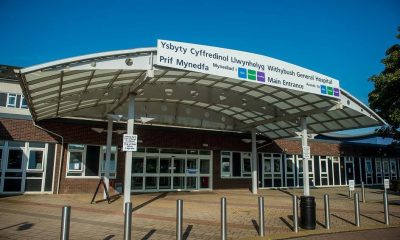

Health2 hours ago
Stroke services consultation reaches halfway point as public urged to have say
HYWEL DDA University Health Board is urging people to take part in its consultation on the future of stroke services,...


Business2 hours ago
Welsh firms eye share of £5bn defence drone boom
WELSH defence and aerospace firms could be in line for a share of billions of pounds in new military spending...


Community2 days ago
Thousands line Cardigan streets for Lord Rhys homecoming parade
THOUSANDS of people lined the streets and quayside in Cardigan on Saturday as the town marked 850 years since Lord...


Crime3 days ago
Dyfed-Powys Police rated only ‘Adequate’ in organised crime inspection
A WATCHDOG has rated Dyfed-Powys Police only “Adequate” in its response to serious and organised crime, despite praise for the...


News3 days ago
Two taken to hospital after aircraft ditches in Cardigan Bay
Coastguard helicopter spotted two casualties after light aircraft came down off west Wales coast TWO people were taken to hospital...


Sport4 days ago
Long Course Weekend gets underway in Tenby as thousands head for county
Three days of swimming, cycling and running begin with The Wales Swim at North Beach THOUSANDS of athletes and supporters...


Climate4 days ago
Welsh waters, Westminster profits: Crown Estate row reignited in Wales
PLAID CYMRU has renewed calls for the Crown Estate to be devolved to Wales after figures showed income linked to...

News4 days ago
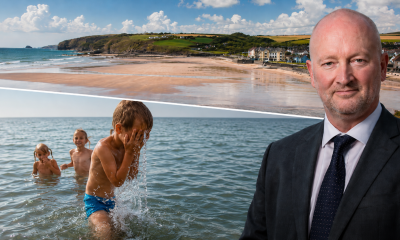
Reform MS: ‘I felt like shouting get out of the water’
Paul Marr says children playing in streams at Pembrokeshire beaches deserve better protection from pollution risks REFORM UK MS Paul...
Health5 days ago
Senedd backs call to rule out hospital downgrades after heated NHS debate
Reform UK amendment passes as West Wales hospital fears remain central political issue THE SENEDD has backed a call for...
-

 Crime6 days ago
Milford man threatened to smash parents’ windows, court hears
-

 Crime6 days ago
Haverfordwest father stole groceries amid cost-of-living struggle
-

 Crime5 days ago
Police appeal after reported rape at Young Farmers rally
-

 Crime6 days ago
Woman sentenced over neglect of child at Haverfordwest property
-

 Crime6 days ago
Dock woman given mental health treatment order after supermarket thefts
-

 Crime6 days ago
Hakin man stole Tesco goods to fund drink and gambling addictions
-

 Crime6 days ago
Grandmother banned after cocaine drug-drive offence
-

 Crime7 days ago
Government fraud squad hunts down Covid loan scams