


Community
Older people ‘left out in the cold’ by UK Budget cuts, says Age UK Cymru


FOLLOWING Wednesday’s Budget, elderly people across Wales are bracing for tougher times as Age UK Cymru warns of severe impacts from the removal of the Winter Fuel Payment for thousands of vulnerable individuals.
The charity expressed strong disappointment with the Chancellor’s announcements, stating the Budget failed to provide adequate support against soaring energy costs, which are already unaffordable for many older people on low incomes.
In a statement, Age UK Cymru cautioned that these cuts could leave numerous elderly individuals unable to afford necessary heating through the winter. A spokesperson for the charity said: “We’re hugely disappointed by the Chancellor’s lack of mitigating measures or financial support for the thousands of older people in Wales who will no longer receive the Winter Fuel Payment.”
The Winter Fuel Payment, a long-standing benefit helping older people manage heating expenses during the coldest months, has been either reduced or removed for many, leaving a significant gap in financial support.
Age UK Cymru is urging both the UK and Welsh governments to broaden eligibility for winter assistance, proposing that benefits recipients, including those on Housing Benefit, Council Tax Support, Attendance Allowance, Personal Independence Payment, and Carer’s Allowance, should qualify for Winter Fuel Payments.

While the charity presses for expanded eligibility, they also recognize that current criteria still risk leaving some of the most vulnerable without help. To address this, Age UK Cymru suggests the UK Government adopt data-matching techniques to more accurately identify and automatically extend Winter Fuel Payments to low-income individuals in need.
Older People’s Commissioner for Wales
Responding to the Budget, Older People’s Commissioner for Wales, Rhian Bowen-Davies, said: “A number of announcements in today’s budget are to be welcomed, including increased investment in public services, and additional funding for the Welsh Government.
“However, it is disappointing that despite using the budget to raise an estimated £40bn, the Chancellor has decided not to reverse her decision to means test the Winter Fuel Payment, and did not announce any specific support to mitigate its impact.
“This decision will result in hundreds of thousands of older people missing out on crucial financial support, and many older people have told me they are hugely worried about the effect this will have on their health and well-being.
“In my view, the Chancellor has missed an opportunity to demonstrate she has listened to the concerns raised by older people and stakeholders, and, more importantly, to take action to ensure people do not miss out on the support they need.”
.


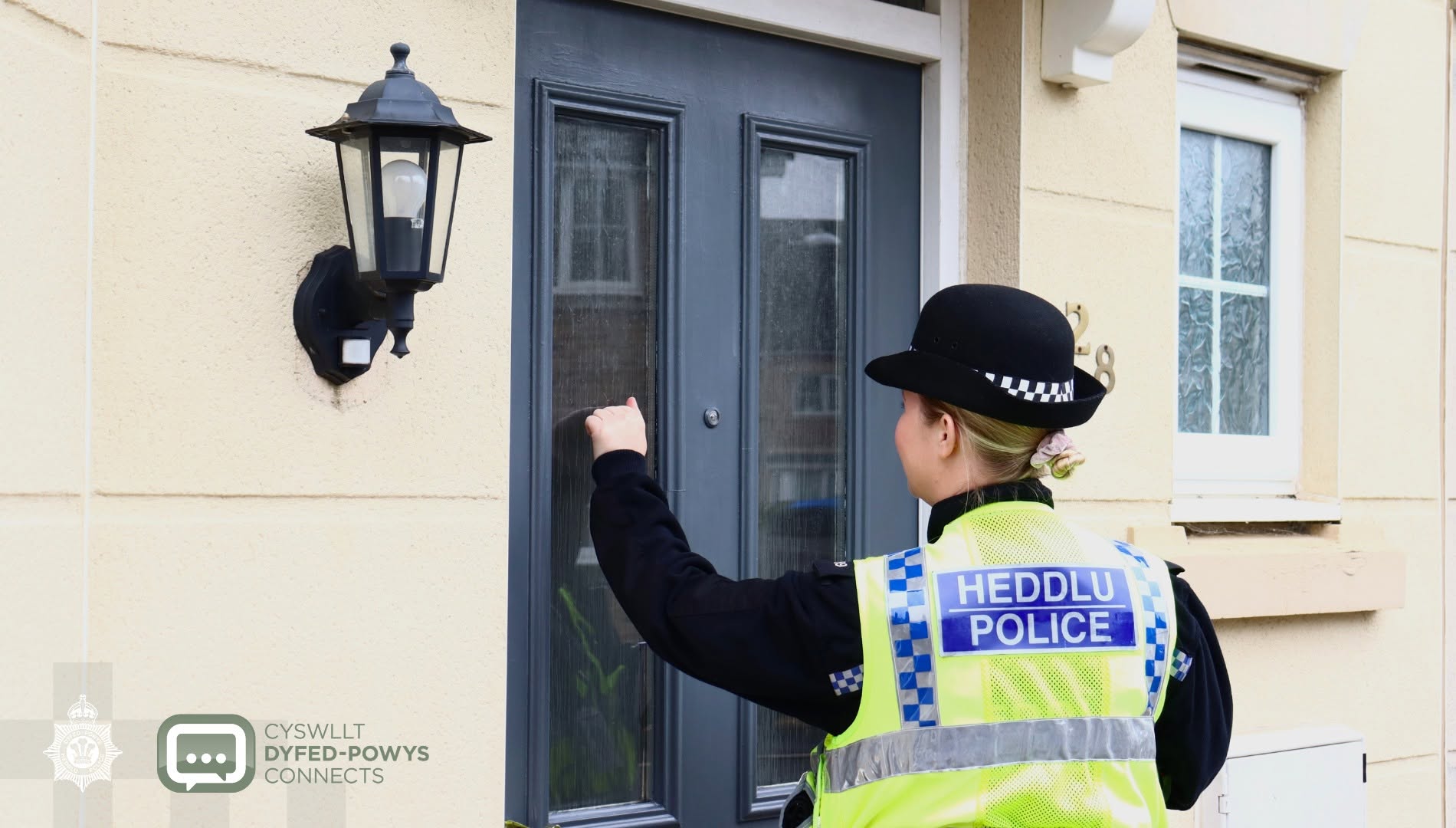
New operation aims to knock on more than 257,000 doors across Dyfed-Powys over the next three years
DYFED-POWYS POLICE has launched a major new community engagement operation aimed at visiting every home across the force area within the next three years.
Operation Connect will see neighbourhood policing and prevention teams proactively call at residential properties across Pembrokeshire, Carmarthenshire, Ceredigion and Powys.
The force says the initiative is designed to increase visibility, improve communication, and give residents a direct opportunity to raise local concerns with officers and PCSOs.
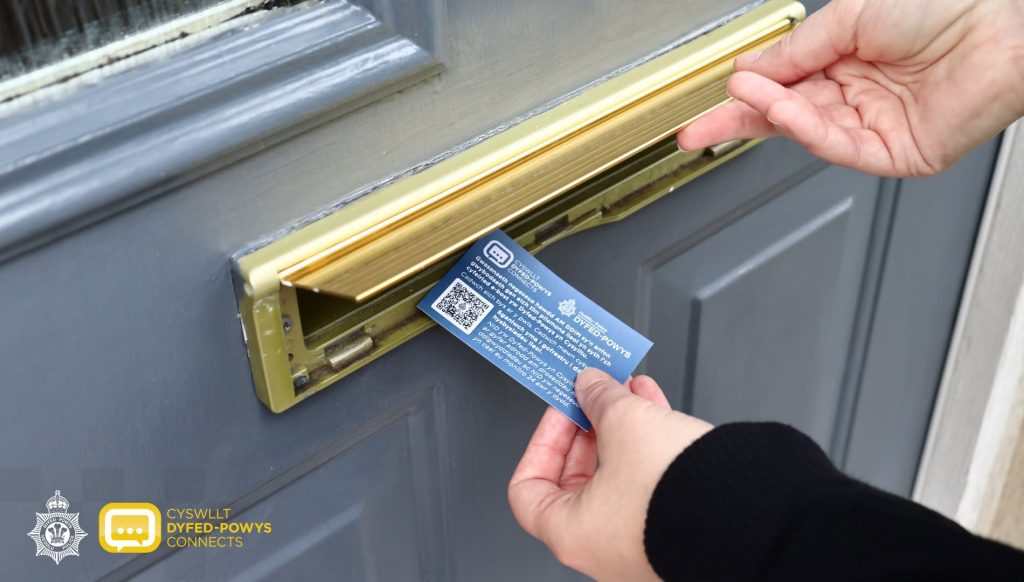
According to Dyfed-Powys Police, there are 257,416 residential properties across the force area currently active on local authority council tax systems. The aim is for officers and staff to knock on every one of those doors over the course of the operation.
The scheme follows the launch of Dyfed-Powys Connects in September 2025, a two-way messaging system intended to improve contact between police and local communities.
Chief Inspector Dominic Jones said: “It is vital that we make every effort to connect with those who live and work in our communities, as our public deserves to know their local police teams and feel a genuine sense of trust and confidence in Dyfed-Powys Police.
“I know how much our neighbourhood policing teams care about their areas, and we are undertaking this work because we truly care about the communities we serve.”
During visits, PCSOs will also help residents complete priority surveys. The force says these will allow local concerns to be recorded and used to shape future policing activity.
Dyfed-Powys Police says the surveys will provide measurable data to help maintain community confidence and support problem-solving with partner agencies.

The force currently has 189 full-time equivalent officers and staff deployed in neighbourhood teams. This includes 131 PCSOs and 58 police constables, made up of 29 existing officers and a further 29 through the Neighbourhood Guarantee uplift.
To cover the whole force area, each officer or staff member would need to visit around 1,362 properties. Dyfed-Powys Police says this would equate to approximately six properties per officer or staff member each day over a 12-month period.
Chief Inspector Jones added: “By reporting back on our progress through ‘You Said, We Did,’ we will continue to build, solve problems, and maintain lasting relationships with the communities we serve.”

The force says Operation Connect will help it build stronger relationships by listening to local issues, addressing concerns through targeted policing, and sharing progress with communities.
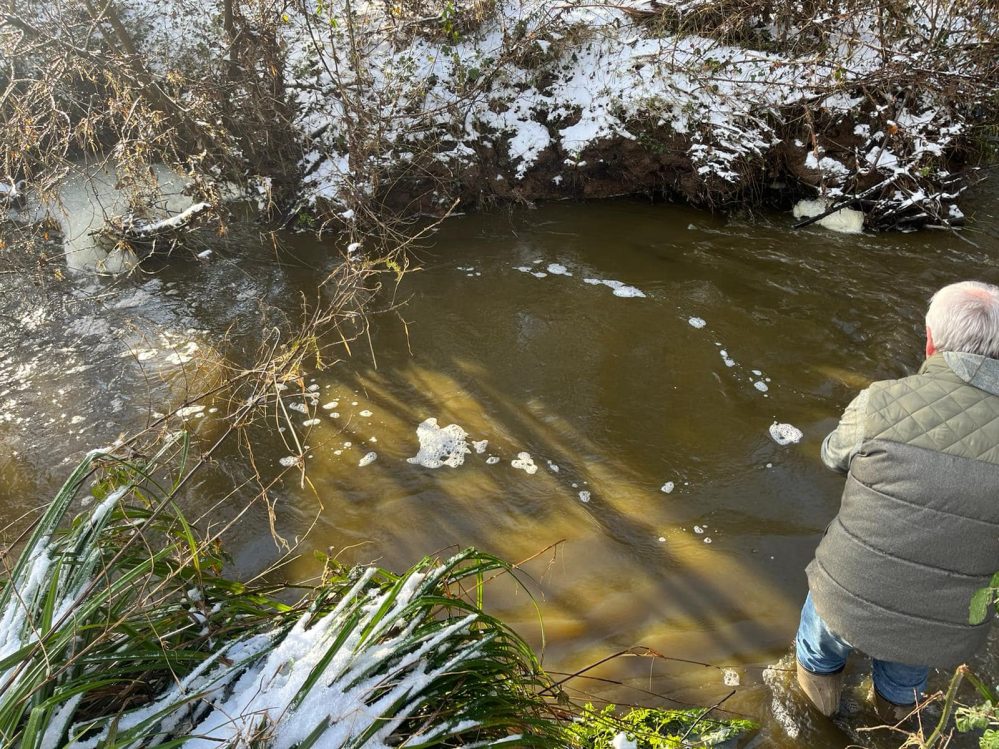
CAMPAIGNERS from across north Pembrokeshire and south Ceredigion are set to come together later this month to press for action on the growing problem of river pollution.
Representatives from several river groups will meet local Senedd Member Anna Nicholl at Haverhub in Haverfordwest on Monday, June 29, to discuss concerns about the health of local waterways and explore potential solutions.
The event follows the recent Senedd election and comes as environmental groups seek to influence policy under the new Welsh Government. Organisers say there is an opportunity to tackle what they describe as an environmental crisis affecting rivers across Wales.
Groups attending include those representing the Rivers Cleddau, Teifi, Nanhyfer and Gwaun. Members have been involved in monitoring water quality, gathering environmental data, engaging with local authorities and the Welsh Government, and promoting greater public appreciation of rivers and their ecosystems.
While each organisation operates independently and focuses on issues affecting its own river catchment, the groups regularly work together on wider environmental initiatives, including river festivals and awareness campaigns.
Organisers say the meeting will provide an opportunity for campaigners to share their concerns directly with the local Senedd Member and discuss what further action may be needed to improve river health and reduce pollution.
The session will be chaired by Fishguard County Councillor Billy Shaw and community campaigner Vicky Moller.
The public is invited to attend the meeting, which takes place from 2:00pm to 4:00pm at The Sorting Office, Haverhub, Haverfordwest.
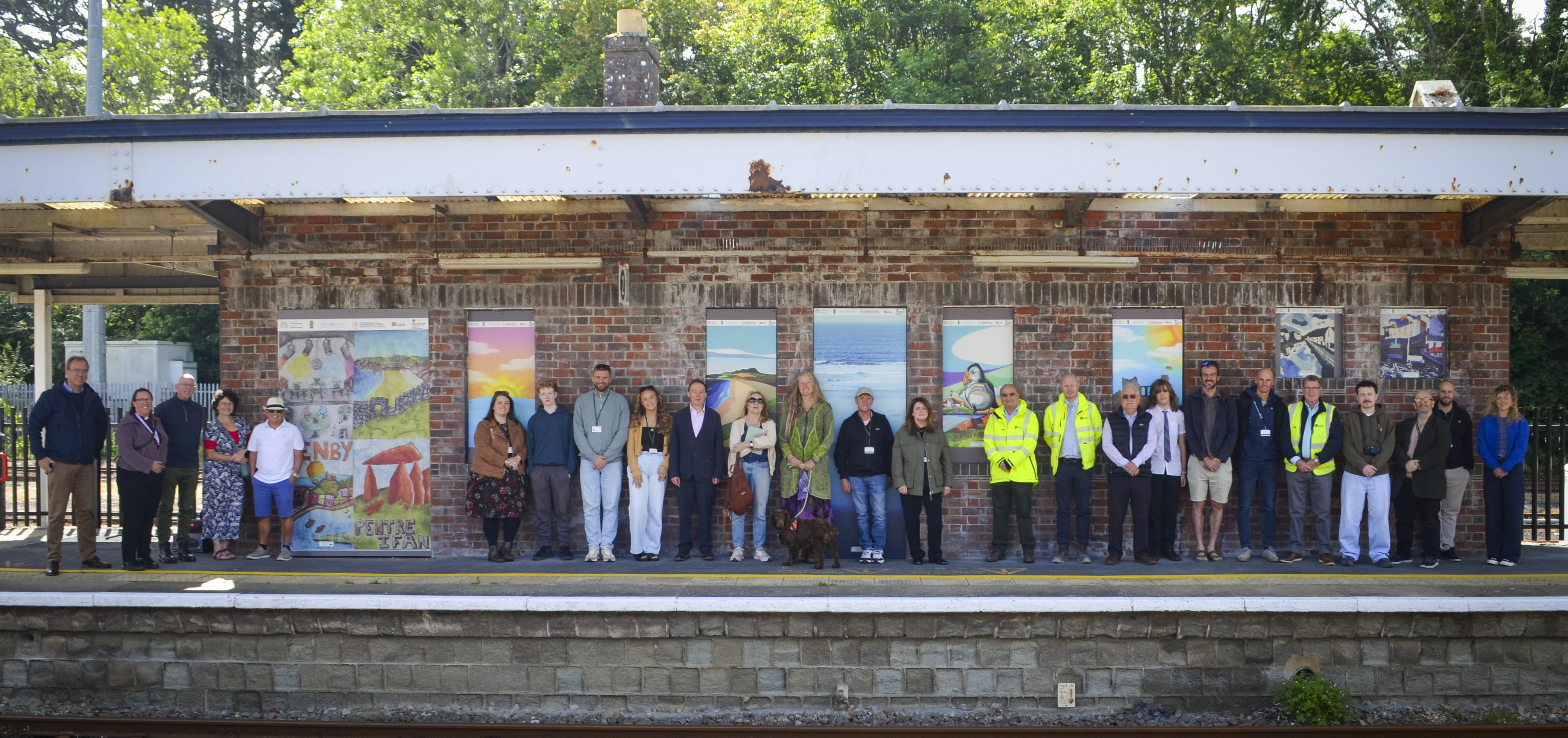
YOUNG people have helped bring new colour and creativity to Haverfordwest Railway Station as part of a wider project to improve one of the town’s key gateways.
A partnership involving local services, transport organisations and community groups has worked together to refurbish parts of the station and install new artwork, with a strong focus on youth engagement and creative participation.
The project involved South West Wales Connected, Pembrokeshire County Council Youth Justice, The Edge Youth Centre and Regeneration Teams, Kier, Transport for Wales, Dyfed-Powys Police, The VC Gallery, Haverfordwest Action Forum and local artists.
As part of the Welsh Government-funded Haverfordwest Public Transport Interchange scheme, Kier carried out refurbishment works at the station, including cleaning and improvements to the waiting area and public facilities.

An unused building on Platform 2 was also cleaned and prepared for the display of artwork. The art installations were funded through the UK Government Shared Prosperity Fund.
Young people supported through Pembrokeshire County Council services produced a series of artworks which are now on display in the station waiting area and on the Platform 2 building. Additional pieces created by local artists have also been installed.
The scheme is intended to create a more welcoming environment for passengers and visitors, while giving young people the chance to take part in meaningful creative activity.
The improvements form part of wider efforts to enhance key gateways into Haverfordwest, from the railway station to the new Haverfordwest Public Transport Interchange, and support town centre regeneration.
Cllr Rhys Sinnett, Cabinet Member for Residents’ Services, said: “It’s great to see art and culture brought to people as opposed to them actively seeking it out and we have a great tradition in Pembrokeshire of young people producing public art in this form.
“The fact that this is a wide-ranging partnership of groups only adds to the value of the project. I hope people take an opportunity to have a look at what has been created.”
Ian Rees, Regional Director for Kier Construction Western and Wales, said: “We’re proud to have supported improvements at Haverfordwest Railway Station through our work on the wider public transport interchange project, and to be leaving such a positive legacy for the local community.
“It’s been fantastic to see so many stakeholders come together to support and celebrate the creative young people involved in this project, providing a more welcoming space for passengers and visitors.”

Philip Merchant, Project Manager for South West Wales Connected, said: “As South West Wales Connected, we took on this project as a response to community feedback that the station was not a welcoming place, in its environment and for passenger wellbeing.
“It was a challenge and an opportunity to take this on as a blank canvas and it was so enjoyable to work with many partners who all had the same vision and reasons to upgrade this important railway station.”
Nathaniel Owen, Senior Customer Operations Manager for Transport for Wales, said: “Transport for Wales are delighted to have worked closely with Pembrokeshire County Council, Kier Construction, South West Wales Connected and local artists and stakeholders to deliver some small but important improvements to the station environment at Haverfordwest.
“We hope customers will enjoy looking at the artwork done by local people for local people when they travel with us.”
The partners said the initiative reflects a shared commitment to supporting young people, improving public spaces and making Haverfordwest railway station a more attractive and welcoming place for the wider community.


News10 minutes ago
Motorcyclist, 22, dies in A4075 crash
A 22-year-old woman remains in hospital after two-vehicle collision A MOTORCYCLIST has died following a serious two-vehicle crash on the...

Community58 minutes ago
Why police will be visiting every home in Pembrokeshire
New operation aims to knock on more than 257,000 doors across Dyfed-Powys over the next three years DYFED-POWYS POLICE has...


Crime4 hours ago
Prisons at breaking point: MPs warn Wales is paying the price of a failing system
Frozen healthcare budgets, overcrowded jails, homelessness on release and mounting pressure on staff are undermining rehabilitation across Wales, according to...


News18 hours ago
Brexit at 10: How Britain was sold a dream that cost us dearly
A decade after the referendum, the promised benefits remain hard to find while the economic costs are increasingly difficult to...


Crime19 hours ago
Worcestershire man jailed after violent attack on woman in Tenby
Defendant was already serving a suspended sentence when serious assault took place A WORCESTERSHIRE man has been jailed for more...


Climate21 hours ago
Offshore wind ‘could bring new generation of jobs to Milford Haven’
Pembrokeshire ports and Celtic Sea projects placed at centre of Wales’ green energy ambitions MILFORD HAVEN and Pembroke Dock could...

Community2 days ago
Police officer hailed hero after midnight sea rescue in Milford Haven
PC swam 100 metres offshore to save distressed woman heard calling for help in darkness A DYFED-POWYS POLICE officer has...


Local Government2 days ago
Security privately arranged by Mayor at Beating of the Bounds
HAVERFORDWEST TOWN COUNCIL has confirmed that security personnel seen at this year’s Beating of the Bounds were privately arranged and...


Business3 days ago
Celtic Freeport five-year plan puts Milford Haven at centre of green energy future
Strategy promises investment, skilled jobs and new supply chains, but major barriers remain over grid connections, planning and delivery THE...

Education3 days ago
Closure of Ysgol Clydau approved after emotional council debate
COUNCILLORS WARNED RURAL COMMUNITIES WILL REMEMBER DECISION PEMBROKESHIRE councillors have voted to close Ysgol Clydau following an emotional debate over...
-

 Community4 days ago
Pembrokeshire Chess Club crowned Welsh champions
-
Local Government2 days ago
Security privately arranged by Mayor at Beating of the Bounds
-

 Crime7 days ago
Pembroke Dock teenager sentenced over train strangulation attack
-

 Education6 days ago
Diocese threatens legal action as Manorbier school closure battle intensifies
-

 Crime5 hours ago
Milford Haven man jailed for breaching domestic violence protection order
-

 Crime2 days ago
Man wanted by court after failing to attend hearing over alleged shop thefts
-

 Local Government6 days ago
Taxi suspended after county-wide licensing checks
-
 Crime2 days ago
Man banned from roads after drink-driving offence