


News
Careers Wales launches Enterprise Troopers competition for primary schools


CAREERS WALES, in partnership with the Welsh Government’s Youth Entrepreneurship programme, Big Ideas Wales, has announced the launch of the 2024-25 Enterprise Troopers Primary School Competition. The competition invites primary schools across Wales to compete for cash prizes of up to £2,500, with additional awards for runners-up.
The challenge celebrates creativity, sustainability, and community impact, encouraging schools to foster entrepreneurial thinking in their pupils. Schools excelling in innovative approaches will be recognised in three categories:
- Best Enterprise School for ECO/Sustainability
- Best Enterprise School for Community/Social Impact
- Best Enterprise School for Creativity/Innovation
Fostering skills for the future
The competition aims to nurture entrepreneurial attitudes in young learners, focusing on creativity, problem-solving, communication, and organisational skills while enhancing literacy and numeracy. Participating schools will receive a digital entry pack containing tailored resources for lower and upper primary age groups. These materials, aligned with the Welsh curriculum, inspire students and teachers to explore enterprise by developing business ideas, making sales, and supporting their local communities.
Schools showcasing their enterprise projects in the Enterprise Troopers gallery will also be eligible for monthly spot prizes.
Inspiring educators and students
Mark Owen, Head of Services to Stakeholders at Careers Wales, said: “We’re thrilled to launch the Enterprise Troopers Primary School competition for 2024-25. For over a decade, this initiative has provided learners with a unique opportunity to explore enterprise, build essential skills, and make a difference in their communities. It’s also a chance for schools to gain recognition for their entrepreneurial achievements and inspire others.”

Carys Davies, Enterprise Lead at Halfway Primary School, praised the programme, saying:
“Pupils developed entrepreneurial skills in an authentic and fun way. It was amazing to see their confidence grow—whether mathematically minded or creatively inclined, every learner contributed and gained valuable insights. We’re excited to build on this experience and expand our enterprise opportunities.”
Key details:
- Open to all primary schools in Wales.
- Suitable for schools with enterprise clubs, past participants, or newcomers.
- Projects must be pupil-led and active between 1 January 2024 and 16 June 2025.
- Winners will be announced in July 2025.
Schools can register and find more information at The Enterprise Troopers | Business Wales – Big Ideas.
Take the first step in empowering the next generation of entrepreneurs—register today!


WELSH defence and aerospace firms could be in line for a share of billions of pounds in new military spending after the UK Government published its long-delayed Defence Investment Plan.
The plan, announced on Tuesday, sets out how the Ministry of Defence will spend almost £300bn over the next four years, including an extra £15bn above the previous settlement.
Prime Minister Sir Keir Starmer said the investment would transform the Armed Forces, strengthen national security and support more than half a million defence-related jobs across the UK by the end of the decade.
But for Wales, the key question is whether the new money will translate into real contracts, skilled jobs and apprenticeships for Welsh companies, or whether the bulk of the spending will be concentrated elsewhere.
At the centre of the plan is a major shift towards drones, artificial intelligence, autonomous weapons and faster battlefield technology.
The Ministry of Defence says more than £5bn will be spent over the next four years on a “drone transformation” for the Armed Forces.
That includes £650m for inexpensive expendable autonomous systems, including drones and uncrewed ground vehicles, to increase the lethality of the Army, Commando Force and Special Forces.
The plan also includes nearly £2bn for a new Digital Targeting Web, designed to connect the Armed Forces more effectively and allow faster decisions on the battlefield.
A further £790m will be spent on protecting the UK and overseas bases from air, drone and missile threats, including new radars, sensors, directed energy weapons and expanded counter-drone systems.
The Government has also committed £11bn to munitions and weapons, including long-range strike weapons, low-cost cruise missiles and one-way effectors. Ministers say at least six new energetics factories will be built by 2030 to increase the UK’s capacity to produce munitions.
For Wales, those commitments are significant because the country already has a sizeable aerospace and defence sector, as well as a specific UK Government-backed plan to grow its role in autonomous systems.
Earlier this year, the UK Government announced a £50m Wales Defence Growth Deal, designed to make Wales a launchpad for next-generation autonomous technology.

That deal was presented as an opportunity to support high-skilled roles and strengthen Wales’ position in areas such as surveillance drones, autonomous systems, cyber security, advanced manufacturing and defence research.
The Defence Investment Plan now becomes the first major test of whether those ambitions are backed by procurement decisions.
Wales already has a substantial defence and aerospace footprint, with major employers including BAE Systems, General Dynamics UK, Airbus, Thales, GE Aerospace, Rolls-Royce and Safran.
The combined aerospace and defence sector in Wales directly employs around 16,000 people, with turnover of £3.7bn and a contribution of approximately £1.5bn in gross value added to the Welsh economy.
Wales is also home to a wider supply chain of engineering, electronics, software, cyber security and manufacturing firms that could potentially benefit from the move towards drones, AI and autonomous warfare.
But industry figures, unions and politicians are likely to ask how much of the promised spending will actually reach Wales.
Welsh Government has previously said Wales receives around 3% of total Ministry of Defence expenditure, with an ambition to increase that to 5% or more as overall defence spending rises.
The new plan will therefore be watched closely by ministers, unions, defence firms, universities and local authorities across Wales.
GMB Union said the Defence Investment Plan provided some stability after months of uncertainty, but warned that workers would judge it by whether it delivered secure jobs and investment.
Matt Roberts, GMB National Officer, said: “Today’s Defence Investment Plan provides some stability for a sector besieged by insecurity.
“The challenge now is delivery. Workers will judge this plan on real jobs, real investment, and real outcomes.
“We must rebuild our own sovereign capability, and strong defence depends on a strong workforce.
“Procurement must prioritise social value and public money must come with the right strings attached, fair pay, decent conditions, and trade union recognition.
“GMB welcomes renewed focus on defence investment, but the real test is whether this delivers jobs, skills, and secure work here in the UK.”
The Government has also announced a new £50bn defence export facility through UK Export Finance, aimed at helping British defence companies win contracts overseas.
That could be important for Welsh firms looking to scale up and compete internationally, particularly if smaller businesses can access support rather than being locked out by larger prime contractors.
The Wales Regional Defence and Security Cluster, launched earlier this year, was designed to bring together small businesses, larger contractors, universities and colleges to strengthen Welsh supply chains and improve access to Ministry of Defence work.
Its role is likely to become more important if the UK’s defence economy shifts further towards dual-use technology, cyber security, artificial intelligence and autonomous systems.
BAE Systems’ Glascoed site in Monmouthshire is one of the best-known defence manufacturing sites in Wales, employing hundreds of people in munitions work.
General Dynamics UK also has operations in south Wales, including work linked to armoured vehicles, tactical communications and systems integration.
Airbus has a major presence in north-east Wales, while Thales, Safran, GE Aerospace and other firms are part of a broader high-value manufacturing and technology base.
The Government says the new plan will also support the Global Combat Air Programme, with more than £8bn over the next four years for the next-generation stealth fighter jet being developed with Japan and Italy.
More than £63bn will be spent over the next four years on the UK’s nuclear deterrent, including Dreadnought and SSN-AUKUS submarines, a new warhead and the purchase of 12 F-35A aircraft.
Those programmes are not Wales-specific, but ministers argue that the wider increase in defence spending should support jobs and supply chains across the UK.
There are also potential implications for west Wales.
Pembrokeshire is home to important military training infrastructure, including Castlemartin Range, while Manorbier has long been associated with air defence training.
Cawdor Barracks near Brawdy has also been the focus of separate Ministry of Defence plans for the proposed Deep Space Advanced Radar Capability project, known as DARC.
Any increase in spending on drones, surveillance, radar, electronic warfare or autonomous systems could raise questions about whether Welsh military sites will receive further investment or new roles.
There may also be interest in whether Welsh ports, marine engineering firms and coastal infrastructure could play any part in the development of uncrewed naval vessels and high-speed military craft.
The Defence Investment Plan includes a shift towards what ministers call a “hybrid Navy”, combining traditional ships with autonomous vessels, AI and uncrewed systems.
Plans include at least six new Common Combat Vessels to act as control hubs for uncrewed systems in the 2030s, alongside high-speed boats for Royal Marine Commandos.
For coastal areas such as Pembrokeshire, that raises a natural question: will maritime defence investment create opportunities for Welsh ports, marine services and engineering businesses?
The plan has been delayed for months amid arguments in Whitehall over money.
Former Defence Secretary John Healey resigned after warning that the funding package fell short of what was needed to protect the UK and meet existing commitments.
Armed Forces Minister Al Carns also quit, saying the plan was not transformative enough in the face of rapidly changing warfare.
New Defence Secretary Dan Jarvis has said the character of warfare is changing rapidly, with uncrewed systems now defining conflicts in Ukraine and the Middle East.
He said the UK had to embrace new technology to give British forces the edge.
Sir Keir said the world was becoming more dangerous and volatile, and that the UK had to rebuild ammunition stockpiles, invest in cutting-edge technology and strengthen the Armed Forces.
The Conservatives have criticised the plan as “too little, too late”, while the Liberal Democrats said the Government had dangerously short-changed the Armed Forces.
Critics have also questioned whether the plan goes far enough to meet NATO expectations and whether the funding will be sufficient to deliver all the ambitions set out in the Strategic Defence Review.
The Government says defence spending will rise from £54bn a year under the previous government to almost £80bn a year by 2029, taking UK defence spending to 2.7% of GDP.
Ministers say the country remains on track to meet NATO defence spending targets by 2035.
There will also be political questions over how the plan is funded, with the Prime Minister saying some capital projects in areas such as roads and energy will no longer go ahead as previously planned.
For Wales, that raises a further issue: whether any Welsh infrastructure schemes could be affected by the wider reprioritisation of public spending.
The Government insists the plan will not take resources away from day-to-day frontline services.
For Welsh industry, however, the immediate question is more practical.
Will the £5bn drone programme include Welsh firms?
Will the new munitions spending benefit existing Welsh sites?
Will smaller companies get a route into defence contracts?
Will universities and colleges in Wales be given funding to train the workforce needed for the new defence economy?
And will west Wales, with its existing military estate and strategic coastal position, see any direct benefit?
The move towards drones and autonomous systems is no longer theoretical. It is already changing warfare.
The question now is whether Wales will be a serious part of that new defence economy, or whether it will once again be left fighting for a small share of UK military investment.

HUNDREDS of thousands of young people are being urged to check whether they are entitled to forgotten savings held in Child Trust Fund accounts.
The UK Government has launched a new drive to reunite young adults with more than £1.6bn in unclaimed savings, with more than 750,000 matured accounts still unclaimed.
Child Trust Funds were set up for children born between September 1, 2002, and January 2, 2011, with Government payments made into accounts to give young people a financial asset when they reached adulthood.
Around 6.3 million accounts were opened, mostly by parents or guardians, with some set up directly by HMRC where no account was opened.
The average unclaimed account is worth around £2,200.
Economic Secretary to the Treasury Rachel Blake MP has now convened a new Child Trust Fund Taskforce, bringing together government and providers to improve tracing and encourage more young people to access their money.
Members include OneFamily, Coutts, Nationwide, HSBC UK, Pilling, The Coventry, Sheffield Mutual, Unity Mutual, Forester, Healthy Investments and The Share Foundation.
Ms Blake said: “Too many young people are missing out simply because they are not aware of where their Child Trust Fund is or how to access it.
“We are acting to fix that by bringing government and industry together, improving coordination and making it easier for people to find and claim what’s rightfully theirs.”
HMRC chief executive JP Marks said many young people had an average of £2,200 waiting to be claimed.
He said: “This is their money, and we want to do all we can to help them find and access it.
“If you think you have one, you can use the Find my Child Trust Fund tool on GOV.UK to find out where your account is held.”

Accounts began maturing on September 1, 2020, when the oldest eligible young people turned 18.
Anyone born between September 1, 2002, and January 2, 2011, can search for their account for free on GOV.UK using their National Insurance number.
Those aged 18 or over can access the funds immediately.


VOTERS in Pembroke Dock’s Market Ward will head to the polls on Thursday, July 9, to elect a new county councillor, with seven candidates standing.
The by-election has attracted candidates from across the political spectrum, alongside three independents, with priorities including healthcare, education, regeneration, cleaner streets, social care and community services.
Independent Hayley Wood says her campaign is centred on listening to residents and ensuring their concerns are represented. She has pledged to support community groups and volunteers, improve transparency and accountability, protect local services, including healthcare, and work collaboratively for the benefit of Pembroke Dock.
She has also highlighted dog fouling as a priority, calling for targeted patrols, mobile CCTV in problem areas and closer working with residents to identify hotspots.
Independent Paul Haywood Dowson is highlighting what he describes as a strong record of campaigning on local issues. He says he helped defeat proposals for a waste storage site at Pembroke Port, opposed plans for a fuel tanker depot on Criterion Way, tackled problems linked to a rogue landlord at the former Coronation School and Commercial Row, worked to remove fly-tipping and overflowing bins, and campaigned on issues surrounding Penally Camp.
Independent Claire Francis-Boswell is focusing on community involvement and volunteering. She says she has worked alongside organisations including Pater Hall Community Trust, Pembrokeshire Pride, Pennar Hall, Friends of Pembroke Pool, the neighbourhood policing team and the town council.
She highlighted her continued work with Pembroke Dock’s Warm Rooms initiative, describing it as an important source of support for vulnerable and isolated residents. She also says she works with local businesses to promote the town centre, while campaigning on issues including antisocial behaviour, dangerous driving and dog fouling.
Welsh Liberal Democrat candidate Lee Herring has identified cleaner and safer streets as a key priority, including repairing potholes and damaged pavements. He is also calling for greater support for young people, improved healthcare services at Argyle Street Surgery, better standards at Ysgol Harri Tudur and stronger accountability from elected representatives.
Reform UK candidate Ryan Morgan says his experience working in social care and running a business has shaped his priorities. He has pledged to campaign for improved social care provision, support the regeneration of neglected sites and empty properties, and improve additional learning needs provision.
Morgan, who is also a local authority school governor, says his personal experience as the parent of a child with autism has given him first-hand insight into the challenges facing families seeking support.
Plaid Cymru candidate Chloe Louise Richards says her background as a registered nurse and clinical practice educator has equipped her with leadership, communication and problem-solving skills. She also serves as a trade union steward, representing colleagues and negotiating on their behalf.
Richards says she wants to see stronger local services, greater opportunities for residents and businesses, and a council that listens to local people.

Welsh Conservative candidate Jamie Street says being part of an established Conservative group at Pembrokeshire County Council would provide access to experience and support while enabling him to raise local issues effectively.
Street says he wants to challenge what he describes as wasteful council spending, arguing that greater focus should be placed on core services including schools, roads, housing and social care. He has pledged to scrutinise council decisions, ensure value for taxpayers’ money and put Market Ward’s interests first if elected.
The by-election was called following the death of veteran county councillor Brian Hall in April. Cllr Hall had represented Pembroke Dock’s Market Ward since 1996 and served in a number of senior roles during three decades of public service.



Business17 minutes ago
Welsh firms eye share of £5bn defence drone boom
WELSH defence and aerospace firms could be in line for a share of billions of pounds in new military spending...


Community2 days ago
Thousands line Cardigan streets for Lord Rhys homecoming parade
THOUSANDS of people lined the streets and quayside in Cardigan on Saturday as the town marked 850 years since Lord...


Crime3 days ago
Dyfed-Powys Police rated only ‘Adequate’ in organised crime inspection
A WATCHDOG has rated Dyfed-Powys Police only “Adequate” in its response to serious and organised crime, despite praise for the...


News3 days ago
Two taken to hospital after aircraft ditches in Cardigan Bay
Coastguard helicopter spotted two casualties after light aircraft came down off west Wales coast TWO people were taken to hospital...


Sport4 days ago
Long Course Weekend gets underway in Tenby as thousands head for county
Three days of swimming, cycling and running begin with The Wales Swim at North Beach THOUSANDS of athletes and supporters...


Climate4 days ago
Welsh waters, Westminster profits: Crown Estate row reignited in Wales
PLAID CYMRU has renewed calls for the Crown Estate to be devolved to Wales after figures showed income linked to...


News4 days ago
Reform MS: ‘I felt like shouting get out of the water’
Paul Marr says children playing in streams at Pembrokeshire beaches deserve better protection from pollution risks REFORM UK MS Paul...


Health5 days ago
Senedd backs call to rule out hospital downgrades after heated NHS debate
Reform UK amendment passes as West Wales hospital fears remain central political issue THE SENEDD has backed a call for...

News5 days ago
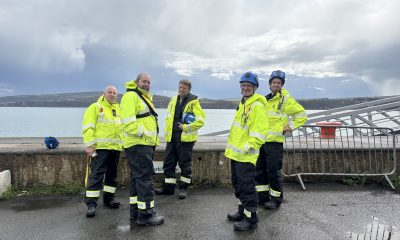
Coastguard callout payments axe sparks fears for coastal communities
VOLUNTEER coastguards across the UK are set to lose callout payments, prompting concern over the future resilience of emergency cover...


Farming5 days ago
Rural Wales ‘left out’ of net zero debate, warns carbon entrepreneur
A WELSH carbon entrepreneur has warned that rural Wales risks being left behind in the national conversation about net zero....
-

 Crime6 days ago
Milford man threatened to smash parents’ windows, court hears
-

 Crime6 days ago
Haverfordwest father stole groceries amid cost-of-living struggle
-

 Crime6 days ago
Woman sentenced over neglect of child at Haverfordwest property
-

 Crime5 days ago
Police appeal after reported rape at Young Farmers rally
-

 Crime6 days ago
Dock woman given mental health treatment order after supermarket thefts
-

 Crime6 days ago
Hakin man stole Tesco goods to fund drink and gambling addictions
-

 Crime6 days ago
Grandmother banned after cocaine drug-drive offence
-

 Crime7 days ago
Government fraud squad hunts down Covid loan scams