


Community
Spotlight shines on County’s young people at annual awards


The FOURTH Pembrokeshire Spotlight Awards celebrating children and young people who achieve exceptional things and make a real difference was held recently.
The Awards – a collaboration between Pembrokeshire Youth, The Children and Young People’s Rights Office and Children’s Services – took place on 22nd November at the Merlin Theatre, Pembrokeshire College and celebrated the achievements of Pembrokeshire’s young people.

A huge well done to the young people from Pembrokeshire Youth Bank, who were involved in the whole process, from conception, to planning, to being involved on the night of the awards.
This was truly an event ‘For Young People, By Young People.’
Sponsorship from BAM Nuttall and Pure West Radio enabled the awards to go ahead this year and helped make it a memorable evening.


The event saw some amazing achievements noted and celebrated and the winners and runners up are as follows:
Achieving positive change: The Edge Quiet Hour (winner), Craig Thompson and Samantha Barton (runners up).
Arts Award: Lleucu-Haf Thomas (winner), FADDS Youth Theatre and Tomos Roberts (runners up).
Eco Champion Award: Senedd Gwyrdd at Ysgol Penrhyn Dewi (winner).
Education Award: Megan Thomas (winner), Carla Briskham (runner up).
Fundraising Award: Ellie Neville (winner), George Bromwich and Molly Venables (runners up).
Making a difference in the community: Eirlys Lloyd-Phillips (winner), Pembroke Family of Schools – Social Action Project, We Know… Our Journey Group, Neyland Youth Club Group (runners up).

Most inspiring story: Aaron Briskham (winner), Aimee Hawkings and Molly Evans (runners up).
Music Award: Carys Wood + Alice Thomas (winners), Amy Evans and Iestyn Barrellie (runners up).
Sport Award: Harley and Liam Franz (winners), Caiden Meacham and Ava Tyrie (runners up).
Voice Award: Tegan Skyrme (winner), Niamh Jones, Mya-Rose John (runners up).
Young Leader / Peer Mentoring Award: Daniella Loveridge / Chloe Harries (winners), Tomos Padel, Brogan Collins and The Point (runners up).
The final award of the night was the special ‘Spotlight Award’, given to a single young person for a particularly important contribution or achievement. For 2024 this award was given to Freya Terry.
Here’s Freya’s inspiring nomination:
Freya has struggled with her mental health since she was 11. She has had some great support from the Amethyst Project and then more recently adult mental health services. She has come out of that stronger and decided to do a voyage solo around the UK and Ireland to raise awareness of mental health in young people – attempting to inspire people to talk about their mental health so that they can get some support, rather than bottle it all up in fear and shame.
She has given talks to local Pembrokeshire youth groups, as well as talking to others as she makes her way around the country which have been really well received. She has gained so much confidence from this venture and has attracted many followers (www.she-sails.co.uk)
Boat problems left her lost at sea for many hours and then a freak wave that tossed her across the boat resulting in her getting concussion and having to call the coastguard. But this didn’t stop her, as soon as she recovered, she got going again and is making great progress.

Director of Education Steven Richards-Downes presented the overall Spotlight Award and said: “Everyone nominated in these Spotlight Awards are a real inspiration to their peers and the wider community. It was an honour to present the overall award for Freya, her story demonstrates a real resilience and commitment to give something back to society while overcoming her own struggles.”
Pembrokeshire County Council Chairman Cllr Steve Alderman said: “It is fantastic to see our young people being celebrated for the exceptional things they have achieved and the difference they make in their communities.”
Cabinet Member for Social Care & Safeguarding Cllr Tessa Hodgson added: “Sometimes young people are not given the credit they deserve and it is fantastic that this event is dedicated to celebrating the wonderful things they can achieve.”

The award ceremony was followed by refreshments and entertainment including an inflatable assault course, circus skills, photo booth as well as candyfloss and popcorn in the foyer of the college.
Special thanks also go to those who attended the event to present the young people with the awards as well as to those who took the time to nominate a young person or group.
Sincere thanks also to Dylan Harwood who performed one of his original songs; Charlie Royal, Polly Thomas, Josh Roberts and the rest of the team at Pembrokeshire College for hosting this event; Nadine Farmer, Bethany Roberts, Nicky Edwards and Angie Moore for their assistance in organising this event and to the young people from Pembrokeshire Youth Bank for their hard work.
More pictures are available on the Children and Young People’s Rights Office Facebook page.


Hands-on sessions will give potential recruits a taste of life in the fire service
PEOPLE interested in becoming firefighters are being invited to take part in special Firefighter Experience Days being held by Mid and West Wales Fire and Rescue Service this June.
The events will take place at Haverfordwest Fire Station on Wednesday, June 3, and at Newtown Fire Station on Friday, June 5. Both sessions will run from 10:00am until 1:00pm.
Mid and West Wales Fire and Rescue Service, which covers almost two-thirds of Wales, says the days are designed to give people a practical introduction to life in the fire service in a relaxed and informal setting.
Around 75 per cent of the service’s fire stations are crewed entirely by on-call firefighters, who play a vital role in protecting communities across the region.
Visitors attending the experience days will have the opportunity to try on firefighting kit, learn how equipment is assembled, and take part in practical exercises alongside serving crews.

Firefighters from both stations will also be on hand to explain the realities of the role, answer questions, and offer guidance on the recruitment process.
Topics covered during the sessions will include the modern role of a firefighter, fitness requirements, personal protective equipment, career pathways within the service, and what applicants can expect during recruitment.
Booking is essential for anyone wishing to attend.
Further information can be obtained by contacting Lily Evans, Digital Marketing Officer for Mid and West Wales Fire and Rescue Service, by emailing [email protected].



AROUND 31,000 properties across Mid and West Wales are at risk of flooding, according to figures released as part of a new fire service response strategy.
Mid and West Wales Fire and Rescue Service has completed a major engagement process to shape how it deals with future flooding incidents.
The work brought together operational crews, partner agencies and community representatives through a series of “Flooding Balanced Room” workshops.
The service said the aim was to make sure all voices were heard equally while developing practical options for prevention, response and recovery.
Nearly 24,000 properties in the service area are at risk from river flooding, while more than 7,000 are at risk from tidal flooding.
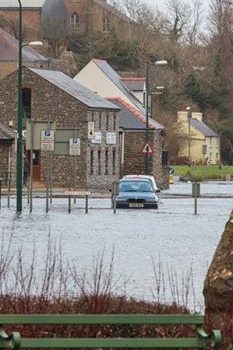
The service attends around 300 water rescue and weather-related flooding incidents each year.
Officials say flooding is becoming more frequent and more serious because of climate change, including heavier rainfall and prolonged weather events.
Recent data also shows a clear seasonal pattern, with the highest number of flooding incidents taking place between October and February.
The third quarter of 2025/26 was the busiest for flooding incidents since 2017/18, while February 2020 and November 2025 recorded the highest monthly levels of flooding activity.

The workshops produced four key priorities: prevention first, collaboration and partnership, enhanced specialist capability, and learning and continuous improvement.
Eleven initial options were narrowed down to five main areas.
These include better public education, community flood groups, improved flood messaging with partner agencies, more staff training, improved welfare and PPE for firefighters, better vehicles and technology, and stronger post-incident support for communities.

Proposals include using flood awareness in home fire safety checks, improving training scenarios, increasing the number of qualified water incident managers, expanding drone use, and using climate data to plan future fleet and equipment needs.
The options have now been assessed, with recommendations presented to the service’s Executive Leadership Team.
The plans will feed into the service’s future flooding strategy and its Community Risk Management Plan 2040.
Iwan Cray, Deputy Chief Fire Officer for Mid and West Wales Fire and Rescue Service, said: “The Flooding Balanced Room process has highlighted the importance of collaboration.
“By listening to our staff, partners, and communities, we’ve created practical, forward-thinking solutions that will strengthen our ability to prevent and manage flooding in Mid and West Wales.
“Together, we can build a safer, more resilient Wales.”

FIFTY-three vintage tractors left Pembroke Dock Ferry Port on Saturday (May 2) as part of a long-running tractor tour to Ireland.
The group boarded the ferry for the latest stage of an exchange which has been running since 2011, when the National Vintage Tractor Run was held in Pembrokeshire.
Organiser Alun Mason said: “The Tour of Ireland has been ongoing since 2011, when the National Vintage Tractor Run was held in Pembrokeshire.
“A large contingent travelled from Ireland and continue to do so every other year, with our visit this weekend and the Irish tractors due to visit in 2027.”
Some of the tractors taking part travelled from as far as Burry Port, Bridgend, Llandrindod Wells, Llandovery and Ceredigion before gathering at the ferry port.
The event brought together vintage tractor enthusiasts from across Wales ahead of the crossing to Ireland.
Pictured are organisers Jo Richards and Alun Mason, and the group waiting to embark at Pembroke Dock Ferry Port.

Vintage tour: Jo Richards and Alun Mason with tractors at Pembroke Dock Ferry Port (Pic: Martin Cavaney).



News2 hours ago
Bishop’s report reveals major renewal challenge at St Davids Cathedral
Formal Visitation highlights financial, structural, leadership and spiritual pressures at one of Wales’ most important religious sites ST DAVIDS CATHEDRAL...


Crime18 hours ago
Farming company fined £19,000 for damaging protected wildlife site
A CARDIGAN farming company has been ordered to pay almost £20,000 after recklessly damaging a Site of Special Scientific Interest....


News21 hours ago
Baby in critical condition after Fishguard emergency
Teenagers arrested as police investigate circumstances A BABY remains in hospital in a critical but stable condition after being taken...


Community2 days ago
Tenby phone signal crisis goes national as businesses warn of summer disruption
TRADERS SAY CARD PAYMENTS, TAXIS AND VISITOR SAFETY ARE BEING HIT BY ‘DEAD ZONE’ COVERAGE TENBY’S long-running mobile phone signal...


News2 days ago
Final poll puts Plaid and Reform level ahead of Senedd vote
Labour faces historic setback as new modelling points to a hung Senedd PLAID CYMRU and Reform UK are projected to...


News3 days ago
West Wales coracle fishermen raise alarm over suspected sewage pollution
A CENTURIES-old fishing tradition on the River Towy could be under threat after coracle fishermen reported suspected sewage pollution entering...


Community4 days ago
Scooter rally brings colour and nostalgia to Tenby
TENBY is buzzing with the sights and sounds of classic scooters this Bank Holiday weekend as the Welsh National Scooter...


Entertainment4 days ago
Haverfoodfest returns to Haverfordwest town centre today
HAVERFORDWEST town centre is expected to be busy today as Haverfoodfest 2026 returns for a full day of food, drink,...

Crime5 days ago
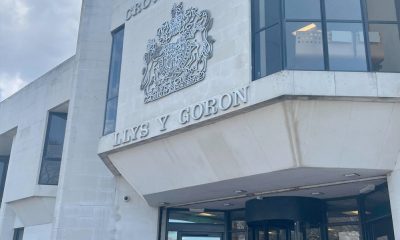
70-year-old denies assault and restraining order breach
A PENSIONER from Pembroke Dock has denied breaching a restraining order and assaulting another man. Henry Howlett, 70, of Market...


News6 days ago
Conservatives target two seats in new Ceredigion Penfro constituency
Paul Davies and Sam Kurtz say health, farming and transport are key as they seek return to the Senedd CONSERVATIVE...
-
News21 hours ago
Baby in critical condition after Fishguard emergency
-

 Community6 days ago
Dogs removed after welfare concerns at Milford Haven property
-

 Crime7 days ago
Pembrokeshire hairdresser avoids prison after pub assault
-

 Crime3 hours ago
Milford motorist disqualified for drug-driving
-

 Business7 days ago
Handcrafted garden furniture built to last across Pembrokeshire
-
 Charity7 days ago
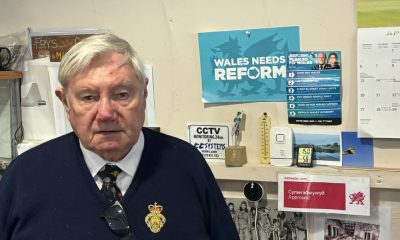
Row erupts at Spitfire museum after Reform poster displayed at charity premises
-

 Community7 days ago
Cancer patients targeted with parking fines outside Haverfordwest support centre
-

 Crime6 days ago
Two men bailed after Fleming Crescent burglary report