


News
St Clears: Chapel Minister too ill to stand trial for child sex abuse



The Reverend Gwyn Ieuan Morgan
A CHAPEL MINISTER who ran a church near St. Clears has been formally cleared of a historical child sex abuse charge because of his failing condition of health.
Gwyn Ieuan Morgan, 82, had been accused of indecently assaulting a boy under the age of 14.
However, a Swansea Crown Court hearing was told psychiatric reports showed he was unfit to stand trial. The minister was suspended from chapel duties after being arrested by Dyfed-Powys Police in October 2013.
Mr Morgan, from Johnstown in Carmarthen, had been a minster at Bryn Iwan Chapel, and Moreia Chapel near St Clears, since 1972. He was due to face trial early next year, but the Crown Prosecution Service said it would be offering no evidence in the case, after receiving the health reports.
A CPS spokesperson told The Herald: “Mr Morgan’s legal team recently presented the prosecution with a report from a consultant psychiatrist which concluded that he was no longer fit to stand trial.

“Upon receipt of this report, the prosecution commissioned its own report from an independent psychiatrist. This second report confirmed the findings of the first.
“As a result of this expert opinion, we undertook a full review of the case and concluded that there was no longer a realistic prospect of conviction.
“The prosecution has therefore informed the court that we offer no evidence in this case. All parties involved have been informed of these developments.”


A SMALL Pembrokeshire brewing company has been formally wound up after its owners concluded the business could no longer continue.
Black Tar Brewing Co Ltd, which was registered in Llangwm, entered creditors’ voluntary liquidation following a meeting of company members on February 27, 2026.
The meeting was held at the Swansea offices of Stones & Co Insolvency Practitioners, where Gareth Stones was appointed to oversee the closure.
The company’s registered address was at Gail Rise in Llangwm, near Haverfordwest, and official records listed its activities as beer manufacturing.
No public details have yet been released about the size of the business, the value of its assets or the amount owed to creditors.
As liquidator, Mr Stones will now take control of the company’s affairs, identify any remaining assets and determine whether funds are available for those owed money.
Creditors are expected to receive further information as the process develops.
The liquidation was initiated by the company rather than through a court order, meaning its members voted to bring trading to an end and place its finances in the hands of an insolvency practitioner.
A public notice connected to the closure directs creditors and other interested parties to Stones & Co for further information.

The winding-up brings an end to the Llangwm-registered brewery, although the company’s recent level of trading and the number of people connected to the business remain unclear.

A 67-YEAR-OLD man has been arrested on suspicion of murder after new potential evidence emerged in connection with a death more than three decades ago.
Dyfed-Powys Police have launched a murder investigation into the death of 58-year-old Bentley Mathias, who died in hospital in 1991.
Mr Mathias died at Morriston Hospital on November 19, 1991, with his cause of death recorded at the time as a brain haemorrhage.
His death was not initially treated as suspicious. However, police said new potential evidence had since come to light, prompting the case to be investigated as a murder enquiry.
On Wednesday, July 22, officers arrested a 67-year-old man from the Llandewi Velfrey area of Pembrokeshire on suspicion of murder.
He has since been released on police bail while enquiries continue.
Dyfed-Powys Police said officers were not looking for anyone else in connection with the investigation.
The enquiry remains ongoing.

Ysgol Preseli also represented Pembrokeshire among five finalists at an all-Wales green skills competition
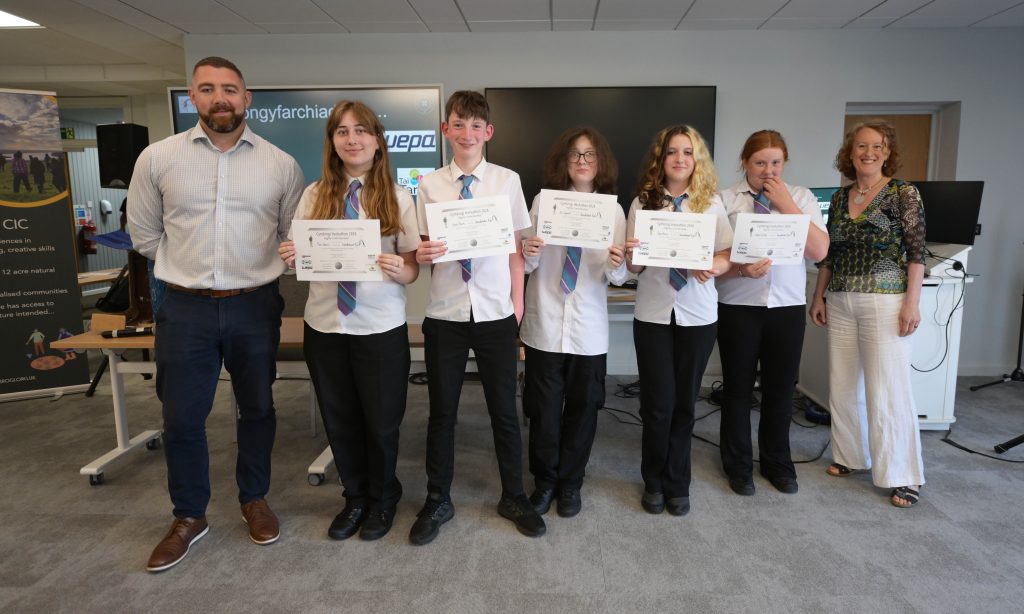
A TEAM of Haverfordwest pupils has earned national recognition after developing a range of environmentally friendly cleaning products aimed at hotels and tourism businesses.
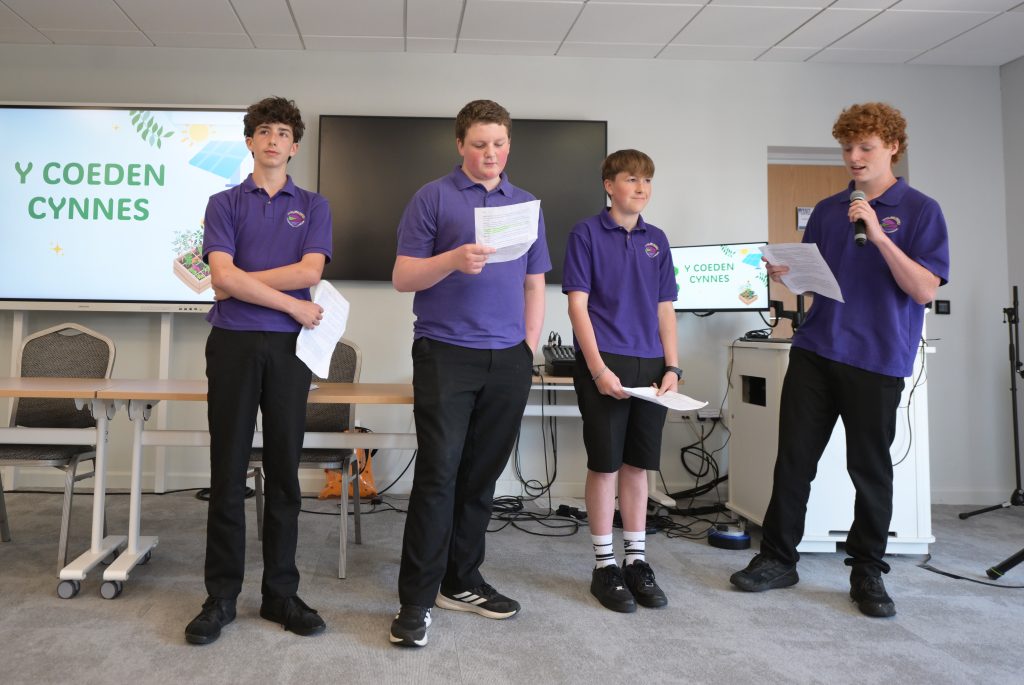
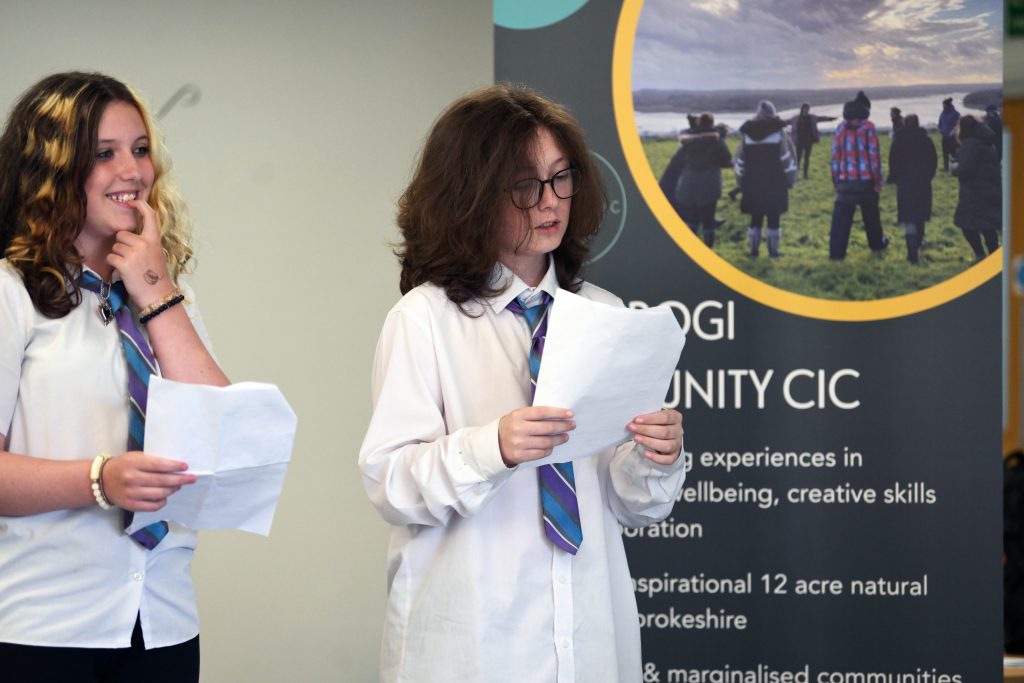
The Sustainables, from Haverfordwest High VC School, presented their idea to business leaders, Welsh Government representatives and sustainability experts at the Tomorrow’s Changemakers Hackathon 2026.
The pupils gave a live demonstration of their product and explained how it could be priced and marketed to businesses across the hospitality sector.

Their combination of environmental thinking and commercial awareness impressed the judging panel, which awarded the team a Highly Commended prize.
Pupils from Ysgol Preseli also reached the final, meaning Pembrokeshire was represented by two of the five teams selected from across south and west Wales.
The competition, held at the University of Wales Trinity Saint David in Carmarthen, challenged Year 8 pupils to find practical solutions to environmental problems affecting tourism, hospitality and the built environment.
The overall winners were the Green Guardians from Llangatwg Community School in Neath Port Talbot.
Their design for a more sustainable school included an outdoor learning centre which could also operate as a pupil-run garden café.
The hackathon marked the end of a year-long programme in which pupils worked alongside teachers, employers and community organisations to research problems, develop ideas and present their solutions.
More than 1,000 Pembrokeshire pupils have taken part in the Tomorrow’s Changemakers programme since it was introduced in the county in 2023.
The Port of Milford Haven is the programme’s main partner in Pembrokeshire.


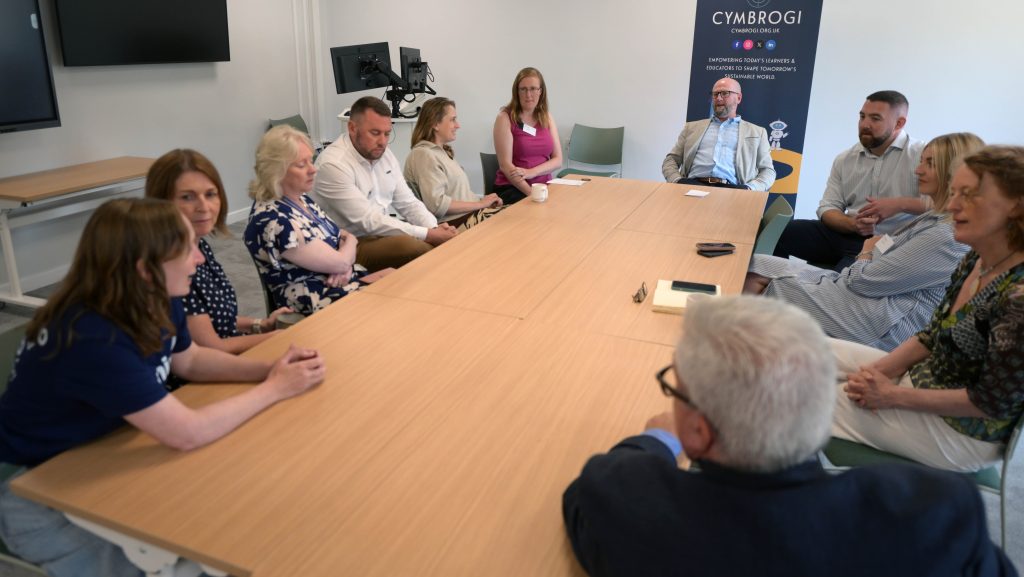
Anna Mullarkey, the Port’s stakeholder engagement and communications manager, said: “The creativity and innovation shown by these learners is truly inspiring.

“They transformed their ideas into practical solutions that could help build a more sustainable future.
“We’re proud to support young people in reaching their full potential and delighted to see schools across Pembrokeshire creating environments where ideas and talent can flourish.”
The programme has now worked with more than 3,000 young people across Pembrokeshire, Carmarthenshire and Neath Port Talbot.
It is due to expand further from September, with Ysgol Harri Tudor and Ysgol Caer Elen joining the Pembrokeshire programme alongside schools in Swansea, Powys and Bridgend.
Cymbrogi Futures founder and chief executive Liza Lort-Phillips said Pembrokeshire remained at the heart of the initiative.
She said: “The county has extraordinary young people with bold ideas about the future of their communities.
“Our job is to give them the space, the tools and the confidence to act on those ideas.”



Crime16 hours ago
Murder investigation launched into death of Pembrokeshire man in 1991
A 67-YEAR-OLD man has been arrested on suspicion of murder after new potential evidence emerged in connection with a death...


Community20 hours ago
‘Paying £29 to reach a cashpoint is absurd’: Narberth’s urgent ATM appeal
Residents, businesses and visitors are being urged to provide evidence after two High Street cash machines were removed, leaving the...


Crime2 days ago
Haverfordwest man jailed for seven years for historic rape and sexual assault of girl
A HAVERFORDWEST man has been jailed for seven years after being convicted of raping and indecently assaulting a girl during...


News2 days ago
Burnham more willing to listen on Welsh devolution, says First Minister
Rhun ap Iorwerth says he will press the new Prime Minister for powers over policing, railways and Wales’ natural resources...


Crime2 days ago
Women jailed after man chased through Milford home and attacked with knives
Kelly Rees receives further 27-month sentence while already serving prison term for notorious taxi robbery TWO women have been jailed...


Crime2 days ago
Mother headbutted and clawed police officers after threatening social worker
Court shown body-worn footage of violent confrontation at Goodwick property A COURT has been shown police body-worn footage capturing the...


Crime3 days ago
Man, 37, found dead following major police response in Pembroke Dock
Death not being treated as suspicious as police make statutory referral to IOPC following active investigation A 37-YEAR-OLD man has...


Community3 days ago
Household Cavalry drum horse returns home to Pembrokeshire for final farewell
Dyfed Willa Rose, who became Major Juno and the first mare to serve as a Household Cavalry Drum Horse, was...


News4 days ago
Jo Stevens out as Welsh Secretary as Burnham reshapes government
Cardiff East MP repeatedly visited Pembrokeshire to champion clean energy jobs, but her successor inherits unresolved questions over Milford Haven’s...


Crime4 days ago
Teen cleared of attempted murder but guilty of GBH after Milford teacher stabbed
Jury returns 11-1 majority verdict on charge of causing grievous bodily harm with intent, with sentencing set for September 3...
-

 Crime2 days ago
Drunken rail passenger tried to headbutt police after being refused travel
-
Crime2 days ago
Women jailed after man chased through Milford home and attacked with knives
-
News2 days ago
Burnham more willing to listen on Welsh devolution, says First Minister
-
Crime2 days ago
Haverfordwest man jailed for seven years for historic rape and sexual assault of girl
-
Crime2 days ago
Mother headbutted and clawed police officers after threatening social worker
-

 Community2 days ago
£447,000 investment to train next generation of planners in Wales
-

 Entertainment2 days ago
Aerial circus show exploring identity and belonging comes to Torch Theatre
-

 Community2 days ago
Charter boat crew rescues three children swept a mile offshore at Pendine
criminal impersonation statutes
January 5, 2026 at 9:50 pm
Fantastic post! I look forward to reading more from you.