


News
Look out for fake spirits this New Year



Glen’s Vodka: Fake on the right, original product on the left.
REVELLERS celebrating the New Year have been warned to watch out for deadly fake vodka being sold in the local area.
Party-goers are being asked to be vigilant after thousands of bottles of counterfeit vodka containing chemicals that could prove lethal have been discovered in several locations across the UK, including in South Wales. The Pembrokeshire Herald understands that high street retailers are now being alerted to the proliferation of fake drink on sale at bargain prices over the Christmas and New Year period.
The new warning comes after Trading Standards watchdogs seized 166 bottles of counterfeit vodka from three Luton shops.
And a raid on an illegal factory in The Midlands recently uncovered 20,000 empty bottles, filling equipment and empty cans of anti-freeze, according to police.
In Weston-super-Mare, fake bottles of Smirnoff found to contain a chemical used in anti-freeze were confiscated by the authorities.

In the Luton case, officers removed vodka branded Glen’s from shop shelves after noticing the label on the bottle said “Botteled” rather than “Bottled”.
Other vodka was found to have fake duty-paid labels. Three samples were found to contain dangerously-high levels of isopropanol, commonly used as an industrial solvent, and butanol which is used in paint remover.
A public health officer said: “Drinking these chemicals could cause serious illness or even death in extreme cases.
“Many unsuspecting consumers may think they are buying cheap duty-free alcohol, when they are actually buying fake and dangerous products.”

THE DANGERS
Properly produced and certified alcoholic drinks are made with ethanol – alcohol that’s safe to drink in moderation. But fake alcoholic drinks can be produced using other cheaper types of alcohol which can have serious adverse effects on your health.
Drinkaware’s Chief Medical Advisor Professor Paul Wallace explains: “Commonly used substitutes for ethanol include chemicals used in cleaning fluids, nail polish remover and automobile screen wash, as well as methanol and isopropanol which are used in antifreeze and some fuels. These other types of alcohol can produce similar effects to ethanol in terms of making you feel tipsy. But they are also potentially very dangerous.”
Drinking alcohol containing these chemicals can cause nausea and vomiting, abdominal pain, drowsiness and dizziness. Drinking it can lead to kidney or liver problems and even coma. Methanol, the substance which has been found in fake vodka can cause permanent blindness.

HOW TO SPOT FAKE ALCOHOL

Illegal: Vodka bottling plant in the Midlands
Jeremy Beadles, former Chief Executive of the Wine and Spirits Trade Association, believes most consumers won’t come across fake alcohol and says that it’s important to keep the problem in perspective. “The vast majority of alcohol in the UK is produced and sold legitimately,” he says. “Most pubs, corner shops, off licenses and other retailers are completely legitimate businesses and wouldn’t get involved with it.”
However, it’s important to know how to spot—and avoid—fake alcohol if you do come across it.
According to the Trading Standards Institute, people need to remember ‘the 4 Ps’: Place, Price, Packaging and Product.
1. Place: Make sure you buy from a reputable supermarket, off licence or shop. 2. Price: If a deal looks too good to be true, it most probably is. 3. Packaging: Look out for:
- Poor quality labelling, including things like spelling mistakes.
- UK duty stamp—spirits in bottles 35cl or larger and 30% ABV or higher have to have a duty stamp, which indicates that tax has either been paid or is due to be paid on the contents of the bottle. They’re usually incorporated into the label or stuck on the glass. If it’s not there, it’s illegal
- Properly sealed caps. If the seal is broken, don’t drink it. Even if it’s not illegal, it could have been tampered with.
- Fake bar codes. If you have an app on your mobile that scans bar codes, scan it and see if it’s listed as the correct product.
Product: Look out for fake versions of well-known brands and be wary of unusual brand names you haven’t seen before. Vodka, the most commonly counterfeited spirit, shouldn’t have any white particles or sediment in the bottle. If you see this, the vodka could have been diluted with tap water. If any alcohol tastes or smells bad, don’t drink it. Particularly look out for the smell of nail varnish.
If you come across what you think is fake alcohol contact the Pembrokeshire County Council trading standards team on 01437 764551.


THOUSANDS of visitors are expected to travel to Eisteddfod y Garreg Las from communities across Wales and beyond.
Whether you are arriving by car, bus, train, coach or taxi, planning your journey in advance will help ensure you reach the Maes safely and in good time.
Travelling by car
Drivers should follow the yellow ‘Eisteddfod’ signs, which will direct traffic to the Maes and the free visitor car parks.
The Eisteddfod site at Llantwd is situated a few miles south of Cardigan.
From Fishguard
Follow the A487 north through Newport and continue towards the Maes entrance, following the yellow Eisteddfod signs as you approach the site.
From Narberth or Carmarthen
Leave the A40 at the Penblewin roundabout and take the A478 towards Cardigan.
Continue to the junction with the B4332 at Postgwyn, turn left and travel west for approximately two miles. Follow the Eisteddfod signs, which will direct traffic north from the B4332 before reaching Eglwyswrw.
From Crymych and Boncath
Travel to the junction of the B4332 and A478 at Postgwyn, then continue west and follow the Eisteddfod signs.
From Cardigan and the north
Travel south from Cardigan and follow the yellow Eisteddfod signs to the Maes.
Visitors should use the designated free car parks and must not park on the roadside. Parking restrictions will be in place around the site.
Travelling by bus
Additional bus services will make it easier for visitors to leave the car at home during the Eisteddfod.
TrawsCymru T5
The TrawsCymru T5 service will take passengers directly to the Maes at Llantwd, with regular services operating between Haverfordwest and Cardigan via Fishguard and Newport.
More frequent buses and late-evening services will operate between Fishguard and Cardigan throughout Eisteddfod week.
Service 430
The 430 bus provides a link between Narberth and Cardigan via Crymych.
Thanks to support from Pembrokeshire County Council, the service will operate every day during the Eisteddfod, with all journeys running to and from Narberth.
An additional late-evening bus will leave directly from the Maes at 11.15pm. Passengers travelling onwards will need to change at Cardigan.
The special T5 and 430 timetables can be downloaded from:
https://www.pembrokeshire.gov.uk/bus-routes-and-timetables/planned-bus-service-changes
Travel is free for passengers with an All-Wales Concessionary Bus Pass.
Young people aged 21 and under can travel for £1 per journey, with a maximum daily fare of £3. Passengers aged between 16 and 21 will need a MyTravelPass.
Special Eisteddfod fares are also available from Transport for Wales:
https://traws.cymru/en/catch-the-t5-bus-straight-to-the-eisteddfod
Free shuttle from Cardigan
Visitors can also use Bws yr Arglwydd Rhys, a free shuttle bus operating between Finch Square in Cardigan and the Maes.
The service will run every hour, on the hour, from 7am until midnight.
Travelling by train
Transport for Wales will operate regular free shuttle buses between Carmarthen railway station and the Maes.
Further information about rail services is available at:
https://tfw.wales/ways-to-travel
Visitors can also plan their journeys through Traveline Cymru:
Special coach excursions
Several operators are organising dedicated trips to the Eisteddfod.
Jones Login
Jones Login will operate excursions on Monday, Wednesday and Friday.
The coach will leave Carmarthen at 7.35am, with pick-up points in St Clears, Whitland, Penblewin, Narberth and along the A478.
Information and booking:
https://www.joneslogin.co.uk/Tour/Eisteddfod-Genedlaethol-Cymru
Windy Corner Coaches
Windy Corner Coaches will operate trips on Monday and Friday, as well as a special excursion on the first Saturday for the Super Furry Animals concert.
Information and booking:
https://windycornercoaches.co.uk/day-trips
Midway Motors
Midway Motors will operate services to the Maes every day throughout the Eisteddfod.
The daytime service will depart from:
- Tegryn at 10am
- Llanfyrnach at 10.05am
- Hermon at 10.10am
- Crymych at 10.15am
- Blaenffos at 10.20am
- Boncath at 10.25am
- Eglwyswrw at 10.35am
The return journey will leave the Maes at 6pm.
An evening service will also operate, departing from:
- Tegryn at 5.15pm
- Llanfyrnach at 5.20pm
- Hermon at 5.25pm
- Crymych at 5.30pm
- Blaenffos at 5.40pm
- Boncath at 5.45pm
- Eglwyswrw at 5.50pm
The evening return journey will leave the Maes at 11pm.
Fares are £5 for adults and £1 for children.
To book, call 01239 831267.
Travelling by taxi
Local taxi and private-hire firms serving the Maes include:
Kyle’s Taxis, H J Taxis Ltd, Tony’s Taxis, Fishguard Taxis, Morgans Private Hire, Letterston Taxi Service, Frank’s Cabs and St David’s Taxis, A2B Minibuses and Taxis, H&S Cab Service, Robins Taxis and Home James.
Visitors are advised to book taxis and coach seats in advance, particularly for late-evening journeys and major Eisteddfod events.

MUSIC lovers are invited to take a journey through the golden age of swing when SOS Big Band – The Story of Swing arrives at the Torch Theatre this August.
Presented by award-winning vocalist and world-class trumpet player Gareth John, alongside the acclaimed SOS Big Band, the show celebrates decades of iconic swing and big band music.
Audiences can expect much-loved classics made famous by Bobby Darin, Frank Sinatra, Dean Martin and Sammy Davis Jr, as well as more modern hits associated with Michael Bublé, Robbie Williams, Matt Goss, Paul Anka and Harry Connick Jr.
Renowned for his showmanship and passion for the genre, Gareth brings a natural warmth and energy to the stage, building an easy rapport with audiences wherever he performs.
During his career, he has shared the stage with a number of household names, including The Beautiful South and The Specials.
The production has already received enthusiastic reviews during its tour, with one audience member at the Core Theatre in Solihull describing it as “a brilliant show”.
SOS Big Band – The Story of Swing will be performed at the Torch Theatre, Milford Haven, on Saturday, August 1, at 7.30pm.
Tickets cost £28.50 and can be booked through the Torch Theatre website or by calling the box office on 01646 695267.

Henry Tufnell has called for urgent government action, saying unreliable mobile coverage is damaging businesses, tourism and access to essential services
ONLY one per cent of premises in Mid and South Pembrokeshire can access the highest-quality form of 5G from at least one mobile network, according to figures highlighted by the constituency’s MP.
Henry Tufnell has written to the Minister for the Digital Economy calling for an urgent meeting over what he described as a serious lack of investment in mobile infrastructure across West Wales.
In his letter, the Labour MP said the constituency remained far behind the rest of the country in both the availability and reliability of mobile services.

According to Ofcom figures cited by Mr Tufnell, 12 per cent of premises in Mid and South Pembrokeshire cannot receive a usable high-quality 5G signal from any network. That is six times the national average of two per cent.
He also said that only one per cent of premises locally could access “5G Standalone”, the highest-quality version of the technology, from at least one operator. Nationally, the equivalent figure is said to be 86 per cent.
Mr Tufnell said surveys carried out among his constituents showed the effect poor coverage was having on everyday life.
Some 98 per cent of respondents said a lack of mobile signal negatively affected them, while more than three-quarters reported having a poor signal or no signal where they lived.
The MP said unreliable connectivity was affecting residents, businesses and visitors, as well as schools, transport services and healthcare workers such as community nurses.
Mobile coverage problems were not limited to isolated rural areas, he said, with unreliable service frequently reported in Haverfordwest and persistent “not-spots” affecting Tenby during the busy tourist season.
Poor coverage can also prevent people from using banking, payment and parking applications, creating particular difficulties for visitors and businesses during peak periods.
Mr Tufnell has separately contacted VodafoneThree UK and EE about infrastructure in the Tenby and Penally areas.
VodafoneThree has advised him that it plans to upgrade the mast at Slippery Back Lane in Tenby, although the work is not currently expected to be delivered until 2028.

He has also raised concerns about a proposed 20-metre 4G telecommunications mast at Strawberry Lane, Penally.
Planning permission has been granted for the replacement mast, but the previous structure has already been removed and work on the new installation has yet to begin.
Mr Tufnell said he had written to EE in April seeking clarification about when the mast would be installed, but had not received a response by the time of his latest correspondence.
He has now asked the Government to discuss what support can be provided to accelerate the delivery of reliable mobile infrastructure across the constituency.
Mr Tufnell said: “West Wales cannot continue to be left behind. We need high-quality, reliable digital infrastructure across the whole of Pembrokeshire.
“This is not simply an inconvenience. Poor mobile coverage is affecting residents, local businesses, public services and the tourism industry.”



News10 hours ago
Princess Royal celebrates Pembrokeshire craftsmanship at family-run weaving mill
A Pembrokeshire business that began after a mother grew tired of waiting three weeks for her children’s name tapes has...


Local Government10 hours ago
Burger King could be coming to Haverfordwest as plans submitted
Plans have been lodged for a Burger King outlet at the Morrisons petrol station on Bridge Meadow Lane BURGER KING...


Crime1 day ago
Murder investigation launched into death of Pembrokeshire man in 1991
A 67-YEAR-OLD man has been arrested on suspicion of murder after new potential evidence emerged in connection with a death...


Community1 day ago
‘Paying £29 to reach a cashpoint is absurd’: Narberth’s urgent ATM appeal
Residents, businesses and visitors are being urged to provide evidence after two High Street cash machines were removed, leaving the...


Crime2 days ago
Haverfordwest man jailed for seven years for historic rape and sexual assault of girl
A HAVERFORDWEST man has been jailed for seven years after being convicted of raping and indecently assaulting a girl during...


News2 days ago
Burnham more willing to listen on Welsh devolution, says First Minister
Rhun ap Iorwerth says he will press the new Prime Minister for powers over policing, railways and Wales’ natural resources...


Crime2 days ago
Women jailed after man chased through Milford home and attacked with knives
Kelly Rees receives further 27-month sentence while already serving prison term for notorious taxi robbery TWO women have been jailed...


Crime3 days ago
Mother headbutted and clawed police officers after threatening social worker
Court shown body-worn footage of violent confrontation at Goodwick property A COURT has been shown police body-worn footage capturing the...


Crime3 days ago
Man, 37, found dead following major police response in Pembroke Dock
Death not being treated as suspicious as police make statutory referral to IOPC following active investigation A 37-YEAR-OLD man has...


Community3 days ago
Household Cavalry drum horse returns home to Pembrokeshire for final farewell
Dyfed Willa Rose, who became Major Juno and the first mare to serve as a Household Cavalry Drum Horse, was...
-
Crime1 day ago
Murder investigation launched into death of Pembrokeshire man in 1991
-

 News8 hours ago
Burnham’s first week – what it means for Wales
-
Community1 day ago
‘Paying £29 to reach a cashpoint is absurd’: Narberth’s urgent ATM appeal
-
 Community2 days ago
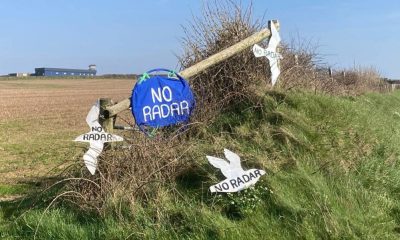
Contentious DARC space radar scheme to be decided by Welsh Government
-

 Business1 day ago
Port of Milford Haven named among UK’s best workplaces for women
-

 Health1 day ago
Record summer waits expose deepening crisis in Wales’ A&E departments
-

 Community1 day ago
Green Flag flies at Manorbier Community Garden for first time
-

 Local Government2 days ago
Call to end special planning delegation panel