


News
St Ishmaels farmer guilty of strangulation and assault after family dispute

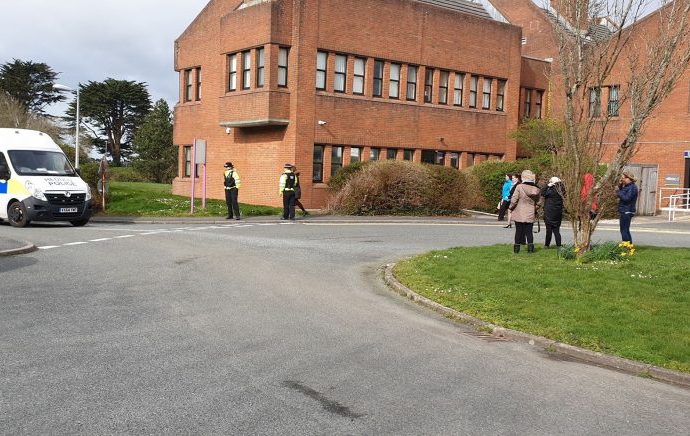
A PEMBROKESHIRE farmer has been found guilty of intentional strangulation, assault and criminal damage following a violent incident at his home earlier this year.
Philip Stoddart, aged 59, of Monk Hill Farm, St Ishmaels, was convicted at Haverfordwest Magistrates’ Court on Monday (Sept 1). The bench – Mr J Ross, Dr R Williams and Mr R John – found him guilty of:
- Assaulting Fraizer Stoddart by beating him on April 4, 2025.
- Intentionally strangling Fraizer Stoddart on the same date, contrary to the Serious Crime Act 2015.
- Causing criminal damage to a hooded top and a Playstation controller belonging to the victim.
Stoddart had denied the allegations when he first appeared in court on April 7. Following trial hearings through the summer, magistrates returned guilty verdicts at the conclusion of the case this week.
The court heard that the offences took place during a family dispute at Monkhill Farm. Stoddart, who farms in the St Ishmaels area, was arrested after police were called to the property.
He was initially remanded on conditional bail in April, before being allowed unconditional bail when the trial began in July. The prosecution was led by Ann Griffiths, while Stoddart was represented by defence solicitor David Weale.

Stoddart has been released on unconditional bail until sentencing, which is scheduled for Tuesday, September 23 at 11:00am at Haverfordwest Magistrates’ Court. A pre-sentence report has been ordered.
The intentional strangulation offence, introduced into law in 2022 to tackle domestic abuse, carries a maximum sentence of five years’ imprisonment if committed in the Crown Court.


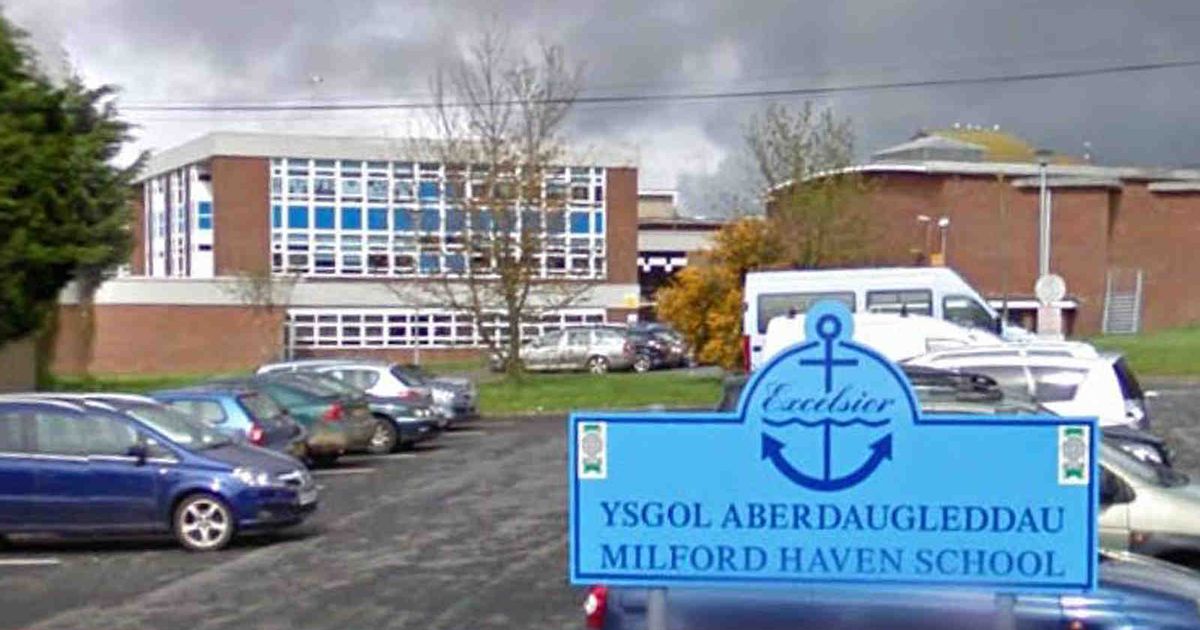
MILFORD HAVEN SCHOOL has thanked pupils and staff for the way they have supported one another during the current heatwave.
The school said cooperation and care across the school community had been greatly appreciated.
With tomorrow (Jun 25) forecast to be the hottest day of the current spell, pupils are being asked to come prepared by bringing plenty of water, wearing sunscreen, and staying as protected from the sun as possible.
Pupils will also be permitted to wear their PE kit to help keep cool.
The school said it will continue to monitor the situation closely and take all necessary steps to prioritise the safety and wellbeing of pupils and staff.

A POPULAR Pembrokeshire music shop is changing the way it operates, with Main Street Music confirming it will no longer trade as a retail shop from September 1.
The business said there will be an immediate 15% sale on all stock, but stressed that Main Street Music is not disappearing completely.
The owner said the decision had been made “with a heavy heart”, adding that the shop’s closure as a retail outlet would be a loss for Pembrokeshire as the county’s last professional guitar dealership.
He said his long-term passion had always been making musical instruments, something he had done since his teenage years, later receiving scholarships and a fellowship for his studies.
After college, he was given the opportunity to buy the business at the age of 24.
He said: “I have had an amazing time running this shop, giving it everything I’ve got, met some wonderful people and sold some incredible guitars.”
Although the business itself remains successful, he said tighter retail margins, dealership pressures and rising costs had made it difficult to grow in a way that would allow him to employ others and spend more time in the workshop.
The shop will eventually reopen as an appointment-only workshop and showroom for handmade guitars and repairs.
Current repair work will continue on a case-by-case basis by appointment only.
Main Street Music thanked customers for their support over recent years, saying the owner was proud of where the shop had been taken.
Caption:
Main Street Music will close as a retail shop from September 1, but will continue as an appointment-only workshop and showroom for handmade guitars and repairs.


ROADWORKS linked to structural repairs at Goscar House in Tenby are nearing completion, with Crackwell Street expected to reopen to through traffic today (Wednesday, June 24).
Scaffolding has now been removed from the property, with contractors carrying out a general clearance of the area.
The road has been closed for around five months while structural repair work has been taking place.
Local residents, businesses and visitors are expected to welcome the reopening, with Crackwell Street forming an important route through the town.
Pembrokeshire County Council has indicated that, all being well, the road will reopen later today.
Gareth Davies, of Gareth Davies Photography Tenby, said it was “good to see the removal of scaffolding today and general clearance on the property”.
He added that locals and visitors would be “so pleased” to see the road open once again.
Photo caption:
Clearance work: Contractors at Crackwell Street, Tenby, as scaffolding is removed from Goscar House (Pic: Gareth Davies).



Community18 hours ago
Manorbier fire scandal: Council’s payout just £63,777 after school destroyed
PEMBROKESHIRE COUNTY COUNCIL has accepted an insurance settlement which leaves it with just £63,777.07 after the catastrophic fire which destroyed...


News1 day ago
Bus overturns in major incident near Kidwelly
All passengers rescued as emergency services remain at scene A BUS overturned on the A484 between Kidwelly and Ferryside on...


Community2 days ago
Tenby Summer Spectacular cancelled amid council row over harbour access
Organisers say popular charity events cannot safely go ahead without clear powers to control crowds TENBY ROUND TABLE has announced...


News2 days ago
Motorcyclist dies after four-vehicle crash on A40 in Carmarthenshire
A MOTORCYCLIST has died following a four-vehicle collision on the A40 between St Clears and Whitland. Dyfed-Powys Police said the...


News2 days ago
Rhun ap Iorwerth urges new deal for Wales after Starmer quits
First Minister says next Prime Minister must focus on greater powers, fair funding and respect for Wales’ democratic mandate FIRST...


News2 days ago
How Labour’s landslide victory unravelled in just two years
Prime Minister announces resignation after losing support within his own party as Andy Burnham emerges as overwhelming favourite to take...


News3 days ago
Long Course Weekend set to bring thousands to Pembrokeshire
Three days of swimming, cycling and running will once again transform Tenby into one of the UK’s biggest endurance sporting...


Community3 days ago
The gentle giant behind the tattoos
Pembrokeshire security worker Josh Davies praised for professionalism, kindness and proving first impressions can be wrong JOSH Davies is hard...


Charity4 days ago
Toy Story fans fill charity toy box at Haverfordwest cinema
Donations pour in for SNAP Specialist Play as families embrace Toy Story 5 launch A TOY STORY-themed charity appeal at...


Community4 days ago
Lord Rhys emerges from the mist in St Davids
Giant puppet begins historic journey marking 850 years since the first Eisteddfod MIST swirled around St Davids Cathedral on Friday...
-

 Crime6 days ago
Milford Haven man jailed for breaching domestic violence protection order
-

 News6 days ago
Crash on Freeman’s Way causes school-run chaos across Haverfordwest
-

 Health4 days ago
Woman jailed assaults on police, harassment and XL Bully possession
-

 Crime4 days ago
Milford Haven woman spared jail despite string of shop thefts
-
 Crime6 days ago
Portfield Gate man faces careless driving allegation after Tufton crash
-
Community3 days ago
The gentle giant behind the tattoos
-

 Local Government6 days ago
Pembrokeshire faces accessible housing shortage as 403 people wait for homes
-

 News7 days ago
Brexit at 10: How Britain was sold a dream that cost us dearly