


Education
Schools must prioritise high-quality teaching to deliver Curriculum for Wales


A NEW thematic report from Estyn has underlined the pivotal role of high-quality teaching in realising the ambitions of the Curriculum for Wales and improving learner outcomes.
Drawing on visits to 25 schools across Wales – including primary, secondary and all-age settings – alongside recent inspection evidence, the report showcases strong practice where schools have embedded consistent, purposeful approaches to pedagogy. It also calls for a renewed national focus on teaching quality to ensure pupils across Wales benefit equally.
Inspectors found that many schools have established clear, whole-school visions for teaching that align with the curriculum’s purposes. Where this is supported by structured professional learning, teaching is having a positive impact on pupils’ progress, engagement and wellbeing.
However, the report also warns that in a minority of schools, expectations for teaching quality remain unclear, leading to inconsistent practice and weaker outcomes for learners.

His Majesty’s Chief Inspector of Education and Training in Wales, Owen Evans, said: “High-quality teaching is the heartbeat of education reform in Wales. As we move further into the implementation of Curriculum for Wales, our evidence shows that when schools put pedagogy at the centre of their work – and when teachers are supported through ongoing, collaborative professional learning – pupils thrive.

But this is not yet the case everywhere. We need a consistent, national commitment to improving teaching across all phases, so that every pupil, in every classroom, benefits from engaging and effective learning.”
The report identifies five key features of strong teaching:
- Clear learning intentions and well-structured lessons
- Purposeful curriculum planning that builds knowledge and skills over time
- Effective use of formative assessment to adapt teaching and encourage pupil reflection
- Use of authentic and local contexts to deepen engagement and strengthen identity
- Sustained, collaborative professional learning focused on pedagogy
The most effective schools are also embedding teaching priorities into self-evaluation and improvement planning, using wide-ranging evidence and professional dialogue to focus on how well pupils are learning, not just what is being taught.
The report cautions against superficial use of the curriculum’s four purposes in lesson planning or assessment. In some schools, staff are assessing directly against the four purposes rather than focusing on the underlying knowledge and skills pupils need to develop, leading to less meaningful learning experiences.
In addition, inspectors found that limited time and budget constraints in some schools restrict access to high-quality professional learning, with training often focusing on statutory compliance rather than deepening teaching expertise.
Estyn is calling on schools, local authorities and national partners to maintain a strong, system-wide focus on teaching. It says that sustained professional learning, reflective leadership and a collaborative culture are essential if the Curriculum for Wales is to achieve its full ambitions.
Image: File photo from Tenby Church School in Wales


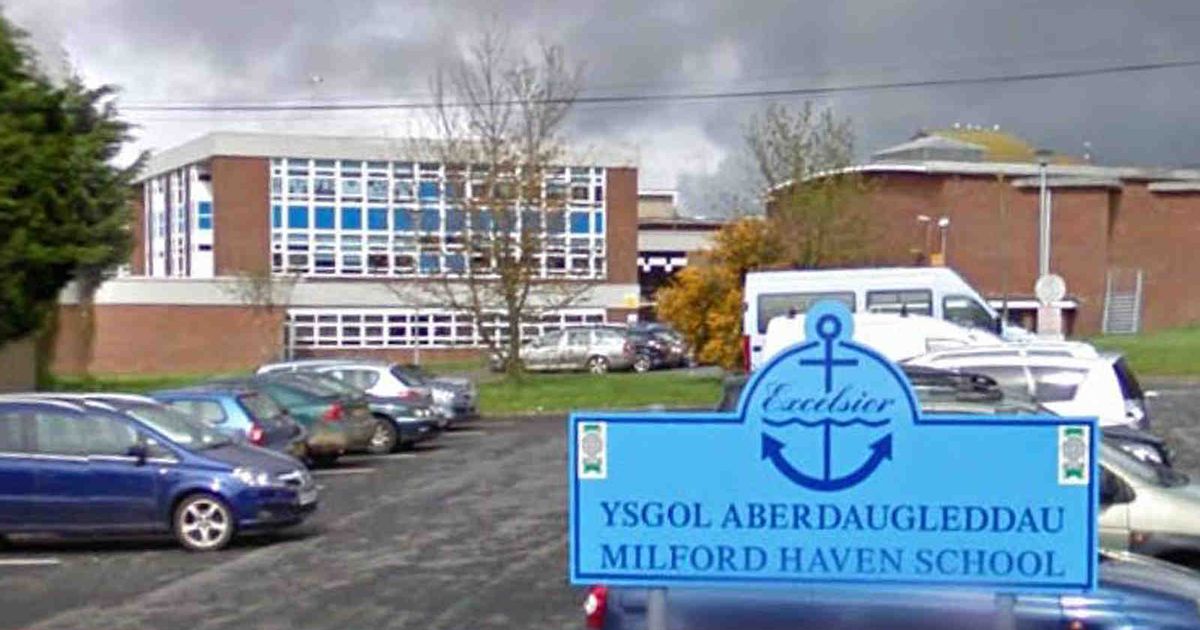
MILFORD HAVEN SCHOOL has thanked pupils and staff for the way they have supported one another during the current heatwave.
The school said cooperation and care across the school community had been greatly appreciated.
With tomorrow (Jun 25) forecast to be the hottest day of the current spell, pupils are being asked to come prepared by bringing plenty of water, wearing sunscreen, and staying as protected from the sun as possible.
Pupils will also be permitted to wear their PE kit to help keep cool.
The school said it will continue to monitor the situation closely and take all necessary steps to prioritise the safety and wellbeing of pupils and staff.

Union says Welsh Government has funded repairs, meals and swimming lessons but failed to address one of the biggest pressures facing schools
SCHOOL leaders have welcomed extra Welsh Government funding for repairs, free school meals and swimming lessons — but warned that pupils with additional learning needs have been overlooked.
The criticism came after the Welsh Government set out its supplementary budget for 2026-27, including £40m for school buildings and repairs, £15m to expand free school meals in secondary schools, and £2m for swimming lessons.
Laura Doel, national secretary of school leaders’ union NAHT Cymru, said the extra capital funding for school buildings was welcome and would “go some way to plugging the gap”.
She also welcomed the expansion of free school meals, saying no child should go hungry because of their parents’ financial circumstances.
But Ms Doel said the “significant omission” was the lack of additional funding for ALN provision.
She said: “It beggars belief that of money that has come to Wales thanks to investment into additional needs in England, not a penny has gone to support pupils with ALN in Wales.
“We have seen local authorities, directors of education and the profession united on the need for significant investment in supporting our most vulnerable learners, but this government has chosen to ignore the pleas for support.
“It calls into question whether education is a key priority for this government.”
ALN pressure
Additional learning needs provision has become one of the major pressures facing schools and councils across Wales, with rising demand for specialist support, assessments, staffing and placements.
School leaders argue that without dedicated funding, already stretched school budgets are being forced to absorb costs which can affect support for both ALN pupils and the wider school community.
The Welsh Government says the supplementary budget is designed to support key priorities, including public services, schools, health and the cost of living.
But NAHT Cymru said the absence of new ALN money was difficult to justify at a time when schools are repeatedly warning that vulnerable learners need more support.

The Herald has asked the Welsh Government how much of the school buildings funding will come to west Wales and why no specific additional allocation has been made for ALN provision.

PEMBROKESHIRE parents are being urged to check school messages as neighbouring Carmarthenshire prepares to close all secondary schools on Wednesday and Thursday because of extreme heat.
The move in Carmarthenshire has raised questions across west Wales about whether schools in Pembrokeshire could also be affected as temperatures continue to rise.
All secondary schools in Carmarthenshire are set to close for two days, with some primary schools also deciding to shut. There has been no blanket closure decision for primary schools in that county.
In Pembrokeshire, no county-wide secondary school closure announcement has been made at this stage.
Parents should check directly with their child’s school for the latest information, including texts, emails, school apps, websites and social media pages.
The situation may vary from school to school, depending on building conditions, ventilation, classroom temperatures and local circumstances.
The closures in Carmarthenshire come as Wales faces exceptional weather conditions, with concerns about pupil and staff welfare during the heatwave.
Many school buildings, particularly older sites, can become extremely hot during prolonged periods of high temperature.
A Wales-wide picture is now emerging, with schools in several counties considering closures, early finishes or remote learning.
For Pembrokeshire families, the key message is not to assume schools are closed unless official confirmation has been received.
The Herald will continue to monitor updates from Pembrokeshire schools and the county council.



Community18 hours ago
Manorbier fire scandal: Council’s payout just £63,777 after school destroyed
PEMBROKESHIRE COUNTY COUNCIL has accepted an insurance settlement which leaves it with just £63,777.07 after the catastrophic fire which destroyed...


News1 day ago
Bus overturns in major incident near Kidwelly
All passengers rescued as emergency services remain at scene A BUS overturned on the A484 between Kidwelly and Ferryside on...


Community2 days ago
Tenby Summer Spectacular cancelled amid council row over harbour access
Organisers say popular charity events cannot safely go ahead without clear powers to control crowds TENBY ROUND TABLE has announced...


News2 days ago
Motorcyclist dies after four-vehicle crash on A40 in Carmarthenshire
A MOTORCYCLIST has died following a four-vehicle collision on the A40 between St Clears and Whitland. Dyfed-Powys Police said the...


News2 days ago
Rhun ap Iorwerth urges new deal for Wales after Starmer quits
First Minister says next Prime Minister must focus on greater powers, fair funding and respect for Wales’ democratic mandate FIRST...


News2 days ago
How Labour’s landslide victory unravelled in just two years
Prime Minister announces resignation after losing support within his own party as Andy Burnham emerges as overwhelming favourite to take...


News3 days ago
Long Course Weekend set to bring thousands to Pembrokeshire
Three days of swimming, cycling and running will once again transform Tenby into one of the UK’s biggest endurance sporting...


Community3 days ago
The gentle giant behind the tattoos
Pembrokeshire security worker Josh Davies praised for professionalism, kindness and proving first impressions can be wrong JOSH Davies is hard...


Charity4 days ago
Toy Story fans fill charity toy box at Haverfordwest cinema
Donations pour in for SNAP Specialist Play as families embrace Toy Story 5 launch A TOY STORY-themed charity appeal at...


Community4 days ago
Lord Rhys emerges from the mist in St Davids
Giant puppet begins historic journey marking 850 years since the first Eisteddfod MIST swirled around St Davids Cathedral on Friday...
-

 Crime6 days ago
Milford Haven man jailed for breaching domestic violence protection order
-

 News6 days ago
Crash on Freeman’s Way causes school-run chaos across Haverfordwest
-

 Health4 days ago
Woman jailed assaults on police, harassment and XL Bully possession
-

 Crime4 days ago
Milford Haven woman spared jail despite string of shop thefts
-

 Crime6 days ago
Portfield Gate man faces careless driving allegation after Tufton crash
-
Community3 days ago
The gentle giant behind the tattoos
-

 Local Government6 days ago
Pembrokeshire faces accessible housing shortage as 403 people wait for homes
-

 News7 days ago
Brexit at 10: How Britain was sold a dream that cost us dearly