


Politics
National museums face almost £3m budget gap


THE PLANNED “business-as-usual” Welsh budget would leave national museums facing a near-£3m shortfall and lead to more cuts, the Senedd’s culture committee has heard.
Jane Richardson, chief executive of Amgueddfa Cymru (Museum Wales), was quizzed about the impact of Welsh Government plans for a standstill budget rising only in line with inflation.
She said a flat settlement in the draft budget – which will be initially unveiled on October 14, with the detail to follow on November 3 – would leave Amgueddfa Cymru nearly £3m short.
Giving evidence on October 8, the chief executive told the culture committee: “We would need to find ways of reducing programming and activities to address that shortfall.”
Plaid Cymru’s Heledd Fychan, who worked for Amgueddfa Cymru until her election in 2021, sought assurances that Wales’ seven national museums would be maintained.

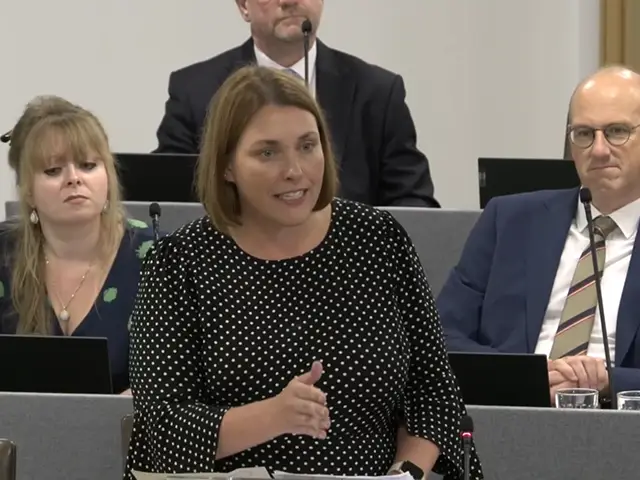
Kate Eden, who chairs Amgueddfa Cymru, replied: “They’re not currently under review, no. But, as you’re aware, we do always have to keep under consideration the span of activities that we undertake but currently there is no plan to actively review those.”
Pressed about rationalising the seven sites, Ms Richardson told Senedd Members: “Not under the current financial arrangements. Were we to have a drastic slashing of our budget, that’s of course what we would have to do.”
The chief executive stressed: “We’re very committed to being a national museum with national reach – we don’t want to be a museum of Cardiff plus a few others.”
Ms Richardson warned an inflationary increase for longer-term capital funding would be “very problematic” in terms of tackling a backlog of building works.
She called for more money to be “baselined” through the museum’s core “grant in aid” funding, warning of a significant resource drain from having to justify each project.
Despite dozens of redundancies due to a previous £4.5m budget deficit, Ms Richardson told the committee staff surveys show morale has since improved significantly.
She explained the museum has introduced new income streams – from commercial flannel production to brand licensing – while making a £1m operating profit from catering and retail.

On introducing charging, she said: “We believe that charging for added-value experiences is an important contribution to increasing the income we receive as a museum.”
Ms Richardson told the committee the museum would continue to pursue charging for activities such as certain exhibitions, including a “pay-what-you-can” model.
She explained the extended charging trial for the underground tour at Big Pit national coal museum, which runs until June 2026, will remain under review.
But she said: “There has been no drop off in the number of people or the percentage of visitors doing the underground tour… since the charge was introduced… feedback is clear that the overwhelming percentage of visitors support and understand the need for a charge.”
Ms Richardson raised the “Art of the Selfie” exhibition, saying Welsh Government insurance did not cover the cost of loaning the Van Gogh self-portrait from Musée d’Orsay in Paris.
She said the museum paid £40,000 for a private insurance policy for one painting but more than recovered the costs by charging a £1 minimum fee.
She told the committee: “Had it run at a loss, we would then have to think: can we afford to bring in such high-value and important works… to the people of Wales?”
Ms Richardson outlined the “NMC 100” vision for the 2027 centenary of the grade one-listed National Museum Cardiff which aims to display collections in a uniquely Welsh way.
The project would also see an overhaul of maintenance issues such as a leaking roof, with only 30% of the building, which is the size of 24 Olympic swimming pools, open to the public.
Ms Richardson stressed: “We owe it to the people of Wales, that we perform at the same level as other national museums both within the UK and more widely in Europe.”
Supporting Wales’ future generations commissioner’s calls for a bill to safeguard services, the former council director warned culture is always among the first areas to be cut.
During a difficult week, in which the St Fagans national museum was hit by a burglary, Ms Richardson told Senedd Members: “Wales should lead the world on culture… it’s our best and greatest export, so we should be proudly defending it.”



Pembrokeshire ports and Celtic Sea projects placed at centre of Wales’ green energy ambitions
MILFORD HAVEN and Pembroke Dock could be at the heart of a new offshore wind boom after Wales’ new energy minister said the sector could drive jobs, investment and coastal regeneration.
Adam Price, the Cabinet Minister for Enterprise, Connectivity and Energy, told the Global Offshore Wind 2026 conference that Wales was “open for business” and ready to work with industry, the UK Government and The Crown Estate.

For Pembrokeshire, the announcement is particularly significant. The Milford Haven Waterway is already being positioned as a key base for floating offshore wind in the Celtic Sea, with Pembroke Port earmarked as a major renewables hub. Plans for a dedicated floating offshore wind storage compound at Pembroke Dock have already secured planning permission.
Mr Price said: “I believe that the offshore wind sector has the potential to deliver high quality sustainable career opportunities for people in Wales.
“The offshore wind sector has a key role to play in bringing about the regeneration of coastal communities in both north and south Wales.
“Our role is to remove the blockers faced by the sector — whether in planning, access to finance or infrastructure.”
The Celtic Sea floating wind programme is expected to create major supply chain opportunities for Welsh ports, engineering firms, vessel operators and training providers. Marine Energy Wales has said the first 4.5GW of floating offshore wind in the Celtic Sea could create more than 5,300 jobs during construction.
The Port of Milford Haven has previously said the Haven’s existing energy expertise, heavy engineering base and deep-water port facilities make it well placed to support the industry.
Mr Price also welcomed UK Government support for Port Talbot, but Pembrokeshire businesses will be watching closely to ensure Milford Haven and Pembroke Dock receive a fair share of the investment.
Jessica Hooper, Director of RenewableUK Cymru, said offshore wind was “Wales’ next big industrial opportunity”, adding that it could be worth almost £5bn to Welsh businesses and deliver more than 3,000 long-term secure jobs.
For Milford Haven, long associated with oil, gas and marine industry, floating offshore wind could mark the next chapter in the Haven’s energy story.

Darren Millar says taxpayers’ money should be spent on Welsh priorities, not foreign projects
THE WELSH GOVERNMENT has been urged to stop spending taxpayers’ money on overseas projects and instead focus every pound on public services and the Welsh economy.
Darren Millar MS, Leader of the Welsh Conservatives, said ministers should scrap what he described as costly international schemes and overseas offices, arguing that the money would be better spent on hospitals, roads and businesses in Wales.
The Conservatives have repeatedly criticised Welsh Government spending on international projects, including tree planting in Nigeria, solar-powered canoes in the Amazon, and the maintenance of overseas offices.
Mr Millar said the Welsh Government had no responsibility for foreign policy and should concentrate on devolved priorities.
He said: “At a time when patients are being treated in hospital corridors, our road infrastructure is creaking and businesses are taxed to the hilt, it is simply wrong that Welsh taxpayers’ money is being wasted on overseas vanity projects.
“The first duty of the Welsh Government is to the people it serves. Plaid’s Finance Minister is being evasive over how to fund flagship policies, but could save millions of pounds by scrapping wasteful spending on non-devolved areas.
“Tree-planting schemes in Africa, solar-powered canoe projects in the Amazon and the maintenance of Welsh Government offices in exotic locations around the world, including three in China, represent spending on non-devolved areas, which are the responsibility of the UK Government.
“There’s no such thing as government money, only taxpayers’ money, and we should be able to see how every penny is spent.
“The Welsh Government must prioritise the needs of the people of Wales and focus spending on public services and building a stronger economy.”

WELSH LABOUR has called on the Plaid Cymru Government to set out whether it will act on a Senedd vote backing the creation of a new negotiating body for school support staff.
The proposed School Support Staff Negotiating Body would provide a national forum for discussing pay, terms and conditions for workers such as teaching assistants, caretakers, cleaners, cooks, administrative staff and lunchtime supervisors.
Supporters say the body is needed to address long-standing inconsistencies in pay and conditions across Wales, including concerns over term-time-only contracts, limited career progression and the lack of a dedicated national bargaining structure for non-teaching school staff.
The issue was raised in the Senedd by Welsh Labour’s Huw Thomas following the passing of an Opposition Day motion last week. The motion, tabled by Labour, secured cross-party support and called for progress on establishing a Welsh SSSNB.
During questions to the Cabinet Minister for Effectiveness and the Constitution, Mr Thomas pressed the Welsh Government on whether work had begun on legislation.
He asked: “Can you confirm that as the Cabinet Minister responsible for the legislative agenda, you are respecting the Senedd’s wishes and have begun preparing legislation for a School Support Staff Negotiating Body?”
Welsh Labour says the proposal would bring Wales into line with England, where legislation has already been taken forward to create a School Support Staff Negotiating Body for workers in state-funded schools.
The policy was also a Welsh Labour manifesto pledge and has been backed by trade unions including UNISON and GMB, which have campaigned for better recognition, fairer pay and clearer career structures for school support staff.
Labour argues that support staff play a vital role in the day-to-day running of schools and in supporting pupils’ learning, wellbeing and safety, but that their pay and conditions have not always reflected the importance of their work.
Mr Thomas, Welsh Labour’s spokesperson for Finance, Democracy, Citizenship and the Welsh Language, also pressed ministers for assurances that manifesto commitments would appear in the Programme for Government in the form originally promised.
Labour said the Plaid Cymru Cabinet Minister declined to give an unambiguous commitment that all manifesto pledges would be carried forward.
However, Opposition Day motions passed by the Senedd do not in themselves create legislation. They place political pressure on ministers to respond, but the Welsh Government is not automatically required to introduce a Bill.
Any new negotiating body would also require detailed work on funding, the role of local authorities, union representation, school budgets and how national terms would interact with existing council and school employment arrangements.
Welsh Labour says ministers must now provide a timetable for legislation and explain how they intend to work with unions, councils, schools and support staff on the creation of the body.



Climate52 minutes ago
Offshore wind ‘could bring new generation of jobs to Milford Haven’
Pembrokeshire ports and Celtic Sea projects placed at centre of Wales’ green energy ambitions MILFORD HAVEN and Pembroke Dock could...


Community21 hours ago
Police officer hailed hero after midnight sea rescue in Milford Haven
PC swam 100 metres offshore to save distressed woman heard calling for help in darkness A DYFED-POWYS POLICE officer has...


Local Government1 day ago
Security privately arranged by Mayor at Beating of the Bounds
HAVERFORDWEST TOWN COUNCIL has confirmed that security personnel seen at this year’s Beating of the Bounds were privately arranged and...


Business2 days ago
Celtic Freeport five-year plan puts Milford Haven at centre of green energy future
Strategy promises investment, skilled jobs and new supply chains, but major barriers remain over grid connections, planning and delivery THE...


Education2 days ago
Closure of Ysgol Clydau approved after emotional council debate
COUNCILLORS WARNED RURAL COMMUNITIES WILL REMEMBER DECISION PEMBROKESHIRE councillors have voted to close Ysgol Clydau following an emotional debate over...


Education2 days ago
Manorbier school closure process to continue after narrow council vote
Questions remain over insurance, rebuilding costs and possible legal action by Diocese PEMBROKESHIRE councillors have voted to press ahead with...

Community2 days ago
The father, son and daughter lifeguard trio saving lives in Pembrokeshire
A FATHER, son and daughter are preparing to help keep beachgoers safe on the Pembrokeshire coast this summer as part...


Community3 days ago
Beating of the Bounds brings music, boats and tradition to Haverfordwest
CENTURIES-OLD CEREMONY DRAWS FAMILIES TO THE RIVERSIDE HAVERFORDWEST’S historic Beating of the Bounds returned on Sunday (Jun 14), with boats,...


Community3 days ago
Milford Haven School pupil praised after stepping in during real-life emergency
A YEAR 11 pupil at Milford Haven School has been praised after putting his first aid training into action to...


Community3 days ago
River festival brings crowds to Haverfordwest
A CELEBRATION of the River Cleddau brought crowds into Haverfordwest on Saturday (June 13) as the town’s River Festival returned...
-

 Community3 days ago
Pembrokeshire Chess Club crowned Welsh champions
-
Local Government1 day ago
Security privately arranged by Mayor at Beating of the Bounds
-

 Crime6 days ago
Pembroke Dock teenager sentenced over train strangulation attack
-

 Education5 days ago
Diocese threatens legal action as Manorbier school closure battle intensifies
-

 Crime6 days ago
Man accused of six rapes including alleged Haverfordwest offence
-

 Local Government5 days ago
Taxi suspended after county-wide licensing checks
-

 Crime6 days ago
Brothers found guilty of causing death of Welsh dad in ‘reckless’ race
-

 Crime5 days ago
Currys worker denies stealing £2,500 of store stock