


Education
Welsh Conservatives cautiously welcome AI in schools but warn against overreliance


THE WELSH CONSERVATIVES have given a cautious welcome to the Labour Government’s plans to embed artificial intelligence (AI) into Wales’ updated school curriculum — but have warned against overreliance on technology in classrooms.
Under the proposals, AI tools will be introduced to assist both teachers and pupils, with the Welsh Government suggesting the technology could reduce administrative burdens and enhance learning experiences. Ministers claim AI can help teachers tailor lesson plans, track pupil progress, and provide personalised feedback.
However, Welsh Conservative Shadow Cabinet Secretary for Education, Natasha Asghar MS, has urged the Government to ensure the technology is used to support teachers rather than replace them.
Ms Asghar said she recognises AI’s potential to ease teacher workloads and improve efficiency but expressed concern that, without proper safeguards, the technology could undermine creativity, critical thinking, and genuine learning.
She said: “AI can be a fantastic tool when used correctly, helping teachers manage their workload and freeing up more time for classroom interaction and Welsh teachers’ wellbeing.

“However, there is a real danger this could become a slippery slope, where the technology slowly takes over vital aspects of education and blurs the line between helpful support and overreliance.
“Encouraging pupils to use AI without proper safeguards risks creating a culture where students rely on it to produce their work, undermining creativity, critical thinking, and the art of original writing. We must ensure AI enhances learning and does not replace it.”
Education experts have also raised questions about the Welsh Government’s ability to deliver sufficient training and infrastructure for schools, particularly in rural areas where internet connectivity remains inconsistent.
The announcement forms part of the Labour Government’s broader “Digital Wales” strategy, which aims to prepare pupils for future technological change while ensuring ethical and responsible AI use.
The Welsh Conservatives have called for transparency on how AI systems will be monitored, data privacy protected, and bias prevented, emphasising that “human oversight and traditional teaching values must remain at the heart of education.”


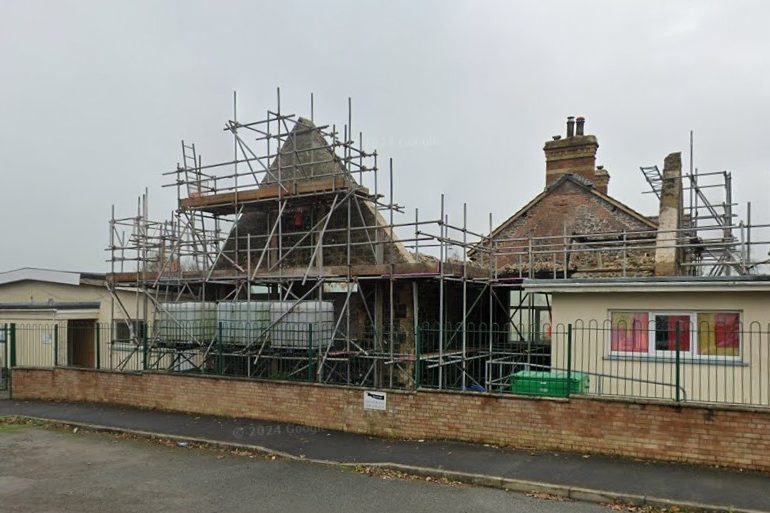
THE FINAL decision to close fire-ravaged Manorbier school has been given the go-ahead, despite a heartfelt last-minute plea by local councillor Phil Kidney to keep it open.
Back in March, Pembrokeshire County Council members backed a recommendation that the Director of Education at Pembrokeshire County Council be authorised to publish a statutory notice to discontinue Manorbier Church in Wales voluntary controlled school.
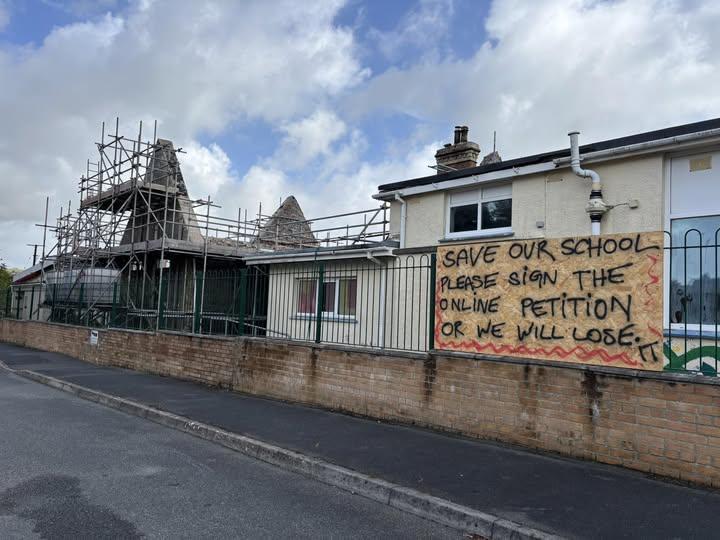
Manorbier Church in Wales VC School and its adjoining schoolhouse was severely damaged by a fire in October 2022, which broke out in the school roof space.
After that, a ‘school from school’ was set up in Jameston Village Hall.
It had been hoped the school would be rebuilt, but last year councillors backed a report of the School Modernisation Working Group which, amongst other recommendations, included a statutory consultation on proposals to discontinue Manorbier Church in Wales Voluntary Controlled School.
The decision attracted strong local opposition, with more than 1,500 people signing a petition on the council’s own website calling for the school to be rebuilt.
The formal consultation for the discontinuation of Manorbier closed last December.
However, many of the council’s figures, especially on the level of surplus places at the school, have been strongly disputed.
At a special extraordinary council meeting held on June 15, members were asked to consider a report on a summary of 62 objections received in respect of the proposal to discontinue Manorbier VC school, which included options to end that discontinuation or to launch a fresh consultation.
However, it was recommended, in a report present by deputy leader Cllr Paul Miller, who now also has responsibility for education, for the discontinuation be proceeded with.
At the meeting, local councillor Phil Kidney, who has been a staunch supporter of the keeping the school open, thanked the campaigners who fought for it and the dedication of the staff, including headteacher Sharon Davies.
Cllr Kidney said: “The way this authority has treated her and the staff is quite frankly amazing; we have all let these good people down.


“We’ve all let these people down, the way this council has handled this situation is appalling; from day one not one of the executives came up to see these children, no-one came out; if that was Haverfordwest or Tenby they’d be all over the place.”
He said the wording of the consultation had seen more mentions of St Florence [ the alternative school for pupils in the event of a discontinuation] than Manorbier, describing it as “like a brochure for St Florence”.
He also warned the Diocese of St Davids, which had always pressed for the school to be rebuilt, would not allow the council to “walk away from our liabilities lightly”.
“We’ve been promised by two leaders and the chief executive: ‘Don’t worry we’ll rebuild,’ sometimes you’ve got to be big enough an honour your promises; do the right thing today, vote for Manorbier and keep it open.”
Members later heard the diocese had, in a letter received by councillors, made “damning accusations the council is being biased against voluntary controlled schools,” with Cllr Jamie Adams saying the council administration should be “ashamed of this debacle”.
Cllr Miller said his only consideration was “the future welfare of the children,” adding: “I do not think 20 children educated in a welfare centre in Jameston is the best for them.”
He said that no pupils would have to travel more than 2.1 miles for their education as a result of a closure, Cllr Kidney disputing that figure more like 3.5 miles.
Cllr Miller said the wording in from the letter from the diocese “which had a dog in the fight” was a one-sided legal argument, adding the council had actually opened VC schools.
Cllr Aled Thomas, chair of the working group which had presented the proposals in the first place, said: “The whole thing is an omnishambles, a total mess of how it’s been handled, but we are where we are.
“The important thing to remember is the future for these children, there will be kids in that school that have never been taught in a classroom setting. Tough decisions are never going to be easy; not a single one of us got elected wanting to be in this position.
“I’m no friend of the administration but we need to look at it holistically.”
Members, by 30 votes to 23, with four abstentions, supported the final steps to close the school.
Posting after the decision, the Friends of Manorbier School said: “Today is a difficult day, as the final decision to close Manorbier Primary School has now been made.
“There were some heartfelt comments and statements during the council meeting. The children, staff, parents and wider community have been waiting far too long for a decision. While this outcome was not unexpected, it is still hard to hear those final words spoken aloud.”
It added: “There are still questions that need to be asked, but the fight to keep the school open has come to an end. Our focus must now be on supporting the children and their families as they prepare for the transition ahead. The staff, too, finally have an answer.”

COUNCILLORS WARNED RURAL COMMUNITIES WILL REMEMBER DECISION
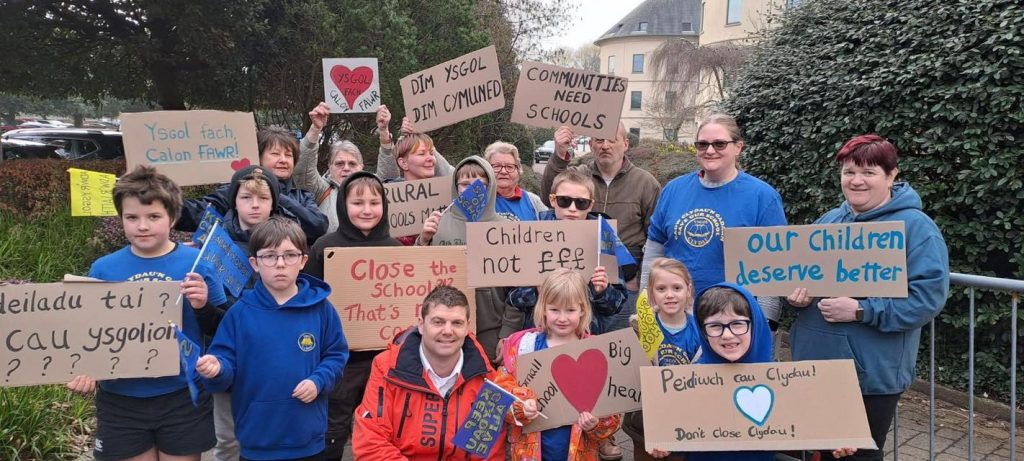
PEMBROKESHIRE councillors have voted to close Ysgol Clydau following an emotional debate over the future of rural education and Welsh-language provision in the county.
The recommendation was carried by 32 votes to 21, with one abstention.
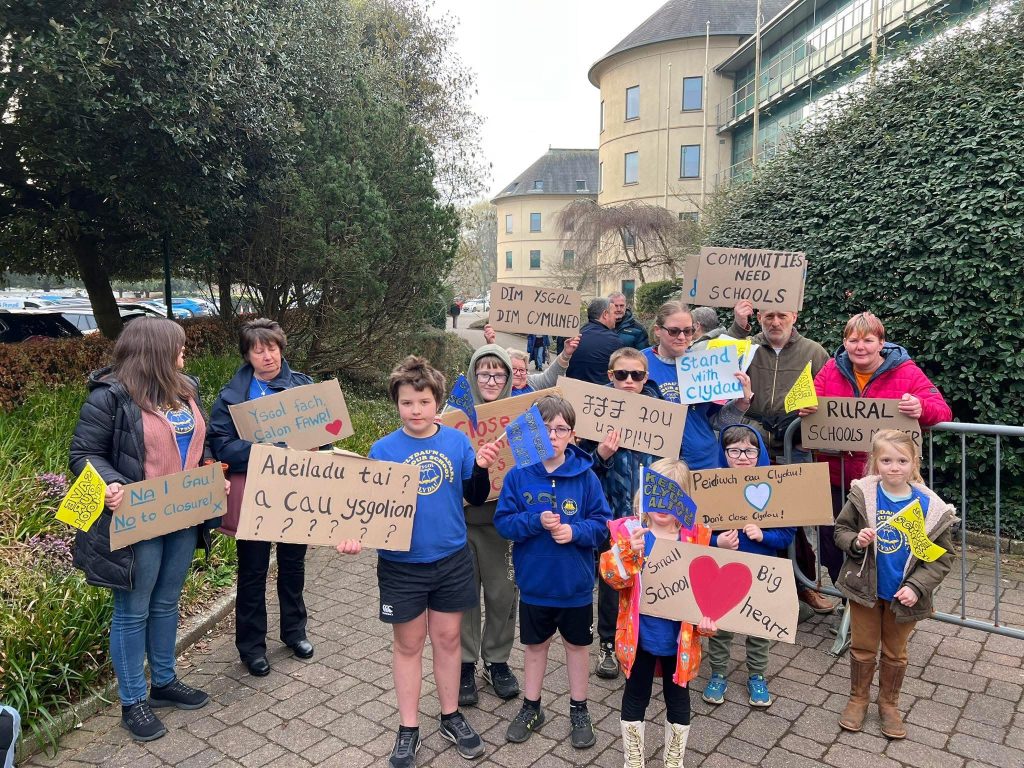
The decision followed strong appeals from several councillors, who warned that closing the school would damage village life, weaken rural communities and risk pushing some families towards home schooling.
Cllr Iwan Ward, the local member, opened the debate by urging councillors to reject the proposal.
He questioned whether the views of local people had genuinely been listened to during the consultation process.
“If the overwhelming concerns of local people have not been listened to, then what was the point of it?” he said.
“This was not a box-ticking exercise. It was a chance to listen.”
Cllr Ward said the people of Clydau had spoken “passionately and clearly” about the importance of the school.
“The school is not just a building,” he said. “It is the heart of the community, where families come together and where the Welsh language is passed on to future generations.”
He warned that closure would affect the viability of young families living in the area and said alternatives, including federation and other collaborative arrangements, had not been properly explored.
“As councillors, we have a responsibility not just to look at budgets, but at the people behind them,” he said.
Cllr Ward added that “local democracy does not end when this meeting closes,” warning that people would remember “who stood up for their communities and who chose to protect the heart of rural Pembrokeshire.”

He said the decision would affect communities “long after we have ended our terms, long after we leave this chamber.”
“Today, we have the opportunity to send a message that rural communities matter, Welsh education matters, and local people matter,” he said.

Rural schools ‘lost forever’
Cllr Anji Tinley also spoke against the recommendation, claiming there had been a wider policy of “starving” rural schools in order to support larger ones.
She warned that once rural schools closed, they were “lost forever”.
Cllr Tinley said she had “never known any other school” bring forward so many options publicly in an attempt to avoid closure.
She told councillors: “When are we going to wake up and listen?”
She said the issue was not simply about pupil numbers or finance.
“Children are more than a spreadsheet number on a desktop,” she said.
Her comments were met with applause from the public gallery.

Welsh language concerns
Cllr Huw Murphy, speaking in Welsh, reminded councillors that he had already made his position clear during a previous council meeting.
“Back in March, I said I would not support closing a school where the Welsh language is strong,” he said.
Referring to the upcoming National Eisteddfod in Pembrokeshire, Cllr Murphy added: “The National Eisteddfod is being held here soon, and I cannot support closing a school that can be seen from the Maes.”
He argued that pupil numbers alone should not determine whether a school remained open.
“Numbers are not the only reason for closing a school,” he said. “If that were true, we could close many schools.”
Cllr Murphy also rejected cost as a justification, saying it was inevitable that providing education in rural communities would cost more than in urban areas.
He pointed to Welsh Government ambitions to reach one million Welsh speakers by 2050, questioning whether any future administration would abandon that aim.
In an emotional intervention, he referenced the Manic Street Preachers song If You Tolerate This Your Children Will Be Next.
“If we close this school, more will follow,” he warned.
‘Duty beyond politics’
Speaking in favour of closure, Cllr John Davies said the issue was not confined to Pembrokeshire, pointing to councils across Wales also considering school closures.
He said Conwy, Gwynedd, Carmarthenshire and Ceredigion were all facing similar pressures.
“Forget the parties in administration,” he said. “We have a duty beyond politics to all children in the county.”
Cllr Davies said there were around 2,000 fewer children in Pembrokeshire than a decade ago, and described the proposed closure of Ysgol Clydau as “extremely sad”.
He said the school itself had been created by combining two other schools, and recalled that when an extension was built there were 71 pupils on roll.
Cllr Davies said the decline reflected wider changes in rural life, including depopulation and changes in farming, with fewer but larger farms.
He added that the council had also closed schools in towns, and said members had a responsibility to all children in Pembrokeshire.
Recalling his own experience, he said he had been a pupil at Eglwyswrw when it closed in 1972, moving from a school of around 30 pupils to one with about 90.
He described that experience as positive and said this was what the council would seek to offer affected pupils.
Cllr Davies said only 14 pupils came from the school’s catchment area, adding that some parents had already “voted with their feet”.
“It is not councils that close schools,” he said. “It is parents who vote with their feet. There is some truth in that saying.”
He concluded by saying that, after 27 years on the council, he would “sadly” vote for closure because he did not believe the school was sustainable in the 21st century.
‘Soul of a community’
Cllr Phil Kidney said he could not support the recommendation, warning that some children would struggle if moved into larger schools.
He asked: “Are we setting these kids up to fail? Are we forcing parents down the home-schooling route?”
Cllr Kidney said he would be voting against the proposal.
Referring to a previous school closure in Penally, he said the local vicar had told him that when the school shut, children stopped playing in the village.
“It rips the soul out of a community,” he said.
Cllr Bethan Price praised the school’s social media campaign and said it had helped highlight the strength of local feeling.
She told the meeting: “We need to keep the Welsh language going.”
Cllr Price said she was there to support both the school and the Welsh language.
Her comments were also met with applause from the public gallery.
Support for closure
Cllr Paul Miller spoke in favour of the closure proposal, saying alternative Welsh-language provision remained available to families in the area.
He told members: “Alternative Welsh language provision is available.”
Cllr Miller added that he believed closure was in the best long-term interests of children living within the catchment area.
“I believe that closing the school is in the best long-term interests of pupils in that catchment,” he said.
Home schooling warning
Cllr Ward later responded by saying travel times were not the only issue, warning that many parents were now considering home schooling.
He said he had spoken to parents and believed as many as 50% of children could be home schooled if the closure went ahead.
Cllr Ward said: “I am not a fan of home schooling. It is not right. They need a school background and they need to be in school with other children.”
He warned the closure would have far-reaching consequences beyond the school itself.
“This will be devastating for Pembrokeshire and our local communities,” he said.
Several councillors warned the decision would be remembered by rural communities and could have political consequences at future elections.
Despite the objections, councillors voted 32 in favour of the recommendation, 21 against, with one abstention.
The recommendation was therefore carried.
Reaction
Following the decision of Pembrokeshire County Council to close Ysgol Clydau, Bethan Williams on behalf of Cymdeithas yr Iaith said: “One of the councillors said that closing rural schools is a symptom of the wider problem of depopulation. It is true that the decline in pupil numbers is a symptom, and one that is common to several counties, but rather than addressing the wider problem, the council decided to close the school today.
“Similarly, maintaining and developing rural schools is not the only solution to this, but it is a fundamental part of the solution. There are plans to build more affordable housing in the village of Tegryn, but what is the point of those houses without schools for children?
“There is an opportunity for the new government to give new hope to our Welsh-speaking rural communities, and we will be pressing them to make use of that opportunity.”
Questions remain over insurance, rebuilding costs and possible legal action by Diocese
PEMBROKESHIRE councillors have voted to press ahead with the statutory process which could lead to the closure of Manorbier Church in Wales VC School, despite warnings of possible legal action, strong community opposition and unresolved questions over the cost of rebuilding the fire-damaged school.
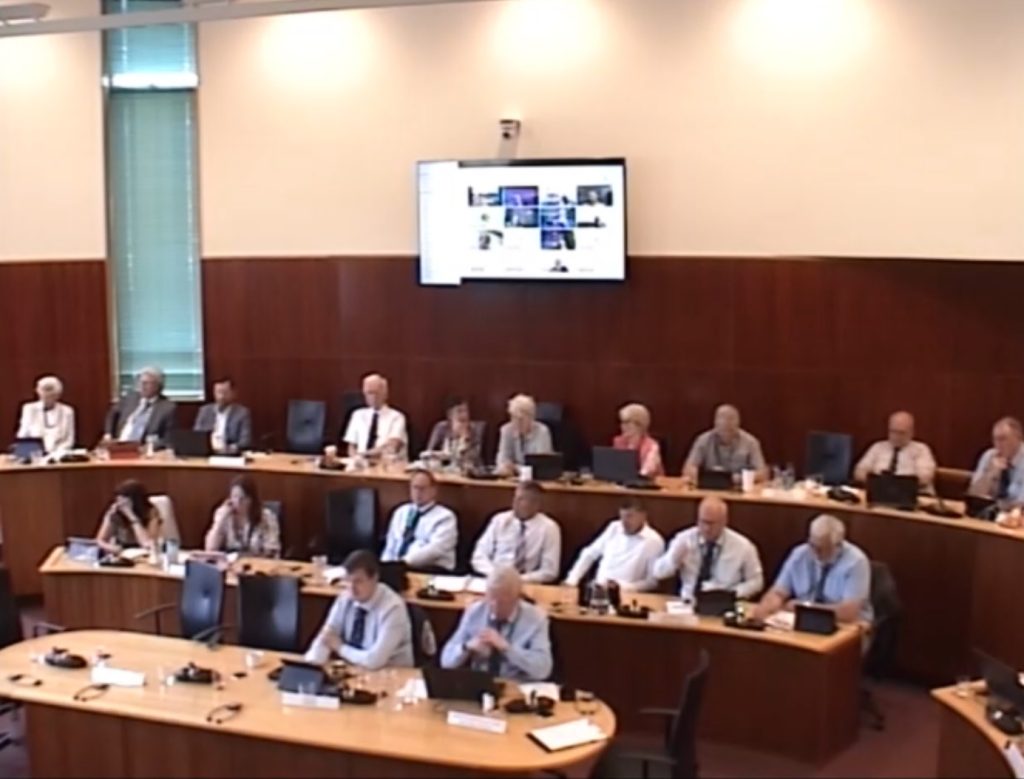
At a full council meeting on Monday (Jun 15), members voted by 30 votes to 23, with four abstentions, to continue with the proposal to discontinue the school.
The decision does not mean the school will close immediately. It allows Pembrokeshire County Council to move to the next stage by publishing a statutory notice. That will trigger a formal objection period before the matter returns for a final decision.
However, the vote followed a lengthy and tense debate in which councillors questioned whether they had been given enough information about the legal, financial and practical consequences of closure.

Legal threat
The school has been operating from Jameston Community Hall since a major fire damaged the original Manorbier school building in October 2022.
In recent days, the St Davids Diocesan Board of Finance, which owns the freehold of the school site, has stepped up its opposition to the closure plan.
Solicitors acting for the Diocese have warned the council that the process is, in their view, procedurally flawed. They have also placed the authority on notice that legal action, including judicial review, may follow if the proposal is ratified.
The Diocese argues that the school should be fully reinstated rather than closed, and says the council cannot simply return a damaged building and walk away.
It has also raised questions about whether insurance money from the fire should be used to restore the site, and whether the council has met its legal duties in relation to maintaining the school premises.
Questions over insurance
One of the biggest unanswered questions is why the school was not insured in a way that has allowed full reinstatement after the fire.
Councillors were told during the debate that major questions remain about the cost of reinstatement, the position of insurers, and the financial liability that could fall on the council if the school is discontinued.
Cllr Huw Murphy raised concerns about how members had reached this point, questioning how the council had ended up in an ongoing dispute with the Diocese.

He also referred to confusion around cost figures, including why councillors had previously been told figures could not be disclosed, before a figure understood to be in the region of £5m entered public discussion.
Several councillors questioned whether members were being asked to make a decision without all the facts in front of them.
Community opposition
The proposal has faced overwhelming opposition locally.
A consultation report showed that 252 responses were received, with 90.48% opposing the proposal to discontinue the school.
Parents, residents and campaigners have argued that Manorbier School is more than a building, describing it as a vital community asset and a nurturing environment for young children.
Objectors say closure would damage village life, reduce the attractiveness of the area for young families and undermine the long-term sustainability of the community.
Concerns have also been raised over transport, narrow roads, parking issues and the loss of the ability for some families to walk to school.
Supporters of the school have repeatedly argued that the fire should not be used as a reason to close Manorbier, and that the proper response should be to rebuild.

Education and learner experience
The Diocese has also challenged any suggestion that the quality of education at Manorbier justifies closure.
In a letter sent to councillors before the vote, the Diocesan Director of Education, Rev’d Canon Chancellor John R Cecil, said Manorbier had received a strong Estyn report while operating from temporary accommodation at Jameston Community Hall.
He argued that the council had not given sufficient consideration to the learner experience, and said managing surplus places did not automatically mean closing schools.
The letter also warned councillors that they needed “accurate and full information” before voting, drawing comparisons with Pembrokeshire County Council’s recent High Court defeat over its Article 4 direction, where judges found councillors had been presented with flawed and incomplete information.
Councillors split
During the debate, a number of councillors voiced concern about the process.
Some questioned whether the Diocese had been properly engaged with, whether the council had fully explored rebuilding options, and whether the legal risks had been properly explained.
Others argued that the council had to make difficult decisions in the context of falling pupil numbers, surplus places in nearby schools and the condition of the Manorbier building.
Council officers have recommended proceeding with the statutory notice, saying the proposal is based on the future sustainability of education provision, the availability of school places, the condition and suitability of buildings and value for money.
But opponents warned that the financial case for closure remains unclear if the council could still face major liabilities linked to the fire-damaged building.
What happens next
The council will now move to publish a statutory notice proposing the discontinuation of Manorbier VC School.
That will open a formal objection period, after which an objection report must be prepared and brought back to councillors before a final decision is made.
The Diocese has not yet confirmed whether it will take legal action following Monday’s vote, but its solicitors have made clear that judicial review remains an option.
For parents and campaigners, the fight is not over.
The key questions now are whether the school was properly insured, what the true cost of rebuilding or closure will be, whether the council can lawfully proceed in the face of Diocese opposition, and whether councillors will ultimately be asked to make a final decision under the shadow of a potential High Court challenge.



Business1 day ago
Celtic Freeport five-year plan puts Milford Haven at centre of green energy future
Strategy promises investment, skilled jobs and new supply chains, but major barriers remain over grid connections, planning and delivery THE...


Education1 day ago
Closure of Ysgol Clydau approved after emotional council debate
COUNCILLORS WARNED RURAL COMMUNITIES WILL REMEMBER DECISION PEMBROKESHIRE councillors have voted to close Ysgol Clydau following an emotional debate over...


Education1 day ago
Manorbier school closure process to continue after narrow council vote
Questions remain over insurance, rebuilding costs and possible legal action by Diocese PEMBROKESHIRE councillors have voted to press ahead with...

Community1 day ago
The father, son and daughter lifeguard trio saving lives in Pembrokeshire
A FATHER, son and daughter are preparing to help keep beachgoers safe on the Pembrokeshire coast this summer as part...


Community2 days ago
Beating of the Bounds brings music, boats and tradition to Haverfordwest
CENTURIES-OLD CEREMONY DRAWS FAMILIES TO THE RIVERSIDE HAVERFORDWEST’S historic Beating of the Bounds returned on Sunday (Jun 14), with boats,...


Community2 days ago
Milford Haven School pupil praised after stepping in during real-life emergency
A YEAR 11 pupil at Milford Haven School has been praised after putting his first aid training into action to...


Community2 days ago
River festival brings crowds to Haverfordwest
A CELEBRATION of the River Cleddau brought crowds into Haverfordwest on Saturday (June 13) as the town’s River Festival returned...


Charity2 days ago
Voices at the Castle hailed as unforgettable night after weather setback
Russell Watson headlines spectacular charity concert at Pembroke Castle A SPECTACULAR evening of live music at Pembroke Castle has been...

Local Government3 days ago
Council admits 74 rights of way complaints remain unresolved
Key post vacant since February as walker raises safety concerns over paths near Llanteg and Amroth PEMBROKESHIRE COUNTY COUNCIL has...


Education4 days ago
Diocese threatens legal action as Manorbier school closure battle intensifies
Church says council could face judicial review over fire-hit school A BITTER row over the future of Manorbier Church in...
-

 Community2 days ago
Pembrokeshire Chess Club crowned Welsh champions
-
Education4 days ago
Diocese threatens legal action as Manorbier school closure battle intensifies
-
 Crime7 days ago
Haverfordwest pair accused of £80,000 rogue trading frauds
-

 Crime5 days ago
Man accused of six rapes including alleged Haverfordwest offence
-

 Crime5 days ago
Pembroke Dock teenager sentenced over train strangulation attack
-

 Local Government4 days ago
Taxi suspended after county-wide licensing checks
-

 Crime4 days ago
Currys worker denies stealing £2,500 of store stock
-

 Crime5 days ago
Brothers found guilty of causing death of Welsh dad in ‘reckless’ race