


News
Coroner finds missed opportunities in death of Pembrokeshire teenager


Judicial review forced full inquest after initial decision overturned
A PEMBROKESHIRE teenager who took her life while suffering from a psychotic episode might still be alive today had she been prescribed anti-psychotic medication and given a proper safety plan, a coroner has concluded — more than three years after her mother successfully fought a judicial review to secure a full inquest.
Sixteen-year-old Kianna Patton was found dead at the derelict Commodore Hotel in Pembroke Dock on October 24, 2019. The inquest, which concluded on Thursday (Nov 13), found that serious failings in her mental health care “probably contributed” to her death.
Early warning signs
The inquest heard that Kianna first came to the attention of mental health services in January 2018, when her GP referred her to the Child and Adolescent Mental Health Service (CAMHS) after she reported self-harming and experiencing panic attacks.
In May 2018, she took an overdose of Tramadol and told doctors she wanted to die. She was referred again to CAMHS and prescribed antidepressants. By December 2018, she was discharged after being assessed as no longer posing a risk to herself.
By mid-2019, Kianna had left the family home to live with friends in a household where cannabis was used. Her mother, Joanne Patton, repeatedly raised concerns with both police and social services but said she was “passed from one to the other”.

Mental health relapse
In September 2019, Kianna told her GP she had been hearing voices for several months and feared she was developing schizophrenia. The GP made an urgent referral to CAMHS.
An assessment later that month classed her as “low risk”, despite her describing intense sadness and auditory hallucinations. She had stopped taking antidepressants, and there was a known family history of schizophrenia — but no anti-psychotic medication was prescribed.
On October 14, Kianna told clinicians she had thoughts about ending her life but would not act on them. On October 21, she reported hearing voices telling her to “off herself”. Two days later she went missing, and on October 24, police found her body at the abandoned hotel.
Expert criticism
Independent psychiatrist Dr Joana Sales told the inquest that while early treatment was reasonable, there was “no effective safety plan” in place in the weeks before Kianna’s death. She said the failure to prescribe anti-psychotic medication or involve a crisis team left a vulnerable teenager managing complex symptoms alone.

Dr Sales added that Kianna’s cannabis use may have worsened her psychosis, but appropriate medication could have stabilised her condition within days. A structured safety plan, she said, could have prevented her death.
Coroner’s findings
Pembrokeshire Coroner Gareth Lewis accepted those conclusions, ruling that the failure to prescribe medication and put a safety plan in place “probably contributed” to Kianna’s death.
He found that she died by hanging on October 23, 2019, her mind disturbed by untreated psychotic symptoms. The coroner noted that Hywel Dda University Health Board has since taken steps to address several of the failings identified through an internal review.

Mr Lewis said there was “no act or omission” by Pembrokeshire County Council that would likely have changed the outcome but extended his “deepest sympathies” to Kianna’s family and thanked all who took part in proceedings.
Judicial review and right to life
The full inquest only took place after Kianna’s mother launched a judicial review challenging the coroner’s original decision not to hold an Article 2 inquest — one that examines whether state bodies failed in their duty to protect life.
In June 2022, Mrs Justice Hill ruled in R (Patton) v HM Assistant Coroner for Carmarthenshire & Pembrokeshire that the earlier decision was legally flawed and must be reconsidered. The High Court found the coroner had not properly examined whether health and social services had a statutory duty to safeguard Kianna under the Social Services and Well-being (Wales) Act 2014.
The judgment was seen as a landmark case for defining how Article 2 of the European Convention on Human Rights applies to vulnerable young people at risk of self-harm.
A mother’s long fight
Mrs Patton’s determination led to renewed scrutiny of how agencies share information between health, social services, and police. The High Court’s intervention ensured that her daughter’s death was not dismissed as an isolated tragedy, but examined as evidence of wider systemic failures in child mental health care and safeguarding across Wales.
Her fight for answers is a powerful example of how one family’s persistence can expose critical gaps in public services and help drive change.

Why the judicial review matters
How a mother’s legal fight changed the inquest
The High Court in Cardiff ruled in 2022 that the first coroner’s decision on Kianna Patton’s death was wrong in law — forcing a full reinvestigation.
Mrs Justice Hill decided that the earlier ruling failed to properly consider whether public bodies had a legal duty to protect Kianna’s life under Article 2 of the Human Rights Act. That duty requires the state to have effective systems and safeguards in place to protect vulnerable people.
Why this was so important
The court said coroners must look not only at what happened to an individual, but at whether the systems meant to protect them actually worked. That means an inquest can now ask wider questions — about how health services, social services and police handled the case — not just how the person died.
What went wrong before
The original coroner decided that Article 2 didn’t apply because Kianna was living with friends and not formally “in care.” The High Court said that was too narrow. Even though she had a roof over her head, the question was whether that home was safe and suitable, given her mental health problems and cannabis use there.
If the council had a duty to provide her with different accommodation under the Social Services and Well-being (Wales) Act, that could have made her a “looked-after child,” triggering extra protection and a detailed support plan.
The ruling meant the coroner had to reopen the case and look again at whether the council, health board and police systems were strong enough to protect vulnerable teenagers like Kianna. It also required the coroner to explain decisions clearly and give reasons families can understand.
Why this matters for other families
The case sets an important precedent for Wales and beyond. It shows that when a vulnerable young person dies in the community — not in hospital or custody — the state can still be held to account if systems, communication or safeguarding break down.
It also means families in similar cases can get proper legal representation and a wider inquiry into what went wrong, rather than being told it was an isolated tragedy.
Key points
- The High Court overturned the coroner’s earlier ruling.
- Councils must show how they decide if accommodation for a child is suitable.
- Article 2 can apply even when someone isn’t detained.
- Families now have stronger rights to a full, transparent inquest.
For confidential support, Samaritans can be contacted for free around the clock 365 days a year on 116 123.



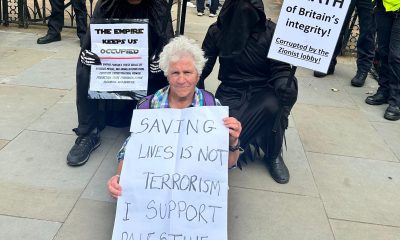










MID WALES peace activist Angie Zelter was arrested outside the Royal Courts of Justice in London after holding a placard in support of Palestine Action.
The 75-year-old campaigner, from Knucklas, Powys, was detained at around 12:20pm on the steps of the court, according to Radnor Palestine Links.
The group said Ms Zelter was arrested under Section 13 of the Terrorism Act 2000 after holding a sign which read: “Saving lives is not terrorism. I support Palestine Action.”
She was taken to Charing Cross Police Station and released around two hours later, the group said.
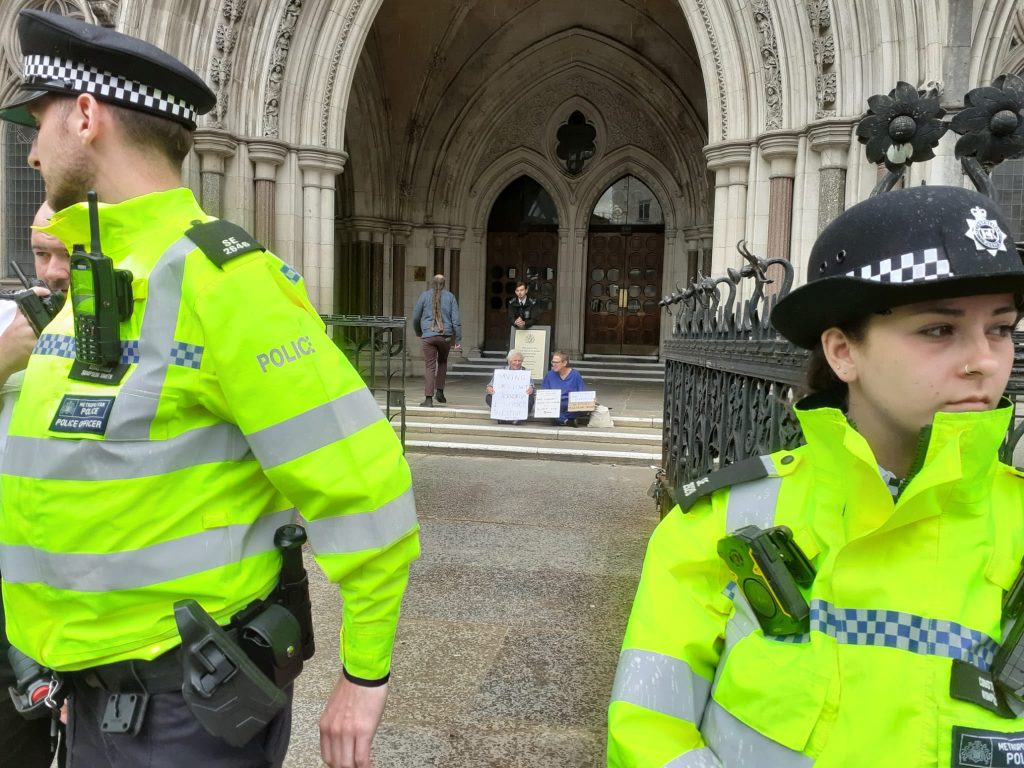
The arrest came as the Court of Appeal ruled in favour of the UK Government over its decision to proscribe Palestine Action under terrorism legislation.
The ruling overturned an earlier High Court decision which had found the ban unlawful. The Court of Appeal held that the Government’s decision was lawful and proportionate.
Palestine Action was banned after the Home Secretary moved to proscribe the group under the Terrorism Act 2000. Supporting or inviting support for a proscribed organisation can be a criminal offence.
Radnor Palestine Links said the protest formed part of an ongoing campaign against the use of counter-terrorism laws against peaceful demonstrators.
Ms Zelter, a long-standing peace and human rights campaigner, has been arrested more than 100 times worldwide during decades of non-violent direct action. She is also known as a founder of Trident Ploughshares.
Speaking after her arrest, Ms Zelter said: “I think it’s a terrible indictment of the criminal justice system that you are charging me with terrorism for holding a peaceful sign.
“We have to uphold the most important international laws. Peaceful, disruptive protest is absolutely essential to protect democracy.”
The Metropolitan Police has been asked to confirm the circumstances of the arrest, whether Ms Zelter was formally charged, and the conditions of her release.

Photo caption: Court protest: Angie Zelter outside the Royal Courts of Justice in London holding a sign in support of Palestine Action (Pic: Radnor Palestine Links).

Soul Space sessions, new relaxation areas and Abba Revival among early announcements
THE BIG RETREAT FESTIVAL has revealed the first details of its 2027 event in Pembrokeshire, with organisers promising new spaces, more inclusive activities and the return of a popular Main Stage act.
The festival will take place from May 28 to May 31, 2027, at Newton Farm, Lawrenny.
Organisers said they had been reflecting on feedback from this year’s event, with visitors most often describing the festival as “fun, relaxing and friendly.”
Among the changes already planned for 2027 is the inclusion of all sessions within The Soul Space as part of the standard festival ticket.

New areas dedicated to rest, relaxation and connection are also being introduced, giving visitors more opportunities to step away from busier parts of the site during the weekend.
The Talk Tent will move to the Village Green, while a new Gathering Place will also be created there. Hosted by the festival’s Solo Traveller Manager and Accessibility Manager, the space will be open to everyone as somewhere to meet others, ask questions, relax or take a moment out.
Other changes include new glamping accommodation with electric hook-ups and the return of the football pitch in Family Camping.
Organisers have also confirmed that Abba Revival will return to The Big Retreat Pembrokeshire in 2027 as the first announced Main Stage act.
The tribute act proved popular at this year’s event, with organisers saying the request to bring them back came up repeatedly in visitor feedback.

The festival team said: “One of the things we love most about The Big Retreat is that no two people experience it in the same way.
“Some come for the music. Some for the yoga. Some for the wild swimming. Some for the talks. Some for the food. Some for the adventure.
“However you choose to spend your weekend, our goal remains the same: Feel Good Your Way.”

First wave tickets are now on sale, with organisers also offering a ten-month payment plan.
Glamping accommodation for 2027, including the new electric hook-up options, is due to go on sale on Wednesday, June 17.
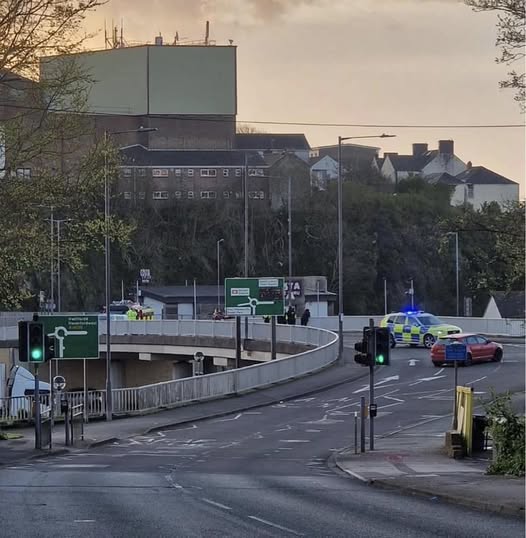
Bridge was shut for around 35 minutes while officers dealt with incident
POLICE temporarily closed Hakin Bridge in Milford Haven over the weekend following concerns for the welfare of an individual.
Dyfed-Powys Police said officers were called to the bridge at around 11:20pm on Saturday (June 13).
The road was closed shortly afterwards, at around 11:30pm, while officers dealt with the incident.
A spokesperson for Dyfed-Powys Police said: “Dyfed-Powys Police received a call for a concern of welfare of an individual on Hakin Bridge, Milford Haven at around 11:20pm on Saturday, June 13.
“The individual was spoken to by officers at the scene, who ensured their safety.
“The road was closed from 11:30pm and reopened at approximately 12:05am on Sunday, June 14.”
The closure lasted around 35 minutes and affected traffic between Hakin and Milford Haven.
Photo caption:
Temporary closure: Hakin Bridge was closed while police dealt with the incident (Pic: File image).



Business8 hours ago
Celtic Freeport five-year plan puts Milford Haven at centre of green energy future
Strategy promises investment, skilled jobs and new supply chains, but major barriers remain over grid connections, planning and delivery THE...


Education10 hours ago
Closure of Ysgol Clydau approved after emotional council debate
COUNCILLORS WARNED RURAL COMMUNITIES WILL REMEMBER DECISION PEMBROKESHIRE councillors have voted to close Ysgol Clydau following an emotional debate over...


Education10 hours ago
Manorbier school closure process to continue after narrow council vote
Questions remain over insurance, rebuilding costs and possible legal action by Diocese PEMBROKESHIRE councillors have voted to press ahead with...

Community13 hours ago
The father, son and daughter lifeguard trio saving lives in Pembrokeshire
A FATHER, son and daughter are preparing to help keep beachgoers safe on the Pembrokeshire coast this summer as part...


Community23 hours ago
Beating of the Bounds brings music, boats and tradition to Haverfordwest
CENTURIES-OLD CEREMONY DRAWS FAMILIES TO THE RIVERSIDE HAVERFORDWEST’S historic Beating of the Bounds returned on Sunday (Jun 14), with boats,...


Community1 day ago
Milford Haven School pupil praised after stepping in during real-life emergency
A YEAR 11 pupil at Milford Haven School has been praised after putting his first aid training into action to...


Community1 day ago
River festival brings crowds to Haverfordwest
A CELEBRATION of the River Cleddau brought crowds into Haverfordwest on Saturday (June 13) as the town’s River Festival returned...


Charity1 day ago
Voices at the Castle hailed as unforgettable night after weather setback
Russell Watson headlines spectacular charity concert at Pembroke Castle A SPECTACULAR evening of live music at Pembroke Castle has been...


Local Government2 days ago
Council admits 74 rights of way complaints remain unresolved
Key post vacant since February as walker raises safety concerns over paths near Llanteg and Amroth PEMBROKESHIRE COUNTY COUNCIL has...


Education3 days ago
Diocese threatens legal action as Manorbier school closure battle intensifies
Church says council could face judicial review over fire-hit school A BITTER row over the future of Manorbier Church in...
-

 Community1 day ago
Pembrokeshire Chess Club crowned Welsh champions
-
Education3 days ago
Diocese threatens legal action as Manorbier school closure battle intensifies
-

 Crime6 days ago
Haverfordwest pair accused of £80,000 rogue trading frauds
-

 Crime4 days ago
Man accused of six rapes including alleged Haverfordwest offence
-

 Crime4 days ago
Pembroke Dock teenager sentenced over train strangulation attack
-
 Crime7 days ago
Families condemn failed appeal by paddleboard boss jailed over Haverfordwest tragedy
-
 Crime6 days ago
Knife blankets call as school staff face rising violence fears
-

 Local Government3 days ago
Taxi suspended after county-wide licensing checks