


Climate
Welsh customers and the Crown Estate: Are seabed fees really driving up bills?

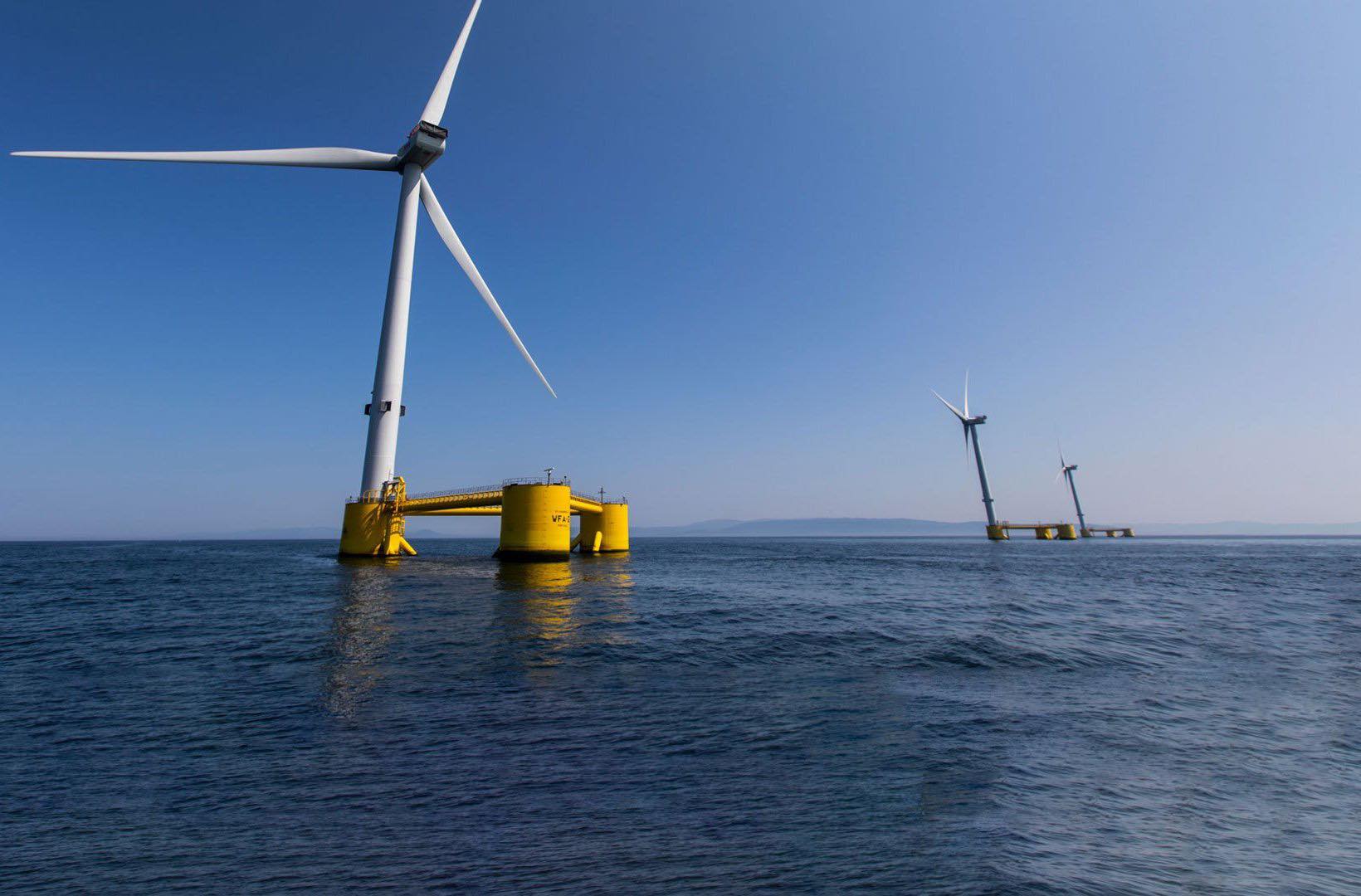
Debate intensifies as Lib Dems and Greenpeace accuse the Crown Estate of “profiteering” — but experts and ministers say seabed fees are a tiny part of energy costs
WELSH households face some of the highest electricity bills in Britain, and offshore wind development in the Celtic Sea has become a heated political battleground. The Welsh Liberal Democrats, backed by Greenpeace UK, insist that “monopoly profiteering” by the Crown Estate is inflating the cost of renewable energy and allowing wealth generated off the Welsh coast to flow out of the country with little local benefit.
But the Crown Estate, the UK Government and several independent analysts strongly dispute these claims, arguing that seabed leasing fees make up only a small fraction of the cost of building wind farms—and that the biggest drivers of recent price increases lie elsewhere.
Lib Dems allege “monopoly behaviour”
Speaking in Parliament this week, Welsh Liberal Democrat MP David Chadwick said the Crown Estate’s decision to run uncapped auctions for seabed rights had “forced developers to pay billions just to access the seabed”, with those costs ultimately passed to consumers through the Government’s Contracts for Difference (CfD) system.
Leasing Round 4 in 2021 generated headline bids of £9.4 billion across the UK—more than all previous leasing rounds combined. Greenpeace campaigner Angharad Hopkinson described the process as “profiteering” and claimed the system was “fleecing Welsh communities while Crown Estate executives take home massive bonuses”.
The party argues that Wales sees “almost no direct return” from offshore wind despite hosting some of the most promising waters for renewable energy in Europe. It wants seabed auctions reformed and the Crown Estate in Wales fully devolved.

Seabed fees are a small slice of total costs
However, independent analysis paints a more nuanced picture. Aurora Energy Research estimates that seabed payments—comprising option fees and annual rents—represent only 1–3% of the lifetime cost of a typical offshore wind farm.
The biggest jumps in project costs, analysts say, have been driven by factors entirely outside the Crown Estate’s control:
- 40–50% increases in the price of offshore turbines
- steep rises in steel, concrete and subsea cable costs
- supply-chain delays since the pandemic
- interest rates rising from near-zero to 5–6%
According to Aurora, even if the Crown Estate charged nothing for the seabed, the CfD strike price needed for new Celtic Sea projects would fall by only £2–£3 per MWh—less than 5% of the level developers sought in the last auction.
RenewableUK and major developer Ørsted both back this view, saying seabed fees are “a known, modest cost” and not the reason offshore wind prices have increased.

Most of the £9.4 billion never materialised
The huge Round 4 headline figure is also misleading. Owing to the same inflationary pressures that have hit global renewable projects, most developers have since withdrawn or renegotiated their option agreements. As a result, the Crown Estate has received only a fraction of the original bids.
Where does the money go?
All net profits from the Crown Estate go directly to the UK Treasury. Since 2017, these profits have reduced the Sovereign Grant paid to the Royal Family—cutting the cost to taxpayers. In 2023–24 alone, Crown Estate earnings lowered the Sovereign Grant by £108 million.
Wales also receives a population-based share of UK-wide spending through the Barnett formula. Analysis by the Wales Governance Centre suggests Wales receives between £4 and £4.5 billion more per year in identifiable public spending than England, partly funded by UK-wide Crown Estate and renewable-energy revenues.

Devolution dispute
Although the Welsh Liberal Democrats want full devolution of the Crown Estate, the Labour-run Welsh Government has repeatedly declined to back the idea. Ministers say Wales would lose its substantial fiscal transfer from the rest of the UK and inherit liabilities, such as decommissioning costs and legal risks.
In Scotland, where the Crown Estate is devolved, the smaller portfolio has run at a loss in some years, and community wealth funds from offshore wind have so far been limited.
Executive pay and reforms
Critics have highlighted the Crown Estate CEO’s £1.9 million pay package in 2023–24, though most of this was a one-off deferred bonus linked to Round 4 income that ultimately did not materialise. The base salary is around £370,000.
The Crown Estate says it is now consulting on a new leasing round with lower option fees, and has voluntarily returned more than £100 million of unspent Round 4 payments to developers to help projects proceed.
Bottom line
Seabed fees play a role in the cost of offshore wind, but the evidence suggests they are not a major driver of rising consumer bills. Global inflation, supply-chain pressures and high interest rates remain far more significant.
What is clear is that Wales receives no ring-fenced financial benefit from wind farms off its coast—and whether the current UK-wide model is fairer or less fair than full devolution remains a live political argument, with Labour, Liberal Democrats, campaigners and analysts sharply divided.


VISITORS to this year’s Royal Welsh Show are being encouraged to use public transport as organisers look to ease congestion and promote more sustainable travel.
The show takes place at the Royal Welsh Showground in Llanelwedd, Builth Wells, from July 20 to 23, and is expected to attract thousands of people from across Wales and beyond.
The Royal Welsh Agricultural Society said rail and bus services would provide convenient options for showgoers, with free shuttle buses running from Builth Road railway station to the showground, which is just over a mile away.
Discounted admission
Visitors travelling on the Heart of Wales Line with a valid rail ticket will be able to buy discounted show admission tickets from conductors and ticket offices along the route.
The discounted prices are £35 for adults and £11 for children. Children under 16 can travel free by train when accompanied by a fare-paying adult.
Transport for Wales said rail services would connect visitors from across Wales and the borders, including routes from Cardiff through some of Wales’ most scenic countryside. TrawsCymru bus services will also provide another option for those travelling to the event.
Family activities
Transport for Wales and Network Rail will also have an interactive stand at the show, offering family-friendly rail safety activities and entertainment.
Activities will include VR headset experiences, story time sessions, badge-making classes and rail safety performances. Builth Wells Male Voice Choir is also due to visit the stand on the first day of the show.
Children under 16 travelling to the show by train on the Heart of Wales Line will be able to collect a free activity sheet on board and hand in their completed artwork at the Transport for Wales stand for a chance to win a prize.
Visitors are being urged to plan their journeys in advance through the Transport for Wales website and journey planner.
Travel encouraged:
Visitors to the Royal Welsh Show are being urged to consider rail and bus services this year (Pic: RWAS).


CALLS have been made for an immediate moratorium on industrial-scale solar and windfarm developments in Wales amid concern over the loss of productive farmland.
The Welsh Conservatives say the Welsh Government should pause major renewable energy schemes and urgently review the planning rules for Developments of National Significance.
Party leader Darren Millar MS said Future Wales 2040, the national planning framework, gives too much weight to large-scale renewable energy projects and risks allowing solar farms and windfarms to be built at the expense of food production.
Planning row
The row comes as Wales faces pressure to increase renewable energy generation while also protecting agricultural land, rural landscapes and farming communities.
Under the Developments of National Significance process, major infrastructure projects, including some large renewable energy schemes, are decided by Welsh Ministers rather than local councils.
Supporters say the system is needed to deliver clean energy and reduce reliance on fossil fuels, while critics argue it can leave communities feeling that decisions are being taken out of their hands.
Mr Millar said: “In opposition, the now First Minister campaigned against industrial-scale renewable developments in his own constituency for fear of the impact it would have on valuable farming land. Now in government, he needs to act accordingly to protect prime agricultural land.
“The current planning framework is fundamentally flawed. Future Wales 2040 creates an assumption in favour of industrial-scale solar farms and windfarm developments across great swathes of rural Wales, putting productive farmland at risk.
“We support renewable energy and recognise its role in achieving energy security and reducing emissions, but those developments should not be at the expense of Wales’ food security.
“Renewable developments should be appropriate in scale and sensitive to their environment, making better use of the roofs of buildings and car parks.
“The Welsh Government should introduce an immediate moratorium on industrial-scale solar and windfarm developments and undertake an urgent review of the planning framework for Developments of National Significance so Wales can take a more balanced approach to Wales’ energy future.”
Climate targets
The Welsh Government says renewable energy is central to meeting Wales’ climate targets and improving energy security, but that projects must go through the planning system before consent is granted.
Supporters of large-scale renewable schemes argue they are needed to cut emissions, reduce reliance on imported energy and help stabilise electricity supplies. Some farmers and landowners also see renewable projects as a source of income at a time when the agricultural sector is under pressure.
However, opponents say the scale and location of some proposals risk damaging landscapes, reducing food-producing land and leaving rural communities with too little say over major developments.


A PEMBROKESHIRE wind turbine scheme which was recommended to be refused over a lack of information on how it may affect bats, which led to it being previously withdrawn, has gained some breathing space to address the issue.
In December of last year, in an application recommended for refusal at Pembrokeshire County Council’s planning committee, Constantine Wind Energy Ltd sought permission for a 76-metre-high wind turbine at Summerton Farm, Sageston.
Back in 2024, an application to replace a current 60.5m high turbine on the site with one up to 90 metres, or just under 300 foot, at the site was refused on the grounds its height and scale would have a detrimental impact on the visual amenity of the locality, with the additional clause of failing to comply with supplementary guidance.
A report for committee members on the latest application says the smaller turbine than previously proposed, representing a 16-metre increase in height from a previously granted turbine “would not be sufficient for it to become an overbearing feature in the landscape,” with no objections from either the Council Landscape Officer or Natural Resources Wales.
However, concerns were raised by the council ecologist that the applicant’s Preliminary Ecological Appraisal Report was incomplete, with a bat survey not included.
It was recommended for refusal on the grounds that appraisal report, and technical note, “do not adequately address the impact of the proposed wind turbine on bat activity in the area”.
At the December meeting, members heard the scheme had been temporarily withdrawn to deal with issues raised, the application returning to the June meeting, again recommended for refusal on a lack of information on the potential impact on bats.
A report for members ahead of the June meeting says the application was withdrawn from the December agenda to allow the applicant time for consideration of the Council Ecologist’s request for further survey work.
It said the applicant had started a bat survey programme, with further surveys due to take place in July and September, the applicant asking for the matter to be deferred in November.
At the June meeting, Richard Grisk, on behalf of the applicants, referenced the additional surveys, calling for a further deferral, saying it would be far most cost efficient and effective for all parties, the applicants intending to resubmit an expected to be near-identical scheme, other than the bat reports, if it was refused.
After a great deal of deliberation on the matter, Cllr John Cole, who had initially proposed a deferral, moved the scheme be decided by officers under delegated powers.
This would allow them to either approve or refuse after the bat reports have been received.

Members, by 10 votes to four, supported the delegated decision, expected later this year.


Local Government8 hours ago
Council admits 74 rights of way complaints remain unresolved
Key post vacant since February as walker raises safety concerns over paths near Llanteg and Amroth PEMBROKESHIRE COUNTY COUNCIL has...


Education1 day ago
Diocese threatens legal action as Manorbier school closure battle intensifies
Church says council could face judicial review over fire-hit school A BITTER row over the future of Manorbier Church in...


Health1 day ago
Baby loss charity calls for urgent action after latest Wales figures published
Sands says Welsh Government must set clearer targets to reduce stillbirths and neonatal deaths A BABY loss charity has called...

Health1 day ago
Cancer delays worsening as west Wales hospitals struggle to recruit specialists
Health board admits standards are difficult to meet as doctors warn of “extremely dangerous” shortages PATIENTS in west Wales are...


News1 day ago
Rhun ap Iorwerth highlights first 25 days in office as First Minister
Plaid Cymru leader says government is moving quickly on NHS, farming and economic priorities FIRST MINISTER Rhun ap Iorwerth has...


Crime3 days ago
Man accused of six rapes including alleged Haverfordwest offence
A MAN has been sent to Crown Court accused of six rapes, including an alleged offence at a Haverfordwest campsite....


News3 days ago
Childcare row erupts as Plaid faces questions over costs and delivery
Opposition parties clash over flagship pledge as Senedd debate exposes growing divisions PLAID CYMRU’S flagship promise to create what it...


Crime3 days ago
Farmers fined in bovine TB scandal face fresh court action
Hartt family members listed at Haverfordwest Magistrates’ Court over unpaid penalties linked to major cattle prosecution TWO PEMBROKESHIRE farmers convicted...


Crime3 days ago
Pembrokeshire child killer stabbed to death in prison cell, murder trial hears
Kyle Bevan, jailed for the murder of Haverfordwest toddler Lola James, was allegedly stabbed 25 times and left ‘as if...


News4 days ago
Pendine cliff fall victim recovering after major emergency response
A 22-YEAR-OLD man who suffered serious injuries after falling from cliffs overlooking Pendine Beach is recovering well following emergency surgery....
-

 Crime6 days ago
Sex offender in senior role at Tenby family hotel
-

 Crime4 days ago
Haverfordwest pair accused of £80,000 rogue trading frauds
-
Education1 day ago
Diocese threatens legal action as Manorbier school closure battle intensifies
-

 Community5 days ago
Forgotten wartime archive found in Pembroke Dock attic after 80 years
-

 Crime5 days ago
Families condemn failed appeal by paddleboard boss jailed over Haverfordwest tragedy
-
Crime3 days ago
Man accused of six rapes including alleged Haverfordwest offence
-
 Crime5 days ago
Knife blankets call as school staff face rising violence fears
-

 Local Government7 days ago
Ombudsman confirms Woodham complaint still live after Cllr Dennison’s suspension