


Health
Hywel Dda board to consider refreshed health strategy to 2040

New plan promises more care closer to home, ‘Digital First’ services, and stronger focus on prevention
HYWEL DDA UNIVERSITY HEALTH BOARD will consider a refreshed version of its long-term health and care strategy at a public board meeting on Thursday (Jan 29).
The proposed strategy, titled A Healthier Mid and West Wales – Healthier lives, well lived, sets out the Health Board’s priorities up to 2040 and updates ambitions first published in 2018.
Health chiefs say the refreshed plan does not change Hywel Dda’s core aim of helping people live healthier lives for longer, with a stronger emphasis on preventing ill-health and supporting people to stay well. Instead, it updates the strategy to reflect changing needs across the region, alongside wider pressures on health and care services including rising demand and the lasting impact of the COVID-19 pandemic.
The strategy sets out how clinical developments, new digital tools and community facilities could provide more opportunities to offer help earlier and closer to home, while outlining how services may need to adapt in the years ahead.
Hywel Dda said the draft refresh has been shaped by engagement with communities, staff and partners across Carmarthenshire, Ceredigion and Pembrokeshire. The engagement took place in two phases between July and November 2025 and involved almost 3,000 people.

Residents were asked what matters most to them in living a healthier life, as well as being invited to share views on priorities for health and care. The Health Board said feedback was used to develop four key themes which underpin the refreshed strategy: thriving teams, healthier communities, great care and positive futures.
During the engagement, people consistently raised concerns about the distance they have to travel to access healthcare. The Health Board said the refreshed strategy aims to deliver more care closer to where people live, with greater support in communities and at home.
The plan also outlines an expanded role for digital services, including easier access to advice, appointment booking and test results. The Health Board said it intends to create a ‘Digital First’ service designed to connect homes, communities and hospitals.
The refreshed strategy also builds on work started in 2018 on a Social Model for Health and Wellbeing, which aims to shift services away from mainly reacting to illness and towards preventing ill-health earlier, with prevention described as a central priority for improving health and reducing long-term demand.

Hywel Dda Chief Executive Professor Phil Kloer said: “Our communities have been clear about what matters most to them. People want fair access to care, strong local services, and support to stay well in their daily lives.
“This proposed strategy refresh is about listening to that feedback and setting a clear direction for how we work together over the next 15 years. Our strategy focuses on health and keeping people well, not just treating illness.
“It is also guided by our values of belonging, growth and working together. These values continue to emphasise the importance of putting people first, improving our services, and supporting each other to deliver the best care possible.

“We will continue to work with our communities and the individuals who play a vital role in shaping our social model for health and wellbeing.”
Lee Davies, Hywel Dda’s Executive Director of Strategy and Planning, said delivering the refreshed plan would require “a more radical approach” to how care is provided.
He said: “The principles of our 2018 strategy remain the same, but the world around us has changed. This refresh ensures our vision, goals and priorities reflect today’s challenges and opportunities.
“We will continue to move towards prevention, wellbeing and primary and community care, supported by digital solutions where appropriate. Most importantly, it shows how what people told us is being reflected in our plans.”
The Health Board said that if the refreshed strategy is approved, it will be finalised and published in multiple accessible formats. Work with communities, staff and partners would continue as delivery plans are developed, and the strategy would be regularly reviewed to reflect changes and developments in health needs across the region.


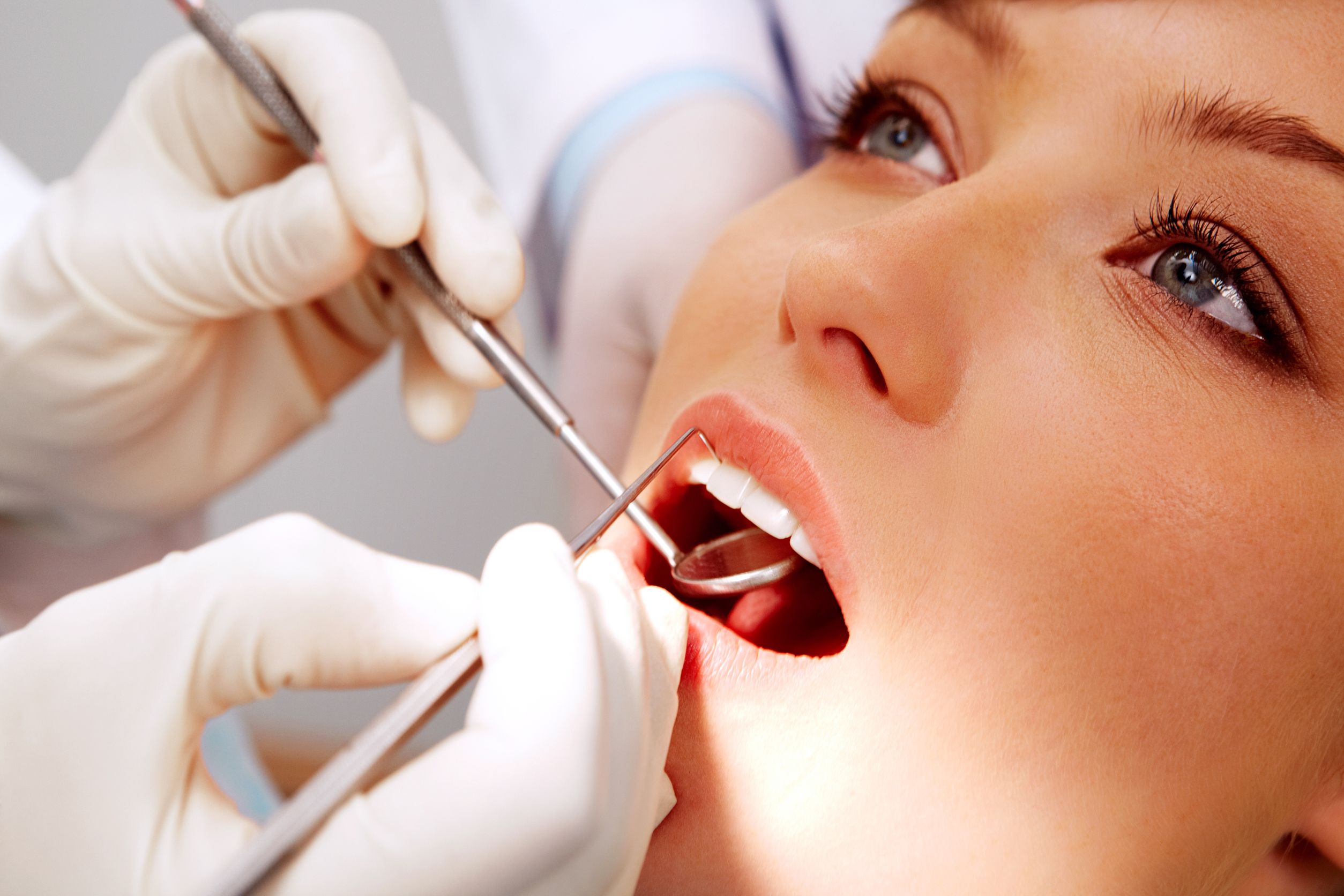
DENTISTS FROM ANTALYA TO VISIT COUNTY TOWN
A TURKISH dental clinic is running a dental meet-up in Haverfordwest this weekend as part of a promotional visit to Wales.
Unique Smile Turkey, which has a permanent office in Wales in Swansea, says its top dentists will be coming to Haverfordwest on Sunday (May 3).
The event is being advertised as a “Dental Meet-Up” and is scheduled to run from 10:00am to 6:00pm at the Mariners Hotel.
The visit features three clinicians: Assoc Prof Dr Ummuhan Tozoglu, described as a specialist in oral diagnosis, radiology and dental planning; Professor Dr Sinan Tozoglu, described as an oral and maxillofacial surgeon and implantologist; and Professor Dr Ismet Duran, described as a periodontologist and implantologist.
The team have between twenty and 35 years of experience in their respective fields.
A contact number has also been provided for enquiries: +90 505 678 90 90.
The visit comes amid continuing interest in dental tourism, with many people in the UK looking overseas for cosmetic dentistry, implants and other private dental treatment.
Turkey has become one of the most popular destinations for such treatment, although patients are generally urged to make careful checks before committing to any procedure abroad, including aftercare arrangements, qualifications, insurance, treatment plans and what support would be available if complications arise after returning home.

Calls grow for diagnosis, care and support to become national priority
NEW figures reveal overwhelming public demand for dementia to be placed at the top of Wales’ political agenda, with voters urging action on diagnosis, treatment and support ahead of the Senedd elections.
Research by Alzheimer’s Society Cymru shows that 83% of people in Wales want dementia made a healthcare priority, while 69% believe it is currently overlooked and underfunded.
More than a thousand adults were surveyed, with the findings highlighting growing concern over diagnosis rates and access to care. Wales continues to record some of the lowest dementia diagnosis rates in the UK, leaving thousands of families without clarity or support.
Around 51,000 people are currently living with dementia in Wales, a figure expected to rise to 70,000 by 2040. Despite this, only 57% of people have received a formal diagnosis, with rates falling as low as 48% in rural areas such as Powys.
Improving diagnosis remains a key concern, with 91% of those surveyed saying access to timely diagnosis must improve, and 87% backing increased investment in diagnostic services. However, respondents also stressed that diagnosis alone is not enough, with 91% saying people with dementia must receive better support, including help for unpaid carers.
Ceri Parry, from Cardiff, said she was forced to retire early from her role as a headteacher at the age of 55 due to a lack of support for her mother, who was diagnosed with Alzheimer’s disease in 2020.
She said: “I fully support improving early and accurate diagnosis, but this must also come with improved support and care for families afterwards. There’s five years between my relatives’ diagnoses and nothing changed. On both occasions we left with a leaflet and the unknown.
“The wait for improved diagnosis, treatment and support needs to end. Dementia must be a top priority for the next Welsh Government, for families living with it now and for those who will face it in the future.
“We also found there was no diagnosis assessment available in the Welsh language. That’s a fundamental issue if a diagnosis is to be accurate and safe for people who speak Welsh as their first language. Ignoring someone’s identity is ignoring the person.”

The survey also found that visible action would be key to restoring public confidence, with 72% calling for improved dementia services, 64% backing more funding for research, and 63% wanting better access to treatments.
Gemma Roberts, National Influencing Manager at Alzheimer’s Society Cymru, said: “Dementia is Wales’s biggest killer and one of the greatest health and social care challenges we face.
“Hope is on the horizon with new treatments and faster, more accurate diagnosis, but the system is not keeping pace. Without urgent transformation, people in Wales risk missing out.

“We are at a turning point. The next Welsh Government must deliver a bold new dementia strategy that transforms diagnosis and ensures access to quality care, treatments and support.”

DENTISTS have warned that NHS dentistry in Wales is at a “make or break” point, with access to treatment now ranking as one of the biggest local concerns for voters ahead of the Senedd election.
The British Dental Association said new polling by YouGov showed local dentistry services were now a top doorstep issue in Wales, with 30% of adults naming it as one of the most important issues in their local area.
That places dentistry ahead of crime and education, both on 14%, and above job opportunities, which were cited by 27% of respondents.
The poll also found that 79% of people in Wales believe the Welsh Government should be doing more to improve NHS dentistry, while only 11% think ministers are doing all they reasonably can.
According to the BDA, unmet need for NHS dentistry now stands at around a third of the adult population in Wales. One in five people said they had tried but failed to get an NHS dental appointment in the past two years, while a further 13% said they had not tried because they assumed they would be unable to secure one.
The professional body said the figures suggest Wales may now be the worst place in Britain to be an NHS dental patient.
The warning comes after controversial dental reforms were introduced in Wales on April 1. The BDA says the changes were forced through without proper testing and have already led some practices to return NHS contracts or reduce their NHS commitment.
It is calling for a “safety net” for struggling practices, including a pause on implementation until 2027 while further improvements are worked up.
The association is also calling for a break from what it describes as chronic underfunding, better protection for vulnerable patients, and a change of tone from the next Welsh Government.

Russell Gidney, Chair of the BDA’s Welsh General Dental Practice Committee, said: “NHS dentistry in Wales was already in crisis, and without decisive action things are set to go from bad to worse.
“Untested reforms have already seen many dentists walk away from the NHS. Whoever forms the next government will need a plan to guarantee the future of this service.
“For voters facing access and cost of living crises dentistry matters. Political choices mean it is now a real concern on the doorstep – polling ahead of crime, education and even jobs as a top-flight issue facing Wales.
“Our message to all candidates and all parties is very clear: dentistry is on the ballot paper in this election. And the public will measure how you choose to respond.
“This is a service millions of voters depend on. Meaningful action will be rewarded. Complacency will be punished.”
The Welsh Government has defended its reforms, saying the new contract is designed to “make NHS dentistry more accessible, fairer and sustainable,” with a stronger focus on prevention and prioritising patients based on clinical need.
The YouGov survey of 1,092 Welsh adults was carried out between February 2 and February 9, 2026.



News6 hours ago
Conservatives target two seats in new Ceredigion Penfro constituency
Paul Davies and Sam Kurtz say health, farming and transport are key as they seek return to the Senedd CONSERVATIVE...


Community11 hours ago
Milford Haven Beer Fest returns to waterfront this May
EVENT WILL FEATURE 34 DRINKS, LIVE MUSIC AND STREET FOOD MILFORD HAVEN is preparing to raise a glass as Beer...

Community1 day ago
Cancer patients targeted with parking fines outside Haverfordwest support centre
Adam’s Bucketful of Hope says vulnerable users, elderly volunteers and charity drivers have paid more than £1,000 after Ateb introduced...

Charity1 day ago
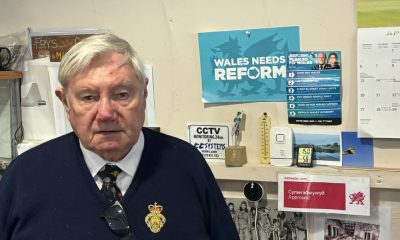
Row erupts at Spitfire museum after Reform poster displayed at charity premises
A HAVERFORDWEST museum has become caught up in a political row after Reform UK campaign material was photographed inside the...


Crime2 days ago
Pembrokeshire man charged with making hundreds of indecent images of children
A PEMBROKESHIRE man has appeared before magistrates charged with making hundreds of indecent images of children. David Lewis, 42, is...


Crime2 days ago
Man appears in court charged over death of Blood Bike Wales volunteer
FAMILY WATCHED FROM PUBLIC GALLERY AS CASE SENT TO CROWN COURT A PEMBROKESHIRE man has appeared before magistrates charged with...


Crime2 days ago
Police launch arson investigation after Haverfordwest fire
CCTV APPEAL ISSUED POLICE have launched an arson investigation after a derelict building was destroyed in a major overnight fire...


News3 days ago
Residents told to stay indoors as derelict building destroyed in Haverfordwest fire
EMERGENCY SERVICS were called to a major overnight fire in Haverfordwest which led to residents being urged to remain indoors...


Health3 days ago
Welsh public backs urgent action on dementia ahead of Senedd elections
Calls grow for diagnosis, care and support to become national priority NEW figures reveal overwhelming public demand for dementia to...


Local Government3 days ago
Council pays tribute to long-serving councillor Brian Hall
PEMBROKESHIRE COUNTY COUNCIL has paid tribute to long-serving Pembroke Dock Market councillor Brian Hall, following his death. Cllr Hall first...
-

 Local Government2 days ago
Fishguard children’s home application is a ‘legal test’, not planning merits decision
-

 News5 days ago
Barley Saturday brings bumper crowds to Cardigan
-
Crime6 days ago
Hakin resident fined £1,330 over repeated noise and intimidation breaches
-

 Business7 days ago
Pay deal agreed for Valero workers amid industry tensions
-

 Sport5 days ago
Goodwick United lift Senior Cup after 3-1 win over Monkton Swifts
-

 News4 days ago
SPECIAL FEATURE: Did Chernobyl affect children in Wales?
-

 Entertainment6 days ago
The Big Retreat announces 2026 line-up for Pembrokeshire festival
-

 Sport4 days ago
Narberth seconds start season in new sponsored kit