


News
Welsh Conservatives push for reversal of 20mph limit and major road spending


OPPOSITION calls on Labour Government to restore 30mph default, revive frozen projects, and advance long-stalled infrastructure schemes amid ongoing controversy over speed limits and road investment.
In a session that began around 4:30pm and was broadcast live via the Senedd’s online proceedings, the Welsh Conservatives presented a detailed motion urging the Welsh Labour Government—supported by Plaid Cymru under their co-operation agreement—to reverse several high-profile transport decisions. At the heart of the debate was a call to restore the default speed limit on restricted roads from 20mph back to 30mph, a policy introduced in September 2023 that continues to divide opinion sharply.
The Conservatives framed their proposals as a comprehensive plan to “fix Wales’ transport system,” emphasizing that robust road networks are fundamental to supporting businesses, generating employment, and stimulating economic growth. They argued that current policies—including the 20mph default, the long-standing cancellation of the M4 relief road around Newport, and the effective moratorium on new major road projects—amount to an “attack on Welsh motorists” that is exacerbating economic stagnation, lengthening journey times, increasing costs for commuters and hauliers, and contributing to Wales trailing other UK nations in wages and overall prosperity.
The specific demands outlined in the motion included:
- Restoring the default speed limit to 30mph (with the party noting that 20mph zones would remain appropriate in sensitive locations such as near schools, hospitals, and residential areas with high pedestrian activity);
- Proceeding with construction of an M4 relief road to alleviate severe congestion in and around Newport, a bottleneck that has persisted for decades despite repeated promises and planning;
- Upgrading the A55, the key North Wales corridor linking Holyhead port to the English border and vital for tourism, freight, and daily commuting;
- Dualing sections of the A40 in West Wales to address chronic bottlenecks that hinder access to regions like Pembrokeshire and Carmarthenshire;
- Delivering a third Menai crossing to enhance connectivity between mainland Gwynedd and Anglesey, reducing reliance on the existing bridges which face capacity and maintenance challenges;
- Unfreezing all paused road projects to resume investment in infrastructure that supporters say has been neglected for too long.
Leading the debate, Sam Rowlands MS—Welsh Conservative Shadow Cabinet Secretary for Finance, Transport and Infrastructure—described Labour and Plaid Cymru’s approach as one that is “slowing Wales down and holding our economy back.” He positioned the Conservative agenda as pragmatic and economy-focused, arguing that good transport links are indispensable for prosperity, job creation, and reversing underinvestment in Wales’ crumbling infrastructure.

This latest intervention comes against a backdrop of sustained political contention over transport policy in Wales. The 20mph default speed limit, championed by the Welsh Government as a road safety measure expected to reduce collisions, injuries, and NHS costs (with some early data showing positive trends in casualty reductions on affected roads), has faced widespread public backlash. A record-breaking Senedd petition opposing the change amassed nearly half a million signatures, and opinion polling has consistently shown strong opposition—often around 70%—particularly among drivers who report increased journey times, frustration in rural and suburban areas, and occasional non-compliance.
The Welsh Conservatives have capitalized on this discontent, repeatedly branding the policy “anti-motorist” and positioning themselves as defenders of drivers, rural communities, businesses dependent on road freight, and those in less well-served regions where public transport alternatives are limited. Critics of the current approach, including the opposition, point to economic modeling (including some Welsh Government estimates) suggesting potential costs from slower average speeds running into billions over time, alongside enforcement expenses and perceived over-application in areas where higher speeds were historically considered safe.
For their part, the Welsh Government and its supporters defend the 20mph limit as evidence-based, life-saving, and aligned with broader goals of sustainable transport, reduced emissions, and safer communities—especially in built-up areas. They have highlighted data indicating collision and injury reductions in the first year of implementation, while acknowledging implementation challenges and engaging in reviews and “listening” exercises in response to criticism. Previous Senedd debates on the issue (including those prompted by petitions and opposition motions) have seen the government largely hold firm, though with signals of potential adjustments toward more targeted application rather than blanket coverage.
The debate also occurs in the early stages of the run-up to the May 2026 Senedd election, where transport—alongside health, the economy, and devolved powers—remains a key battleground. Polling suggests a competitive landscape, with Labour facing pressure to retain its historic dominance, Plaid Cymru gaining ground, and emerging challengers like Reform UK adding volatility. The Welsh Conservatives hope to frame themselves as offering a clear, motorist-friendly alternative that prioritizes economic connectivity and infrastructure delivery.
No immediate outcome from the January 28 debate was detailed in public releases, but such opposition-led motions typically serve to highlight divisions, rally supporters, and keep issues prominent in the media and public discourse ahead of the election. Sam Rowlands MS was made available for media interviews following the session, underscoring the party’s intent to sustain momentum on these themes.
The session underscores the ongoing tension in Welsh politics between competing visions of transport: one emphasizing road-user convenience, economic efficiency, and major infrastructure projects; the other prioritizing safety gains, environmental sustainability, active travel alternatives, and long-term decarbonization. As Wales approaches a pivotal election year, debates like this one are likely to shape voter perceptions of how best to balance these priorities.


NEW roofs, structural upgrades and solar panels have been installed across three residential blocks at Fleming Crescent as part of a major housing improvement scheme.
Pembrokeshire County Council said the project has delivered safer, warmer and more energy-efficient homes for residents, with the full replacement of roofs serving 54 flats.
The works also included structural improvements designed to support the long-term performance of the buildings, alongside the installation of solar panels to help improve energy efficiency, reduce carbon emissions and lower energy costs for tenants.

The council received a funding contribution from the Welsh Government through the Optimised Retrofit Programme, which supports energy-efficiency improvements alongside wider investment works.
The scheme was completed on schedule, with W B Griffiths & Son Ltd appointed as the main contractor.
Cabinet Member for Housing, Cllr Michelle Bateman said: “Delivering a project of this scale on schedule is a significant achievement.
“The new roofs and external upgrades will help reduce future maintenance issues and improve the long-term resilience of the buildings, while the solar panels form an important part of our wider decarbonisation programme.
“By working closely with W B Griffiths & Son Ltd, we have delivered high-quality improvements that will benefit tenants both now and in the future.
“Pembrokeshire County Council continues to invest in housing improvements across the county, ensuring homes remain safe, modern, energy efficient and fit for the future.”
The project has also received national recognition after being shortlisted for a Constructing Excellence in Wales Award.
Neil Griffiths, Managing Director of W B Griffiths & Son Ltd, said: “We are proud to have delivered this important project at Fleming Crescent to a high standard and within the agreed timescales.
“The combination of full roof replacement and solar panel installation will provide long-term value, improve the performance of the buildings and support better outcomes for residents.

“It has been a pleasure to work in partnership with Pembrokeshire County Council on this scheme.”
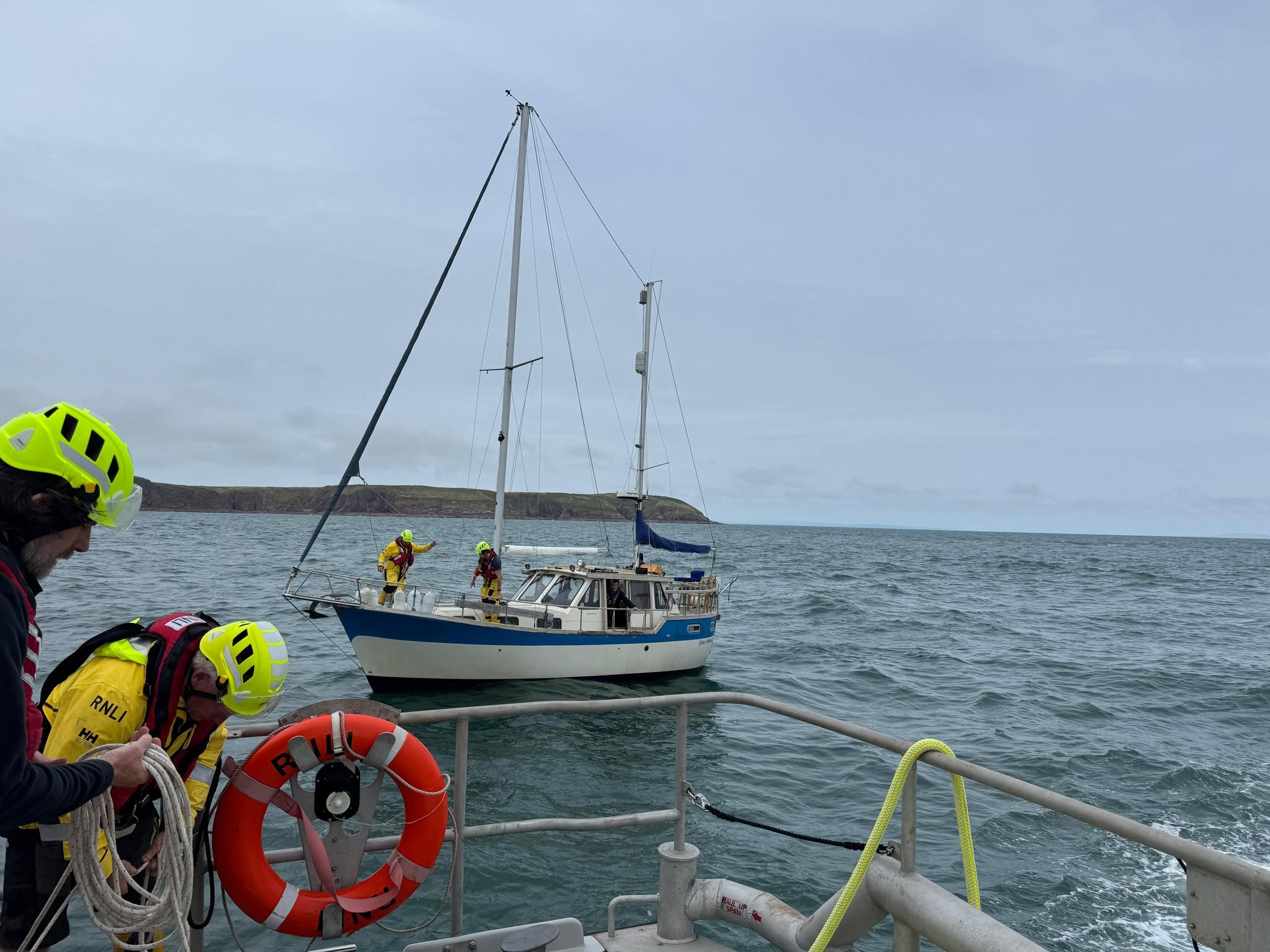
A YACHT was towed back to Tenby after its skipper became unwell off Caldey Island.
Tenby’s all-weather lifeboat was requested to launch at 1:40pm on Monday (Jun 15), after the coastguard received a call from the occupants of a yacht reporting that the skipper had become ill around one mile south of Caldey Island.
The volunteer crew quickly made their way to the vessel, which had three people and a dog on board.
Once alongside, the lifeboat crew discovered that the skipper was suffering badly from seasickness and that the other two people on board were unable to sail the yacht themselves.
After a full assessment by the coxswain, it was decided that the safest course of action was to tow the yacht back to Tenby. The vessel was drifting with the tide towards Caldey Island and was also considered a potential navigational hazard to other boats.
Two lifeboat crew members were placed aboard the yacht to help set up the tow and to monitor the unwell skipper during the journey back.
After a tow of around an hour, the yacht was placed on the lifeboat mooring in the calmer waters of North Bay.
The lifeboat then returned to station, arriving back at 3:15pm.
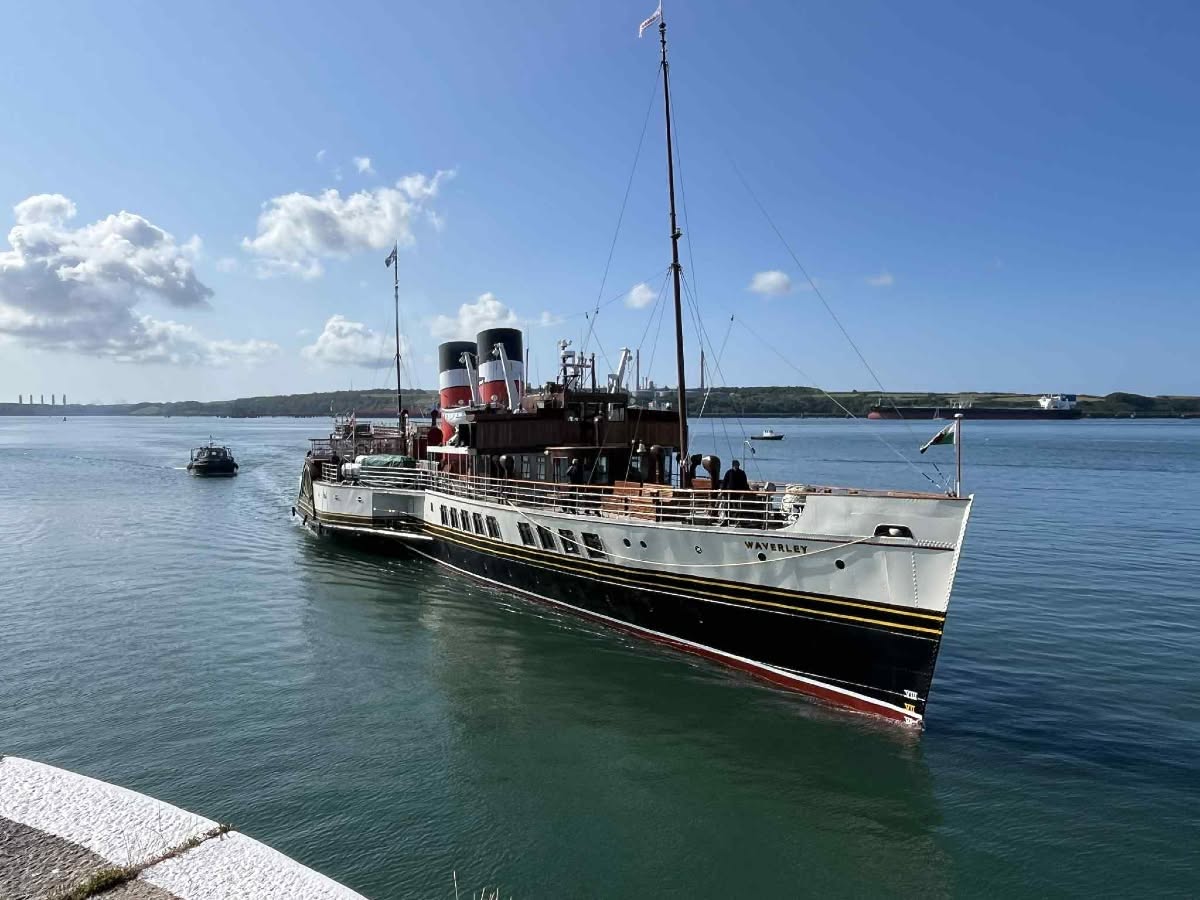
THE WORLD’S last seagoing paddle steamer will return to Pembrokeshire this week as Waverley marks the 79th anniversary of her maiden voyage.
The historic vessel will sail from Milford Haven and Tenby on Tuesday (Jun 16), with trips including a daytime cruise around Skokholm, Skomer, St Brides Bay and Ramsey Island from 11:30am to 4:30pm.
There will also be an evening sailing from Milford Haven at 5:00pm, travelling to St Govan’s Head, Caldey Island and along the Pembrokeshire coast, returning at 9:50pm.
Passengers can also join Waverley at Tenby, with sailings to Milford Haven and an evening cruise around Caldey Island and the coast.
On Wednesday (Jun 17), Waverley will make her only Fishguard visit of 2026, with an evening cruise to St David’s Head, passing Strumble Head Lighthouse, from 6:15pm to 9:15pm.
Tickets are available through Waverley Excursions.


Business1 day ago
Celtic Freeport five-year plan puts Milford Haven at centre of green energy future
Strategy promises investment, skilled jobs and new supply chains, but major barriers remain over grid connections, planning and delivery THE...


Education1 day ago
Closure of Ysgol Clydau approved after emotional council debate
COUNCILLORS WARNED RURAL COMMUNITIES WILL REMEMBER DECISION PEMBROKESHIRE councillors have voted to close Ysgol Clydau following an emotional debate over...


Education1 day ago
Manorbier school closure process to continue after narrow council vote
Questions remain over insurance, rebuilding costs and possible legal action by Diocese PEMBROKESHIRE councillors have voted to press ahead with...

Community1 day ago
The father, son and daughter lifeguard trio saving lives in Pembrokeshire
A FATHER, son and daughter are preparing to help keep beachgoers safe on the Pembrokeshire coast this summer as part...

Community2 days ago
Beating of the Bounds brings music, boats and tradition to Haverfordwest
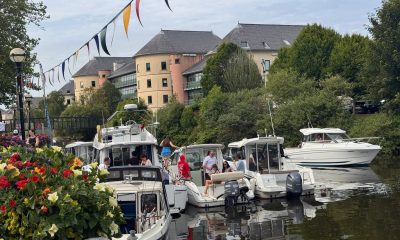
CENTURIES-OLD CEREMONY DRAWS FAMILIES TO THE RIVERSIDE HAVERFORDWEST’S historic Beating of the Bounds returned on Sunday (Jun 14), with boats,...


Community2 days ago
Milford Haven School pupil praised after stepping in during real-life emergency
A YEAR 11 pupil at Milford Haven School has been praised after putting his first aid training into action to...


Community2 days ago
River festival brings crowds to Haverfordwest
A CELEBRATION of the River Cleddau brought crowds into Haverfordwest on Saturday (June 13) as the town’s River Festival returned...


Charity2 days ago
Voices at the Castle hailed as unforgettable night after weather setback
Russell Watson headlines spectacular charity concert at Pembroke Castle A SPECTACULAR evening of live music at Pembroke Castle has been...


Local Government3 days ago
Council admits 74 rights of way complaints remain unresolved
Key post vacant since February as walker raises safety concerns over paths near Llanteg and Amroth PEMBROKESHIRE COUNTY COUNCIL has...


Education4 days ago
Diocese threatens legal action as Manorbier school closure battle intensifies
Church says council could face judicial review over fire-hit school A BITTER row over the future of Manorbier Church in...
-

 Community2 days ago
Pembrokeshire Chess Club crowned Welsh champions
-
Education4 days ago
Diocese threatens legal action as Manorbier school closure battle intensifies
-

 Crime7 days ago
Haverfordwest pair accused of £80,000 rogue trading frauds
-

 Crime5 days ago
Man accused of six rapes including alleged Haverfordwest offence
-

 Crime5 days ago
Pembroke Dock teenager sentenced over train strangulation attack
-

 Local Government4 days ago
Taxi suspended after county-wide licensing checks
-

 Crime4 days ago
Currys worker denies stealing £2,500 of store stock
-

 Crime5 days ago
Brothers found guilty of causing death of Welsh dad in ‘reckless’ race