


Crime
Staff shortages still crippling Parc prison despite improvements, inspectors warn


Regime restrictions leaving prisoners locked up for long periods despite progress tackling drugs
STAFF shortages at Parc Prison are continuing to severely restrict daily life for inmates despite improvements in tackling illegal drugs, according to inspectors.
A report published on Monday (Feb 16) by HM Chief Inspector of Prisons found that progress at the Bridgend jail was being significantly undermined by ongoing recruitment and retention problems, delays in vetting new staff, and the need to escort prisoners to outside hospital appointments.
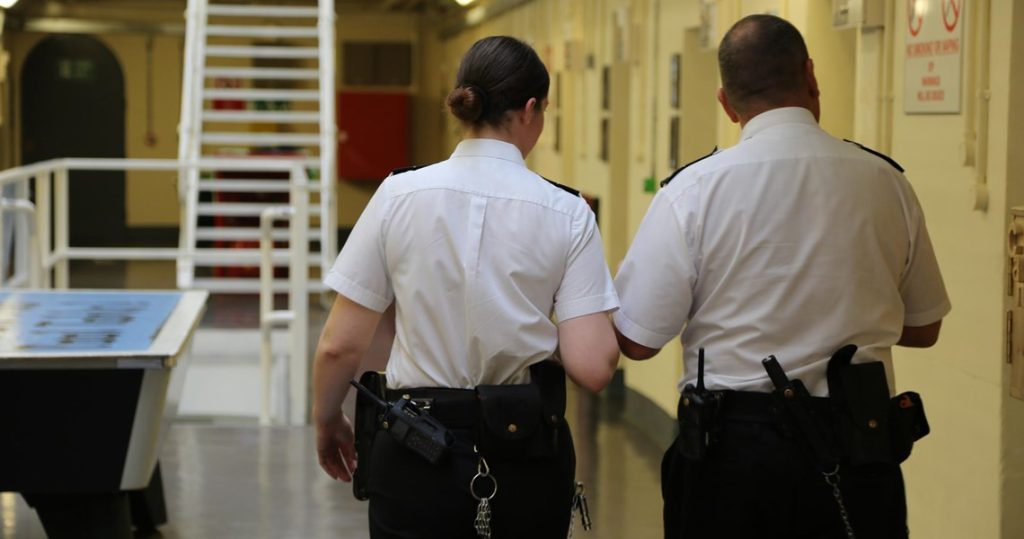
Inspectors said these pressures meant many prisoners were spending long periods locked in their cells with limited access to education, work, or rehabilitation activities.
The findings come from a targeted independent review of progress carried out between January 5 and January 7, 2026, rather than a full inspection.
Staffing crisis restricting daily regime
Inspectors concluded that staffing shortages were the main factor preventing improvement across multiple areas of the prison.

The report found that regime restrictions had “severely hampered” progress, with prisoners often unable to access purposeful activity or support services needed to prepare for release.
Limited time out of cell is widely recognised as one of the key indicators of prison instability and poor outcomes.
Drug reduction efforts showing results
Despite the challenges, inspectors identified one significant area of progress.
Leaders and staff had made what the report described as “considerable effort” to reduce the supply of illicit drugs entering the prison.
Measures included:
- Installation of secure windows
- Increased use of technology
- Targeted deployment of resources
These steps were credited with contributing to a decline in drug use among prisoners — a notable development given previous concerns about drug-related instability at the jail.
Concerns over rehabilitation and sentence progression

However, inspectors warned that prisoners were not receiving enough support to progress through their sentences.
Weaknesses in offender management meant some inmates were missing opportunities to complete programmes or move forward in their rehabilitation, potentially affecting their preparation for release.

Public protection weaknesses identified
The report also highlighted concerns around public protection processes, including aspects of risk management for certain offenders.
Such findings are considered particularly significant because they relate directly to the safety of the public after prisoners are released.
Partial recovery after troubled period
HMP Parc, a large Category C resettlement prison operated privately, has faced increasing scrutiny in recent years following a period of serious deterioration identified in earlier inspections.
The latest review suggests that while some improvements have been made — particularly in tackling drugs — fundamental operational pressures remain.
Inspectors made clear that without resolving staffing shortages and restoring a full daily regime, wider progress across the prison will remain limited.
G4S responds
A HMP Parc spokesperson said: “We are encouraged that this report highlights progress at the prison in many areas, particularly in our work to disrupt the supply of drugs.
“This is significant and will drive wider improvements throughout the prison, especially in reducing self-harm and violence.
“Staffing levels are continuing to rise, which will allow us to increase access to education, training, employment and rehabilitation activities.
“Resources are now in place to manage the increased volume of public protection monitoring work.”
Despite the strong criticisms of the jail, the prison management wanted to highlight the current positives from the report:
- ‘Leaders had put considerable efforts into reducing the ingress of illicit drugs; secure window installation was progressing well, and leaders were making good use of technology and resources. As a result, there had been a decline in drug use.’
- ‘In the last six months, 24% of random tests had been positive in the last 6 months, compared to 31% before the last inspection.’
- ‘Partnership working, both between providers and among departments, was working much more effectively to tackle the challenges that we had identified.’
- ‘Oversight within the safety function had improved. The safety team was now more established and had worked hard to embed basic processes and improve the collation of data.’
- ‘The introduction of bespoke peer support roles … was positive. These initiatives included training in supporting emotional regulation and conflict resolution. Peer supporters we spoke to were enthusiastic with a strong sense of purpose.’
- ‘Prisoners had benefited from the provision of in-cell tablet computers’


A 24-YEAR-OLD man has been charged following a single-vehicle collision on the A44 near Capel Bangor, Aberystwyth.
Dyfed-Powys Police said the incident happened on Tuesday, June 30.
Owen Rhys-Jones, of Dol-y-Bont, Aberystwyth, has been charged with attempted murder, dangerous driving, and controlling and coercive behaviour.
He has been remanded in custody and is due to appear before court.
Police are continuing to appeal for witnesses and are asking anyone who was in the Capel Bangor area at around 8.50pm on Tuesday, June 30, to come forward.
Officers are particularly keen to hear from anyone who witnessed a disturbance in or around Capel Bangor, or who may have phone, video or dashcam footage of the incident.
Anyone with information can contact Dyfed-Powys Police through the force’s dedicated online portal.
The force said: “We would like to thank the local community for their support while officers have carried out extensive enquiries, and to those who have supported our investigation so far.”


A 24-YEAR-OLD man has been sent to Crown Court to face a series of alleged drug supply offences in Cardigan.
Harrison Casey, of Harebell Way, Brownsover, Rugby, appeared before Aberystwyth Magistrates’ Court on Wednesday (Jul 2).
He faces six charges relating to alleged offences at Bridge Street, Cardigan, between April 7 and April 24, 2023.
The charges include being concerned in the supply of cocaine, a Class A drug, and being concerned in the supply of cannabis, a Class B drug.
Casey is also accused of possessing cannabis with intent to supply, possessing tetrahydrocannabinol with intent to supply, being concerned in an offer to supply THC edibles, and possessing flualpazolam, a Class C drug.
There were no pleas to the charges at this stage.
Magistrates sent the case to Swansea Crown Court for trial under Section 51 of the Crime and Disorder Act 1998.
Casey was granted unconditional bail and is due to appear at Swansea Crown Court on August 3 for a plea and trial preparation hearing.

THE WIDOW of a Carmarthenshire father killed by a dangerous driver has been left facing months of uncertainty after being told the man jailed over her husband’s death may fall under new sentencing rules.
Aaron Jones, 38, from Llanpumsaint, died while walking his dog on December 23, 2024. His death devastated his family and shocked the close-knit village community.
Daniel Douglas Wyke, from Carmarthen, later admitted causing death by dangerous driving. He was jailed at Swansea Crown Court for four-and-a-half years and banned from driving for eight years and two months.
Now Aaron’s widow, Lisa Jones, has received correspondence indicating that Wyke may be affected by provisions introduced under the Sentencing Act 2026.
The family has been told it may not know until the end of August whether the changes will affect the time he spends in custody.
Ann Davies MP for Caerfyrddin and Nerys Evans MS for Sir Gaerfyrddin have now written to the Ministry of Justice seeking assurances that Aaron’s family will be heard during any review process.
They said the uncertainty had added further pain for a family already living with unimaginable loss.
“Our thoughts remain firmly with Lisa Jones, her family and the community of Llanpumsaint, who continue to endure unimaginable grief following the tragic loss of Aaron,” they said.
“To now face uncertainty over the sentence of the man responsible for his death adds further distress at an already devastating time.
“It is vital that the Ministry of Justice listens to victims and their families. Any move to shorten sentences in cases of this seriousness must be approached with the utmost caution and sensitivity.”
Nerys Evans MS said victims and their families must remain at the centre of the justice system.
She added: “We have written to the Ministry of Justice to seek assurance that the voice and view of Aaron’s family are able to be heard as part of any process to review the sentence.”

Ann Davies also raised the case in Westminster on Thursday, July 2.
Speaking in the House of Commons, she said her constituent Aaron Jones had been killed in a hit-and-run while walking his dog, and that his widow had since received a letter from the Ministry of Justice about sentence changes under the Sentencing Act 2026.
She asked whether ministers accepted that waiting until the end of August to learn whether Wyke could be released earlier than expected was causing further distress to victims’ families.
Sir Alan Campbell, Leader of the House of Commons, said he understood the sensitivity of the case and the distress caused to Aaron’s family.
He said: “These are difficult decisions, but I understand the point about assurances as far as they can be given to families.”
He added that he hoped the Ministry of Justice had heard the concerns and said he would raise the matter directly.
The Sentencing Act 2026 received Royal Assent in January. The Government says the reforms are intended to tackle prison overcrowding, increase the use of tougher community restrictions and make greater use of supervision and tagging after release.
However, the case has highlighted the anxiety caused to victims’ families when changes to release arrangements are communicated before the full impact on individual cases is known.
For Lisa Jones and her children, the question now is not only what decision will be made, but why they must wait weeks to find out.



News20 hours ago
A40 closed near Llandeilo following collision
A SECTION of the A40 in Carmarthenshire has been closed in both directions following a collision. The road is currently...


Local Government20 hours ago
Award-winning Saundersfoot sauna faces refusal over location concerns
PLANS to allow an award-winning outdoor sauna to remain permanently at Saundersfoot Harbour have been recommended for refusal by Pembrokeshire...


Health23 hours ago
NHS at 78: A moment to give back to the service Wales helped create
As the health service marks its 78th birthday, people in Pembrokeshire are being urged to support local NHS charities helping...


Community2 days ago
Saundersfoot Harbour regeneration project wins national planning award
SAUNDERSFOOT HARBOUR’S redevelopment has been named Best Project at the RTPI Cymru Awards for Planning Excellence 2026. The award recognises...


Business2 days ago
Pembrokeshire-based Ascona Group expands UK portfolio with Truckhaven acquisition
PEMBROKESHIRE-BASED Ascona Group has completed the acquisition of Truckhaven (Carnforth) Ltd, a major trunk road services area in Lancashire. The...


Health3 days ago
Wales begins early NHS winter planning after long waits and ambulance pressure
Ministers say health boards and councils must act now to ease pressure on hospitals, ambulances and social care before winter...


Crime4 days ago
Judge calls pensioner a ‘dirty old man’ as he avoids jail for exposing himself to women
Judge says 75-year-old Stewart Laugharne behaved ‘disgracefully’ as he avoids jail but is ordered to sign sex offenders register A...
Health4 days ago
Stroke services consultation reaches halfway point as public urged to have say
HYWEL DDA University Health Board is urging people to take part in its consultation on the future of stroke services,...


Business4 days ago
Welsh firms eye share of £5bn defence drone boom
WELSH defence and aerospace firms could be in line for a share of billions of pounds in new military spending...


Community6 days ago
Thousands line Cardigan streets for Lord Rhys homecoming parade
THOUSANDS of people lined the streets and quayside in Cardigan on Saturday as the town marked 850 years since Lord...
-

 Crime7 days ago
Dyfed-Powys Police rated only ‘Adequate’ in organised crime inspection
-

 News5 days ago
Biker dies and woman seriously injured in Black Mountain crash
-
 Crime7 days ago
Swansea man jailed for 16 years after attacking vulnerable woman
-
Community6 days ago
Thousands line Cardigan streets for Lord Rhys homecoming parade
-

 Crime4 days ago
Estate agent banned after drug-drive crash in Milford Haven
-

 Community6 days ago
Civic service brings Pembrokeshire towns together in Haverfordwest
-

 Local Government5 days ago
Flood defence scheme moves closer as community invited to view plans
-

 Crime4 days ago
Eight guilty over ‘industrial scale’ cocaine conspiracy into Pembrokeshire and Carmarthenshire