

Farming
Colostrum the unseen ally for outdoor lambing flocks

LAMB viability and survival rates in outdoor lambing flocks will be significantly impacted by the quantity and quality of ewes’ colostrum, irrespective of the wider seasonal management factors such as shepherding, mob size, shelter and available grazing.
So says Rumenco Technical Services Manager Dr Alison Bond, who points to pre-lambing nutrition as the key to ensuring ewes are equipped to provide their lambs with the best possible start in the critical hours and days after lambing.
“We’re seeing a trend towards outdoor lambing in some areas, with a shift to later, easier lambing genetics,” she says, “and this can be an effective way to reduce infrastructure, labour and feed costs.
“There are some important seasonal management factors, such as resting winter pastures to ensure adequate grazing and optimising mob size to minimise issues such as mis-mothering, but the first consideration must be colostrum.
“Ensuring ewes receive the right balanced nutrition in the lead up to lambing is vital, and in many cases this will mean supplementing the ration to provide the energy and protein to support lamb development as well as colostrum and milk production.

“There can never be any guarantees as to what the weather will do, so getting ewes in the best condition to supply ample high quality colostrum should be a priority in the weeks before lambing.”
Dr Bond advises feeding a specialist pre-lambing supplement such as Lifeline Lamb and Ewe buckets or blocks in the six weeks prior to lambing. In addition to supplementing protein and energy requirements, this can also help with forage utilisation, preventing loss of body condition.
“Lifeline Lamb and Ewe is a multi-purpose supplement that will also provide other essential nutrients like minerals, vitamins and trace elements,” she adds. “It also contains a blend of functional nutrients, including lactose, mannan-oligosaccharides and beta-glucans, which independent research has shown will support a ewe’s immune function and enhance colostrum immunoglobulin content by up to 25%.
“When outdoor lambing is underway, there will be factors like the weather that cannot be controlled, but knowing that ewes have had the right preparation, not least in terms of nutrition, should be a great reassurance and help keep losses to a minimum.”

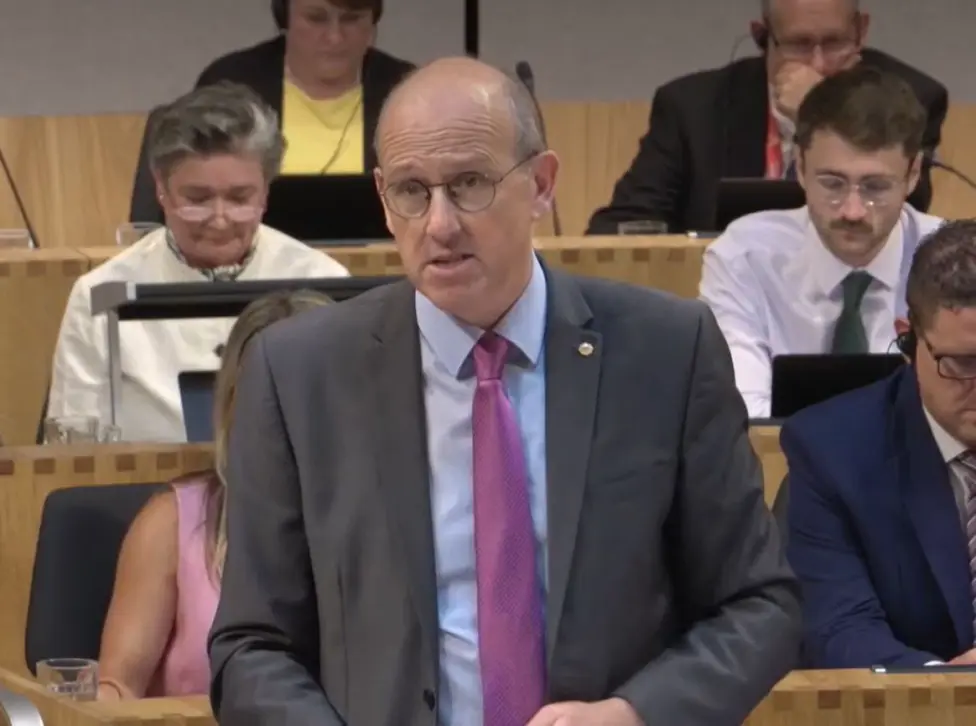
THE WELSH Government has no plans to force a reduction in livestock numbers to meet climate targets, the rural resilience minister has insisted.
Llyr Gruffydd said agriculture remains “central” to Wales’ rural economy following a clash in the Senedd over net-zero policies.
The minister was challenged by Reform’s Laura Anne Jones, who accused the administration of pursuing “left-wing ideological climate targets” at the expense of farmers.
Ms Jones, the shadow rural affairs minister, questioned whether the government would adopt independent recommendations to cut meat and dairy consumption.
The UK Climate Change Committee previously advised that meat consumption should drop by 25% by 2033, alongside a 27% reduction in cattle and sheep numbers by 2040 to hit net-zero goals by 2050.
Ms Jones said the UK Government had accepted the framework and called for clarity on whether Wales would follow suit.

Rejecting the claims, Mr Gruffydd said: “This government is clear that Wales needs a strong, sustainable and productive livestock sector.
“We want to see Welsh farmers producing high-quality food in a way that’s both economically and, yes, environmentally sustainable.”
The minister pointed to the upcoming Sustainable Farming Scheme as the primary vehicle to help farmers improve long-term resilience while maintaining food production standards.
He added that his long-term vision relied on boosting local production, processing, and procurement.
The row escalated when Ms Jones expressed surprise that the minister would not commit to the UK committee’s figures, citing an “obsession” with climate targets.
Responding to what he described as a “quip” about left-wing ideology, Mr Gruffydd said: “Your colleague two questions ago was asking me about heat in schools and the consequences of climate change and the need for air conditioning and improved infrastructure.

“Maybe you should talk to each other about where you stand on this, because I’m hearing very different messages coming from these sides, these benches over here.”

Labour MS, Vikki Howells reminded the Siambr of the work done by the previous Labour administration to protect nature in Wales.
Noting that the Welsh Labour government was the first in the world to formally recognise and declare a nature emergency in 2021, Ms Howells stressed the importance of policies and initiatives to help improve habitats and reverse biodiversity loss.
The Pontypridd Cynon Merthyr MS – who is also the Labour spokesperson for the environment and farming – discussed one of the last initiatives established by her party, Nature Estate Cymru.
She also referenced the Naturfa sites – places for nature recognised under a Welsh Government programme – four of which were announced at the end of the last Senedd term.
Ms Howells asked Mr Gruffydd for his assessment of the two schemes, and if he will commit to continuing them.
Admitting he is not yet “fully versed” on the two initiatives, Mr Gruffydd said he will write to Ms Howells with his reflections.
He added: “We do have an aspiration within our climate and nature action plan, which we’re working at and working on, that will hopefully meet and support some of the aspirations that those groups and herself, I’m sure, will share.”

Andrew RT Davies meanwhile told the Siambr that the Economy, Trade and Rural Affairs Committee has produced a report on governance at Hybu Cig Cymru.
The former Welsh Conservative leader noted one of it’s recommendations was that it should be “returned to the producers and actually be run by the producers and the levy payers”.
Mr Davies, who declared an interest as a levy payer himself, called for HCC to be returned to the levy payers.
He said this would promote “quality Welsh beef, lamb and pork on the world stage rather than paying solicitors and human resources advisers to deal with ludicrous accusations levelled against many individuals within that organisation”.
Mr Gruffydd confirmed he has met with the chief executive and the chair of Hybu Cig Cymru, saying they “know what [his] view is”.
He said: “I want a fully functioning, firing-on-all-cylinders Hybu Cig Cymru. I feel that under the new chief exec and the Vision 2030 strategy that’s been published recently, that they are now on a positive trajectory.
“I will be a critical friend of theirs, but I will support the work that they do, because I honestly think that they are the organisation to move us forward in this space.
“Levy payers’ voices are critical, of course they are, but we need to strike the right balance in terms of making sure that we have an organisation that is functioning, delivering.
“If we rip it up and start again, I fear we’ll do nothing but look at internal structures for time to come. I think we’re beyond the point now where we’re looking back. For me, it’s about looking forward and building Hybu Cig Cymru into what it could and should be.”
But Mr Davies accused the minister of failing to answer his question and pressed for clarification on whether he will allow levy payers to take ownership of HCC.
Mr Gruffydd responded: “Let’s not forget that the Welsh Government brings a lot to the table here as well. So, the Welsh Government has to be represented in the organisation. And I believe that they are on the right trajectory now.
“So, I don’t believe in changing the current structure. I will, of course, keep a watching brief on things as they develop.
“And I’ve spoken with NSA Cymru and others on a myriad of issues around this. But I’ve also spoken to the people running HCC, leading HCC, and they are giving me confidence that they are on the right track and I will support them.”

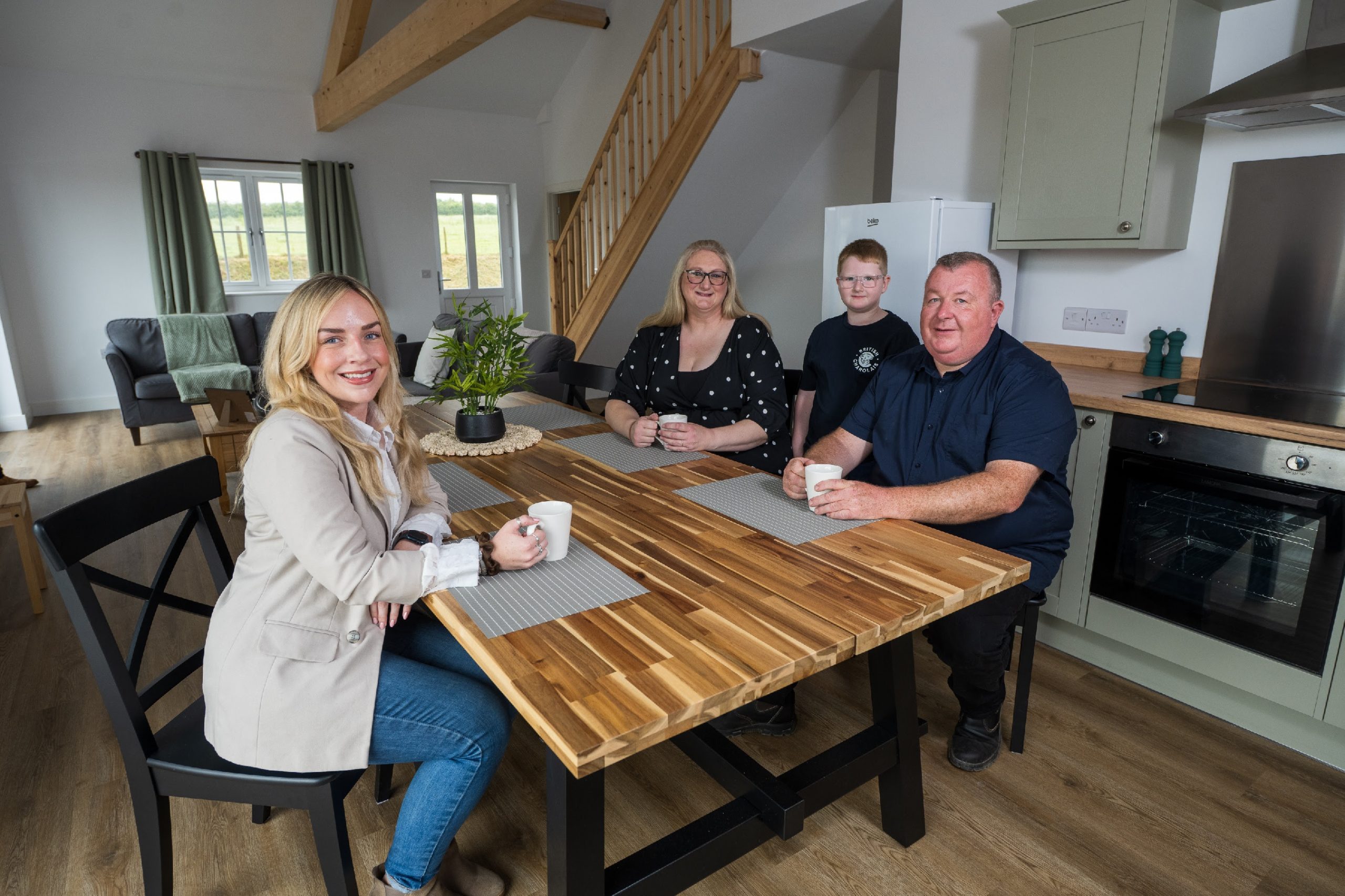
Family-run cattle farm diversifies into rural tourism with support from £150,000 Development Bank loan
A FAMILY-run cattle farm in Carmarthenshire has opened its gates to visitors for the first time after launching a new holiday cottage business offering guests a hands-on taste of rural life.
Carnau Mawr Holiday Cottages, based at Brynawelon, has created two high-quality three-bedroom holiday lets alongside its existing beef farming operation.
The project was supported by a £150,000 loan from the Development Bank of Wales through the Wales Flexible Investment Fund.
Owned by Robert and Emily Currell, the farm now combines traditional livestock production with a growing rural tourism venture. The cottages give visitors the chance to stay on a working farm and learn more about day-to-day agricultural life.
The investment was led by David Knight, Investment Executive at the Development Bank of Wales.
Robert and Emily said: “Diversifying into holiday accommodation has been an enjoyable experience for us. It has given us a way to bring in additional income alongside the farm, while making full use of the land we already have.
“Neither of us had a background in hospitality before this, but we have found that we really enjoy welcoming people here.
“One of the most rewarding aspects has been giving visitors a chance to see how a working farm operates. For many children especially, it is their first real insight into farming, and that educational side has been incredibly positive.
“The Development Bank of Wales was excellent to work with. The team were approachable, supportive and made the whole process feel very personal. It really felt like dealing with people who understood what we were trying to achieve.”
The investment comes amid growing demand for high-quality rural accommodation in west Wales, while also highlighting how farming businesses are looking at new ways to diversify and strengthen their long-term future.
Nakeja Howell, Portfolio Executive at the Development Bank of Wales, said: “Carnau Mawr is a strong example of how farms across Wales are adapting and evolving.
“By diversifying into tourism, Robert and Emily have created a business that not only strengthens their own income but also contributes to the wider rural economy.

“Projects like this highlight the value of flexible finance that works alongside the realities of running a farm. By taking a relationship-led approach, we aim to provide funding that is practical, accessible and tailored to individual businesses.
“We are pleased to support Carnau Mawr as they establish their holiday accommodation offering and open up their farm to visitors, creating new opportunities for both the business and the local area.”
The £150,000 loan came from the Wales Flexible Investment Fund, which is financed by Welsh Government.
The £500m fund supports Welsh businesses with terms of up to 15 years. Loans, mezzanine finance and equity investments are available from £25,000 to £10m.
Renowned craftsman David Broadbent hopes to end his show career on a high at Llanelwedd
A RENOWNED stickmaker from the Isle of Harris in the Outer Hebrides is preparing to make one final journey to the Royal Welsh Show later this month, as he competes in what he expects to be his last season on the agricultural show circuit.
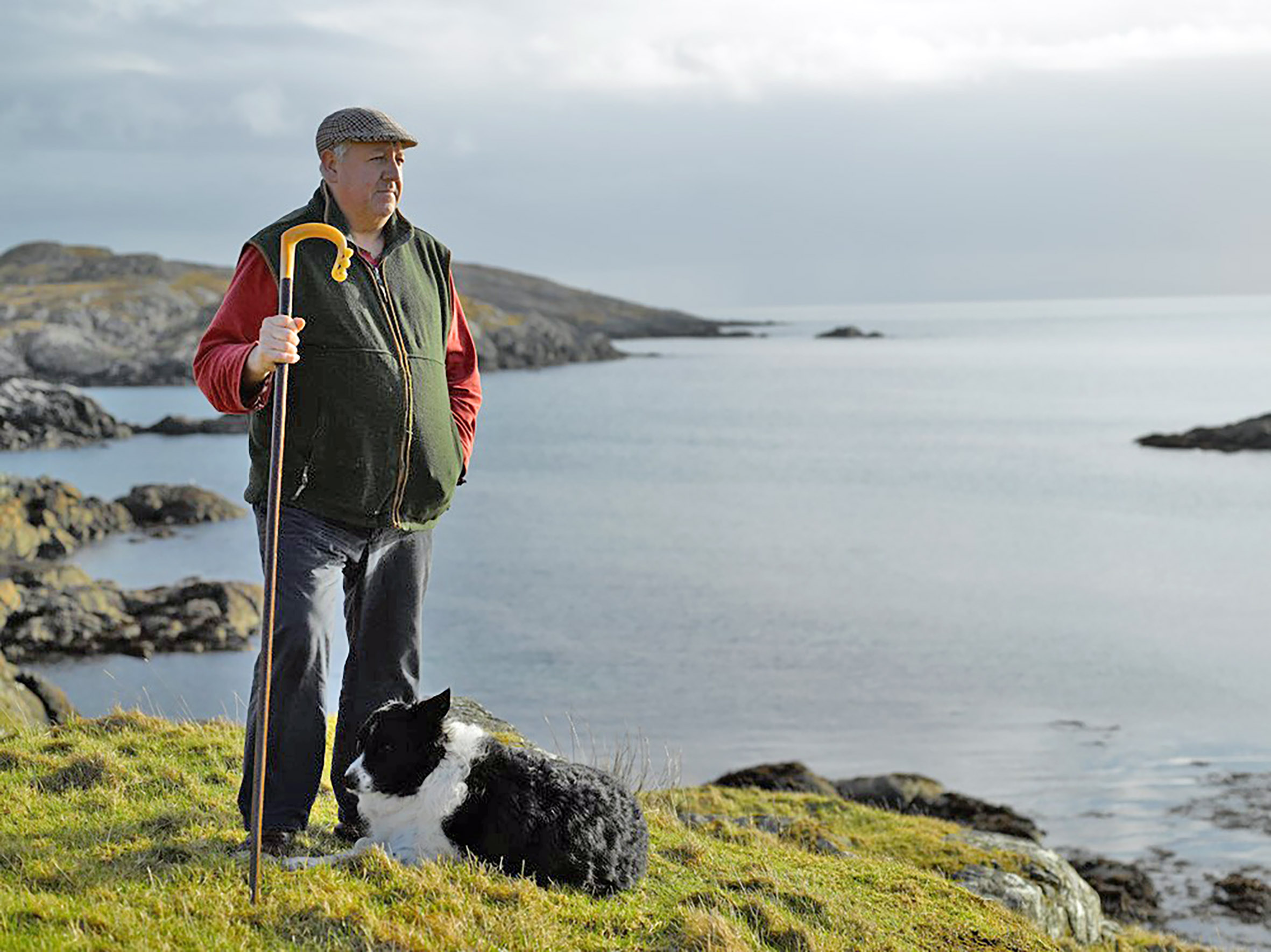
David Broadbent, known as The Harris Stickmaker, has spent almost half a century perfecting the traditional rural craft, winning numerous championship titles and awards at agricultural shows across the UK.
Originally from Halifax in West Yorkshire, David moved to the Isle of Harris in 1972 while working as a carpenter. It was there that he met his wife. After several years living on the mainland, the couple eventually returned to the family croft where she was born.
His passion for stickmaking began in 1976, when he bought a handcrafted stick from a local crofter for £5. Captivated by its decorative handle, he decided to try making one himself.
Nearly 50 years later, David is regarded as one of the UK’s most respected stickmakers.
His success has also brought him into contact with members of the Royal family. During celebrations marking the 100th anniversary of the Harris Tweed Orb trademark, he presented the then Prince of Wales and Duchess of Cornwall, now King Charles III and Queen Camilla, with handcrafted walking sticks. He has also met The Princess Royal through the International Sheep Dog Trials.
David’s distinctive sticks are made from materials including ram’s horn, Highland cow horn and buffalo horn, combined with native woods such as hazel, blackthorn and cherry. Each piece is individually shaped and finished by hand.
For many years, David had dreamed of competing at the Royal Welsh Show, but felt the 600-mile journey from the Hebrides was simply too far. That changed when his granddaughter became engaged to a hill farmer near Oswestry, giving him a base from which to travel to Mid Wales.
He finally fulfilled his long-held ambition by competing at the Royal Welsh in 2023.
Now 74 and facing deteriorating health, David has decided that 2026 will likely be his final year in competition. He is entering the Royal Welsh, the Royal Highland and the Great Yorkshire, which he describes as the three top shows in the country.
David is also keen to pass the craft on to the next generation. He teaches youngsters on the island, as well as his granddaughter when she visits.
In recent years, much of his stickmaking has focused on charity work, with sticks donated to fundraising auctions in support of Prostate Cancer UK and the British Heart Foundation.

Among the classes David will enter at this year’s Royal Welsh Show is the unique Lady’s and Gentleman’s class, which requires competitors to produce a matching pair of intricately crafted sticks.
For the class, David has created a pair from Shetland sheep horns, decorated in striking black and gold.
He said: “Stickmaking is not an easy craft to take on and the judging can be extra critical. However, it is a true passion of mine and something I find incredibly satisfying.
“I can whittle away the hours in my shed, surrounded by vices, presses and a clutter of tools, and it brings me immense joy.
“I’ve been making sticks for nearly 50 years and I’ve met wonderful people through the craft. I want to go out with a bang and, if I could finish by winning at the Royal Welsh, that would be something very special.”
The stickmaking competition remains a popular feature of the Royal Welsh Show, attracting skilled craftsmen from across the UK and helping to preserve a traditional rural craft.
The classes will be judged on the opening day of this year’s show, which takes place from July 20 to 23 at Llanelwedd, Builth Wells.
Picture caption: The Harris Stickmaker, David Broadbent.


Local Government15 hours ago
Calls grow for independent investigation into Manorbier school closure
Councillor alleges misleading figures, inadequate insurance and poor treatment of staff CALLS for an independent investigation into the controversial closure...

Community21 hours ago
Neyland Carnival hailed a huge success after streets fill with colour and crowds
NEYLAND CARNIVAL organisers have thanked the community, volunteers and local businesses who helped make this year’s event a memorable success....

Community1 day ago
Tenby Summer Spectacular: Anger grows over ‘disaster waiting to happen’ warning
A growing backlash has followed police calls for the event’s licence to be revoked, with supporters questioning why authorities failed...

Charity2 days ago
RSPB secures ‘missing link’ to reconnect wildlife habitats in Carmarthenshire
RSPB CYMRU has purchased a 96-hectare upland site in Carmarthenshire, describing it as a vital step towards reconnecting one of...


Crime3 days ago
Ann Widdecombe: Welsh politicians pay tribute as murder probe launched
Prime Minister Sir Keir Starmer has praised the former minister’s “conviction and dedication”, while political figures in Wales remembered her...


News3 days ago
Solardo pulls out of Haverfordwest show as organisers offer full refunds
Headline act confirms non-appearance as Park House Series announces major event changes DANCE music duo Solardo will no longer perform...


Local Government3 days ago
Conservatives win Pembroke Dock seat as Reform stalls and Dowson polls just 11
Jamie Street takes Market ward with a 43-vote majority as Reform finishes fourth despite its major Senedd breakthrough two months...

Health3 days ago
Hospital ward closed after highly contagious scabies outbreak
Hywel Dda confirms wider rise in cases across Carmarthenshire, Pembrokeshire and Ceredigion as patients and staff are offered treatment A...


Crime4 days ago
Teacher stabbing trial: The first week of evidence
Jury hears accounts of alleged planned classroom attack, teacher’s fear she was dying, and boy’s words after leaving school A...

Community4 days ago
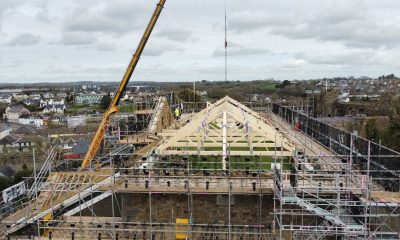
Haverfordwest Castle refurbishment reaches new heights as roof goes on
Major milestone reached in project to transform historic gaol building into flagship visitor attraction A MAJOR milestone has been reached...
-
 Farming6 days ago
Pembrokeshire slaughterhouse given urgent improvement rating after audit failure
-

 Entertainment5 days ago
Swing and big band classics heading to Torch Theatre
-
 News6 days ago
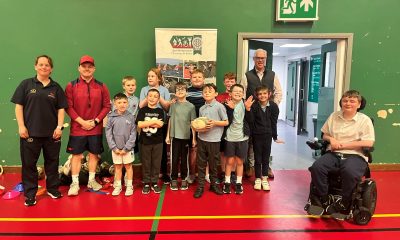
From boccia to boxing: ALN multisport events give youngsters chance to try activities
-
 News7 days ago
Large fire breaks out at Impala Terminal in Milford Haven
-

 News6 days ago
Questions raised over Hamilton Accies finances after club’s Haverfordwest friendly
-
 Farming4 days ago
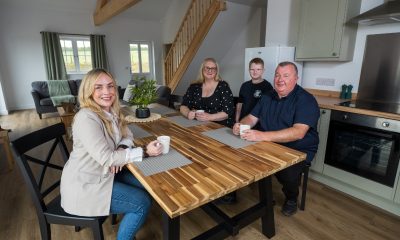
Working Carmarthenshire farm opens gates to visitors with new holiday cottages
-
 Community6 days ago
British Empire Medal ceremony held at County Hall
-
 Crime4 days ago
Greenacres confirms seized dogs are safe as investigation continues