


News
Pembrokeshire weak for mobile connectivity as landowners launch mast policy campaign


Campaigners say mast rent reforms have damaged cooperation between operators and landowners as rural Wales continues to struggle with patchy mobile coverage
CAMPAIGNERS representing rural landowners have launched a new website aimed at gathering evidence about what they describe as a “broken mast policy”, which they say is contributing to poor mobile coverage across parts of Wales, including Pembrokeshire.
The campaign comes amid fresh analysis highlighting persistent connectivity problems in rural areas. Research by broadband intelligence firm Ookla shows that large parts of West Wales continue to lag behind the UK average for mobile download speeds. In many parts of Pembrokeshire, typical mobile data speeds are reported to sit in the mid-teens to low-twenties megabits per second, with widespread mobile “not-spots” where coverage drops out altogether.
Local residents and businesses have long complained about unreliable signal in rural parts of the county. Coastal communities, farming areas and smaller villages often struggle with patchy reception, particularly during busy tourist periods when networks come under additional strain.
Campaigners say the situation has been made worse by changes introduced under the Electronic Communications Code reforms in 2017, which significantly altered the way telecoms operators pay landowners who host mobile phone masts.
Before the reforms, landowners typically received commercial rents for hosting telecommunications infrastructure. However, the updated legislation aligned mast rents more closely with the value of the land itself rather than the commercial benefit to the operator. In many cases this has led to payments being reduced by as much as ninety per cent when existing agreements are renewed.

Landowner groups say the changes have damaged relationships between network operators and site providers, making negotiations over new sites and renewals more difficult.
A spokesperson for the campaign said the new website will allow landowners across the UK to submit evidence and case studies about how the policy has affected the rollout of mobile infrastructure.
They said: “Many rural landowners feel they have been pushed into a David versus Goliath battle with telecoms operators. The reforms drastically reduced mast rents and undermined long-standing agreements, which has damaged cooperation just at the time when better mobile connectivity is needed most.
“We are launching this platform so that landowners can record what is actually happening on the ground. Without fair relationships between site providers and operators, the rollout of modern mobile networks will continue to face unnecessary barriers.”

The campaigners argue that the breakdown in trust between operators and landowners risks slowing the expansion of mobile networks in rural areas, including the rollout of newer technologies such as 5G.
Although mobile companies say the reforms were intended to reduce the cost of infrastructure and accelerate deployment, critics argue that in practice the changes have led to legal disputes, stalled negotiations and delays to upgrades.
For counties like Pembrokeshire, where the geography is already challenging, the issue has particular significance. The county’s rugged coastline, dispersed rural settlements and areas of national park land can make it more difficult and expensive to install new masts or upgrade existing ones.

Industry and government have acknowledged the scale of the rural coverage problem. The UK Government’s Shared Rural Network programme is currently working with mobile operators to extend coverage across the countryside by upgrading existing masts and building new sites.
The programme aims to eliminate many of the UK’s so-called “partial not-spots”, where customers can only access one mobile network. However, much of the initiative is focused on expanding 4G coverage rather than directly funding widespread 5G deployment.
As a result, many rural communities are still waiting for the faster speeds and lower latency promised by next-generation mobile networks.
Local businesses say improved connectivity is increasingly essential to the county’s economy. Tourism operators rely heavily on mobile networks for bookings and contactless payments, while farmers and rural enterprises are increasingly using digital tools and connected equipment that require reliable mobile data.
Campaigners behind the new website say they hope the evidence gathered from landowners will help policymakers better understand the practical challenges facing rural connectivity.
They warn that unless the policy framework governing mast sites is reviewed, ambitions to expand mobile infrastructure across rural Britain may be harder to achieve.
Industry bodies and government officials maintain that the reforms were designed to make it easier and more affordable to deploy digital infrastructure. Landowner groups, however, insist that the changes have had unintended consequences and may ultimately slow the rollout they were meant to accelerate.
For communities across Pembrokeshire still struggling with unreliable signal, the debate over mast policy could play an important role in determining how quickly faster and more reliable mobile coverage arrives in the years ahead.


TRADERS in Tenby have been left frustrated after Pembrokeshire County Council extended the closure of Crackwell Street once again.
The street, which provides direct access to Tenby Harbour, has been closed for several months to allow scaffolding work to be carried out at Goscar House.
It had been due to reopen on Friday, but the council has now extended the closure until June 19.
Local businesses say the repeated delays have affected trade, with concerns that the ongoing closure is making access to the harbour area more difficult during a busy period for the town.
The road remains closed while scaffolding is in place at the property.
Caption:
Ongoing closure: Scaffolding remains in place on Crackwell Street, Tenby (Pic: Malcolm Richards).


Court hears defendant contacted protected person despite ban
A LLANGADOG man has been fined £1,375 after twice breaching a restraining order by contacting a protected person he had been banned from approaching.
Adam Thomas Davies, 34, of Llangadog, appeared before Llanelli Magistrates’ Court on Monday (Jun 15) for proceedings linked to an existing community order.
The court heard Davies had breached a restraining order on two separate occasions in June last year by contacting a person he had been prohibited from approaching under an order imposed by Llanelli Magistrates’ Court in November 2019.
Magistrates were told the original community order, imposed in August 2025, had become unworkable due to long-term physical health issues alongside Davies’ employment.
The court revoked the existing order and resentenced him for the original offences.
Davies was made subject to a new community order running until June 14, 2027. He must comply with a Rehabilitation Activity Requirement and attend appointments or activities as directed by probation services, for up to 15 days.
As a punitive element of the order, magistrates imposed a fine of £1,375.
The court heard the breaches related to unlawful contact made in Carmarthenshire despite the restrictions remaining in force.
Davies was ordered to pay the fine at a rate of £120 per month, starting from July 13.


COMMUNITY groups, charities and local organisations across the Dyfed-Powys area are being invited to apply for funding for projects aimed at improving road safety.
Police and Crime Commissioner Dafydd Llywelyn has launched a new Road Safety Community Grant Fund to support local initiatives designed to reduce risks on the roads, raise awareness and encourage safer behaviour among drivers, cyclists and pedestrians.
The fund will support preventative projects led by communities, including education and awareness programmes, behaviour-change campaigns, road safety events, training and skills development, and evidence-led pilot schemes.
Applications will be assessed on their potential to improve road safety, provide value for money and deliver clear community benefits.
Mr Llywelyn said: “Keeping our communities safe on our roads is a fundamental part of our wider mission to protect the public and reduce harm.
“By investing in community-led initiatives, we are empowering local organisations to deliver practical, innovative solutions that improve road safety, change behaviours, and ultimately save lives.”
The fund forms part of the commissioner’s Police and Crime Plan for 2025-2029, which includes commitments to preventing harm, supporting safer communities and working in partnership on issues affecting local people.
Further details, including eligibility criteria and how to apply, are available on the Dyfed-Powys Police and Crime Commissioner’s website.
The fund closes at 10:00pm on Sunday, July 19.



Business3 hours ago
Celtic Freeport five-year plan puts Milford Haven at centre of green energy future
Strategy promises investment, skilled jobs and new supply chains, but major barriers remain over grid connections, planning and delivery THE...


Education4 hours ago
Closure of Ysgol Clydau approved after emotional council debate
COUNCILLORS WARNED RURAL COMMUNITIES WILL REMEMBER DECISION PEMBROKESHIRE councillors have voted to close Ysgol Clydau following an emotional debate over...


Education4 hours ago
Manorbier school closure process to continue after narrow council vote
Questions remain over insurance, rebuilding costs and possible legal action by Diocese PEMBROKESHIRE councillors have voted to press ahead with...


Community7 hours ago
The father, son and daughter lifeguard trio saving lives in Pembrokeshire
A FATHER, son and daughter are preparing to help keep beachgoers safe on the Pembrokeshire coast this summer as part...


Community17 hours ago
Beating of the Bounds brings music, boats and tradition to Haverfordwest
CENTURIES-OLD CEREMONY DRAWS FAMILIES TO THE RIVERSIDE HAVERFORDWEST’S historic Beating of the Bounds returned on Sunday (Jun 14), with boats,...


Community1 day ago
Milford Haven School pupil praised after stepping in during real-life emergency
A YEAR 11 pupil at Milford Haven School has been praised after putting his first aid training into action to...


Community1 day ago
River festival brings crowds to Haverfordwest
A CELEBRATION of the River Cleddau brought crowds into Haverfordwest on Saturday (June 13) as the town’s River Festival returned...


Charity1 day ago
Voices at the Castle hailed as unforgettable night after weather setback
Russell Watson headlines spectacular charity concert at Pembroke Castle A SPECTACULAR evening of live music at Pembroke Castle has been...

Local Government2 days ago
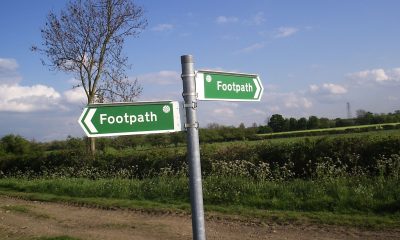
Council admits 74 rights of way complaints remain unresolved
Key post vacant since February as walker raises safety concerns over paths near Llanteg and Amroth PEMBROKESHIRE COUNTY COUNCIL has...


Education3 days ago
Diocese threatens legal action as Manorbier school closure battle intensifies
Church says council could face judicial review over fire-hit school A BITTER row over the future of Manorbier Church in...
-

 Community19 hours ago
Pembrokeshire Chess Club crowned Welsh champions
-

 Crime6 days ago
Haverfordwest pair accused of £80,000 rogue trading frauds
-
Education3 days ago
Diocese threatens legal action as Manorbier school closure battle intensifies
-

 Crime4 days ago
Man accused of six rapes including alleged Haverfordwest offence
-

 Community7 days ago
Forgotten wartime archive found in Pembroke Dock attic after 80 years
-

 Crime4 days ago
Pembroke Dock teenager sentenced over train strangulation attack
-

 Crime6 days ago
Families condemn failed appeal by paddleboard boss jailed over Haverfordwest tragedy
-
 Crime6 days ago
Knife blankets call as school staff face rising violence fears