


Farming
£3 million secured to continue Welsh sheep genetics programme


THE WELSH GOVERNMENT has confirmed £3 million in funding over the next three financial years to continue the Welsh Sheep Genetics Programme (WSGP), helping Welsh sheep farmers improve efficiency, productivity and environmental performance.
From April 2026, Hybu Cig Cymru – Meat Promotion Wales (HCC) will lead Phase 2 of the programme, marking a significant next step in supporting farmers to make smarter, evidence-based breeding decisions.
The new phase will provide transition support for existing participants while also opening the programme to new flocks. Farmers will receive practical, technical and financial support to make use of Genomic Estimated Breeding Values, advanced genetic tools designed to help them make better-informed decisions at farm level. The data collected will also strengthen industry benchmarking and support longer-term business planning.
Phase 2 will also include the development of robust key performance indicators, tailored farm-level action plans, and an ambitious portfolio of research projects aimed at driving innovation across the sector.
The programme’s objectives are closely aligned with the Sustainable Farming Scheme, which launched on January 1, 2026, as well as HCC’s Vision 2030, reflecting a shared commitment to a productive, sustainable and competitive Welsh red meat industry.

Phase 1 of the WSGP, delivered by Farming Connect, comes to an end on March 31, 2026. Since launching in 2023, the programme has achieved significant progress, including introducing genomics into the sheep sector for the first time anywhere in the world.
It has also generated 70,000 genotypes across Tier 1 and Tier 2 flocks on the AHDB-Signet database since 2023, the highest number recorded there, while developing two major research strands focused on breeding for worm resistance and reduced methane emissions.
The programme has worked in close partnership with leading specialists, including Innovis and AHDB-Signet, and has delivered measurable genetic gains and improvements in key performance traits across participating flocks.
The investment underlines the Welsh Government’s commitment to reducing greenhouse gas emissions while supporting the production of high-quality, sustainable PGI Welsh Lamb.
Deputy First Minister for Climate Change and Rural Affairs, Huw Irranca-Davies, said: “This funding demonstrates our commitment to supporting farmers to build profitable, resilient businesses while delivering on our climate ambitions. The Welsh Sheep Genetics Programme shows what is possible when cutting-edge science meets the proud tradition of Welsh livestock farming. By helping farmers breed healthier, more productive flocks with a lower environmental footprint, we are strengthening food security and safeguarding our rural economy for the long term.”
José Peralta, Chief Executive of Hybu Cig Cymru, said: “The progress achieved to date reflects the commitment of farmers across Wales, the work of the Farming Connect team, and the continued financial support of the Welsh Government. Together, these provide a strong platform for the next phase.
“This next step directly supports a core priority in our new strategic plan: to develop and lead the implementation of initiatives that improve economic and environmental sustainability. We look forward to working closely with farmers to ensure they have the tools, insights and support needed to thrive in the years ahead.”


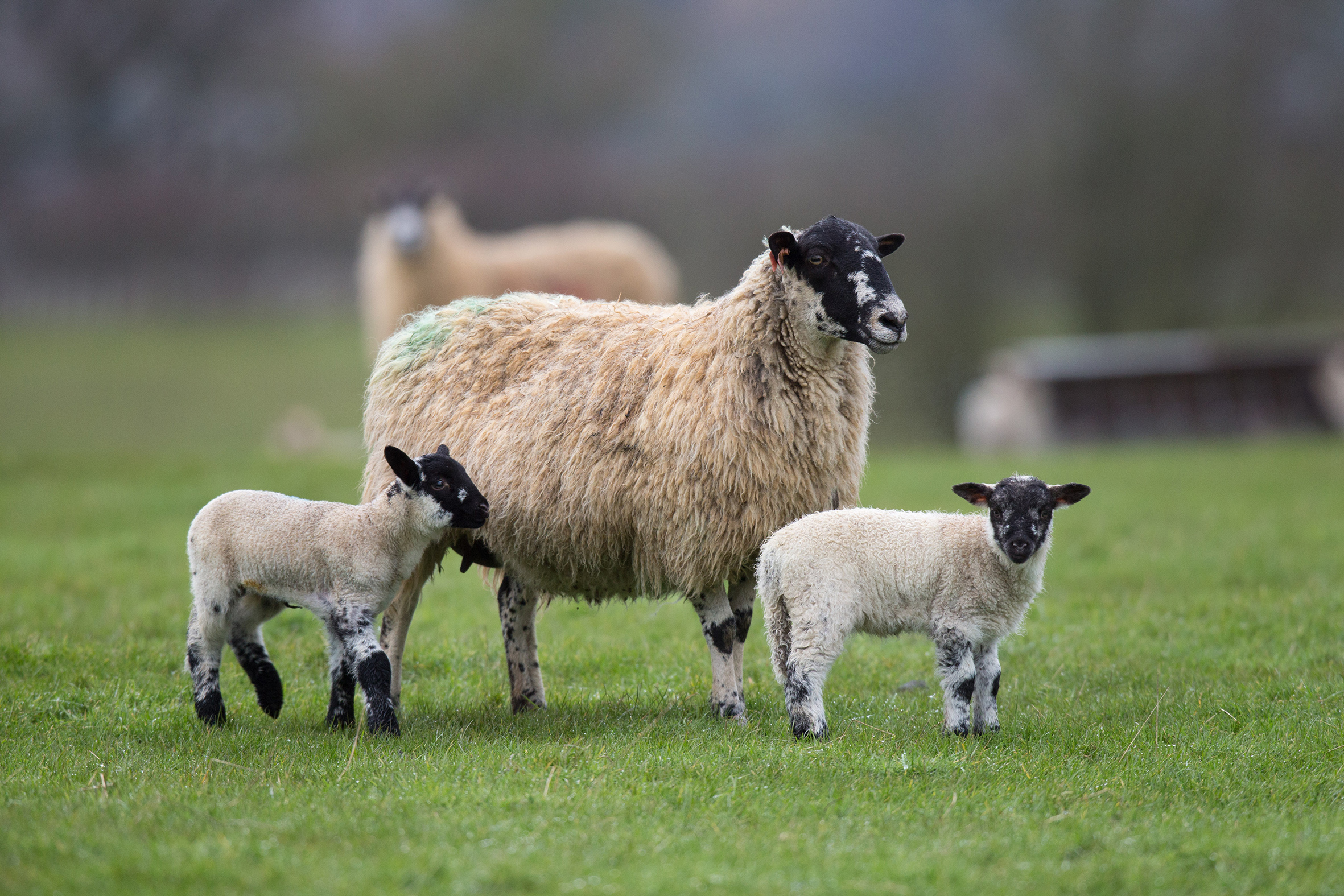
PEMBROKESHIRE sheep farmers are being urged to use weaning as a key opportunity to check ewe condition and deal with any problems before tupping.
With many local flocks now moving towards weaning, farmers are being advised to assess body condition score, as well as checking teeth, feet and udders, while there is still time to improve nutrition ahead of the breeding season.
Dr Alison Bond, Technical Services Manager at Rumenco, said close monitoring at this stage can help avoid major changes in ewe condition and improve overall flock productivity.
She said weaning at around 12 weeks was a good target, when lambs should usually be between 25kg and 30kg and taking very little milk from the ewe.
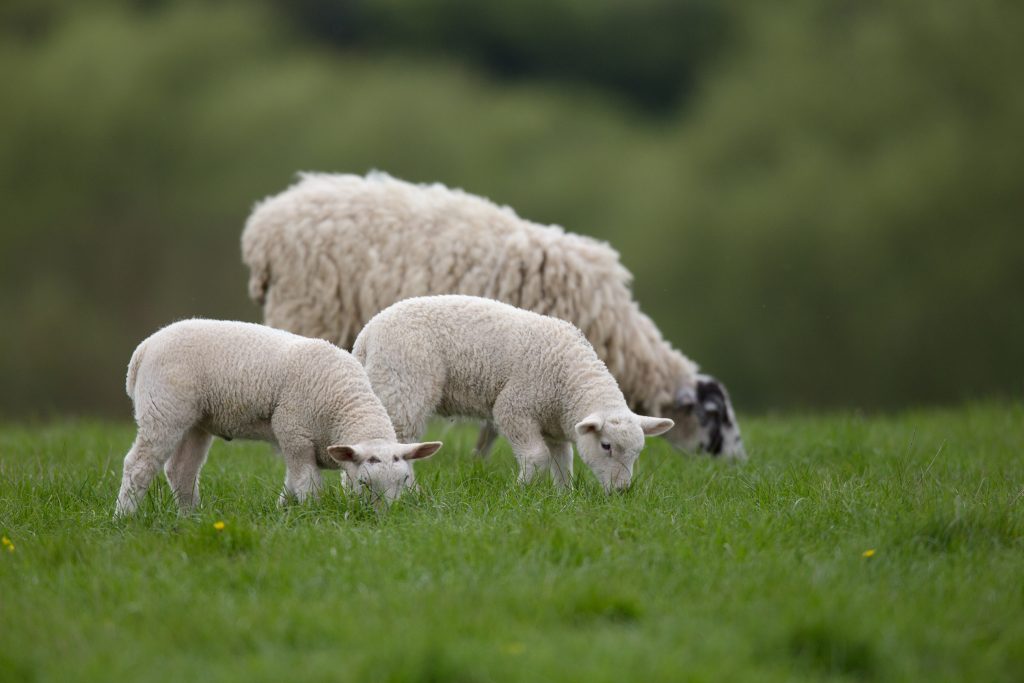
“There will of course be a focus on the lambs’ readiness for market at this stage, but it is equally important to put a hand across the ewes to assess their condition,” she said.
For lowland flocks, ewes with a body condition score below 2.5 at weaning should be given priority, as they may struggle to reach the target score of around 3.5 by tupping.
Those poorer condition ewes should be grouped separately, moved onto the best available grazing and given appropriate supplementary feeding where needed.
Dr Bond said waiting until closer to tupping could be less effective and may affect performance.
She added that ewes in good condition at tupping are more likely to scan with more lambs, produce healthier lambs after birth, and rear heavier lambs by eight weeks of age.
“It affects the whole production cycle, and not just one element,” she said.
The advice will be particularly relevant to farms across Pembrokeshire, Carmarthenshire and Ceredigion, where sheep remain a major part of the rural economy and where grass quality can vary sharply depending on weather, soil type and stocking pressure.
Dr Bond said the aim should be to keep ewes between body condition score 2.5 and 3.5 throughout the cycle, avoiding big dips and peaks.

Routine checks at weaning, she said, give farmers the best chance of correcting problems before the tups go in two to three months later.
Pic: Farmers are being urged to check ewe condition at weaning to protect flock performance ahead of tupping (Pic: Tim Scrivener/Agriphoto).

LOW UPTAKE HAS RAISED FRESH QUESTIONS OVER THE FUTURE OF SUPPORT FOR WELSH FARMERS
REFORM WALES has called for an urgent review of the Sustainable Farming Scheme after figures showed only around half of eligible farmers have signed up.
The party said the lower-than-expected uptake showed that serious concerns remained within the farming community over the complexity of the scheme, compliance rules and uncertainty about how it will operate in the long term.
Laura Anne Jones MS, Reform Wales’ Shadow Cabinet Minister for Food, Farming and Rural Affairs, raised the issue during questions to the Welsh Government.
She said: “The figures released by the Welsh Government today confirm what many farmers have been saying for some time: the Sustainable Farming Scheme is too complex, too restrictive and too bureaucratic.
“Farmers need certainty and security, not endless paperwork and rigid requirements that fail to reflect the realities of farming in Wales.
“Reform Wales believes the scheme should be reviewed as a matter of urgency, with a greater focus on flexibility, common sense and practical outcomes.
“Welsh farmers deserve a scheme that works with them, not against them.”
The Sustainable Farming Scheme is due to replace previous systems of agricultural support in Wales and has been one of the most contentious issues facing the rural sector.
Farming unions and campaigners have repeatedly warned that any new system must be practical for family farms and must not add unnecessary red tape at a time when many businesses are already under pressure from rising costs, bovine TB and market uncertainty.
Reform Wales said the Welsh Government must now explain how it intends to respond to the level of take-up and whether changes will be made before the scheme is fully rolled out.


PLANS to convert historic farm buildings near north Pembrokeshire’s Whitesands beach for use as holiday accommodation have been given the go-ahead, but their use doesn’t have to be restricted to just that purpose.
In an application to Pembrokeshire Coast National Park, Matthew James of James Properties, through agent Harries Planning Design Management sought permission for the conversion of two derelict barns to two self-catering holiday accommodation units at Porthmawr Ganol, Whitesands, St Davids.
An officer report said: “The farmstead occupies a prominent position within a landscape characterised by open agricultural fields enclosed predominantly by traditional dry-stone walls, exposed coastal pasture and areas of heathland associated with Carn Llidi.”
It added: “The site lies within the Porthmawr Historic Landscape Character Area, an area recognised for its historic pattern of dispersed settlement, traditional farmsteads, dry-stone wall field boundaries and evidence of medieval and post-medieval agricultural activity.
“The retention and reuse of the existing buildings therefore has the potential to preserve an important element of the area’s historic landscape character whilst securing a viable long-term future for structures that would otherwise continue to deteriorate.”
It said that insufficient evidence had initially been submitted to demonstrate that the buildings were unsuitable for permanent residential conversion and only for self-catering accommodation and therefore an affordable housing contribution should be secured.
Policy would lead to a contribution of £36,400, the report said, but a financial viability assessment by the applicant “demonstrated that the development would not be viable if required to provide the full policy contribution,” the maximum contribution capable of being supported whilst maintaining viability was £12,641.
This reduced figure was accepted, the officer report saying: “Whilst this represents a reduced contribution when compared with the full policy requirement, the submitted viability evidence demonstrates that the development could not reasonably support the full contribution whilst remaining deliverable.
“In these circumstances, securing a reduced contribution is considered preferable to losing the opportunity to secure the restoration and beneficial reuse of the historic buildings.”
It stated that, with the affordable contribution, the scheme would not be limited to self-catering development only.
The application was conditionally approved by Park planners.



News10 hours ago
Long Course Weekend set to bring thousands to Pembrokeshire
Three days of swimming, cycling and running will once again transform Tenby into one of the UK’s biggest endurance sporting...


Community17 hours ago
The gentle giant behind the tattoos
Pembrokeshire security worker Josh Davies praised for professionalism, kindness and proving first impressions can be wrong JOSH Davies is hard...


Charity2 days ago
Toy Story fans fill charity toy box at Haverfordwest cinema
Donations pour in for SNAP Specialist Play as families embrace Toy Story 5 launch A TOY STORY-themed charity appeal at...


Community2 days ago
Lord Rhys emerges from the mist in St Davids
Giant puppet begins historic journey marking 850 years since the first Eisteddfod MIST swirled around St Davids Cathedral on Friday...


News3 days ago
Tragic tribute paid to Haverfordwest man after A4075 collision
FAMILY REMEMBERS “KIND AND LOVING” CALLUM HANSON THE FAMILY of a 22-year-old man from Haverfordwest who died following a road...


News4 days ago
Motorcyclist, 22, dies in A4075 crash in Pembrokeshire
A 22-year-old woman remains in hospital after two-vehicle collision A MOTORCYCLIST has died following a serious two-vehicle crash on the...


Community4 days ago
Why police will be visiting every home in Pembrokeshire
New operation aims to knock on more than 257,000 doors across Dyfed-Powys over the next three years DYFED-POWYS POLICE has...


Crime4 days ago
Prisons at breaking point: MPs warn Wales is paying the price of a failing system
Frozen healthcare budgets, overcrowded jails, homelessness on release and mounting pressure on staff are undermining rehabilitation across Wales, according to...


News5 days ago
Brexit at 10: How Britain was sold a dream that cost us dearly
A decade after the referendum, the promised benefits remain hard to find while the economic costs are increasingly difficult to...


Crime5 days ago
Worcestershire man jailed after violent attack on woman in Tenby
Defendant was already serving a suspended sentence when serious assault took place A WORCESTERSHIRE man has been jailed for more...
-

 Crime4 days ago
Milford Haven man jailed for breaching domestic violence protection order
-

 Local Government6 days ago
Security privately arranged by Mayor at Beating of the Bounds
-

 News4 days ago
Crash on Freeman’s Way causes school-run chaos across Haverfordwest
-

 Crime5 days ago
Man wanted by court after failing to attend hearing over alleged shop thefts
-
 Crime5 days ago
Man banned from roads after drink-driving offence
-

 Crime5 days ago
Man jailed after admitting strangulation and assaults
-

 Crime5 days ago
Drug trafficker must repay £33,000 after court rules he made nearly £500,000
-

 Crime5 days ago
Man sentenced over stalking campaign and lock knife offence