


News
Starmer fights for survival as Labour civil war erupts


Cabinet split, ministers resign and MPs revolt as pressure mounts on Prime Minister after disastrous election losses
KEIR STARMER is facing the biggest political crisis of his premiership as Labour descends into open civil war, with cabinet ministers divided, MPs publicly revolting and speculation mounting over who could replace him.
The Prime Minister entered a crucial cabinet meeting on Tuesday morning under extraordinary pressure after Labour’s disastrous local election performances across England, Scotland and Wales triggered a wave of panic inside the party.
By mid-morning, at least 78 Labour MPs had publicly called on Starmer either to resign immediately or set out a timetable for departure — almost one in five of Labour’s parliamentary party.
The situation worsened overnight when six ministerial aides quit their roles, forcing Downing Street into a late-night reshuffle to replace them.
The political turmoil is now so severe that financial markets have started reacting nervously, with UK government borrowing costs climbing amid fears of instability at the heart of government.


Cabinet tensions explode
Tuesday morning’s cabinet meeting was supposed to focus heavily on the escalating Middle East crisis.
Instead, Labour’s internal collapse dominated Westminster.
BBC political editor Chris Mason reported that Starmer’s cabinet is now openly split on the most fundamental question in government:
whether the Prime Minister should remain in office.
Some ministers are urging him to fight on.
Others are reportedly telling him privately that he should announce a timetable for departure.
The most damaging intervention came from Home Secretary Shabana Mahmood, who is understood to have urged Starmer to prepare for an orderly transition.
Despite the growing pressure, the Prime Minister attempted to project calm and authority during cabinet discussions.

According to political correspondent Harry Farley, Starmer told ministers:
“As I said yesterday, I take responsibility for these election results and I take responsibility for delivering the change we promised.
“The past 48 hours have been destabilising for government and that has a real economic cost for our country and for families.
“The Labour Party has a process for challenging a leader and that has not been triggered.
“The country expects us to get on with governing.”
However, few in Westminster now believe the crisis can simply be contained.

First minister resigns
The first ministerial resignation came from Communities Minister Miatta Fahnbulleh, who delivered a devastating blow to Starmer’s authority.
In a resignation letter published online, she wrote:
“The public does not believe that you can lead this change — and nor do I.”
Fahnbulleh accused the government of failing to govern with sufficient “vision, pace and ambition”.
She also criticised controversial decisions including winter fuel payment changes and cuts affecting disabled people.
Her resignation is politically significant because she is regarded as a close ally of former Labour leader Ed Miliband.
Importantly, Fahnbulleh did not demand Starmer leave immediately.
Instead, she called for: “An orderly transition so that a new team can deliver the change we promised the country.”
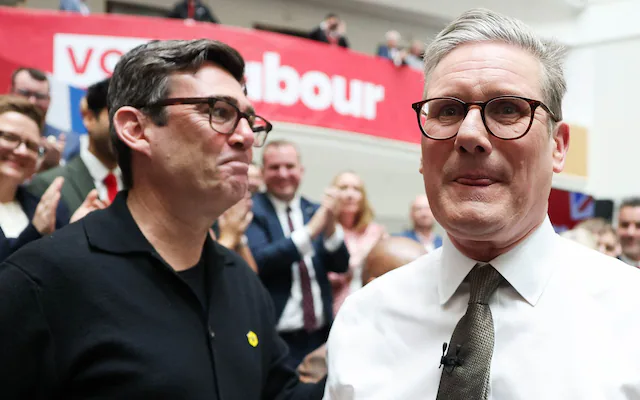
That wording is already being interpreted inside Westminster as an attempt to create time for potential successors — particularly Greater Manchester Mayor Andy Burnham — to position themselves.
Burnham speculation grows
Speculation surrounding Andy Burnham intensified dramatically throughout Tuesday morning.
Burnham, currently Mayor of Greater Manchester, is seen by many Labour activists and MPs as one of the few figures with strong electoral appeal outside Westminster.
However, he is not currently an MP, meaning he would need to return to Parliament through a by-election before he could formally contest the Labour leadership.
Senior minister Darren Jones attempted to shut down the speculation during a difficult round of BBC interviews.
Asked whether Burnham could return to frontline politics, Jones dismissed the idea as:
“Fantasy politics.”
He insisted Labour should focus on governing rather than leadership plotting.
Jones also criticised the public nature of Labour’s internal warfare, saying:
“It’s right to have challenging conversations internally — as opposed to in public.”
However, notably, Jones repeatedly avoided explicitly guaranteeing that Starmer would lead Labour into the next general election.
That omission fuelled further speculation that even some loyalists are preparing for change behind the scenes.
Two rival camps emerging
Westminster insiders now believe Labour is beginning to split into two broad leadership camps.
One group is thought to favour an “orderly transition” which would potentially allow Burnham time to re-enter Parliament before a contest begins.
Another faction — reportedly involving allies of Health Secretary Wes Streeting — is believed to favour a faster leadership contest that would effectively prevent Burnham entering the race.
Streeting himself has remained publicly loyal so far, but his name is increasingly being discussed as a potential successor.
Other names circulating include:
– Angela Rayner
– David Lammy
– Rachel Reeves
– Yvette Cooper
At present, no formal challenger has declared.
But the atmosphere inside Westminster is deteriorating rapidly.
One Labour MP reportedly described the situation as: “Complete meltdown.”
Rebellion spreads across Labour
Several Labour MPs openly attacked Starmer during broadcast interviews on Tuesday morning.
Labour MP Yuan Yang said she no longer believed the Prime Minister could lead the party into the next election.
She urged Starmer to:
“Take control and set out an orderly timetable.”
Meanwhile Gower MP Tonia Antoniazzi said Starmer was:
“Not cutting through” with voters.
She warned that Nigel Farage and Reform UK were increasingly dominating public debate while Labour appeared directionless.
Jonathan Hinder, Labour MP for Pendle and Clitheroe, delivered one of the most brutal assessments.
Speaking on BBC Newsnight, he said: “No prime minister can survive this number of MPs losing confidence in him.”
He added: “Keir Starmer has never been an electoral asset.”
Economic warning signs emerge
The political instability is now beginning to have real-world economic consequences.
UK government borrowing costs rose sharply on Tuesday morning, with yields on 10-year government bonds climbing above five per cent.
Economics editor Dharshini David warned that investors fear a change in Labour leadership could lead to:
– Looser control of public spending
– Increased borrowing
– Higher inflation
– Rising mortgage costs
The UK already faces growing debt interest payments, with roughly one pound in every ten spent by government now going towards servicing debt.
Analysts warned prolonged political instability could further damage confidence in Britain’s economic outlook.
Timing could hardly be worse
The crisis comes at an extraordinary moment politically.
On Wednesday, the King is due to deliver the State Opening of Parliament, outlining the government’s legislative plans for the coming year.
Traditionally, the monarch repeatedly refers to “My Government” throughout the speech.
Yet as ministers arrived at Downing Street on Tuesday morning, journalists openly shouted questions including: “Is it all over for Keir Starmer?”
Deputy Prime Minister David Lammy smiled and waved at reporters but ignored questions about whether Starmer should resign.
Chancellor Rachel Reeves also declined to answer questions as she entered Downing Street.
Meanwhile, political commentators noted the surreal contrast between the pageantry of constitutional government and the growing sense that the Prime Minister may be politically mortally wounded.
What happens next?
Under Labour Party rules, 20% of Labour MPs — 81 MPs — are required to formally trigger a leadership contest.
Public opposition is now approaching that threshold.
Attention will now focus on:
– Whether further ministers resign
– Whether cabinet ministers publicly break ranks
– Whether leadership camps begin organising openly
– Whether Starmer offers concessions or timetables
– Whether markets continue reacting negatively
For now, Starmer insists he will not “walk away”.
But inside Westminster, many Labour MPs increasingly believe the question is no longer whether he goes — but when.









A special evening of music and celebration marked four decades of service by HOPE MS Therapy Centre, one of Pembrokeshire’s longest-serving self-funding charities.
THE ANNIVERSARY concert took place on Friday evening (June 26) at St Clement’s Church, Neyland, bringing together supporters, trustees, local councillors and members of the community to celebrate the charity’s 40th year.
Founded in 1986, HOPE MS Therapy Centre provides support and therapies for people living with multiple sclerosis and other neurological conditions across Pembrokeshire. The organisation has operated as a self-funding charity throughout its history, relying heavily on fundraising and community support.
Guests enjoyed performances from the Quaynotes Mixed Choir, along with acclaimed soloist Sarah Arthur, in what organisers described as an evening of music, song and thanksgiving.
Among those attending was Pembroke Mayor Jonathan Grimes, who praised the charity’s contribution to the county. He was joined by fellow county councillors and trustees including Simon Wright and Simon Hancock MBE.
Writing after the event, Cllr Grimes said: “Thank you to HOPE MS Therapy Centre for inviting me as Mayor of Pembroke to this evening’s concert to celebrate 40 years of service to Pembrokeshire.
“It was great to see my fellow county councillors and members of the trustee board as well as enjoying a fabulous performance from Quaynotes Mixed Choir and the fabulous soloist Sarah Arthur.
“Congratulations to HOPE MS Therapy Centre. I’m looking forward to being involved with the other events you have planned to celebrate 40 years.”
The concert is one of a series of events planned to mark the charity’s milestone anniversary year.
HOPE MS Therapy Centre continues to support people from across Pembrokeshire, providing therapies, advice and a vital social network for those affected by multiple sclerosis and related conditions.
Dinas Cross-born soldier was among those killed at the Battle of the Little Bighorn 150 years ago this week
A YOUNG man from a remote Pembrokeshire farm found himself at the centre of one of the most famous battles in American history after leaving Wales in search of a new life across the Atlantic.
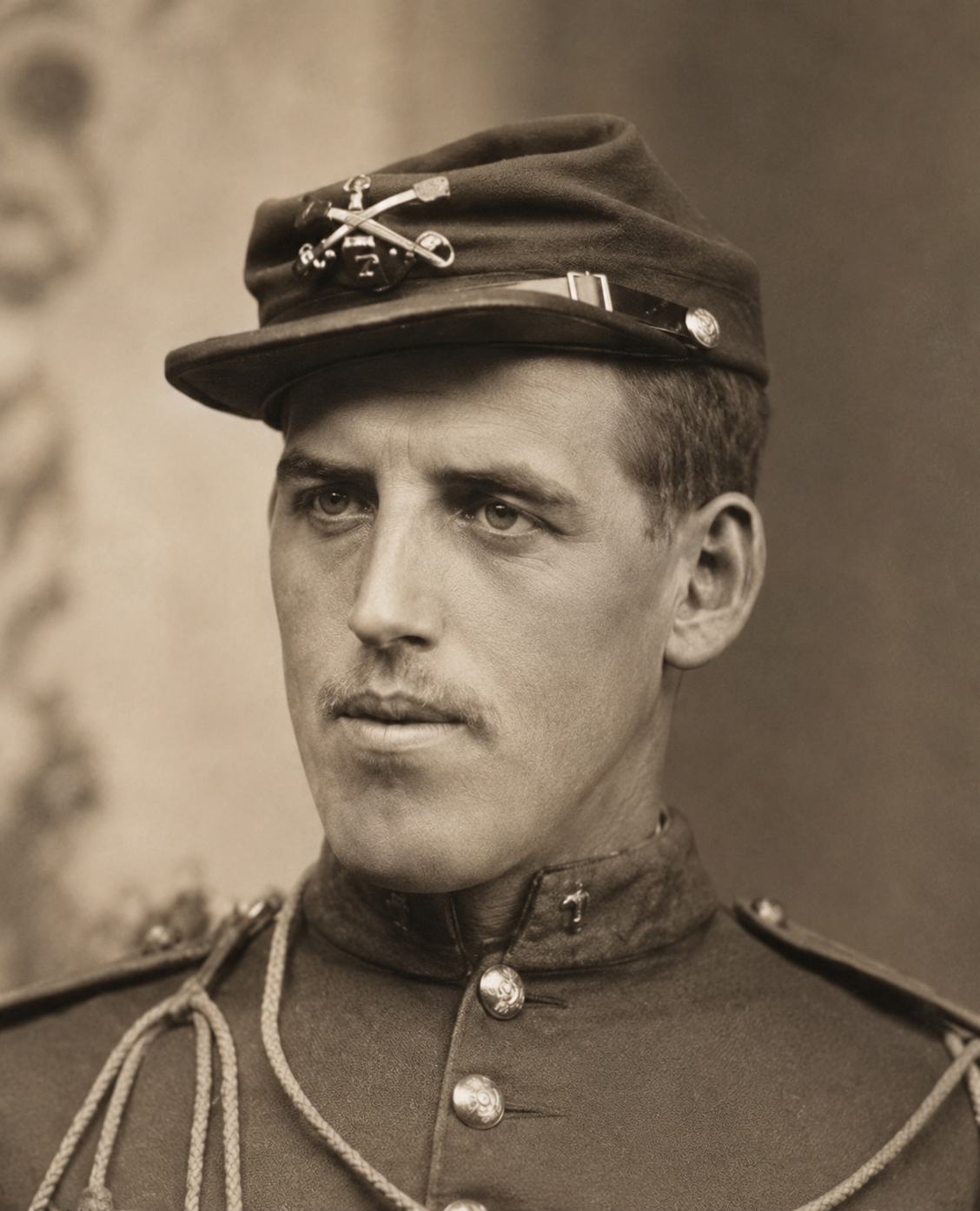
This week marks 150 years since Sgt William Batine James, originally from Pencnwc Farm near Dinas Cross, was killed alongside General George Armstrong Custer at the Battle of the Little Bighorn.
The battle, fought on June 25 and 26, 1876, became known around the world as “Custer’s Last Stand” after the defeat of the US Army’s 7th Cavalry by a coalition of Lakota Sioux, Northern Cheyenne and Arapaho warriors.

Among the dead was a 27-year-old Welshman whose remarkable journey had begun on the north Pembrokeshire coast.
Born on March 3, 1849, James grew up in rural Pembrokeshire before emigrating to North America as a young man. Records show he arrived in Toronto in 1871 before later crossing into the United States and joining the US Army.
He eventually became a sergeant in Company E of the famed 7th Cavalry Regiment.
Just five years after leaving Canada, James found himself riding with Custer into what would become one of the most studied and debated military engagements in American history.
The battle took place in present-day Montana during the Great Sioux War. Custer’s force was overwhelmed after encountering a much larger Native American force than expected.
Every member of Custer’s immediate command was killed.
For many years, James’s family back in Pembrokeshire had little idea what had become of him. Communication across the Atlantic was slow and unreliable, and news often took weeks or months to reach rural communities.
His story only gradually emerged through letters he had sent home, helping relatives piece together the fate of the young man who had travelled thousands of miles from Dinas Cross to the American frontier.
Today, historians of both Welsh emigration and the American West continue to document the lives of those who fought at the Little Bighorn. James remains one of Pembrokeshire’s most unusual historical figures – a local farm boy whose life became entwined with one of the defining moments of the American frontier era.

One hundred and fifty years after his death, Sgt William Batine James remains a reminder of how far Welsh emigrants travelled in the nineteenth century, and how people from even the smallest communities could find themselves caught up in events that would echo through history.
Giant puppet procession brings Welsh history and culture to the streets ahead of this summer’s National Eisteddfod
FISGHUARD and Goodwick joined the celebrations today as the spectacular Carreg Filltir Las procession brought the story of Lord Rhys to north Pembrokeshire.
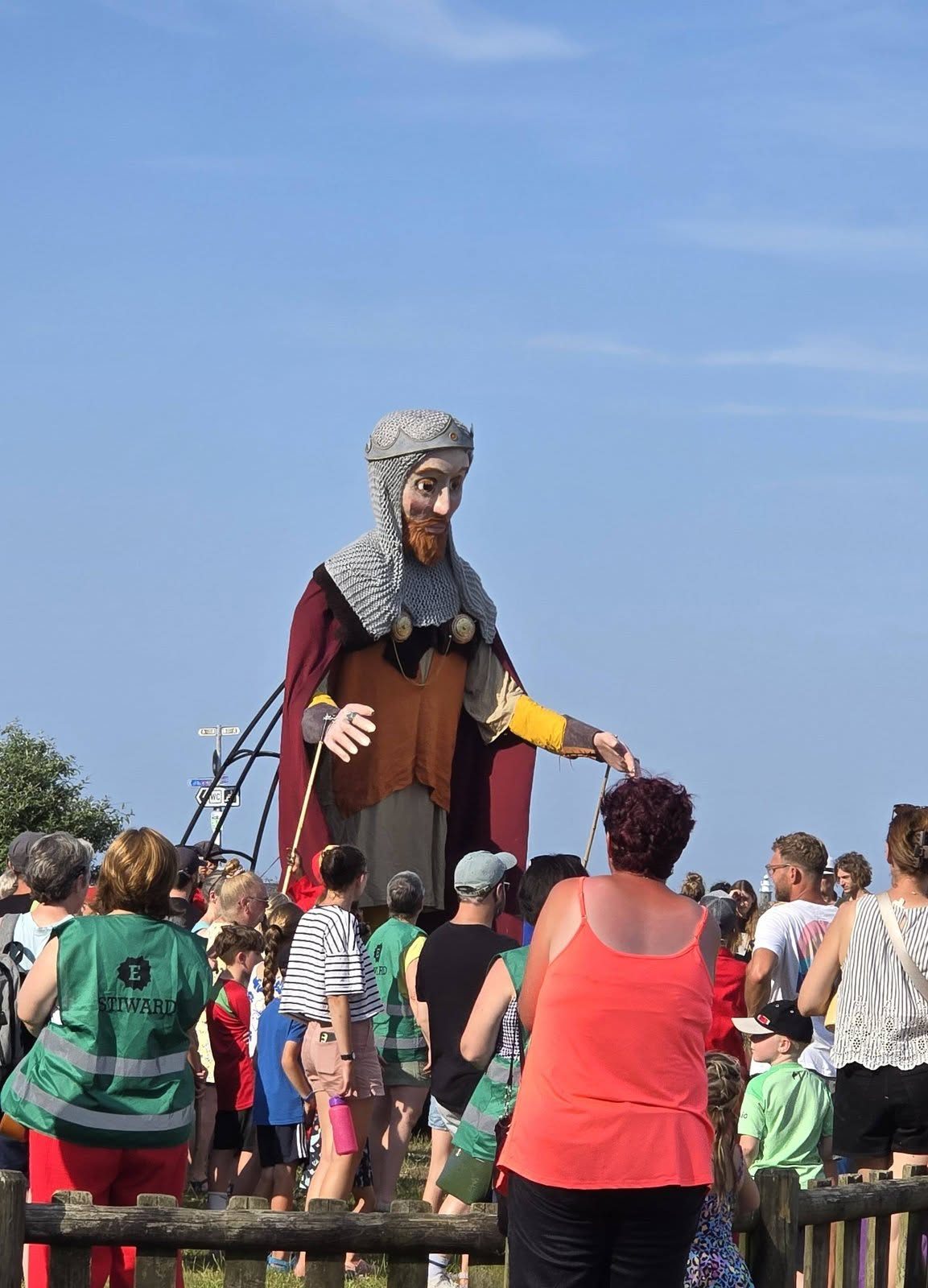
Residents lined the streets as a giant puppet of the 12th-century Welsh prince, created by Small World Theatre, made its way through the community as part of the build-up to this summer’s National Eisteddfod.
The procession commemorates 850 years since Lord Rhys hosted what is widely regarded as the first Eisteddfod at Cardigan Castle in 1176.
Fishguard was one of the stops on the route, with families, local residents and Welsh language supporters turning out to welcome the larger-than-life figure as it passed through the town.
Organisers say the project aims to connect communities across the Eisteddfod area while celebrating Welsh language, culture and heritage.
The procession forms part of the build-up to Eisteddfod Genedlaethol y Garreg Las, which will be held in north Pembrokeshire from August 1 to 8.
The festival is expected to attract thousands of visitors and will showcase Welsh music, literature, performance, art and culture.
The Lord Rhys journey has already visited communities across west Wales and will culminate in Cardigan, the historic birthplace of the Eisteddfod tradition.
Photo caption:
Crowds gathered in Fishguard as the Lord Rhys procession passed through the town as part of the build-up to the 2026 National Eisteddfod.



Sport2 hours ago
Long Course Weekend gets underway in Tenby as thousands head for county
Three days of swimming, cycling and running begin with The Wales Swim at North Beach THOUSANDS of athletes and supporters...


Climate5 hours ago
Welsh waters, Westminster profits: Crown Estate row reignited in Wales
PLAID CYMRU has renewed calls for the Crown Estate to be devolved to Wales after figures showed income linked to...

Community8 hours ago
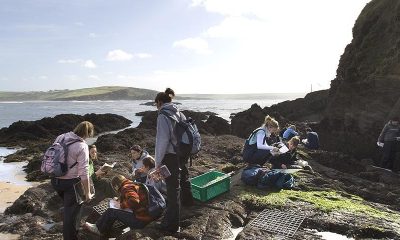
Working-class young people ‘shut out’ of marine conservation careers in Wales
New study says marine conservation is becoming a “functionally middle-class” profession as barriers to entry grow A NEW report has...

News11 hours ago
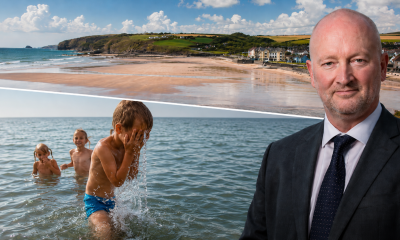
Reform MS: ‘I felt like shouting get out of the water’
Paul Marr says children playing in streams at Pembrokeshire beaches deserve better protection from pollution risks REFORM UK MS Paul...

Health1 day ago
Senedd backs call to rule out hospital downgrades after heated NHS debate
Reform UK amendment passes as West Wales hospital fears remain central political issue THE SENEDD has backed a call for...

News2 days ago
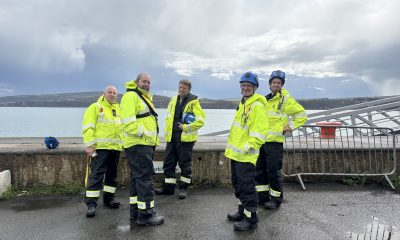
Coastguard callout payments axe sparks fears for coastal communities
VOLUNTEER coastguards across the UK are set to lose callout payments, prompting concern over the future resilience of emergency cover...


Farming2 days ago
Rural Wales ‘left out’ of net zero debate, warns carbon entrepreneur
A WELSH carbon entrepreneur has warned that rural Wales risks being left behind in the national conversation about net zero....


Local Government2 days ago
Tenby Spectacular row continues as organisers say key question remains unanswered
Round Table says legal clarity over pedestrian access is still holding up event plan TENBY ROUND TABLE has welcomed Pembrokeshire...


Community3 days ago
Manorbier fire scandal: Council’s payout just £63,777 after school destroyed
PEMBROKESHIRE COUNTY COUNCIL has accepted an insurance settlement which leaves it with just £63,777.07 after the catastrophic fire which destroyed...


News3 days ago
Bus overturns in major incident near Kidwelly
All passengers rescued as emergency services remain at scene A BUS overturned on the A484 between Kidwelly and Ferryside on...
-

 Health6 days ago
Woman jailed assaults on police, harassment and XL Bully possession
-

 Crime1 day ago
Police appeal after reported rape at Young Farmers rally
-

 Crime6 days ago
Milford Haven woman spared jail despite string of shop thefts
-

 Community5 days ago
The gentle giant behind the tattoos
-

 Crime6 days ago
Spittal man to stand trial accused of ABH
-

 Crime6 days ago
Carmarthenshire pensioner, 86, accused of causing prostitution for gain
-
 Entertainment5 days ago
Harbour Fest to bring music, food and maritime magic to Milford Waterfront
-
Health5 days ago
Welsh Government refuses to halt Withybush and Bronglais service review