

News
Centuries of industry have transformed Wales’ coastline, study finds

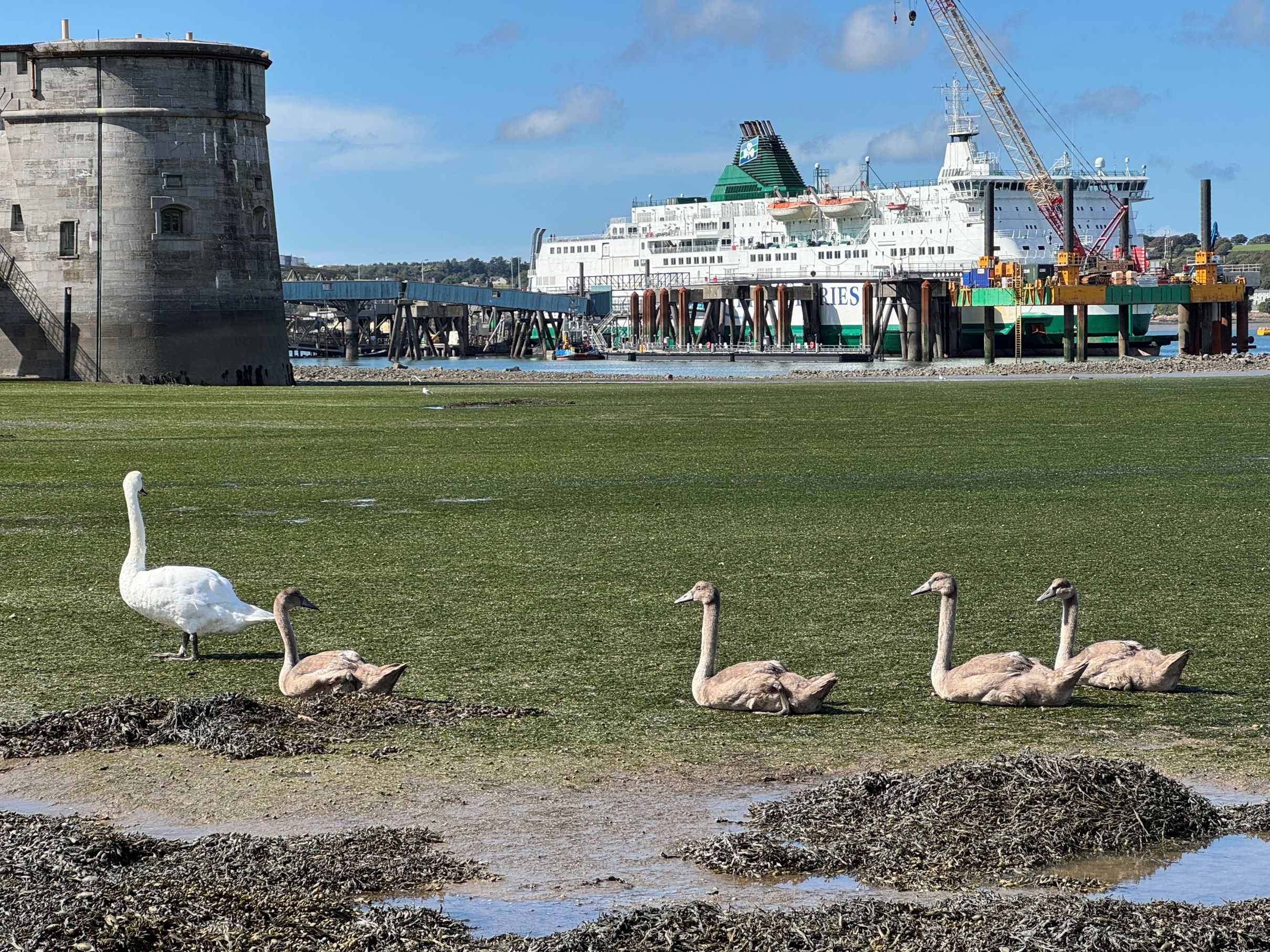
Researchers say marine restoration must look forward rather than back as historic damage revealed
WALES’ coastlines and estuaries have been so heavily altered by centuries of industrial development that attempts to return them to a “pristine” natural state may no longer be realistic, according to new research.
A major study led by bioscientists at Swansea University has revealed the staggering scale of historical damage to Welsh coastal environments, with nearly four in five estuaries significantly altered through engineering and industrial activity over the past 300 years.
Researchers found that 79 per cent of Welsh estuaries – 33 out of 42 examined – have undergone major physical changes, including land reclamation, channel rerouting, embankment construction and industrial expansion.
The study, published in the journal Natural Resources Forum, argues that many of Wales’ marine environments were fundamentally transformed long before modern ecological monitoring began, meaning today’s conservation efforts may already be working from an altered baseline.
Industrial legacy
The research team used historical ecology techniques to map centuries of change across the Welsh coastline, analysing archival records, historic maps and written accounts.

Among the findings were the direct loss of more than 13,400 hectares of marine and estuarine habitat, widespread destruction of productive intertidal areas and the disappearance of vital ecosystems such as salt marshes, seagrass meadows and oyster beds.
Researchers said much of the damage accelerated during the nineteenth century, at the height of the Industrial Revolution in Wales, when ports expanded and coastlines were reshaped to support growing industry.
Some estuaries were effectively erased altogether, while former islands – including Barry Island – became permanently connected to the mainland through large-scale development.
The study also highlights the long-term environmental impact of overfishing, particularly the destruction of oyster reefs, as well as persistent pollution caused by historic mining activity.
‘Blank ecological canvas’
Lead author Dr Richard Unsworth said Wales now faced the challenge of restoring ecosystems that had already been dramatically altered generations ago.
He said: “By recognising the true extent of historical change, we can move beyond outdated notions of conservation.
“These degraded ecosystems should be embraced as the foundations for future recovery, ensuring blue growth is aligned with social, ecological, and health outcomes.”

Rather than attempting to recreate an unattainable historical landscape, the researchers are calling for what they describe as a “One Health” restoration approach.
This would focus on rebuilding biodiversity, improving ecosystem resilience and recognising the link between healthy marine environments and the wellbeing of coastal communities.
The study suggests restoration efforts should prioritise improving water quality, restoring habitats that help store carbon and reduce coastal erosion, and supporting wildlife recovery in ways that also benefit local economies.
For communities along the Pembrokeshire coast – where concerns over sewage discharges, marine conservation and coastal resilience remain high – the findings are likely to add to the debate about how Wales balances environmental protection with economic development.
Photo caption:
Squeezed coastline: Researchers say centuries of development have left less space for nature in Wales’ coastal waters (Pic: Dr Richard Unsworth).

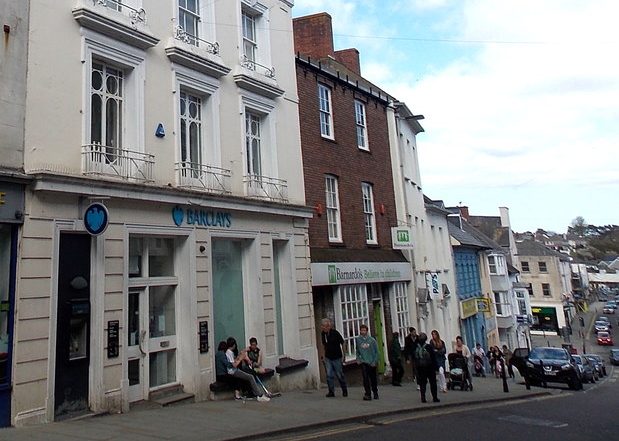
BARCLAYS has been urged to reopen bank branches in west Wales after reports that the banking giant is preparing to rebuild its high street presence.
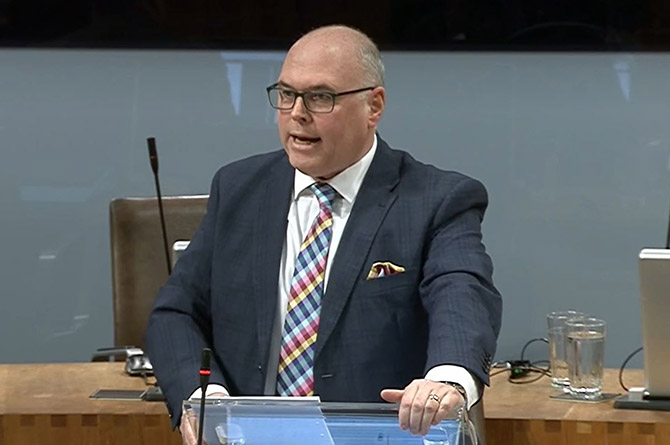
Paul Davies MS, Senedd Member for Ceredigion Penfro, has written to Vim Maru, Chief Executive of Barclays UK, calling on the bank to restore full branch services in Pembrokeshire and Ceredigion.
Mr Davies said Haverfordwest and Aberystwyth should be treated as priority locations, with Tenby and Cardigan also considered as part of any future review.
The call comes after reports that Barclays is looking again at its high street network, including opening new branches, expanding some existing sites and reviving the traditional role of local bank manager.
Mr Davies said west Wales should not be overlooked if Barclays is serious about returning to communities.
Barclays closed its Haverfordwest branch in May 2024, while branches in Aberystwyth and Cardigan also shut that year. The closures left many customers in Pembrokeshire and Ceredigion without access to a full Barclays branch.
Mr Davies said the loss of face-to-face banking had hit residents, small businesses and community organisations across two largely rural counties.

He said: “It’s extremely disappointing that Barclays Bank currently has no branches in either Pembrokeshire or Ceredigion. This represents a significant reduction in service provision for both personal and business customers across the two counties.
“However, I welcome the bank’s recent announcement and have written to the Chief Executive to encourage Barclays to take this opportunity to restore banking services in our area by reopening branches in Pembrokeshire and Ceredigion.
“Access to face-to-face banking services remains vital for many residents, businesses and community organisations, and I hope the bank will give serious consideration to reopening the high street branches in west Wales.”
The withdrawal of bank branches has become a growing concern in towns across Wales, particularly for older residents, people without reliable internet access, rural customers who depend on public transport, and businesses that need to deposit cash.
While some banking services are available through the Post Office, Barclays Local sites and banking hubs, campaigners have argued that these do not always provide the same service as a fully staffed branch.

Mr Davies said Barclays now had an opportunity to show that rural communities would not be left behind.
He is asking the bank to place Haverfordwest and Aberystwyth at the front of the queue if it proceeds with plans to expand its branch network.
The Herald has contacted Barclays for comment.

THE FAMILY of an 18-year-old man who died after entering the River Wye during a Duke of Edinburgh expedition have paid tribute to a “loving” young man who will be “dearly missed”.
Umar Dumbuya, from London, died in Glasbury, Powys, on Tuesday, June 30.
Dyfed-Powys Police have issued a photograph of Umar and a tribute from his family following the tragedy.
His family said: “We are heartbroken by the loss of our son, brother and grandson. There are no words that can describe the pain we are feeling as a family.
“Umar was a loving boy and will be dearly missed by everyone who knew him.
“Umar loved spending time playing basketball, attending the gym, and being with friends and family.
“We will always remember Umar for his kindness, warmth and sense of humour. His death has left a devastating hole in our family, and we now ask for privacy as we take time to grieve.”

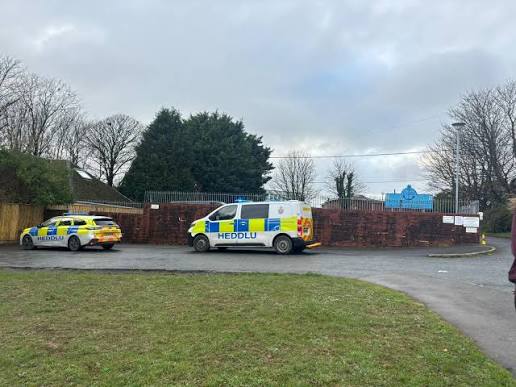
A TEACHER allegedly stabbed in the head at Milford Haven Comprehensive School told a jury she feared she was dying after a knife attack which prosecutors say was a deliberate attempt to kill her.
Vicki Williams gave evidence on the second day of the trial of a 15-year-old defendant accused of attempting to murder her at the school on February 5, 2026.
The teenager, who cannot be identified because of his age, denies attempted murder, inflicting grievous bodily harm with intent, and unlawful wounding. He has admitted possessing a bladed article on school premises.
Giving evidence at Swansea Crown Court, Mrs Williams described the terrifying moments she says unfolded after the end of the school day.
The jury heard that Mrs Williams had taught the defendant during a history lesson earlier that morning and had experienced no problems with him.
Asked about their relationship, she said that from her perspective they had always got on well.
Mrs Williams told jurors that after lessons ended at around 3.10pm, the defendant approached her while she was working in a classroom.
She said he stood beside her, talking to her while searching through his school bag.
Moments later, she told the court, she was attacked.
“He hits me in the head first,” Mrs Williams said.
“The force of it hits me back into my chair.”
She told jurors she did not initially realise she had been stabbed.

“When he pulls the knife back from my head, that’s when I see the knife,” she said.
Mrs Williams said she then tried to grab the weapon to stop herself being stabbed again, suffering injuries to her hands in the process.
The prosecution says she sustained a penetrating stab wound to the head, along with defensive injuries to her hands and other minor wounds.
During cross-examination, defence barrister Matthew Roberts KC suggested the injury to Mrs Williams’ scalp was caused accidentally during a struggle over the knife.
Mrs Williams rejected that account.
“That’s not what happened,” she told the court.
Mr Roberts also suggested the defendant had approached her to discuss schoolwork before producing the knife.
Again, Mrs Williams disputed the suggestion.
Jurors were played a recording of Mrs Williams’ police interview, in which she described the expression on the defendant’s face during the incident.
“What gets me is how cool and collected he was coming in,” she said.
“His eyes were psychotic, his eyes were full of just pure rage.
“He stabs me in the head. He’s trying to kill me.”
Asked about the defendant’s appearance during the attack, Mrs Williams later told the jury: “Those eyes are not something I’m going to forget quickly.
“It was pure hatred.”
The court heard that after the defendant fled, Mrs Williams was left holding the knife.
When asked why she had not locked herself inside the classroom, she told the jury she had been focused on seeking urgent medical assistance.
“I know I’ve been stabbed in the head. I’m fearful that I’m dying,” she said.
The jury also heard evidence from Catherine Wilcox, a teacher of 20 years and the school’s safeguarding lead.
Mrs Wilcox described seeing Mrs Williams shortly after the incident.
She told the court that Mrs Williams was clutching the back of her head and said: “He got me in the head.”
Mrs Wilcox described her colleague’s condition as shocking.
“She looked horrific. Her skin was the colour of a dead body,” she said.
“God, she looked awful. Vicky always presents herself so well but she looked horrific.”
Jurors were also shown CCTV footage from the school as part of evidence presented by Detective Constable Henry Foster.
The trial before Judge Paul Thomas KC continues.


Crime2 hours ago
Teacher feared she was dying after Milford Haven classroom stabbing
A TEACHER allegedly stabbed in the head at Milford Haven Comprehensive School told a jury she feared she was dying...


News2 hours ago
Farage to resign as MP and fight Clacton by-election amid finance row
NIGEL FARAGE has announced he will resign as MP for Clacton and stand again in the by-election he intends to...


Crime5 hours ago
Teacher tells jury there were ‘no issues’ with accused pupil hours before ‘stabbing’
Milford Haven teacher gives evidence as trial of 15-year-old continues at Swansea Crown Court A TEACHER allegedly stabbed at Milford...


News20 hours ago
Major incident stood down after fire at Impala Terminal in Milford Haven
Fire involved decommissioned oil tank containing residual crude oil and around 60 cylinders A MAJOR incident declared during a fire...


News23 hours ago
Large fire breaks out at Impala Terminal in Milford Haven
Black smoke seen for miles as emergency services respond to incident at former Puma Energy site A LARGE fire has...
Crime1 day ago
Prosecution outlines ‘planned attack’ as Milford Haven teacher stabbing trial opens
Jury hears teenager allegedly brought kitchen knife into school before teacher was stabbed in the head THE JURY in the...

Crime1 day ago
Boy, 15, denies attempted murder of Milford Haven teacher in ‘horrifying’ attack
Swansea Crown Court hears dramatic opening of trial over February stabbing A 15-YEAR-OLD boy from Milford Haven has gone on...

Crime2 days ago
Fishguard man cleared after five years in prison refused compensation again
Brian Buckle’s case raises fresh questions over justice system that says a man can be cleared by a jury but...


Crime2 days ago
Wales’ police commissioners to face MPs over future of policing
WALES’ four Police and Crime Commissioners are to be questioned by MPs next week as major changes to the way...


Crime3 days ago
Man in critical condition after serious assault in New Quay
A 20-YEAR-OLD man remains in a critical condition in hospital after being seriously assaulted in New Quay. Dyfed-Powys Police said...
-

 Entertainment5 days ago
Pembrokeshire DJ lands record deal with London dance label
-
 Education6 days ago
Council deputy leader moves to halt Stepaside school closure plan
-

 News6 days ago
Bridge installation to begin at Tenby station as accessibility upgrade reaches key stage
-

 Community5 days ago
Saundersfoot Harbour regeneration project wins national planning award
-

 Health6 days ago
Wales begins early NHS winter planning after long waits and ambulance pressure
-

 Charity6 days ago
Prince of Wales praises Wales Air Ambulance as charity marks 25 years
-

 Crime5 days ago
Llandeilo man accused of rape sent to Crown Court
-

 Farming6 days ago
Shearing lambs can improve growth and reduce labour, says expert