


Politics
Minister wants Wales to have more say over justice, policing, and rail funding

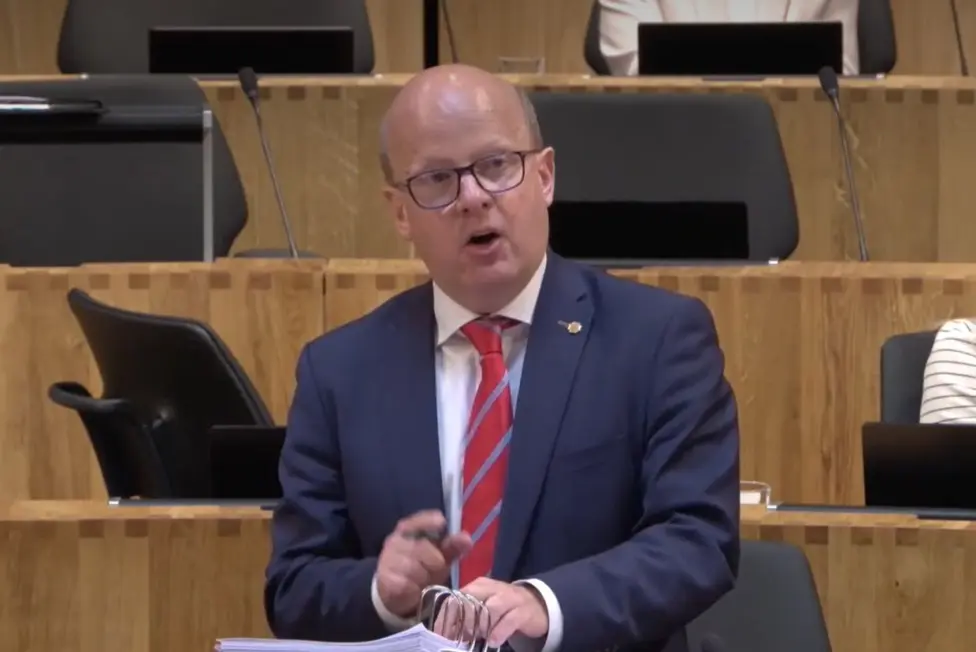
WALES needs more say over justice, policing, and rail investment, the new constitution minister has said.
Plaid Cymru’s Dafydd Trystan Davies faced questions from Senedd colleagues for the first time on Tuesday June 16.
The Caerdydd Fynnon Taf MS, who was appointed to the cabinet role last month, has responsibility for overseeing the government’s priorities, supporting oversight of the cabinet office, and constitutional affairs.
He is also responsible for the potential devolution of justice and policing.
Adrian Mason, Reform’s shadow constitution minister, challenged Dr Trystan Davies on Plaid’s plans.

Mr Mason said: “Plaid Cymru has long argued for more powers for Wales and greater responsibility here in Cardiff Bay. But Plaid cannot present itself as a new beginning after the Labour-Plaid era when, at key moments, it helped keep Labour in power.
“After 27 years of Labour-led devolution in health, education, transport and the economy, does the minister accept that Plaid shares some responsibility for that record?”
He added: “Why should Wales hand more powers to the same governing consensus that helped create the failures it now claims it can fix?”

Dr Trystan Davies emphasised that Plaid Cymru is a “new government”, set out on a “new course” which focuses on “the people’s priorities”.
He continued: “I think it is clear to everyone in this chamber that the legacy of 27 years of Labour government led to their election result. That is why so many of our fellow countrymen and women voted for a new leadership for Wales, and that is a Plaid Cymru leadership.”
The Reform shadow minister also questioned the minister on Plaid’s desire for independence.
He said: “Plaid’s manifesto is clear: it wants independence. But in the latest polling… the people of Wales do not. So, is the government pursuing independence by instalments – more powers, more separation, more institutions – without first asking the Welsh people the direct question?”

Mr Mason called for the minister to commit to “no constitutional change by the backdoor, no move towards independence, and no further substantive devolution without clear public consent”.
Dr Trystan Davies reiterated the First Minister’s election-time commitment that there will be no independence referendum during this Senedd term.
He then addressed the question of greater powers for Wales and said: “Where there are opportunities to improve the lives of the people in Wales, then [the Welsh Government] will take them.”
He said: “We are on a constitutional journey in Wales. It is a journey that is best served by consensus and collaboration, and that is what we will seek to do.”
Sam Rowlands, of the Welsh Conservatives, echoed the Mr Mason’s questions on Plaid Cymru’s constitutional reform plans.

He called on the minister to reveal how much time and resources are likely to be spent on “constitutional and independence-pursuing work” and to clarify how this will affect the government’s ability to focus on core public services.
Dr Trystan Davies said his party’s focus on constitutional matters will be in line with the priorities set out in its election manifesto.
He said: “On the constitution, [we] will be focused on those very specific priorities that we set out in our manifesto that will improve people’s lives – on water, on policing, on justice, on the Crown Estate, to improve people’s lives in Wales.”
Plaid MS Peredur Owen Griffiths, of Casnewydd Islwyn, asked his party colleague to share what steps he is taking to establish a national commission on Wales’ constitutional future.

Dr Trystan Davies noted that, in line with Plaid’s 100-day plan, a new national commission overseeing progress on further devolution and engaging with the public in a “national conversation about Wales’ constitutional future” is being developed.
He committed to updating the Senedd as the work progresses.
The minister also faced questions on potential areas of further devolution to Wales.
Plaid Cymru’s Niamh Salkeld, of Blaenau Gwent Caerffili Rhymni, asked him for an update on the progress being made to devolve rail funding to Wales.
She provided the example of Abertillery, describing the town as a “prime example of a community that is being held back by the UK Government’s chronic underfunding of Wales’ rail network.”
Discussing the proposed Abertillery spur – a passenger railway branching off the Ebbw Vale line at Aberbeeg to reconnect Abertillery to the rail network – Ms Salkeld said the proposed rail line would improve access to jobs and education, increase footfall for local businesses, and support town centre regeneration.

Dr Trystan Davies responded: “The figures are stark. The UK Government has promised an investment of £445 million, which sounds like a large figure, but when you compare it to the £4.5 billion owed to Wales under HS2 money, it is merely a drop in the ocean.
“That £4.5 billion would allow us to invest in Abertillery, it would allow us to invest in rail and bus services across the country.
“It is our fair share, it is chwarae teg for Wales. That is why I am proud that my colleague, the deputy minister for transport [Mark Hooper], is pursuing this case energetically with the UK Government. It is only right, it is only fair.”
Ms Salkeld’s calls were supported by Labour’s Mike Hedges, who said he has “consistently argued for the devolution of rail funding.”
Mr Hedges, of Gwyr Abertawe, said: “Asymmetric devolution has not worked. It hasn’t worked in Britain, it hasn’t worked in Spain. It is important that rail funding is devolved. The main question is how should the funding be calculated.”

He pressed the minister to share which form of rail funding formula he would prefer: “relative population, relative population with the 20% addition that the Barnett formula provides, relative track length, or relative passenger numbers?”
Dr Trystan Davies noted that Wales would do “pretty well” out of relative track length due to the geography of the country.
He added: “We have historically received a disproportionately low share of rail enhancement funding from the UK Government.
“Transport for Wales set out a vision of £14 billion of rail spending. That is the kind of rail funding that Wales needs to improve our rail services and to ensure that we have a 21st century rail system.”
Policing
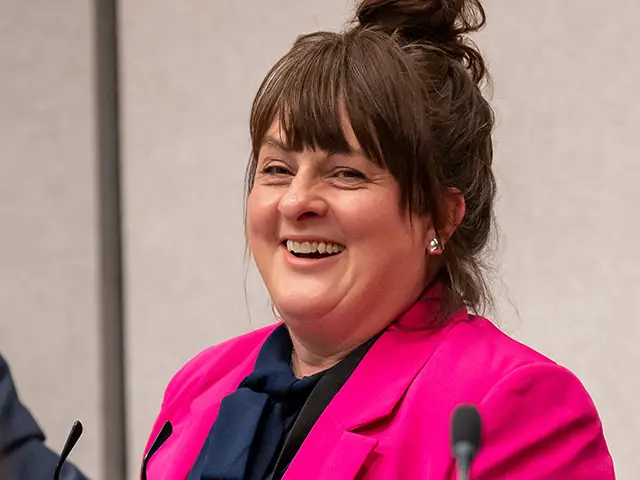
The cabinet minister also faced questions on the devolution of policing, led by Reform MS Catherine Cullen.
Ms Cullen, of Blaenau Gwent Caerffili Rhymni, told the Siambr her constituents don’t want to see money “wasted” on devolving more powers, they want “better jobs and higher salaries”.
Questioning the minister on the financial impacts of further devolution she said: “Why does this Plaid government think this should be a priority, when so many of the public services that people rely upon are already under considerable pressure?”
Dr Trystan Davies noted that devolving policing to Wales has been recommended by a series of independent commissions, including the Silk Commission in 2014.
He clarified that Plaid’s priorities remain as the NHS, schools, the economy, child poverty and childcare, but with regard to policing said: “There clearly are negotiations to be had around the transfer of functions and how effectively those resources are transferred from the UK level to the Welsh level.
“We will be robust and energetic in those discussions with our UK counterparts.”
Labour’s Mr Hedges once again weighed in on the debate, affirming his support for the devolution of policing.
He referred back to a debate he led in 2013 that received majority support in the Siambr calling for the its devolution.
He said: “Policing is devolved to Northern Ireland, Scotland, London, and other areas with elected mayors, but not to Wales.
“Different devolution settlements for Wales, Scotland, and Northern Ireland do not work, as I said earlier.
“Currently, Wales gets 20% extra for devolved services than England gets. Why would it be different for policing?”
Welsh Liberal Democrats leader, Jane Dodds, also voiced her support for the devolution of policing.
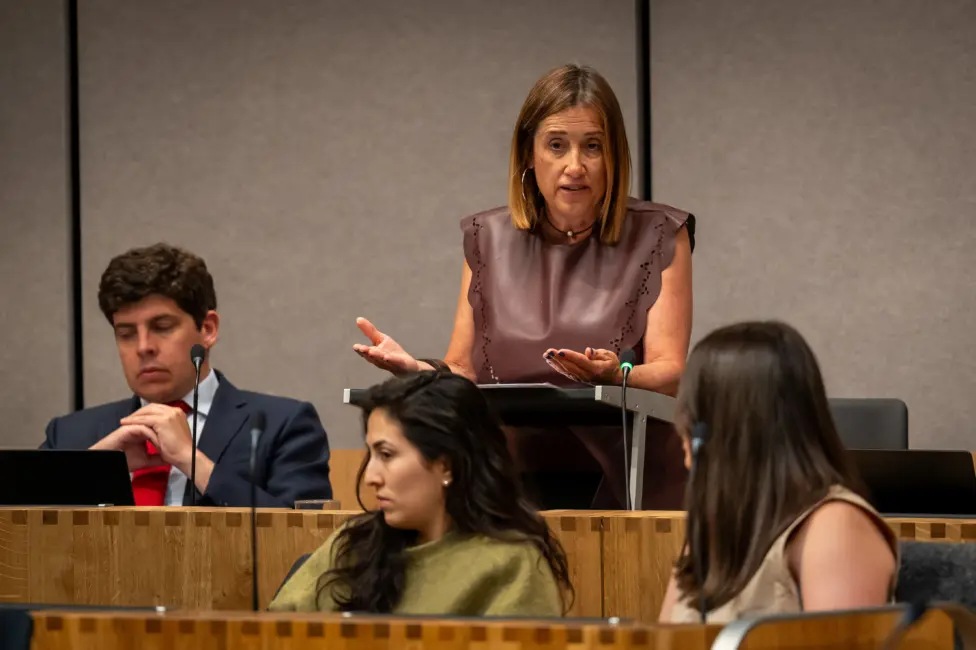
She said: “Unlike Reform UK, I do want to talk about something that affects the people of Wales directly and affects women.
“The devolution of justice and policing is not an abstract debate – it has real human consequences, and in the last Senedd, the equality and social justice committee concluded that the current devolution settlement is causing direct harm to women in Wales.”
Ms Dodds continued: “There is no women’s prison in Wales. Welsh women serving custodial sentences are held in England far from their families and far from their communities, and far from the support services that they need.”
She called on the minister to share his plans for securing these powers, along with a timetable for when it can be expected.
Dr Trystan Davies responded: “There are a number of issues there in terms of services for women that are currently not good enough under the current justice system.
“I do think that there is work to be done in terms of the justice system and devolution. There is work to be done in terms of policing that is related to devolution.
“In order to make progress on this, we must build an effective, productive relationship with the UK Government. A meeting has already been arranged with the minister for policing in the UK, the Deputy First Minister, and myself.”


THE NEW SENEDD committees have been decided, meaning detailed scrutiny of the Welsh Government’s decisions can begin.
The titles, remits, and which party will chair each of the new committees have now been approved by Senedd Members – but which members will be sitting on these committees is yet to be decided.
Existing to check and challenge the work of the Welsh Government, Senedd committees scrutinise laws both before and after they are passed, proposing changes when needed.
They are made up of Senedd Members from different party groups who work together to examine the areas of law that are devolved to the Welsh Government.
For the new Senedd term, the business committee has proposed the formation of 13 committees – one more than in the previous term.
So what are the committees for this Senedd term and what do they cover?
For this Senedd term there will be eight policy and legislation committees, with each having nine members from across the political groups.
The representation in the committees for each group depends on their level of representation in the Senedd.
In the nine-member committees, Plaid Cymru will have four members and Reform three, while Welsh Labour and the Conservatives will have one each.
The committees are: early years, children, young people and education; health and social care; climate change; environment, sustainability and rural affairs; equality, human rights, and social justice; economy, energy, and connectivity; culture, communications, Cymraeg and sport; local government, housing and planning; and constitution, justice and external affairs.
The constitution, justice, and external affairs committee splits the remit of the legislation, justice and constitution committee from the previous Senedd, adding external affairs and electoral matters to its brief.
There will also be committees for finance; legislation; public accounts and public administration; and petitions.
Each will have seven members as opposed to nine for the policy and legislation committees.
The party-group representation in each of the seven-member committees will be three Plaid Cymru members, two Reform, and one each for Labour and the Conservatives.
Senedd standing orders – the written rules that govern Senedd proceedings – also require the establishment of a standards of conduct committee.
This committee has responsibility over complaints and the conduct of members more generally. It is also cross-party, meaning members from each of the political groups may sit, and it will have five members in total.
As with the party makeup of the committees, chairs are also allocated to reflect the size of the political groups represented in the Senedd.
In line with the current makeup of the Senedd, Plaid Cymru will have six chairs, Reform five, and Welsh Labour and the Conservatives will have one each.
Plaid Cymru will chair the committees for early years, children, young people and education; equality, human rights, and social justice; economy, energy, and connectivity; culture, communications, Cymraeg and sport; constitution, justice and external affairs; and standards of conduct.
The committees for climate change; environment, sustainability and rural affairs; local government, housing and planning; public accounts and public administration; legislation; and petitions will be chaired by Reform.
Labour’s sole chair position will be on the committee for health and social care, while the Welsh Conservatives will chair the finance committee.
The Senedd approved the creation of these committees and the allocation of committee chairs to party groups in plenary on Tuesday June 16, with no objections.
There are also three more committees to be formed – the scrutiny of the First Minister committee, Llywydd’s committee, and chair’s forum – but these are governed by different rules and will be formed once the chairs of the other committees have been elected.
The first committee meetings will be held later in the Senedd term.
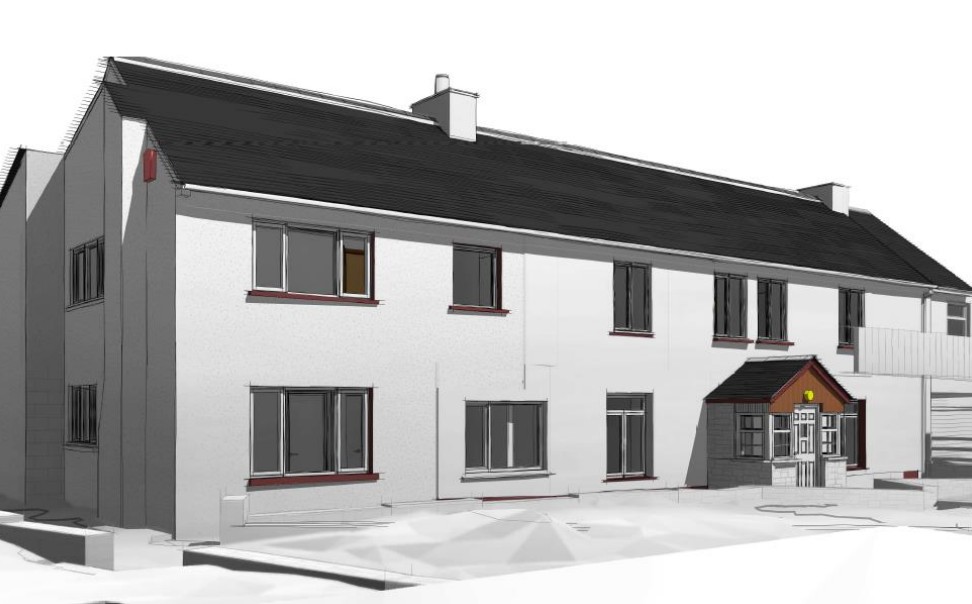
A CALL to convert a former Pembrokeshire farmhouse and guesthouse into housing units has been given the go-ahead by county planners.
In an application to Pembrokeshire County Council, Dan Hildebrand, through agent GMW Design, sought approval for the subdivision of Torbant Farmhouse, Croesgoch, near Haverfordwest, to form four residential units.
A supporting statement through Johnston Planning on behalf of the applicant and agent said: “The property has historically been run as a successful guesthouse for a number of years but has recently come under new ownership. The new owner wishes to maximise the potential of the existing residential floor space through the subdivision of this generous property into four units.”
It added: “Whilst the intention is to utilise the subdivided property for residential purposes due regard is given to the 2022 changes to the use class order which in effect created new residential classes for new development in an effort to control unrestricted holiday uses in sensitive locations.
“As such a ‘free use’ is sought within use classes C3 (use as a sole/main residence), C5 (use as otherwise as a sole/main residence) and C6 (use as a commercial short term let).
“These proposed uses, which are considered to be reasonable and to be fully compliant with current planning policy (especially when one has regard to the existing use) will provide the owner with flexibility in terms of proposed occupation. Ensuring full and meaningful use of the property in the future.”
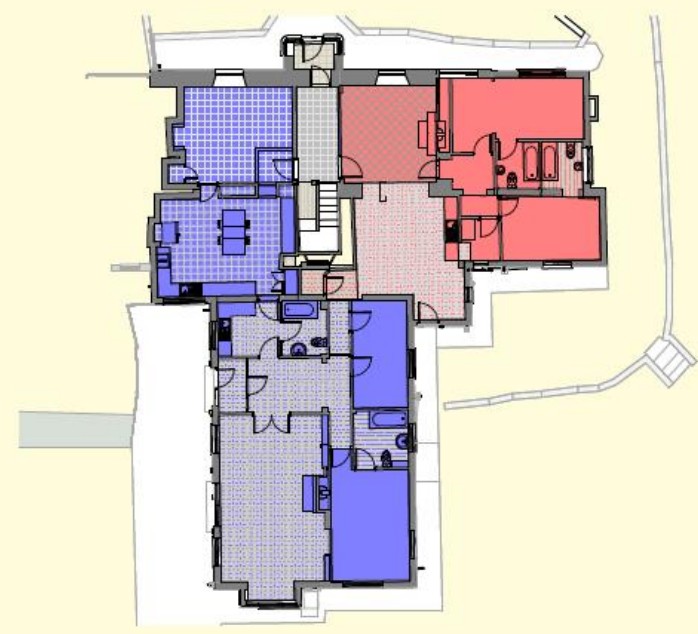
It said the property was once part of Torbant Farm, now been broken up into a number of separate properties, including Torbant Caravan Park immediately to the north.
It added the works to the property “are minimal and will have a negligible impact externally,” adding: “Internally whilst the layout will alter marginally no structural works to the property are proposed.
“In character terms therefore, there will be no discernible physical impact either to the dwelling itself or to the wider locality.”
Six objections to the scheme were received, raising concerns including harm to visual and residential amenity, ecological impact, infrastructure constraints, and claimed inaccuracies in the submitted application, as well as the application overstating available parking space “which would encroach onto shared access areas, causing obstruction and conflict between users”.
An officer report recommending approval said the scheme was amended to move car parking provision within land under the applicant’s control.
It concluded the scheme represented “an efficient use of the existing building stock,” and it “would not result in any external alterations to the host building and would not give rise to unacceptable harm to the character or appearance of the building or its wider rural setting nor the residential amenities of neighbouring occupiers”.

The application was conditionally approved by county planners.
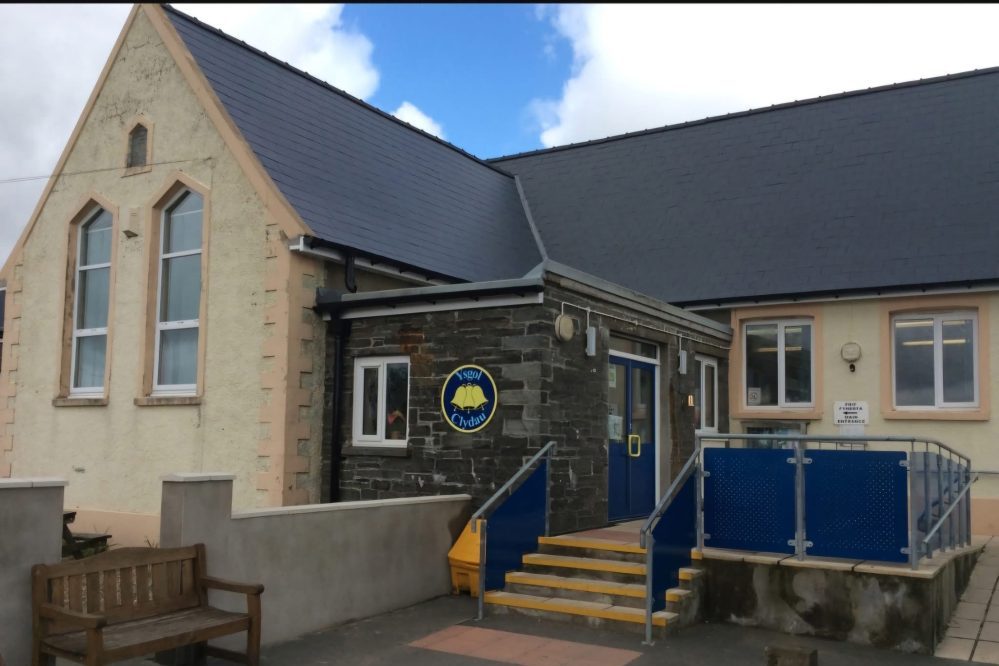
PEMBROKESHIRE councillors have backed the closure of a small rural school which has left campaigners “heartbroken” and “let down by those elected to represent them”.
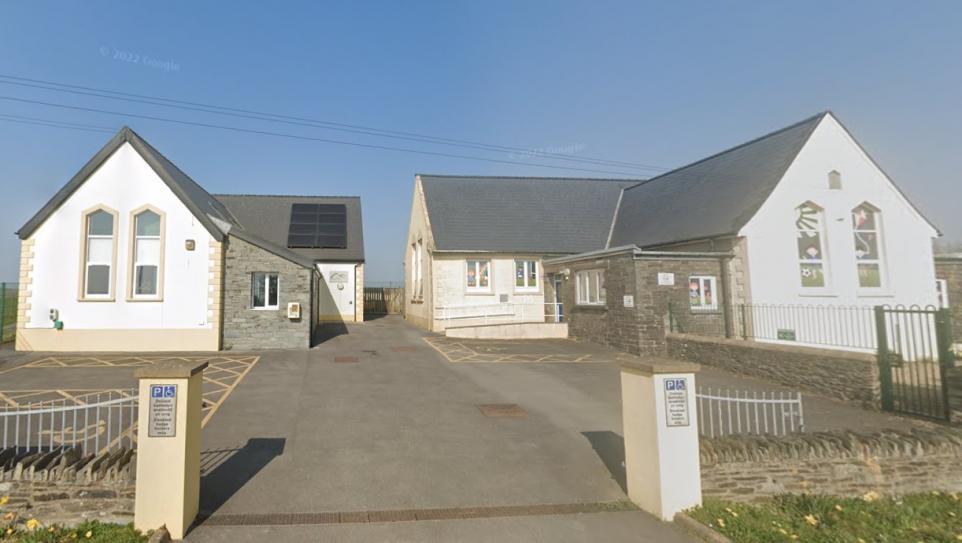
At its March meeting, Pembrokeshire County Council members backed a recommendation that Director of Education be authorised to publish a Statutory Notice to discontinue Ysgol Clydau, Tegryn.
Councillors had previously heard here has been a significant decline in the school’s pupil population during the period 2015-2025, with no indication that this will be significantly reversed during the next five-six years.
The statutory notice followed a consultation on the proposals, and a hearing of a petition opposing the potential closure, which had generated 648 responses on the council’s own website, with impassioned pleas to keep the school open.
Ysgol Clydau has been described as “more than just a school; it’s a hub for community life, offering a safe and welcoming space for children, families and residents of all ages,” with those opposing closure warning: “Its closure will isolate our community, leading to a decline in population and a weakening of our social fabric.”
At a special extraordinary council meeting held on June 15, members of Pembrokeshire County Council were asked to consider a report on a summary of 126 objections received in respect of the proposal to discontinue Ysgol Clydau, which included an option to halt the closure.
However, it was recommended, in a report present by deputy leader Cllr Paul Miller, who now also has responsibility for education, for the discontinuation be proceeded with.
The decision for Ysgol Clydau followed an earlier agenda item where members backed a recommendation to discontinue Manorbier school in the south of the county.
At the meeting, local member Cllr Iwan Ward – who has championed the fight to keep Ysgol Clydau open – questioned the value of the consultation, saying it was “supposed to be an opportunity to listen and reflect on alternative viewpoints,” adding: “They deserve to know their voices matter.”
He said viable alternatives to closure had “not been fully explored,” adding: “This decision will have consequences that last longer than any council term; today we have an opportunity to send a message that rural communities matter, and that Welsh education matters, and that rural schools matter.”
Cllr Huw Murphy, whose ward is nearby said he would find it difficult to attend this year’s national Eisteddfod which is being held close to Tegryn, knowing a Welsh language school had been closed, before quoting the Manic Street Preachers rock band lyrics: “If you tolerate this then your children will be next.”
Cllr Miller stressed alternative Welsh language provision for the pupils, with the longest any pupil would have to travel was just over three miles.

Members voted by 32 votes to 21, with one abstention, to back the recommendation to discontinue Ysgol Clydau.
Speaking after the meeting, campaign group Save Ysgol Clydau – Cadw Clydau yn Gardarn said: “Many of us feel that those making this decision spoke about budgets, statistics and percentages, but failed to understand what Ysgol Clydau truly is.
“It is not simply a school. It is a community. It is the heart of a Welsh-speaking rural area. It is a place where children felt safe, supported, understood and valued. Today, that has been taken away.”
It added: “What happened today should concern every rural community in Wales. If it can happen here, it can happen elsewhere. This is bigger than Ysgol Clydau. It is about the future of rural schools, rural communities and the Welsh language.”
It ended by saying: “Today we are grieving. Today we are heartbroken. Today many people feel let down by those elected to represent them.
“But history will record that this community fought with dignity, passion and determination for its children. And we will continue to speak up for rural communities and rural schools, because what happened today should never become normal.”



Crime54 seconds ago
Prisons at breaking point: MPs warn Wales is paying the price of a failing system
Frozen healthcare budgets, overcrowded jails, homelessness on release and mounting pressure on staff are undermining rehabilitation across Wales, according to...


News14 hours ago
Brexit at 10: How Britain was sold a dream that cost us dearly
A decade after the referendum, the promised benefits remain hard to find while the economic costs are increasingly difficult to...


Crime15 hours ago
Worcestershire man jailed after violent attack on woman in Tenby
Defendant was already serving a suspended sentence when serious assault took place A WORCESTERSHIRE man has been jailed for more...


Climate17 hours ago
Offshore wind ‘could bring new generation of jobs to Milford Haven’
Pembrokeshire ports and Celtic Sea projects placed at centre of Wales’ green energy ambitions MILFORD HAVEN and Pembroke Dock could...

Community2 days ago
Police officer hailed hero after midnight sea rescue in Milford Haven
PC swam 100 metres offshore to save distressed woman heard calling for help in darkness A DYFED-POWYS POLICE officer has...


Local Government2 days ago
Security privately arranged by Mayor at Beating of the Bounds
HAVERFORDWEST TOWN COUNCIL has confirmed that security personnel seen at this year’s Beating of the Bounds were privately arranged and...


Business3 days ago
Celtic Freeport five-year plan puts Milford Haven at centre of green energy future
Strategy promises investment, skilled jobs and new supply chains, but major barriers remain over grid connections, planning and delivery THE...


Education3 days ago
Closure of Ysgol Clydau approved after emotional council debate
COUNCILLORS WARNED RURAL COMMUNITIES WILL REMEMBER DECISION PEMBROKESHIRE councillors have voted to close Ysgol Clydau following an emotional debate over...


Education3 days ago
Manorbier school closure process to continue after narrow council vote
Questions remain over insurance, rebuilding costs and possible legal action by Diocese PEMBROKESHIRE councillors have voted to press ahead with...

Community3 days ago
The father, son and daughter lifeguard trio saving lives in Pembrokeshire
A FATHER, son and daughter are preparing to help keep beachgoers safe on the Pembrokeshire coast this summer as part...
-
 Community4 days ago
Pembrokeshire Chess Club crowned Welsh champions
-
Local Government2 days ago
Security privately arranged by Mayor at Beating of the Bounds
-

 Crime7 days ago
Pembroke Dock teenager sentenced over train strangulation attack
-

 Education6 days ago
Diocese threatens legal action as Manorbier school closure battle intensifies
-

 Crime7 days ago
Man accused of six rapes including alleged Haverfordwest offence
-

 Crime2 days ago
Man wanted by court after failing to attend hearing over alleged shop thefts
-

 Local Government6 days ago
Taxi suspended after county-wide licensing checks
-
 Crime2 days ago
Man banned from roads after drink-driving offence