


Finance
Young people urged to claim share of £1.6bn in forgotten savings


HUNDREDS of thousands of young people are being urged to check whether they are entitled to forgotten savings held in Child Trust Fund accounts.
The UK Government has launched a new drive to reunite young adults with more than £1.6bn in unclaimed savings, with more than 750,000 matured accounts still unclaimed.
Child Trust Funds were set up for children born between September 1, 2002, and January 2, 2011, with Government payments made into accounts to give young people a financial asset when they reached adulthood.
Around 6.3 million accounts were opened, mostly by parents or guardians, with some set up directly by HMRC where no account was opened.
The average unclaimed account is worth around £2,200.

Economic Secretary to the Treasury Rachel Blake MP has now convened a new Child Trust Fund Taskforce, bringing together government and providers to improve tracing and encourage more young people to access their money.
Members include OneFamily, Coutts, Nationwide, HSBC UK, Pilling, The Coventry, Sheffield Mutual, Unity Mutual, Forester, Healthy Investments and The Share Foundation.
Ms Blake said: “Too many young people are missing out simply because they are not aware of where their Child Trust Fund is or how to access it.
“We are acting to fix that by bringing government and industry together, improving coordination and making it easier for people to find and claim what’s rightfully theirs.”
HMRC chief executive JP Marks said many young people had an average of £2,200 waiting to be claimed.
He said: “This is their money, and we want to do all we can to help them find and access it.
“If you think you have one, you can use the Find my Child Trust Fund tool on GOV.UK to find out where your account is held.”

Accounts began maturing on September 1, 2020, when the oldest eligible young people turned 18.
Anyone born between September 1, 2002, and January 2, 2011, can search for their account for free on GOV.UK using their National Insurance number.
Those aged 18 or over can access the funds immediately.

Finance
Protecting your investment portfolio as a Welsh investor during changing inflation conditions


INFLATION is normal, but it can have a huge impact on investments, so it’s essential that Welsh investors understand how their portfolios may be affected. By taking the right precautions, investors can protect their investment portfolios and maintain their long-term financial goals even during times of economic uncertainty.
With that in mind, here’s how inflation can affect investment portfolios and what Welsh investors can do to protect them.
How Inflation Affects Investment Portfolios
Inflation can have an impact on investment portfolios in multiple ways, primarily:
- Higher returns are required – as inflation reduces the value of money, investments have to generate higher returns to compensate. Although every asset is affected differently. For instance, property investments may be more resistant to rising costs, whereas cash savings may lose value if interest rates fail to keep up with inflation.
- Markets can be volatile – changing inflation conditions can create market volatility, which can influence things like bond prices and company valuations.
How to Manage Risks During Economic Uncertainty
Here are a few things you can do to manage the risks that come with changing conditions.
Diversify Your Assets
Diversification is one of the most effective ways to manage investment risks. Concentrating on just one investment can put you at risk if that asset is significantly impacted by inflation or market conditions. By spreading your investment across a variety of assets instead, all hope isn’t lost for your entire portfolio even if one area performs poorly.
Many investors opt for strategies like spread betting to profit from market price changes without owning the actual assets, although this is often riskier.
Think Long-Term
Markets tend to fluctuate during challenging economic periods or uncertainty. And many people respond by making emotional decisions based on current environments, despite the fact these can change in an instant. It’s important for investors to ride out temporary volatility and focus on a clear long-term investment strategy instead.
Review Your Portfolio Regularly
When it comes to investing, it’s all about balancing what’s comfortable when it comes to risk and reward, and this is unique to each individual. You should be reviewing your portfolio frequently, especially when conditions aren’t steady, to ensure your rewards are still worth the risk.
Securing Your Investments is Critical
By diversifying assets, thinking long-term, and regularly assessing your portfolio, you can better protect your investments even during times of economic uncertainty, inflation, and market volatility.

A RECORD number of families are using Tax-Free Childcare to cut the cost of childcare, HM Revenue and Customs has said.
The government paid almost £600m in top-up payments through the scheme in 2025-26, with 868,095 families now benefiting.
Tax-Free Childcare allows working parents to receive government support towards approved childcare for children aged 11 and under, or up to 16 if the child is disabled.
For every £8 paid into an online childcare account, the government adds £2. Parents can receive up to £500 every three months for each child, or £1,000 if the child is disabled.
This means families can save up to £2,000 a year per child, or £4,000 for a disabled child.
HMRC is encouraging parents to check whether they are eligible before the summer holidays, when childcare costs often rise.
HMRC’s Chief Customer Officer, Myrtle Lloyd said: “I’m so pleased these figures show more families than ever are using Tax-Free Childcare to save on their bills.
“£2,000 is not a small amount and it can make a real difference – especially with the childcare void of the summer holidays approaching.
“If you haven’t signed up yet, don’t miss out, go to GOV.UK to do it today.”
The scheme can be used to pay for approved childcare including childminders, before and after-school clubs, and holiday activity clubs. It can also help cover specialist equipment needed by a childcare provider for a disabled child.
Families may be eligible if they have a child aged 11 or under, or a disabled child aged up to 16, and if both parents — or a single parent — earn at least the equivalent of 16 hours a week at the National Minimum Wage or Living Wage.
Each parent must earn no more than £100,000 a year, and families cannot receive Tax-Free Childcare if they are also receiving Universal Credit or childcare vouchers.

Tax-Free Childcare can be used alongside free childcare hours, provided the family meets the eligibility rules.
Parents can check eligibility and apply through GOV.UK.

New plans aim to cut delays, reduce costs and stop house sales collapsing
THOUSANDS of homebuyers across Wales could save time and money under a major overhaul of the property-buying process announced by the UK Government.
The reforms are designed to tackle long-standing problems in the housing market, including lengthy delays, failed transactions and unexpected costs which can leave buyers and sellers out of pocket.
Ministers say the changes could reduce the average time taken to buy a home by around four weeks and save first-time buyers an average of £650.
Under the proposals, sellers and estate agents would be required to provide key information about a property when it is listed for sale. New “sales packs” would include details about a home’s condition, leasehold charges and the status of any buying chain.
The Government also plans to introduce earlier legally binding agreements between buyers and sellers to reduce the number of transactions which collapse late in the process.
A major part of the reforms will focus on replacing paper-based systems with digital property logbooks, electronic signatures, online identity checks and AI-assisted conveyancing.
Welsh Secretary Jo Stevens said: “Thousands of people across Wales will benefit from these reforms which will make buying a home faster, simpler and fairer.
“For too long the system has been difficult and complex. This government’s changes will save working people and families valuable time and money when they are buying their new home.”
Prime Minister Sir Keir Starmer said the current system leaves many families “in limbo” and makes home ownership more difficult than it should be.
Housing Secretary Steve Reed said buying or selling a home should not be “a drawn-out nightmare of delays, hidden costs, and failed deals.”
The Government says the reforms will be introduced in stages, with a new Code of Practice for property agents expected later this year.
From 2027, ministers plan to consult on mandatory qualifications for estate agents and the wider use of digital tools.

Legislation requiring sales packs, binding contracts and digital property information systems is expected before the end of the current Parliament.



Community24 hours ago
Thousands line Cardigan streets for Lord Rhys homecoming parade
THOUSANDS of people lined the streets and quayside in Cardigan on Saturday as the town marked 850 years since Lord...


Crime2 days ago
Dyfed-Powys Police rated only ‘Adequate’ in organised crime inspection
A WATCHDOG has rated Dyfed-Powys Police only “Adequate” in its response to serious and organised crime, despite praise for the...


News2 days ago
Two taken to hospital after aircraft ditches in Cardigan Bay
Coastguard helicopter spotted two casualties after light aircraft came down off west Wales coast TWO people were taken to hospital...


Sport3 days ago
Long Course Weekend gets underway in Tenby as thousands head for county
Three days of swimming, cycling and running begin with The Wales Swim at North Beach THOUSANDS of athletes and supporters...


Climate3 days ago
Welsh waters, Westminster profits: Crown Estate row reignited in Wales
PLAID CYMRU has renewed calls for the Crown Estate to be devolved to Wales after figures showed income linked to...

News3 days ago
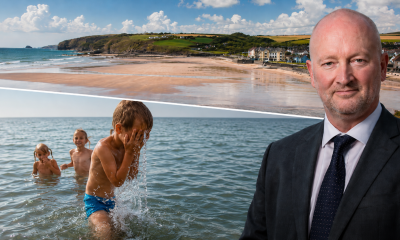
Reform MS: ‘I felt like shouting get out of the water’
Paul Marr says children playing in streams at Pembrokeshire beaches deserve better protection from pollution risks REFORM UK MS Paul...


Health4 days ago
Senedd backs call to rule out hospital downgrades after heated NHS debate
Reform UK amendment passes as West Wales hospital fears remain central political issue THE SENEDD has backed a call for...


News4 days ago
Coastguard callout payments axe sparks fears for coastal communities
VOLUNTEER coastguards across the UK are set to lose callout payments, prompting concern over the future resilience of emergency cover...


Farming4 days ago
Rural Wales ‘left out’ of net zero debate, warns carbon entrepreneur
A WELSH carbon entrepreneur has warned that rural Wales risks being left behind in the national conversation about net zero....


Local Government5 days ago
Tenby Spectacular row continues as organisers say key question remains unanswered
Round Table says legal clarity over pedestrian access is still holding up event plan TENBY ROUND TABLE has welcomed Pembrokeshire...
-

 Crime5 days ago
Milford man threatened to smash parents’ windows, court hears
-

 Crime4 days ago
Police appeal after reported rape at Young Farmers rally
-

 Crime5 days ago
Woman sentenced over neglect of child at Haverfordwest property
-

 Crime5 days ago
Haverfordwest father stole groceries amid cost-of-living struggle
-

 Crime5 days ago
Dock woman given mental health treatment order after supermarket thefts
-

 Crime5 days ago
Grandmother banned after cocaine drug-drive offence
-

 Crime5 days ago
Hakin man stole Tesco goods to fund drink and gambling addictions
-

 Charity7 days ago
Sea shanties and street food bring crowds to Cardigan RNLI festival