

Local Government
Pembrokeshire council buys housing over £6.5m covered mostly by grant support


PEMBROKESHIRE’S council has made 17 purchases of housing in various sizes and a building to be used as a children’s home, amounting to just over £6.5m, but the council will pay a fraction of that thanks to grant support.
At the July 6 meeting of Pembrokeshire County Council’s Cabinet, members backed a recommendation to note a report covering larger acquisitions and disposals which have completed between last November and March of this year.
A report presented by Joint Cabinet Member for Communities Cllr Aaron Carey listed 18 separate groups of acquisitions, totalling £6,526,967, along with one disposal of the former contact centre, Argyle Street, Pembroke Dock, at £415,000.
For those purchases, grants have been secured to the tune of £6,440,179, the report said.
These acquisitions, all for housing stock in various sizes and amounts, are: 22 The Glebe, Tenby £200,000, with a grant of £119,419; 12 Gay Lane , Marloes, £180,000 (£129,728); 5 St Mary’s Road, Pembroke Dock £125,000 (£76,764); 51 Augustine Way, Haverfordwest £105,000 (£69,126); 82 Heywood Court, Tenby £115,000 (£87,633); 19 Maes Ewan, Solva £220,000 (£165,155); 29 Heol Penlan, Goodwick £132,000 (£86,393); 1 Churchill Close, Tenby £125,000 (£83,571); 3 Westaway Park, Rosemarket £142,000 (£93,134); 22 Churchill Close, Tenby £125,000 (£83,571); 31 Haroldston Close, Merlins Bridge £110,000 (£62,318); 28 Flemish Court, Lamphey £160,000 (£114,597); 7 Precelly Place, Milford Haven £125,000 (£81,578); 17 Newell Hill, Tenby 170,000 (£120,098).

Larger acquisitions are: 3 Rose Haven, The Beacon, Rosemarket, of four two-bed houses and six three-bed houses £2,601,967 (£1,725,179); 32, 33, 34 and 35 Harcourt Close, Hook four two-bed semis £864,000; 36 and 37 Harcourt Close, Hook two three-bed semis £552,000, with a grant of £2,821,760 covering 15 units in the case of the latter two.
An additional purchase of Sentry Cottage, Jordanston for a children’s residential home at £475,000, with a £580,152 grant was also listed.
Planning permission for that scheme was granted back in February.
Cabinet member Cllr Jon Harvey pointed out the grants received offset the costs “quite substantially” for the purchases, the majority of which will “provide much-needed affordable housing”.
Last November, Cabinet members heard a similar report, covering April 1 to October 31 of 2025, which included includes the purchase of 16 properties for housing stock, to the tune of £3,470,000 and the disposal of two industrial estate plots, at some £278,400.

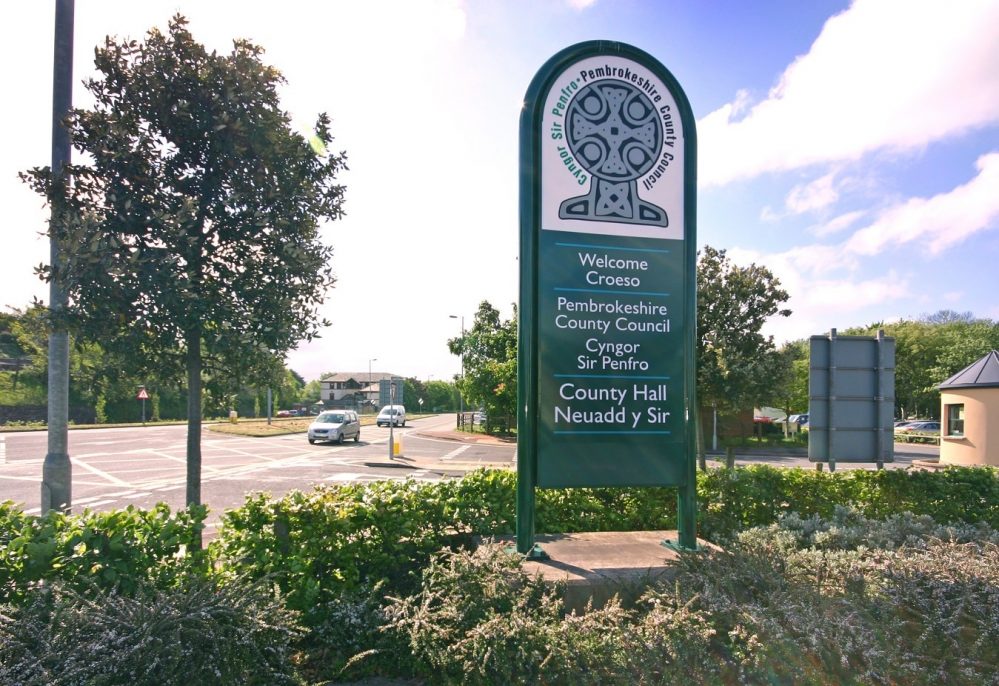
SENIOR Pembrokeshire councillors have backed changes to a list of council-owned properties, some moving to other departments and some, ultimately, be put up for sale.
At Pembrokeshire County Council’s Cabinet meeting of July 6, members were asked to approve a list of properties as either surplus to council requirements and to be disposed of; appropriated to another use within the council; or removed from the category of properties declared surplus to and to be appropriated for a particular use within the council.
A report for members, presented by Joint Cabinet Member for Communities Cllr Aaron Carey said: “The property department is undertaking a review of the council’s estate to identify under used or vacant properties that are no longer required for service delivery and could be transferred internally or disposed of to generate capital receipts.”
It listed 13 assets either for disposal, to be appropriated to another council directorate, or to be changed from surplus and to be appropriated to a council directorate.
“The identification of properties that may be suitable for disposal is constantly ongoing and there are several additional underused or underutilised properties that are being considered as part of our asset review and are subject to further investigations.
“Any properties to be declared surplus as a result of this review will be brought to Cabinet for determination in due course.”
Four properties were listed to be declared surplus for disposal.
The first was Eastleigh, West Street, Newport, described as a “residential property in the centre of Newport which is vacant; significant expenditure required to bring up to standard of the HRA portfolio; to be sold with a local covenant or restriction (trade/business to include holiday let) to be discussed at Cabinet”.
Also listed was a car park to the side of 56 Charles Street, Neyland, described as “area of land adjoining a commercial premises utilised as parking area for the premises”.
Also listed were the frontage area of a commercial premises at “St Thomas’ Haverfordwest,” and land at Withybush for industrial/commercial use.
The second section, covering six assets, was those declared surplus by one area of the council to be appropriated to another council directorate.
Former residential home Riverside, Woodbine Terrance, Pembroke mores from housing to property to review a future use, with Hakin infant school site having a similar change.

A parcel of land at Slade Lane for future education use moves from Education to Property, as does land to the rear of Eastgate Centre, Pembroke Open area of land From Education to Property, and the former Pembrokeshire Learning Cantre, Pembroke Dock, being vacated by the outgoing service.
At Brynhir an updated plan of land area for residential development moves from property to housing.
The final area of changes were three sites moving from surplus to be appropriated to a council directorate
Land adjoining the Fishguard Co-Op site will transfer to property to review a future use
An area of land at Brynhir, similar to mentioned earlier, will also transfer to housing.
The third was an area of open land adjoining the estuary at Front Street, Pembroke Dock transferring to property commercial/industrial letting.
The proposed changes were backed by members, Cllr Carey pointing out that approval of the surplus units does not automatically authorise their sales, without further approvals as and when required.


COMMUNITY councils in Pembrokeshire are being encouraged to develop local emergency plans to help protect residents and strengthen resilience during major incidents.
Pembrokeshire County Council’s Emergency Planning Team recently met members of Stackpole and Castlemartin Community Council to deliver a briefing on emergency preparedness.
The session covered national and regional risks, the Civil Contingencies Act and the importance of locally owned Community Emergency Plans.
Council officers said the aim was not to suggest that an emergency was expected, but to ensure communities recognised potential risks and were prepared to reduce their impact.
A Community Emergency Plan can help local people respond to a wide range of incidents, identify and support vulnerable residents, and make better use of local knowledge and community networks during difficult situations.
Attendees were also briefed on the Wales Resilience Framework, which sets out how government, public services, voluntary organisations, businesses and communities can work together to reduce risks and improve emergency preparedness.
The council’s Emergency Planning Team also highlighted the Dyfed-Powys Local Resilience Forum Community Risk Register, which is currently being updated.
Community representatives were invited to give feedback on how the register could be improved and used as a trusted source of information.
The register is designed to inform communities about the most significant risks in the region and their potential impact, provide links to partner organisations and further guidance, and encourage practical steps to improve preparedness in homes, businesses and communities.
Cllr Tessa Hodgson, Leader of Pembrokeshire County Council, said: “Preparing for emergencies is about protecting our communities and ensuring local people have the information and support they need when it matters most.
“Community-led resilience planning strengthens neighbourhoods, supports vulnerable residents and helps communities work together during challenging situations.
“I would encourage other community councils to engage with the Emergency Planning Team and explore how they can develop their own plans.”


PEMBROKESHIRE COAST NATIONAL PARK AUTHORITY has published its latest Welsh Language Standards Annual Report, setting out the work carried out over the past year to support and promote the use of Welsh across its services.
The report covers the period from April 2025 to March 2026 and outlines the Authority’s progress in meeting its statutory duties under the Welsh Language Standards.
The Standards require public bodies in Wales to provide services and communicate with the public in Welsh, ensuring that people can access information, take part in public life and engage with organisations through the language of their choice.
The legal framework for the Standards is set out in the Welsh Language (Wales) Measure 2011, which places duties on public organisations, including National Park Authorities, to treat the Welsh language no less favourably than English.
For Pembrokeshire Coast National Park Authority, the report is not only a statutory requirement but also a reflection of the importance of Welsh to many communities across the county.
The Authority says its work under the Standards supports residents, schools, community groups, volunteers and visitors, while helping to ensure that Welsh remains visible and accessible in everyday life.
Tegryn Jones, Chief Executive of Pembrokeshire Coast National Park Authority, said: “The Welsh language is central to the identity, culture and everyday life of Pembrokeshire Coast National Park.
“As an Authority, we recognise our responsibility not only to comply with the Welsh Language Standards, but to help create the conditions in which Welsh can be used naturally and confidently.
“For many people in Pembrokeshire, Welsh is the language of home, family and community, and it is important that they are able to engage with the Authority in their first language.
“This work is reflected across the Authority’s services, from the way we share information with the public to our work with schools, communities, volunteers and visitors.
“The Annual Report provides an opportunity to look at what has been achieved over the past year, while also recognising where further progress can be made.”
The Authority’s wider commitment to the Welsh language is also reflected in its Welsh Language Strategy, National Park Management Plan and Local Development Plan 2.

The full Welsh Language Standards Annual Report is available at: www.pembrokeshirecoast.wales/welsh-language-standards/.



Business20 hours ago
Pembrokeshire lands £98m share of Wales marine energy boom
New industry report says county has received the second highest level of marine energy investment in Wales, supporting more than...


Crime20 hours ago
First aider tells jury teacher was “crying, shaking” after classroom stabbing
A SCHOOL first aider has told a jury that teacher Vicki Williams was “crying, shaking” and in “complete shock” after...


Crime2 days ago
Teacher feared she was dying after Milford Haven classroom stabbing
A TEACHER allegedly stabbed in the head at Milford Haven Comprehensive School told a jury she feared she was dying...


News2 days ago
Farage to resign as MP and fight Clacton by-election amid finance row
NIGEL FARAGE has announced he will resign as MP for Clacton and stand again in the by-election he intends to...
Crime2 days ago
Teacher tells jury there were ‘no issues’ with accused pupil hours before ‘stabbing’
Milford Haven teacher gives evidence as trial of 15-year-old continues at Swansea Crown Court A TEACHER allegedly stabbed at Milford...


News2 days ago
Major incident stood down after fire at Impala Terminal in Milford Haven
Fire involved decommissioned oil tank containing residual crude oil and around 60 cylinders A MAJOR incident declared during a fire...


News3 days ago
Large fire breaks out at Impala Terminal in Milford Haven
Black smoke seen for miles as emergency services respond to incident at former Puma Energy site A LARGE fire has...
Crime3 days ago
Prosecution outlines ‘planned attack’ as Milford Haven teacher stabbing trial opens
Jury hears teenager allegedly brought kitchen knife into school before teacher was stabbed in the head THE JURY in the...


Crime3 days ago
Boy, 15, denies attempted murder of Milford Haven teacher in ‘horrifying’ attack
Swansea Crown Court hears dramatic opening of trial over February stabbing A 15-YEAR-OLD boy from Milford Haven has gone on...


Crime3 days ago
Fishguard man cleared after five years in prison refused compensation again
Brian Buckle’s case raises fresh questions over justice system that says a man can be cleared by a jury but...
-

 Entertainment7 days ago
Pembrokeshire DJ lands record deal with London dance label
-
 Community6 days ago
Closure-threatened Stepaside school expected to remain open
-

 Crime7 days ago
Llandeilo man accused of rape sent to Crown Court
-
 Education6 days ago
Education secretary vows to tackle ‘root causes’ of antisocial behaviour in schools
-

 Community6 days ago
Saundersfoot Harbour regeneration project wins national planning award
-
 Education6 days ago
First Minister pressed on biological sex, additional learning needs, and NHS jobs
-

 Education6 days ago
Ysgol Glannau Gwaun celebrates prestigious Gold Active Travel award
-
News3 days ago
Large fire breaks out at Impala Terminal in Milford Haven