


News
‘Street-food’ entrepreneur finalist for business award

JONATHAN WILLIAMS, founder of successful street-food catering business Pembrokeshire Beach Food Company, has been shortlisted as a finalist in the 2015 Making Business Happen Awards.
Inspired by the food and the beach lifestyle of Pembrokeshire, 36 year-old Williams left his office job in 2010 to follow his dream and start his own catering company. Now based in Pembroke Dock, Jonathan and his team run a successful street-food business visiting major events and festivals across the UK and have also created an expanding ‘beach food deli’ range for the retail industry.
Pembrokeshire Beach Food Company will now fight it out with three other finalists in the SME Business Growth category for the first prize of a £12,500 cash investment. Each of the teams that have made this year’s shortlist will receive a tailored package of business support and mentoring, provided by the University of South Wales and a range of 2015 award partners, which include NatWest and Santander.
Last September, award organisers set out on a UK-wide search for business owners and aspiring entrepreneurs and challenged them to show how they are ‘making business happen’. Five months later and eight businesses, together with 15 teams of school and university students, have taken their places amongst the shortlisted entrants.


A LEGAL charity has called on the Welsh Government to confirm that boiling lobsters, crabs and other shellfish alive is already illegal under existing Welsh animal welfare law.
The Animal Law Foundation has written to ministers, supported by more than 40 animal welfare organisations and legal experts, urging the Welsh Government to issue formal guidance to restaurants, fishmongers, processors and consumers.
The call comes amid growing scrutiny of how crabs, lobsters and other decapod crustaceans are treated from sea to plate.
The Herald previously reported on a major Crustacean Compassion report which warned of welfare concerns across the shellfish supply chain, including animals being killed without first being humanely stunned, tails being pulled off while conscious, and limbs being removed or damaged.
The issue is particularly sensitive in Wales, where shellfish is both an important coastal industry and a celebrated part of the national food scene.

Welsh crab and lobster feature heavily in local seafood businesses, restaurants and tourism, while Pembrokeshire lobster was recently showcased in the winning menu at the National Chef of Wales 2026 competition.
The Welsh Government is also developing the first Wales-only Crabs and Lobsters Fisheries Management Plan, with consultation expected during 2026.
Campaigners say the latest legal question is not about banning Welsh seafood, but about whether live boiling can continue where less painful killing methods are available.
The Animal Law Foundation says the live boiling of decapod crustaceans, including lobsters and crabs, is incompatible with the Welfare of Animals at the Time of Killing (Wales) Regulations 2014.
Those regulations do not specifically name lobsters or crabs, but Schedule 4 says no person involved in the restraint, stunning or killing of an animal may cause, or permit, avoidable pain, distress or suffering. It also requires anyone carrying out those acts to have the necessary knowledge and skill to do so humanely and efficiently.
The charity argues that because lobsters and crabs are now recognised in law as sentient animals capable of feeling pain, and because alternative killing methods are available, boiling them alive while conscious amounts to avoidable suffering.
The call follows a recent move in England, where the UK Government’s Animal Welfare Strategy said guidance would be published clarifying that live boiling is not an acceptable killing method under existing welfare-at-killing requirements.

The Welsh Government is now being asked to take the same position under the Welsh equivalent regulations.
Edie Bowles, executive director of The Animal Law Foundation, said: “Wales has the same legal protections for lobsters and crabs as England, where it is now officially recognised that live boiling is unacceptable under the current law.
“We are asking the new Welsh Government to start off on the right foot and ensure animal protection laws are acknowledged and complied with.
“Every day without this is another day the law continues to be misunderstood and undermined, with animals suffering as a result.
“Lobsters and crabs are sentient animals. Science tells us they feel pain, fear and distress. Being boiled alive while fully conscious can take many agonising minutes, and there is no justification, legal or moral, for allowing this to continue.”
The charity says scientific evidence, including a London School of Economics review commissioned by the UK Government, supports the view that decapod crustaceans are sentient and capable of experiencing pain, distress and fear.
That review helped lead to decapod crustaceans and cephalopod molluscs, including lobsters, crabs and octopuses, being included within the scope of the Animal Welfare (Sentience) Act 2022.
Campaigners say more humane methods are available, including electrical stunning using specialist equipment, double-spiking for crabs and whole-body splitting for lobsters when carried out by a trained person.
However, the question of whether live boiling is already unlawful in Wales has not yet been formally confirmed by the Welsh Government.
The Welsh Government agreed in January 2025 to work with Defra, the other devolved governments and industry stakeholders on non-statutory guidance on killing lobsters and other decapod crustaceans.
The Herald has asked the Welsh Government whether it accepts the charity’s interpretation of the law, whether it plans to issue guidance, and whether any enforcement action has been taken in Wales. A response will be added when received.

TOURISM developers in Wales are likely to face greater pressure to show how new projects benefit local communities, support jobs and protect Welsh culture, according to planning and development consultancy Lichfields.
Plaid Cymru is leading the Welsh Government for the first time after emerging as the largest party in the Senedd, although it does not hold an overall majority.
No major tourism-specific policy announcements have yet been made by the new administration, but Lichfields says the direction of travel suggests a stronger emphasis on sustainable tourism, local benefit, the Welsh language and community involvement in planning decisions.

Tourism and hospitality is a major part of the Welsh economy, employing around one in nine people across Wales, rising to about one in five in areas such as Pembrokeshire and Anglesey.
Key policy areas already affecting the sector include the visitor levy, the 182-day threshold for holiday accommodation, and new registration requirements for short-term visitor accommodation, which are due to come into force from October 2026.
Planning reform is also expected to have implications for tourism development. Proposed changes include stronger community involvement, earlier pre-application consultation, greater emphasis on the Welsh language, simplified planning processes, and reform of national and regional planning frameworks.
Helen Ashby-Ridgway, Planning Director at Lichfields, said: “The change in government is an important moment for tourism and planning in Wales, but the direction of travel looks more evolutionary than revolutionary.
“Tourism is recognised as an important part of the Welsh economy, but future proposals will need to do more than show visitor demand. They will need to show how development supports local jobs, communities, culture, language and long-term place-making.
“That does not mean tourism development cannot come forward. It means operators, landowners and developers should be thinking carefully about how proposals are shaped, explained and brought to local communities from the outset.”
From October 2026, providers offering stays of 31 nights or fewer will need to register with the Welsh Revenue Authority by March 31, 2027. The data collected is expected to help local authorities better understand the scale and location of visitor accommodation in their areas.
Lichfields says this could influence planning policy, local development plans and future investment decisions.
Helen added: “The short-term accommodation register could become an important evidence base for councils and for businesses looking to invest in Wales.

“Good data should help move the debate beyond assumptions. It can give councils, communities and the industry a clearer picture of where accommodation is located, what demand looks like and where future growth may be appropriate.
“For tourism businesses, the key will be to engage early, take part in plan-making and show clearly how proposals deliver economic, social, cultural and environmental benefits. That will become increasingly important if planning policy moves further towards community value and local benefit.”
Because Plaid Cymru is leading without an overall majority, cross-party support is likely to be needed to deliver future reforms. Several current policy areas, including the visitor levy and accommodation registration system, continue measures developed during the previous Senedd term.
Lichfields says those bringing forward tourism and leisure developments in Wales should prepare for a planning environment where community engagement, local benefit and policy alignment carry increasing weight.

MILFORD HAVEN ROUND TABLE is asking residents in Hakin and Hubberston to help keep roads clear ahead of this Saturday’s Carnival Procession.
Organisers say the event is shaping up to be one of the biggest yet, with a large number of floats, lorries and support vehicles expected to make their way through Hakin before the procession begins at Waterloo Square.
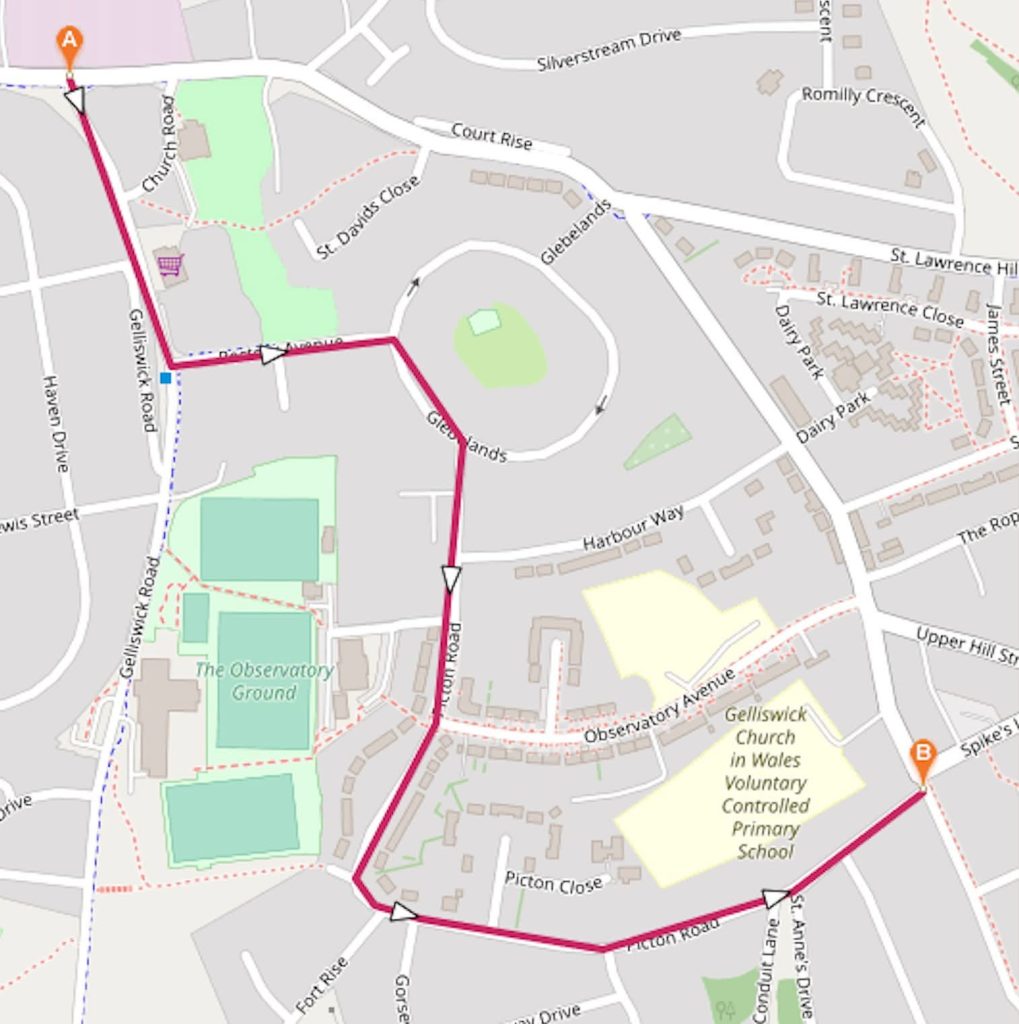
Residents living along Gelliswick Road, Rectory Avenue, Glebelands and Picton Road, particularly near the junction with Observatory Avenue, are being asked to avoid double parking or parking on pavements where possible between around 11.45am and 1.00pm.
The route being used by the floats and support vehicles is shown on the map.
Some of the vehicles involved are large, and organisers say keeping the roads as clear as possible for the short period will help ensure the procession reaches Waterloo Square safely and on time.
Milford Haven Round Table said the carnival “belongs to the whole community” and thanked residents for their continued support.
They added: “Your understanding and cooperation, even for this short time, will make a huge difference and help make this year’s Carnival another fantastic day for our town.”
Residents are also being encouraged to share the message with friends, family and neighbours who live along the affected roads.



Health17 hours ago
Wales begins early NHS winter planning after long waits and ambulance pressure
Ministers say health boards and councils must act now to ease pressure on hospitals, ambulances and social care before winter...


Crime2 days ago
Judge calls pensioner a ‘dirty old man’ as he avoids jail for exposing himself to women
Judge says 75-year-old Stewart Laugharne behaved ‘disgracefully’ as he avoids jail but is ordered to sign sex offenders register A...
Health2 days ago
Stroke services consultation reaches halfway point as public urged to have say
HYWEL DDA University Health Board is urging people to take part in its consultation on the future of stroke services,...


Business2 days ago
Welsh firms eye share of £5bn defence drone boom
WELSH defence and aerospace firms could be in line for a share of billions of pounds in new military spending...


Community4 days ago
Thousands line Cardigan streets for Lord Rhys homecoming parade
THOUSANDS of people lined the streets and quayside in Cardigan on Saturday as the town marked 850 years since Lord...


Crime5 days ago
Dyfed-Powys Police rated only ‘Adequate’ in organised crime inspection
A WATCHDOG has rated Dyfed-Powys Police only “Adequate” in its response to serious and organised crime, despite praise for the...


News5 days ago
Two taken to hospital after aircraft ditches in Cardigan Bay
Coastguard helicopter spotted two casualties after light aircraft came down off west Wales coast TWO people were taken to hospital...


Sport6 days ago
Long Course Weekend gets underway in Tenby as thousands head for county
Three days of swimming, cycling and running begin with The Wales Swim at North Beach THOUSANDS of athletes and supporters...


Climate6 days ago
Welsh waters, Westminster profits: Crown Estate row reignited in Wales
PLAID CYMRU has renewed calls for the Crown Estate to be devolved to Wales after figures showed income linked to...


News6 days ago
Reform MS: ‘I felt like shouting get out of the water’
Paul Marr says children playing in streams at Pembrokeshire beaches deserve better protection from pollution risks REFORM UK MS Paul...
-

 Crime7 days ago
Police appeal after reported rape at Young Farmers rally
-
Crime5 days ago
Dyfed-Powys Police rated only ‘Adequate’ in organised crime inspection
-

 Entertainment6 days ago
Torch cuts children’s cinema tickets to £5.25 for summer
-

 News3 days ago
Biker dies and woman seriously injured in Black Mountain crash
-

 Farming7 days ago
Farmers urged to protect themselves as heatwave brings health risks
-
Health7 days ago
Senedd backs call to rule out hospital downgrades after heated NHS debate
-
Climate6 days ago
Welsh waters, Westminster profits: Crown Estate row reignited in Wales
-

 Crime6 days ago
Former Swansea Prison inmate died 48 hours after release