

Local Government
Welsh councils carry £6.7bn debt as campaigners warn of ‘ticking time bomb’

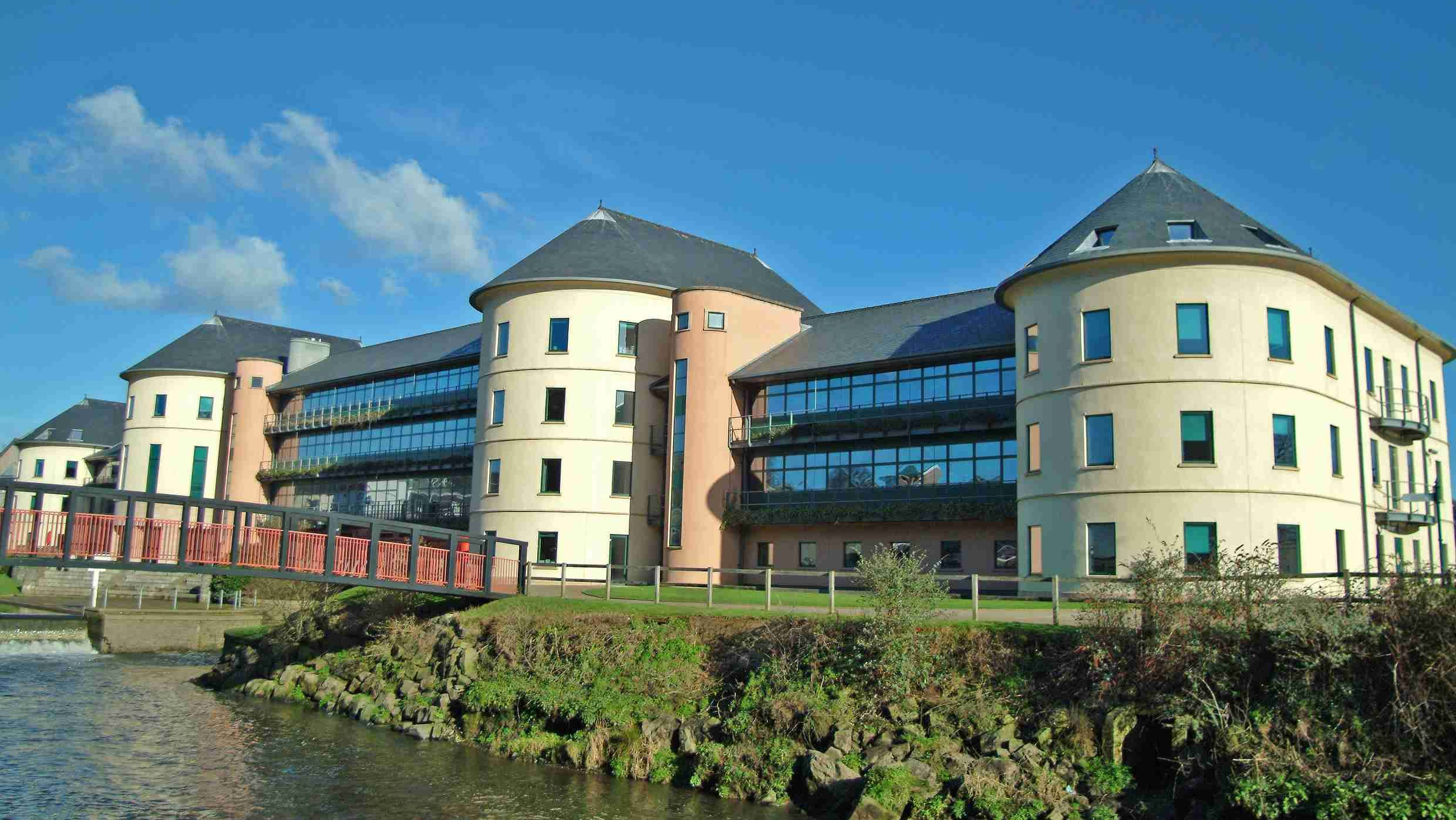
Cardiff has the largest overall borrowing, while Wrexham records the highest debt per resident among Wales’ 22 principal councils
WELSH local authority bodies are carrying debts of almost £6.7 billion, according to new figures which have prompted warnings about the long-term burden being placed on taxpayers.
Research published by the TaxPayers’ Alliance puts total local authority debt in Wales at £6.698 billion during 2025-26.
The campaign group said that amount was equivalent to nearly 2.94 million average Welsh Band D council tax bills, based on an average annual charge of £2,283.
The figures were compiled from UK Government borrowing and investment data for the final quarter of the financial year.
Wales’ 22 county and county borough councils accounted for around £6.55 billion of the total, with additional borrowing attributed to other local authority bodies.

Cardiff Council recorded the largest debt among Welsh councils at £1.148 billion, followed by Swansea at £629.2 million and Wrexham at £542.5 million.
Carmarthenshire Council had debts of £434.1 million, while Flintshire recorded £362.3 million and Powys £361.9 million.
However, the picture changes when debt is calculated according to population.
Wrexham had the highest council debt per resident in Wales at approximately £3,924, followed by Denbighshire at £3,431 and Merthyr Tydfil at £3,049.
Cardiff’s debt was equivalent to £2,989 per resident, while Powys recorded approximately £2,680 and Swansea £2,504.
What about Pembrokehire?
In Pembrokeshire, the figures show total council debt of £201.794 million, equivalent to approximately £1,605 for every resident.
Of Pembrokeshire’s total, £170.194 million was recorded as borrowing from the Public Works Loan Board, the government body which provides loans to councils and other public organisations.

Pembrokeshire ranked 12th among Wales’ 22 principal councils for total debt and 15th when borrowing was calculated per resident.
The figures do not, however, mean that each household personally owes the amount calculated per resident.
Council borrowing is commonly used to finance long-term capital projects such as schools, council housing, roads, leisure facilities and regeneration schemes.
Under the prudential borrowing framework, Welsh councils are permitted to borrow for capital purposes provided they judge that the repayments are affordable. Welsh Government figures state that authorities can borrow without specific government consent where they can afford to service the debt.
Audit Wales has also stressed that capital spending is essential for providing services, including the construction of schools, improvements to libraries, social care equipment and the maintenance of public buildings.
However, borrowing must eventually be repaid, and interest and repayment costs can place continuing pressure on the annual budgets used to fund frontline services.
Across the UK, local authority debt reached a record £154.6 billion during 2025-26, an increase of £6 billion, or 4.1 per cent, compared with the previous year.
The TaxPayers’ Alliance said council debt had risen by £84.6 billion since 2009-10, representing a cash increase of 121 per cent.
Around £116 billion, or three quarters of the UK total, was borrowed from the Public Works Loan Board.
John O’Connell, chief executive of the TaxPayers’ Alliance, described the level of local authority debt as a “ticking time bomb” and called for councils to bring their borrowing under control.
He said taxpayers ultimately risked being left responsible for obligations accumulated through borrowing, statutory service pressures and, in some parts of the UK, unsuccessful commercial investments.
The figures should nevertheless be treated as a measure of gross borrowing rather than a complete assessment of the financial health of an individual council.
They do not deduct councils’ cash balances or investments, assess the value of assets funded through borrowing, or show the interest rates, repayment dates and annual servicing costs attached to each loan.
A council with substantial borrowing may also hold valuable housing, property and infrastructure assets, while an authority with less debt can still face serious pressure because of falling reserves, rising demand or an ongoing budget deficit.
The findings are likely to increase pressure on Welsh councils to provide clearer information showing what their borrowing has funded, how much taxpayers are paying each year in interest and repayments, and whether those costs remain affordable as spending pressures continue to grow.


HAVERFORDWEST VC HIGH SCHOOL has closed early today after extreme heat affected wall-mounted soundproofing boards around the building.
The school said several of the boards, including some positioned at height, could become unsafe and fall from the walls.
Pupils were initially moved to safe areas and placed under supervision while the situation was assessed by the school’s site management team and Pembrokeshire County Council maintenance officers.
Following discussions, a decision was made to close the school early so the boards could be removed safely.
School buses were due to arrive at 1.15pm to transport pupils who normally travel home by bus. Children attending a trip at Scolton Manor were expected to return to the school by 1pm.
Parents and carers who usually collect their children were asked to do so from 1.30pm.
Pupils who normally walk home were only permitted to leave after receiving parental permission. Parents could provide permission by sending their child a text message to show their form tutor or by contacting the school reception.
The school said it expected the affected boards to be removed today, allowing the school to reopen as normal tomorrow, Tuesday, July 14.
Parents will be updated through ParentMail if the work cannot be completed as planned.


A CALL for Pembrokeshire to again push Welsh Government for a review of the contentious 182-day rule for self-catering holiday properties in order to avoid paying second homes tax is to be heard next week.
Self-catering businesses not meeting the 182-day criteria end up paying the second homes council tax premium, currently 125 per cent on top of the general rate, in the county, along with similar premiums for the other elements of the overall bill such as the police precept.
In a submitted question to be heard at the July 16 meeting of Pembrokeshire County Council, Cllr Huw Murphy asks: “Most councillors are aware that much of Pembrokeshire relies on tourism and hospitality for its economic success. A key element of a successful Pembrokeshire tourism industry is the self-catering sector.
“Plaid Cymru in its manifesto made several pledges for its first 100 days in office, one under the headline of ‘Unleashing Wales Economic Potential’ which made no specific mention of the 182 letting day rule that was introduced by the previous Labour Government under their co-operation agreement with Plaid Cymru.
“However, Plaid Cymru prior to Senedd elections in May 2026, stated that they would review the 182-day threshold which has been a disaster for many self-catering businesses, many of whom are in rural and coastal communities. I have raised this matter on several occasions since being elected.
“Through speaking to those operating in the self-catering sector there is a clear need to reduce the 182-day threshold. I should point out that in the past I have suggested it be reduced to 140 days and still hold that view.
“Over 50 days have now passed since the Senedd Elections, but we have not heard any details of a review of the 182-day letting rule. Therefore, will the Leader write off to the First Minister outlining the concerns of many Pembrokeshire county councillors with regards to the 182 days letting rule and ask for a reply setting out when Welsh Government intend to commence a review of this policy, which is much needed?”
Back in 2023, Cllr Murphy submitted an unsuccessful notice of motion to full council calling for the 182-day rule in Pembrokeshire to be lowered, proposing a figure of 140 days.
At the time of the 2023 call it was instead agreed to review the situation and for the council to raise its concerns to Welsh Government.
A CALL for an impartial investigation into the contentious closure of Manorbier school, along with an apology from a senior councillor in connection with that closure, are to be heard next week.
Back in June, the final decision to close fire-ravaged Manorbier school was given the go-ahead, despite a heartfelt last-minute plea by local councillor Phil Kidney to keep it open.
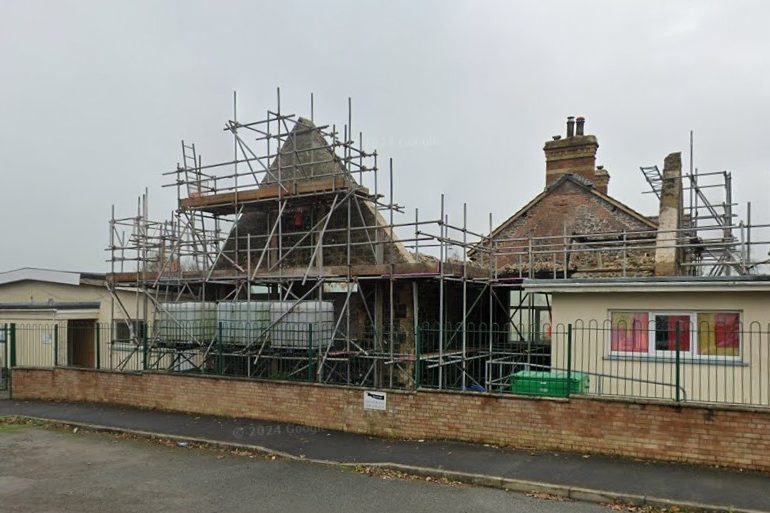
Manorbier Church in Wales VC School and its adjoining schoolhouse was severely damaged by a fire in October 2022, which broke out in the school roof space.
After that, a ‘school from school’ was set up in Jameston Village Hall.
It had been hoped the school would be rebuilt, but last year councillors backed a report of the School Modernisation Working Group which, amongst other recommendations, included a statutory consultation on proposals to discontinue Manorbier Church in Wales Voluntary Controlled School.
The decision attracted strong local opposition, with more than 1,500 people signing a petition on the council’s own website calling for the school to be rebuilt.
The formal consultation for the discontinuation of Manorbier closed last December.
However, many of the council’s figures, especially on the level of surplus places at the school, were disputed.
At a special extraordinary council meeting held on June 15, members were asked to consider a report on a summary of 62 objections received in respect of the proposal to discontinue Manorbier VC school, which included options to end that discontinuation or to launch a fresh consultation.
However, it was recommended, in a report presented by deputy leader Cllr Paul Miller, who now also has responsibility for education, for the discontinuation be proceeded with.
At the meeting, local councillor Phil Kidney, who has been a staunch supporter of the keeping the school open, thanked the campaigners and staff.
“We’ve all let these people down, the way this council has handled this situation is appalling; from day one not one of the executives came up to see these children, no-one came out; if that was Haverfordwest or Tenby they’d be all over the place.”

He said the wording of the consultation had seen more mentions of St Florence [ the alternative school for pupils in the event of a discontinuation] than Manorbier, describing it as “like a brochure for St Florence”.
He also warned the Diocese of St Davids, which had always pressed for the school to be rebuilt, would not allow the council to “walk away from our liabilities lightly”.
Members later heard the diocese had, in a letter received by councillors, made “damning accusations the council is being biased against voluntary controlled schools,” with Cllr Jamie Adams saying the council administration should be “ashamed of this debacle”.
Cllr Miller said his only consideration was “the future welfare of the children,” adding: “I do not think 20 children educated in a welfare centre in Jameston is the best for them.”
Members, by 30 votes to 23, with four abstentions, supported the final steps to close the school.
Following that decision, issues around the contentious closure will be heard at the forthcoming meeting of the council, taking place on July 16.
In a notice of motion before councillors, Cllr Kidney proposes: “That council considers a full impartial investigation into the process of closing Manorbier school, specifically the time it has taken, broken promises, inadequate insurance, and the involvement of HR department.”
A supporting statement for his motion says: “The review should be carried out by someone not employed by the authority, with powers to recommend disciplinary action if they deem necessary.
“A full impartial review should hopefully stop another school being treated so appallingly.”
Cllr Kidney is also, in a submitted question, seeking an apology from the deputy leader, who now has responsibility for education: “Would the Cabinet Member for Education like to apologise to the staff and parents of Manorbier School for his comments at the last council meeting, where he stated children would get a better education in St Florence and children in Manorbier were being taught in one room?
“This is both factually wrong and insulting to staff, who have worked tirelessly to provide teaching of an excellent standard, and if he had taken the time to read the last Estyn report, he may not have made these derogatory comments.”
Both the motion and question will be heard by councillors next week.



Crime4 hours ago
Teenager tells jury he took knife to school to ‘show off’ to friends
Boy accused of attempting to murder Milford Haven teacher says he ‘never wanted to injure’ her A TEENAGE boy accused...


Local Government19 hours ago
Calls grow for independent investigation into Manorbier school closure
Councillor alleges misleading figures, inadequate insurance and poor treatment of staff CALLS for an independent investigation into the controversial closure...


Community1 day ago
Neyland Carnival hailed a huge success after streets fill with colour and crowds
NEYLAND CARNIVAL organisers have thanked the community, volunteers and local businesses who helped make this year’s event a memorable success....


Community1 day ago
Tenby Summer Spectacular: Anger grows over ‘disaster waiting to happen’ warning
A growing backlash has followed police calls for the event’s licence to be revoked, with supporters questioning why authorities failed...


Charity2 days ago
RSPB secures ‘missing link’ to reconnect wildlife habitats in Carmarthenshire
RSPB CYMRU has purchased a 96-hectare upland site in Carmarthenshire, describing it as a vital step towards reconnecting one of...


Crime3 days ago
Ann Widdecombe: Welsh politicians pay tribute as murder probe launched
Prime Minister Sir Keir Starmer has praised the former minister’s “conviction and dedication”, while political figures in Wales remembered her...


News3 days ago
Solardo pulls out of Haverfordwest show as organisers offer full refunds
Headline act confirms non-appearance as Park House Series announces major event changes DANCE music duo Solardo will no longer perform...


Local Government3 days ago
Conservatives win Pembroke Dock seat as Reform stalls and Dowson polls just 11
Jamie Street takes Market ward with a 43-vote majority as Reform finishes fourth despite its major Senedd breakthrough two months...


Health3 days ago
Hospital ward closed after highly contagious scabies outbreak
Hywel Dda confirms wider rise in cases across Carmarthenshire, Pembrokeshire and Ceredigion as patients and staff are offered treatment A...
Crime4 days ago
Teacher stabbing trial: The first week of evidence
Jury hears accounts of alleged planned classroom attack, teacher’s fear she was dying, and boy’s words after leaving school A...
-

 Farming6 days ago
Pembrokeshire slaughterhouse given urgent improvement rating after audit failure
-

 Entertainment5 days ago
Swing and big band classics heading to Torch Theatre
-

 News6 days ago
From boccia to boxing: ALN multisport events give youngsters chance to try activities
-

 News6 days ago
Questions raised over Hamilton Accies finances after club’s Haverfordwest friendly
-

 Farming4 days ago
Working Carmarthenshire farm opens gates to visitors with new holiday cottages
-

 Community6 days ago
British Empire Medal ceremony held at County Hall
-

 Crime4 days ago
Greenacres confirms seized dogs are safe as investigation continues
-
Crime4 days ago
Teacher stabbing trial: The first week of evidence