


News
Superfast broadband progressing in county


MORE than 23,500 homes and businesses in Pembrokeshire can now access fast fibre broadband thanks to the Superfast Cymru programme as Tenby becomes the latest area to benefit.
The first households and businesses to be connected in Tenby join residents in Haverfordwest, Johnston, Milford Haven, Neyland, Pembroke and Saundersfoot, who can already take advantage of faster upload and download speeds.
Elsewhere, Fishguard, Broadhaven, Narbeth, Newport (Dyfed), Carew, Manorbier, Clynderwen are all set to see engineering work begin before the end of March as part of the Superfast Cymru roll-out. Fibre broadband will also be switched on this month in Hebron, Crymych, Crosswell, Treffgarne and Letterston.
The high-speed technology has the ability to transform people’s use of the internet. At home, fibre broadband allows a family to simultaneously download a movie, carry out online research, surf the web and play games online all at the same time. Businesses can use fibre broadband to work more efficiently, market themselves more effectively, find new customers and become more competitive.
Superfast Cymru, a partnership between the Welsh Government, BT, UK Government and the European Regional Development Fund is the largest of its kind in the UK. It is aiming to achieve, when combined with commercial programmes by the private sector, the Welsh Government’s aim of providing 96% of premises in Wales with access to fast fibre broadband by the end of Spring 2016.

Deputy Minister for Skills and Technology, Julie James said: “The Superfast Cymru programme is changing the digital landscape in Wales and I’m pleased to see more and more premises gaining access in Pembrokeshire.
“Tenby is the latest to benefit in the county and more communities will be able to take advantage of superfast speeds as roll-out of the programme continues.
“The pace of technological development shows no sign of slowing down. We are embracing this change and Superfast Cymru is a clear demonstration of our commitment to seeing Wales become a truly digital nation.”
Households and businesses who want superfast speeds need to contact an internet service provider (ISP) of their choice to sign up to receive fast fibre – the upgrade is not automatic. There are a wide range of ISPs offering fibre broadband in Wales so customers can shop around and choose the package that is best for them. If they choose not to upgrade to fibre broadband, they will be able to continue using their existing broadband service.


MILFORD HAVEN ROUND TABLE is asking residents in Hakin and Hubberston to help keep roads clear ahead of this Saturday’s Carnival Procession.
Organisers say the event is shaping up to be one of the biggest yet, with a large number of floats, lorries and support vehicles expected to make their way through Hakin before the procession begins at Waterloo Square.
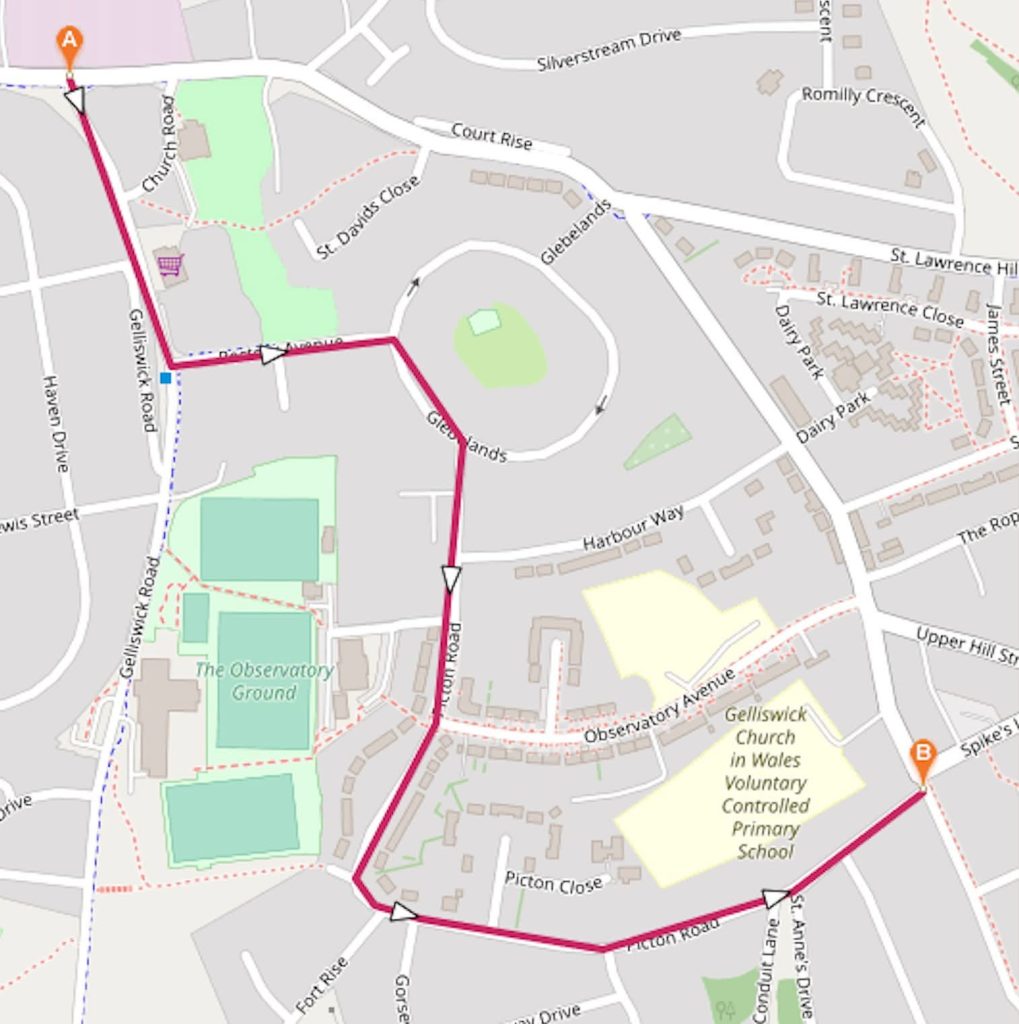
Residents living along Gelliswick Road, Rectory Avenue, Glebelands and Picton Road, particularly near the junction with Observatory Avenue, are being asked to avoid double parking or parking on pavements where possible between around 11.45am and 1.00pm.
The route being used by the floats and support vehicles is shown on the map.
Some of the vehicles involved are large, and organisers say keeping the roads as clear as possible for the short period will help ensure the procession reaches Waterloo Square safely and on time.
Milford Haven Round Table said the carnival “belongs to the whole community” and thanked residents for their continued support.
They added: “Your understanding and cooperation, even for this short time, will make a huge difference and help make this year’s Carnival another fantastic day for our town.”
Residents are also being encouraged to share the message with friends, family and neighbours who live along the affected roads.


A NEW YEAR’S EVE drive has resulted in a 12-month road ban after a motorist was found to be more than twice the legal cannabis limit.
Ridwan Rahman, 20, was stopped by police as he drove his Vauxhall Astra along Steynton Road, Milford Haven, on January 1.
“Police noted the car accelerating away from traffic lights in an erratic manner,” Crown Prosecutor Sian Vaughan told Haverfordwest magistrates this week.
“When officers asked the vehicle to stop, they smelt cannabis coming from inside.”
A blood test later showed Rahman had 5.2mcg of delta-9 tetrahydrocannabinol, the active ingredient in cannabis, in his system. The legal limit is 2mcg.
Rahman, who has no previous convictions, pleaded guilty to drug-driving. He was represented in court by solicitor Alaw Harries, who disputed the prosecution’s claim that he had been driving erratically.
“He does not accept that he was driving in an erratic manner, nor that he accelerated away from the traffic lights,” she said.
“The officers told him he had been stopped because the vehicle’s registration plate light was not working.”
Rahman, of Carbon Close, Newport, was fined £323 and ordered to pay a £129 court surcharge and £85 costs.
He was disqualified from driving for 12 months.

A FISHGUARD man has been jailed after breaching a restraining order which banned him from contacting his mother.
Steven O’Sullivan attended his mother’s home on June 22, despite the order having been imposed in November 2012. It prohibited him from having any direct or indirect contact with her.
“She felt she needed to phone the police because she was frightened of her son,” Crown Prosecutor Sian Vaughan told Haverfordwest magistrates this week.
“He had been dropped off at his mother’s property by a female, and his mother went upstairs to ring the police because he makes her feel vulnerable.”
When officers arrived, they found O’Sullivan inside an outbuilding, crouching beside an outside toilet.
“There have been a number of previous breaches, the most recent being on June 5,” continued Ms Vaughan. “Now we have yet another one on June 22.”
O’Sullivan, of Gwelfor, Fishguard, is currently on remand at Swansea Prison. He is also accused of stealing beer and food worth £45 from the Nisa store in Haverfordwest on June 21.
Representing him in court, solicitor Tom Lloyd said there had been no threats of violence when O’Sullivan went to his mother’s home.
“But the aggravating factor is his previous convictions,” he told the bench.
“He was particularly upset and had nowhere else to go. This was why he went to see his mother.”
Magistrates jailed O’Sullivan for eight weeks. He was also ordered to pay a £154 court surcharge and £85 costs.
He is due to return to Haverfordwest Magistrates’ Court on July 7 to enter a plea in relation to the alleged theft offence.




Health8 hours ago
Wales begins early NHS winter planning after long waits and ambulance pressure
Ministers say health boards and councils must act now to ease pressure on hospitals, ambulances and social care before winter...


Crime1 day ago
Judge calls pensioner a ‘dirty old man’ as he avoids jail for exposing himself to women
Judge says 75-year-old Stewart Laugharne behaved ‘disgracefully’ as he avoids jail but is ordered to sign sex offenders register A...
Health2 days ago
Stroke services consultation reaches halfway point as public urged to have say
HYWEL DDA University Health Board is urging people to take part in its consultation on the future of stroke services,...


Business2 days ago
Welsh firms eye share of £5bn defence drone boom
WELSH defence and aerospace firms could be in line for a share of billions of pounds in new military spending...


Community3 days ago
Thousands line Cardigan streets for Lord Rhys homecoming parade
THOUSANDS of people lined the streets and quayside in Cardigan on Saturday as the town marked 850 years since Lord...


Crime4 days ago
Dyfed-Powys Police rated only ‘Adequate’ in organised crime inspection
A WATCHDOG has rated Dyfed-Powys Police only “Adequate” in its response to serious and organised crime, despite praise for the...


News5 days ago
Two taken to hospital after aircraft ditches in Cardigan Bay
Coastguard helicopter spotted two casualties after light aircraft came down off west Wales coast TWO people were taken to hospital...


Sport5 days ago
Long Course Weekend gets underway in Tenby as thousands head for county
Three days of swimming, cycling and running begin with The Wales Swim at North Beach THOUSANDS of athletes and supporters...


Climate5 days ago
Welsh waters, Westminster profits: Crown Estate row reignited in Wales
PLAID CYMRU has renewed calls for the Crown Estate to be devolved to Wales after figures showed income linked to...


News6 days ago
Reform MS: ‘I felt like shouting get out of the water’
Paul Marr says children playing in streams at Pembrokeshire beaches deserve better protection from pollution risks REFORM UK MS Paul...
-

 Crime7 days ago
Police appeal after reported rape at Young Farmers rally
-
Crime4 days ago
Dyfed-Powys Police rated only ‘Adequate’ in organised crime inspection
-

 Entertainment5 days ago
Torch cuts children’s cinema tickets to £5.25 for summer
-

 News2 days ago
Biker dies and woman seriously injured in Black Mountain crash
-

 Farming7 days ago
Farmers urged to protect themselves as heatwave brings health risks
-

 Farming7 days ago
Rural Wales ‘left out’ of net zero debate, warns carbon entrepreneur
-

 Community7 days ago
Council ‘did not request or give direction’ to cancel Tenby Summer Spectacular
-
News6 days ago
Reform MS: ‘I felt like shouting get out of the water’
Kenneth Dalziel
May 18, 2015 at 8:27 am
I remember reading this article in the paper, especially about Crosswell being switched to broadband in that month. Just checked Superfast Cymru website and they are now saying September – but not which year!!! Oh the joys of being treated as second class citizens