


News
Village narrowly misses setting British rain record

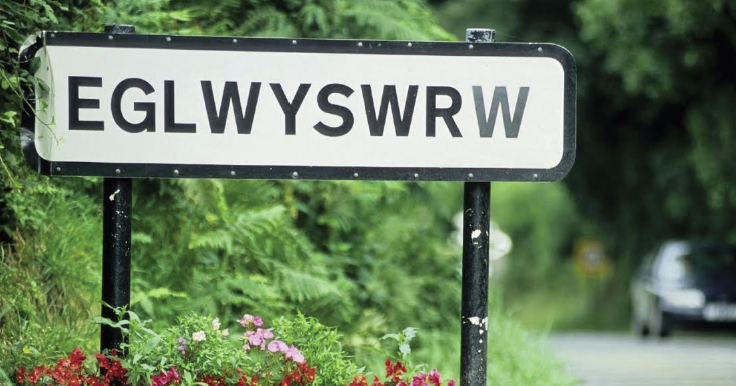
 AN INFLUX of cold weather Tuesday Jan 19th prevented the small Welsh village from taking the crown for longest consecutive rainfall.
With temperatures dropping below freezing, Eglwyswrw was left with a grand total of 85 days of consecutive rain, which began last year on October 24.
Residents hoping to seize the record were dismayed last Saturday when the village remained dry during the day. However, close to midnight the rain returned, leaving their wet spell uninterrupted until yesterday.
The current British ‘raining’ champion for most consecutive rainfall is Eallabus in Scotland, which endured 89 days of drizzle between August 12 and November 8 1923.
News of sodden Eglwyswrw travelled far, with the village’s story appearing in the Italian newspaper ‘Centro Meteo Italiano’.

Pembrokeshire County Councillor John Davies revealed that the weather was heavily affecting his animals. His sheep were getting wool rot due to their coats not having enough time to dry out between rain showers. Farmers were also forced to let their crops rot in the ground due to fields being too waterlogged to save them.
The dry spell that caused the village to miss out was predicted by meteorologists at the Met Office, with one stating that “the sequence could be broken because we are expecting some drier days.”
The Pembrokeshire coastline is often the first point that rain-bearing clouds meet land, which is one of the reasons why the county is subject to such heavy rainfall. Although Eglwyswrw narrowly missed out on setting the record, it is far from being completely rid of the rain due to it being forecast for the rest of the week.



A POPULAR restaurant is taking on one of the town centre’s biggest frustrations with a new initiative designed to ease parking stress and encourage more visitors into the heart of the community.
Stix Noodle Bar has announced a new scheme offering customers money off their bill when they show proof of paid parking in the town.
Under the initiative, diners who present an active parking ticket or parking app booking will receive the equivalent cost of one hour’s parking deducted from their meal bill.
The business says the idea was created in response to ongoing concerns about local parking pressures, while also supporting neighbouring independent traders and encouraging more people to spend time in the town centre.
In a statement released alongside the launch, the restaurant said: “Tired of Haverfordwest’s parking stress? So are we. That’s why we’re doing something about it.”
The team behind the noodle bar is encouraging visitors to “park up, come in, eat well, then go explore some of the brilliant businesses right on our doorstep,” adding that “Haverfordwest is worth stopping for.”
The scheme has already received support from local representatives, including Reform Councillor, Scott Thorley, who praised the move as a practical way to support the town centre economy.
“This is an excellent idea,” he said. “Tackling parking stress while boosting local businesses and footfall in Haverfordwest — this is exactly the practical support our town centre needs.”


County’s coastline places sixth in UK-wide photo study
PEMBROKESHIRE has been named the most photographed coastal national park in the UK, according to new data from photo curation app Popsa.
The study, which analysed metadata from millions of customer photos uploaded in 2025, ranked Pembrokeshire Coast National Park sixth overall out of the UK’s 15 national parks.
It was the highest-ranked coastal park in the list, ahead of destinations including the Cairngorms, Loch Lomond and the Trossachs, the Yorkshire Dales and Dartmoor.
Popsa gave Pembrokeshire a Photo Index Score of 28, representing 5.76% of all UK national park photography included in the study.
The company said the county’s 186-mile coastline, with its limestone arches, sea stacks, beaches and hidden coves, offered “photographic variety that few parks can match”.
Barafundle Bay was highlighted as one of the most photographed locations, particularly at low tide, while Skomer Island was noted for its puffin colonies, which attract photographers between April and July.
Wales performed strongly overall, with all three national parks appearing in the UK top ten. Eryri, formerly Snowdonia, ranked fifth, Pembrokeshire sixth, and Bannau Brycheiniog, formerly the Brecon Beacons, tenth.
Together, the three Welsh parks accounted for 16.46% of all UK national park photography in the study.
The Lake District topped the list, followed by the South Downs, the Peak District and the New Forest.

Popsa CEO Liam Houghton said: “Wales has three genuinely world-class national parks and this data shows they are clearly on photographers’ radar.
“But there’s a real gap between the quality of the landscapes and the volume of photos being taken there compared to the English parks.”
The findings suggest Pembrokeshire remains one of the UK’s standout destinations for landscape, wildlife and coastal photography, while also underlining the continued importance of the national park to the county’s tourism economy.


Defendant accused of dishonestly selling vehicle for scrap in Haverfordwest
A PEMBROKE woman is due to appear before magistrates charged with fraud after allegedly selling a vehicle for scrap in Haverfordwest.
Natalie Morris, aged 42, of Corston Lodge, Axton Hill, is accused of fraud by false representation under the Fraud Act 2006.
The allegation relates to an incident said to have taken place in Haverfordwest on Tuesday (Aug 9), 2022, in which Morris allegedly dishonestly made a false representation by selling a silver Toyota Corolla, registration CU52 XBR, for scrap.
The court heard the alleged offence was carried out with the intention of making a financial gain of £313.
The case was listed before Llanelli Magistrates’ Court on Monday (May 18), where a previously issued warrant was withdrawn.
No plea was entered and the matter was adjourned.
Morris is now due to appear before Haverfordwest Magistrates’ Court at 10:00am on Tuesday (May 26) for a plea hearing, where she will be asked to enter a guilty or not guilty plea.



Community3 hours ago
Paul Davies MS calls for review of parking charges in Ceredigion following concerns
SENEDD Member for Ceredigion Penfro, Paul Davies, has called on Ceredigion County Council to urgently review its policy on car...


Crime5 hours ago
Former Lostprophets singer’s killing ‘not justified’, jury told
JURORS in the trial of two prisoners accused of murdering former Lostprophets singer Ian Watkins have been told that his...


Health1 day ago
Occupational therapists urge Welsh Government to act before NHS crisis deepens
More than 300 professionals sign open letter calling for prevention-focused care and urgent reform OCCUPATIONAL therapists across Wales are urging...

Community2 days ago
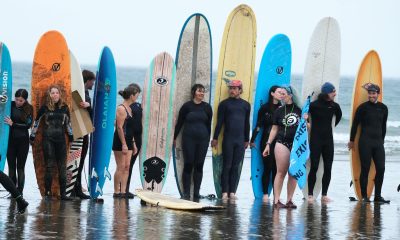
Surfers take sewage protest to Broad Haven beach
CAMPAIGNERS took to the sea at Broad Haven today in a colourful protest demanding urgent action over sewage pollution in...


Health2 days ago
New NHS regional body raises questions over future hospital services in Pembrokeshire
Health bosses promise better joined-up care — but patients will want assurances over Withybush and travel distances PEMBROKESHIRE patients are...


Local Government3 days ago
Pembrokeshire County Council welcomes new chairman
CLLR DELME HARRIES has been elected chairman of Pembrokeshire County Council for the coming municipal year. Cllr Harries, who was...


News3 days ago
From Milford Mercury to County Hall for Pembrokeshire’s first female leader
Late councillor Mike Stoddart helped hold power to account for decades — now his daughter Tessa Hodgson leads the council...


Business3 days ago
Port reports record turnover, but debt, emissions and senior pay also rise
Annual report shows strong growth and major investment, but underlying figures reveal a more complex picture THE PORT OF MILFORD...


Community3 days ago
DARC radar: Campaigners ask Welsh Government to call in planning application
PARC AGAINST DARC has submitted an official request asking the new Welsh Government to call in the planning application for...


News5 days ago
State Opening overshadowed by Starmer leadership crisis
KING CHARLES has arrived at Parliament for the State Opening as Sir Keir Starmer faces the most serious crisis of...
-

 News3 days ago
Palestine pledge backed by 36 new Senedd Members
-

 Crime5 days ago
Teenager banned from roads after being caught six times over drug-drive limit
-
Community2 days ago
Surfers take sewage protest to Broad Haven beach
-

 Crime5 days ago
Man threatens to torch Silverdale Lodge through ‘demon drink’, court hears
-

 Crime5 days ago
Man sentenced for stalking women and threatening to torch home
-

 Crime5 days ago
Violent man jailed after ‘Banksy’ claims and campaign of domestic abuse
-

 Crime5 days ago
Man denies exposure in Pembrokeshire town
-

 Crime5 days ago
Drunk motorist arrested at Pembrokeshire petrol station