


News
New policy for fly grazing horses: will it work?

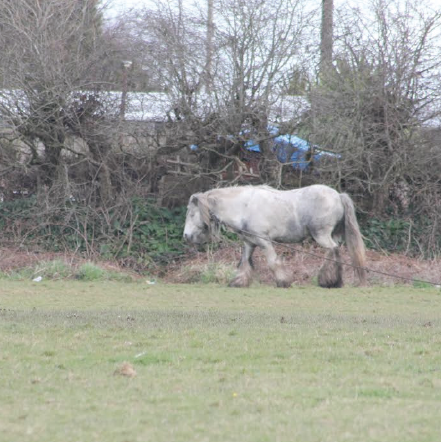

Monkton: The Horse tethered to the ground near to Monkton Priory School
PEMBROKESHIRE COUNTY COUNCIL has developed a new way of dealing with horses fly grazing on council land.
The issue has been on-going for a number of years but until now there has not been one single point of contact to deal with the problem.
The Council’s Environmental Services now has the lead when dealing with fly grazing horses but will the new service actually work?
The Police have said that although they may be called to an incident, they are often in a difficult position when it comes to dealing with it and it takes them on average 1 hour and 22 minutes to deal with a stray horse.
It was also pointed that owners may not be willing to pay the fee required to get their horses back should the council have to take them away.

The Control of Horses act has been brought in across England while Carmarthenshire County Council has also embraced the act.
The horse has also been seen chasing after residents who have been walking their dogs.
SCRUTINY COMMITTEE
Discussions were held at a meeting of the Environment Overview and Scrutiny Committee on Tuesday, March 15.

The Committee has been concerned about the issue for a number of months and had asked what could be done to tackle the problem.
Previously, there were no specific resources available for dealing with horses fly grazing on Council land and any issue would have to be dealt with within existing budgets.
At a meeting in November 2015, the Environment committee recommended that a working group be set up to look at a way forward.

A meeting of the Heads of Service of Property (Barry Cooke), Highways and Construction (Darren Thomas), Environment and Civil Contingencies (Richard Brown) and Public Protection (Mark Elliot) on February 11, 2016 and they have come up with a way forward.
Environmental services have been tasked with being the main point of contact for issues around horses fly grazing on council land.
It was also agreed that the incidences would be dealt with on a case by case basis when either;
• A horse is posing a realistic threat to people or property
• A horse is posing a realistic threat to the health and welfare of people and animals or,
• A horse has strayed onto the highway
Enforcement action will not be taken if a horse is securely tethered and tendered.
Any costs incurred will be left to the service responsible for the land where the horse is found.
At the meeting of the Environment Committee in March councillors were concerned that the police had little powers when it comes to dealing with fly grazing and also spoke about adding signs to help prevent future issues.
Head of Environment and Civil Contingencies, Richard Brown said: “We have agreed a way forward with Barry Cooke, Mark Elliot (Head of Public Protection) and Lyn Hambidge.
“Environmental services will act as a lead co-ordination body for dealing with all fly-grazing issues. So at the moment there is confusion, lack of clarity and ultimately lack of action in the way that things are currently going on.
“Essentially we’re proposing an approach which is, the best analogy is similar to something of an abandoned car or a stray dog, you have a single point of contact, it doesn’t matter whose land it is on, whether it is running between housing land or highway land or play areas, we just have one section dealing with it who’s got the knowledge, the legal authority to be able to deal with it and the understanding of it.
“We won’t have an automatic assumption of dealing with it. We’ll be looking at whether or not it is posing a risk or there has got to be some other overwhelming reason that we want to tackle it.
“We are fully aware that and don’t disagree with what was said previously regarding costs but having had a look into it and haven spoke to Carmarthen, the costs are not insignificant.
“The value of the horse is next to nothing, we have to pay somebody to come along and take the horse away, stable it, give it a medical check over and then retain it for a period of time and the likelihood is nobody is going to come and claim it and pay what’s going to be several hundred pound at least, so essentially we are taking in horses and then we have to make a decision about what happens to them.
“Internal protocol is being developed but we’re here just to address your concerns regarding a single point of contact.”
The Council had also invited two police sergeants to the meeting to ask what the police could do in relation to fly grazing horses.
DYFED-POWYS POLICE
Sgt Terri Harrison said: “The majority of calls we have relate to horses straying onto the highway as opposed to horses fly grazing and whether it be private or public land.
“We have had a number of calls but I think that you’d be surprised at the amount of calls we do have that aren’t reflected in your concerns.
“We’ve got the stats from our headquarters and they are not reflective with the concerns that have been brought to our attention in the last few days. Certainly we are not getting calls regarding horses fly grazing on council land.
“The majority of calls that we tend to are horses, cattle, and livestock roaming on the highways which of course we can deal with.
“I know that Carmarthenshire County Council has embraced the new Control of Horses Act that came in 2014 and they have seized a large amount of horses since then. They work with animal welfare and they take them away and obviously there is seven days when they can keep them, until the owners or the location of the horses are known then they will apply to them to try and get the money back but that is not happening because these will say it is not mine and there are so many families with the same name so sometimes it is really hard to get hold of them.
“What we need to do as a police force is that if we do come across these and somebody comes up to us says that is their horse, we need to take initial action and get their details from them there and then.
“With regards to fly grazing we are not having the calls at all and, with due respect, it is not really in our remit unless it is a public concern of community safety or danger.”
Cllr Brian Hall said: “The animals that are roaming have obviously come from somewhere, usually tethered on to council or private land and they have broken their tethers.”
Sgt Harrison replied: “On occasion, I wouldn’t say the majority of times.”
PROBLEMS IN MONKTON
There is a significant issue in Monkton, Cllr Pearly Llewellyn’s ward, and she was also invited to the committee to give here views.
Cllr Llewellyn said: “There is one particular problem which is a stallion that is tethered on community ground. It’s been there five to seven weeks.
“It’s a huge animal; it’s got full length of the tether across the community ground. Children can’t go on it to play football and it is also a favourite place for dogs to walk.
“I made an approach, because we found out who the owner was and happened to be passing through and I saw the owner moving the tether. So I went up to him and I said I don’t want to cause an argument but do you know you are not supposed to be here. I had a load of abuse from him and he kept walking around and he said ‘there is nothing wrong with my horse, it’s well fed, it’s watered, I’ll do what I want to do and if I want to put my horse here I will.’
“On March 9, I had a telephone call to say the horse was in the school grounds galloping round and the children are coming into the school.
“Another person saw to the horse and caught it and the horse pulled him around and hit him into the hedge where he damaged his hand. So he tied the horse up to the nearest place where he could tie it so the owner came to retrieve the horse and take it back where it had come from.
“The deputy head teacher said he was going to report it to the police and they said that school gates were going to be locked.
“I was fearing for my safety that night thinking there was going to be repercussions.
“They’re just not taking any notice, and the problem I have had is being passed from department to department so there has to be a point of contact and there has to be something done to stop whoever it is tethering horses on council land.
“There was an incident in the middle of the night and five horses had got out into South Meadows on a private housing estate rampaging through there. The Police were called and the wrong owner was contacted. They eventually did get the owner and the owner of those horses in in the field not with the permission of the land owner so they can’t do anything about it.
“Some years ago we had a meeting with the gypsy community, RSPCA and police to find out if there is any land available that these gypsies could rent or buy to put their horses on. The man from the RSPCA came up with the idea that he would get some funding to chip these horses and passport them so nothing ever happened after that meeting.
“What I want is notices put up on spare ground in Monkton, not a little notice, I want a big notice knocked into the ground that says horses are not allowed.”
Richard Brown responded saying: “I don’t think those experiences have held the council in a particularly good light. I’ll apologise on behalf of the officers because that isn’t what you should be experiencing.
“I think going forward, what we need to look at isn’t just enforcement, we need to work with the police, with gypsy liaison officers, things like signs.
“We want prevention as the start, we don’t want to just take horses away, we want to stop it happening in the first place. I think that is going to be a wider piece of work than just having a horse warden to take them off.
“It might be that we want to look at providing opportunities or facilitating grazing arrangements, I don’t know. There is a piece of work to do here and we have the advantage that Carmarthenshire is well ahead of us on this. They have had some significant problems down in Llanelli where roads have been closed for several days at a time because horses have got loose down one of the main roads.
“I think we probably are going to have to bit the bullet and get a few horses picked up to let people know that we are serious and that if they do leave them there, there are going to be consequences. I think at the moment they have done it without fear of consequences.”
It was pointed out that since Carmarthen had introduced the Control of Horses act, the number of seizures had reduced from 38 in 2014 to just 4 so far in 2016.
Sgt Geraint Lewis added: “The problem you have from a police perspective is that we are going there to educate and then we look at the enforcement side of it; if we can’t enforce what we’ve actually educated it will have no impact whatsoever. We’ve got no powers to enforce fly grazing.
“If you’ve got a report of horses in the night on a main road and they attend, it is difficult for them to actually deal with that if you’ve got no one to come along and move the horses from the highway.
“The police then are in a difficult position; either we stay there for hours on end closing both sides of the road or you look at a common sense procedure to alleviate the problem and put them into the nearest field, that then obviously causes problems if there are issues within that field and there are bills coming to Dyfed- Powys Police for damage to field where horses have been placed into so there is not an easy fix in any shape or form to this.”
Cllr Brian Hall added: “Prevention is the way forward. The last thing the police want to deal with is if one of these horses gets out, and the council wouldn’t want it, because then the gates would be open, because we would liable if it’s on our land for any claims and I wouldn’t want you or us to deal with any fatality.”
Sgt Lewis highlighted that the problem was not just relevant to Pembroke and listed a number of statistics for other areas of the county.
He told the committee that there were 17 calls to stray horses on the road in Kilgetty in the last eighteen months and 9 in Tenby and Milford Haven. There were also 24 in Pembroke, 18 in Pembroke Dock and 5 in Haverfordwest.
Sgt Lewis added: “The problem you’ve got is that it’s taking officers an awful long time to deal with these problems. It’s taking officers an hour and 22 minutes on average to deal with each call of horses. That’s an awful lot of police time dealt with horses.”
Richard Brown said that staff would be trained as quickly as they possibly can.
Cllr Lyn Jenkins said: “The people who have these horses are not stupid. They know the law and I am sure they know that if you come along with a blue light there is nothing you can do apart from get them to make the horse safe and you’re not going to prosecute them.”
Cllr Brian Hall said unless they made an example the issue would go on and on.
Cllr Tony Wilcox added that the issue could not be ignored and that it had to be addressed.
It is hoped that the number of complaints will go down once the new policy is put in place but there are still concerns as to how it will be dealt with.

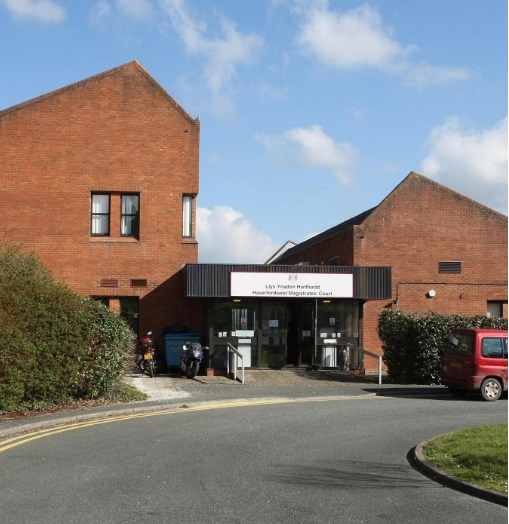
Court told defendant did not appreciate failure to attend was a criminal offence
A MONKTON man has been sentenced for failing to attend an initial drugs assessment after a previous sample showed he had cocaine in his system.
Luke Probert, 37, of Long Meadow, Adams Road, Monkton, was requested to attend the assessment on February 19 to establish whether he was dependent on the Class A drug.
But his failure to show up resulted in his appearance before Haverfordwest Magistrates’ Court this week, where he pleaded guilty to the offence.
He was represented in court by solicitor Alaw Harries, who said the defendant “didn’t appreciate this was a criminal offence”.
“He’s extremely apologetic,” she said.
Probert was fined £80 and ordered to pay £85 court costs and a £32 surcharge.

Police said vehicle was driven at speed towards patrol car in Milford Haven
A PEMBROKESHIRE motorist has lost his licence after driving towards a police patrol car in Milford Haven while over the drink-drive limit.
Officers observed the vehicle being driven towards them in Dartmouth Street on the night of May 12.
“It was being driven at speed,” Crown Prosecutor Sian Vaughan told Haverfordwest magistrates this week.
After stopping the vehicle, officers discovered it was being driven by Nathaniel Bird, 26, of Main Street, Goodwick. A roadside breath test proved positive, while subsequent readings given at the police station showed that Bird had 41mcg of alcohol in his system. The legal limit is 35mcg.
Bird pleaded guilty to the drink-driving offence and was represented in court by solicitor Alan Lewis.
“He doesn’t accept he was speeding, but was pulled over and was fully co-operative with the officers throughout,” Mr Lewis told the court.
“He had four cans of beer at a friend’s house a few hours earlier and felt absolutely fine. He believed he was under the limit, but even though this was a very low reading, it wasn’t close enough.”
Bird was disqualified from driving for a total of 12 months. He was fined £650 and ordered to pay a £260 surcharge and £85 costs.

Police said vehicle was driven at speed towards patrol car in Milford Haven
A PEMBROKESHIRE motorist has lost his licence after driving towards a police patrol car in Milford Haven while over the drink-drive limit.
Officers observed the vehicle being driven towards them in Dartmouth Street on the night of May 12.
“It was being driven at speed,” Crown Prosecutor Sian Vaughan told Haverfordwest magistrates this week.
After stopping the vehicle, officers discovered it was being driven by Nathaniel Bird, 26, of Main Street, Goodwick. A roadside breath test proved positive, while subsequent readings given at the police station showed that Bird had 41mcg of alcohol in his system. The legal limit is 35mcg.
Bird pleaded guilty to the drink-driving offence and was represented in court by solicitor Alan Lewis.
“He doesn’t accept he was speeding, but was pulled over and was fully co-operative with the officers throughout,” Mr Lewis told the court.
“He had four cans of beer at a friend’s house a few hours earlier and felt absolutely fine. He believed he was under the limit, but even though this was a very low reading, it wasn’t close enough.”
Bird was disqualified from driving for a total of 12 months. He was fined £650 and ordered to pay a £260 surcharge and £85 costs.



Community2 hours ago
Narberth cash machine closures spark urgent access review
CALLS have been made for an urgent review of access to cash in Narberth after two town centre ATMs were...


Health15 hours ago
First Minister quizzed on Welsh NHS pressures in his first-ever FMQs
SENEDD Members pressed the First Minister over the state of the health service in Wales, as the Plaid Cymru leader...


Community23 hours ago
Historic paddle steamer Waverley to return to Fishguard this month
THE WORLD’S last seagoing paddle steamer will return to Fishguard this month as part of her annual visit to South...


Local Government1 day ago
National Express use of new Haverfordwest interchange still subject to risk checks
A RUMOUR that National Express coaches may struggle to use Haverfordwest’s new transport interchange has been denied by Pembrokeshire County...


Crime1 day ago
Milford Haven man jailed for illegal Premier League streaming service
A MILFORD HAVEN man who supplied illegal Premier League streams and loaded Firesticks to almost 2,000 customers has been jailed...


Community2 days ago
RNLI lifeguards rescue beachgoers during busy heatwave weekend
FOUR PEOPLE RESCUED AS RIP CURRENTS AND OFFSHORE WINDS HIT PEMBROKESHIRE BEACHES RNLI lifeguards in Pembrokeshire rescued four people and...


Local Government2 days ago
Council and school staff pay row could hit Pembrokeshire services
COUNCIL workers, carers and school support staff in Pembrokeshire could be drawn into a growing UK-wide pay dispute after GMB...

Health3 days ago
Hywel Dda to hold second consultation on future of stroke services
A SECOND phase of public consultation is to be held on the future of stroke services across Hywel Dda University...

Community3 days ago
Warning as algal blooms mistaken for sewage on Welsh coast
Beachgoers urged to avoid contact with suspicious foam and report pollution concerns NATURAL RESOURCES WALES has issued summer advice to...

News3 days ago
Yacht towed to safety after engine failure off Tenby
A YACHT was towed to safety by Tenby RNLI after suffering total engine failure around 15 miles south-east of the...
-

 Health6 days ago
Paul Davies warns health board over Withybush and Bronglais services
-

 Crime6 days ago
Carmarthenshire man sent to Crown accused of 33 historic sexual offences
-
Crime1 day ago
Milford Haven man jailed for illegal Premier League streaming service
-
Crime1 day ago
Haverfordwest man admits cocaine offence as Crown disputes basis of plea
-
 Crime6 days ago
Suspended prison sentence for man who left dogs without vet care
-
 News6 days ago
Vehicle destroyed in early morning fire in Pembroke
-

 News6 days ago
Davies calls for NHS foreign language interpreters to be scrapped
-

 Crime6 days ago
Man accused of police station bomb hoax remanded in custody