


Community
Control of horses act becomes law


 NFU CYMRU has welcomed the fact that the Control of Horses (Wales) Act 2014 has become law in Wales this week.
The Act will provide all local authorities in Wales with consistent legal powers to seize, impound, sell, re-home, return, dispose of and destroy horses by humane means, when the horses are found causing nuisance by fly grazing, straying or have been abandoned in a local authority area.
NFU Cymru member, William Jenkins, who has himself been affected by fly grazing said:
“The issue of fly grazing, whereby horses and ponies are turned out to graze on private land, such as farmers’ fields, without permission, has risen to some considerable prominence in recent times. Whilst the problem has been particularly serious in south Wales and along the M4 corridor, it is a problem that can occur in any location.
“A survey by the Union last year found that about five per cent of our members in Wales have direct experience of fly-grazing, while a similar number are aware of a neighbour who has been a victim of fly-grazing. The survey also indicated that the problem has worsened over the past few years.

“The costs, damage to grazing and welfare implications for farmers affected by this menace can be considerable with the liability unfairly falling on farmers who are the innocent victims of this illegal activity.”
William Jenkins concluded: “For these reasons, NFU Cymru is pleased that the Control of Horses (Wales) Act 2014 has received Royal Assent (27 January, 2014), and that Wales has led the way in taking genuine steps to combat this menace. The Act provides a further tool in combatting fly grazing, straying and abandonment of horses and ponies and will hopefully work towards establishing a fly grazing free Wales.”
Welcoming the Act, FUW land use and parliamentary committee chairman Gavin Williams said that over recent years the number of fly grazing incidents have increased substantially, particularly in South Wales where large numbers of horses have been dumped on private and public land, resulting in major welfare problems for animals of little value and significant implications for public safety when straying onto public highways on the farming sector as well as the resource implications for local authorities, equine charities and the tax payer.
“Earlier last year the FUW contributed to the Welsh Government consultation which looked at the actions and legislative changes that might be needed to deliver a long term solution to tackle the issue of fly grazing and the abandonment of horses and ponies in Wales and worked with Welsh Government to come up with ideas which have now been incorporated into the new Act,” Mr Williams added.


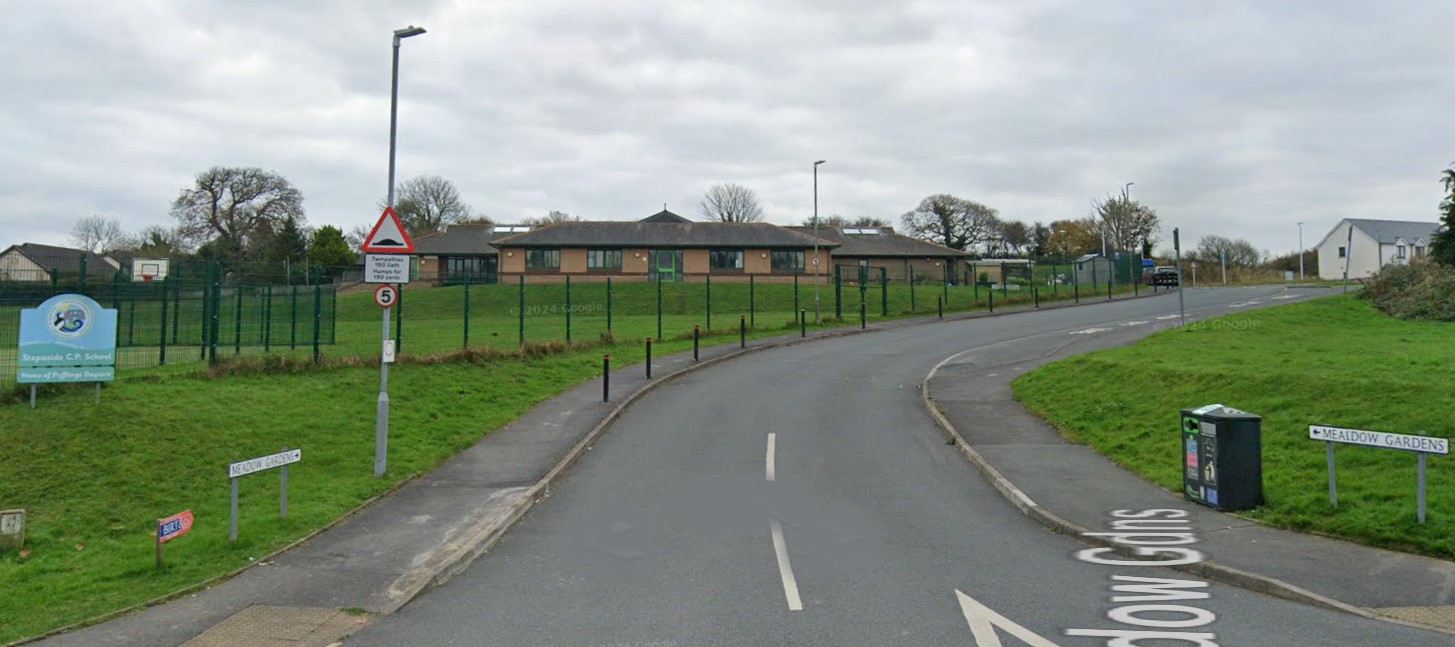
A PEMBROKESHIRE school at threat of closure as part of education reorganisation in the south of the county is now expected to remain open following a call from the council’s deputy leader.
Stepaside CP School was being earmarked for closure by Pembrokeshire County Council, as part of proposals to establish a new 3-11 primary school on the Saundersfoot School site, discontinuing both Saundersfoot School and Stepaside school.
The Stepaside proposal was based on surplus places for all the schools in the proposals, with Stepaside having a surplus capacity of over 50 per cent, councillors had previously heard.
An e-petition on the council’s own website, started by Angela Robinson, called upon Pembrokeshire County Council “to Save Stepaside School and work with local communities to look at alternative solutions” attracting nearly 2,000 signatures.
In March, a vote at a full meeting of Pembrokeshire County Council reaffirmed the decision of last December, that the Director for Education be authorised to commence statutory consultation to discontinue Stepaside and Saundersfoot schools and establish the new three-11 primary school.
Since then, Pembrokeshire’s deputy leader, who has recently taken on Cabinet member responsibility for education, is now recommending the school doesn’t close.
That takes the form of a notice of motion, due to go before full council meeting on July 16 which, if approved by, rescinds the earlier December 2025 decision.
Cllr Miller said: “Following a thorough review, I have decided to recommend to Council that it not proceed with the closure of Stepaside School. I believe the school is providing good educational outcomes for its local population and is sustainable in its current form.”
The statement was welcomed by Angela Robinson of Standing Together for Stepaside School, who said: “After months of challenges for our dedicated staff, students, families, and the Kilgetty community, we’re thrilled to share that Stepaside School is here to stay!
“With 1,952 signatures backing our cause, we’ve shown just how vital our school is to the community. We’ve held meetings with council members and engaged our Senedd and Parliament representatives, resulting in countless discussions, reports and late nights trying to challenge an unfair process.
“Our community has truly rallied together, building stronger relationships along the way.”
Local county councillors Alistair Cameron and Alec Cormack, who both battled to keep the school open, said they were delighted by the decision, indicating their support for the motion.

Cllr Cameron said: “We owe a huge debt of gratitude to Mr Jones, Headteacher at Stepaside School, and all of his colleagues at the school for their continued dedication and hard work to the school children during this very unsettling time.
“Thank you also to the parents, governors and local residents for their magnificent support for our local school. I never believed it was right to consider closing Stepaside School with its modern building, stable pupil numbers of over 100 and excellent report from the school inspectors, Estyn.
“The school staff can now concentrate on what they do best, which is to provide excellent education in a caring and nurturing environment.”
Cllr Cormack welcomed the Cabinet decision: “This decision removes the cloud of reorganisation hanging over both Saundersfoot and Stepaside/Kilgetty. Now both head teachers, staff and governing bodies can continue to deliver excellent education to their local communities.”

FURTHER concerns have been raised to Pembrokeshire’s council about road safety in Neyland after a parked car was hit by a vehicle, just months after a car hit a house wall, described as “sheer good luck” that “a terrible tragedy” was avoided.
Local social media community group Neyland News recently posted: “There is real public concern about road safety in Neyland especially on Honeyborough Road. On Thursday a driver hit a parked vehicle.
“These incidents have happened a number of times with cars losing wing mirrors and scrapes to bodywork. This has been reported to the police and the county council. This comes after incidents where cars have lost control and hit houses in Kensington Road.
“The county council are carrying out a topographical survey from Honeyborough Roundabout to Kensington Road and they will come forward with proposals to physically slow down traffic which they will consult on.”
The post author added: “This cannot come soon enough. I will keep everyone updated on this. I have asked the police to carry out much more regular speed checks. I am in direct contact with the Inspector.”
Local county councillor Cllr Simon Hancock said: “Speeding on Honeyborough Road and Kensington Road are matters of great concern. A number of serious incidents have been reported recently but this situation is getting worse.
“I am pushing hard for much greater speed enforcement checks from the police and physical traffic calming measures from the highways department of Pembrokeshire County Council.”
Back in February, Cllr Hancock had called for traffic calming measures in the town where “a terrible tragedy” was avoided by “sheer good luck” after a car hit a house wall, the fifth such incident in less than a decade.

Residents had expressed their concerns at vehicle speeds at a meeting of the town council at the start of the year.
After that meeting, Simon Hancock said: “They came to express their concern at speeding cars losing control on the corner where Honeyborough Road leads into Kensington Road. On Sunday afternoon a speeding car mounted the pavement and smashed into the wall of No 43 coming to rest in the middle of the road. Emergency services were on the scene.”
He said images of the incident and its aftermath were shared on social media and to the council.
Following that, Cllr Simon Hancock, who is also the county council’s presiding member, said: “I am extremely concerned by some drivers travelling at excessive speeds at this bend. This is the fifth serious incident in nine years where cars have collided with houses in the terrace.

“Any pedestrians on the pavement at the time could have been killed or seriously injured. I have written to the chief executive, leader and cabinet member [of Pembrokeshire County Council] insisting on road traffic calming measures at this location.
“It is by sheer good luck that a terrible tragedy has been avoided.”
After that incident, a Pembrokeshire County Council spokesperson said: “We are liaising with the police over the incident to determine the cause of the accident before considering what measures the Highway Authority may take.”
The council has been contacted for a response following the latest incident.

SAUNDERSFOOT HARBOUR’S redevelopment has been named Best Project at the RTPI Cymru Awards for Planning Excellence 2026.
The award recognises Phase 2 of the Saundersfoot Harbour Redevelopment Project, which has helped transform the harbour into a year-round destination with new commercial, community and visitor facilities.
Delivered by Saundersfoot Harbour, with planning input from Pembrokeshire Coast National Park Authority, the project was praised by judges as “an exemplar for coastal economic resilience in smaller settlements” and “a very good example of planning enabling place-based regeneration.”
Judges highlighted the scheme’s economic and community benefits, including investment, job creation, new local business space, improved public access, year-round activity, major events, and the reuse of brownfield and heritage assets.
They also recognised the role of planners in dealing with design changes, conservation area issues, flood risk, accessibility, and the coordination of several linked schemes within a working harbour.
Sara Morris, Director of Place and Engagement at Pembrokeshire Coast National Park Authority, said the award was a testament to the value of good planning.
She said: “We are delighted that Phase 2 of the Saundersfoot Harbour Redevelopment Project has been recognised by RTPI Cymru.
“This award is a real testament to the value of good planning in helping places adapt, thrive and deliver lasting benefits for their communities.
“Saundersfoot Harbour is a hugely important location, both locally and strategically, and this project shows how careful planning can support regeneration while respecting the character, heritage and environmental challenges of a coastal setting.
“I would particularly like to thank Andrew Richards and Nicola Gandy, who both led on the planning aspects of the project for the Authority.
“The judges’ comments underline the strength of the partnership approach behind the project, and we are very pleased to see the work of our planning team recognised alongside Saundersfoot Harbour’s ambition and commitment.”
Ted Sangster, Chairman of Saundersfoot Harbour Commission, congratulated the National Park Authority on the award.

He said: “As a trust port, we operate very much as a commercial business but with no shareholders and therefore no dividends to pay. Our strategy is to provide real, long-term benefit for our community and all users of the harbour.
“The successful Phase 2 of the harbour development now provides both an active fishing and recreational sailing harbour and a year-round visitor attraction serving an increasingly diverse range of users, and has created around 100 new jobs so far.
“Our work with local businesses and stakeholders has been greatly assisted by the open and consultative partnership with the National Park, which is based on the shared aim of sustainable economic delivery and social benefit to our community.”
As winner of the Best Project category in Wales, the Saundersfoot Harbour project will now be automatically entered as a finalist in the UK National Awards for Planning Excellence.
The national finalists are due to be announced by the RTPI on October 7, ahead of the UK national finals on December 3.
The National Park Authority also welcomed recognition for the Dark Skies Guidance for Wales, which won the Chair’s Award at the RTPI Cymru Awards.
The guidance was developed by a working group from across Wales, including the Authority’s Principal Planning Officer for Strategic Policy, Gayle Lister.
Sara Morris added: “It is particularly pleasing to see the Dark Skies Guidance for Wales recognised alongside the Saundersfoot Harbour project.
“Protecting dark skies is an important part of caring for the special qualities of Wales’ landscapes, and this guidance reflects the value of collaboration across planning, conservation and environmental disciplines.”
The RTPI Cymru Awards for Planning Excellence celebrate outstanding plans, projects and people that demonstrate the power of planning to make a positive difference to places and communities.



Health1 hour ago
NHS at 78: A moment to give back to the service Wales helped create
As the health service marks its 78th birthday, people in Pembrokeshire are being urged to support local NHS charities helping...


Community16 hours ago
Saundersfoot Harbour regeneration project wins national planning award
SAUNDERSFOOT HARBOUR’S redevelopment has been named Best Project at the RTPI Cymru Awards for Planning Excellence 2026. The award recognises...


Business22 hours ago
Pembrokeshire-based Ascona Group expands UK portfolio with Truckhaven acquisition
PEMBROKESHIRE-BASED Ascona Group has completed the acquisition of Truckhaven (Carnforth) Ltd, a major trunk road services area in Lancashire. The...


Health2 days ago
Wales begins early NHS winter planning after long waits and ambulance pressure
Ministers say health boards and councils must act now to ease pressure on hospitals, ambulances and social care before winter...


Crime3 days ago
Judge calls pensioner a ‘dirty old man’ as he avoids jail for exposing himself to women
Judge says 75-year-old Stewart Laugharne behaved ‘disgracefully’ as he avoids jail but is ordered to sign sex offenders register A...
Health3 days ago
Stroke services consultation reaches halfway point as public urged to have say
HYWEL DDA University Health Board is urging people to take part in its consultation on the future of stroke services,...


Business3 days ago
Welsh firms eye share of £5bn defence drone boom
WELSH defence and aerospace firms could be in line for a share of billions of pounds in new military spending...


Community5 days ago
Thousands line Cardigan streets for Lord Rhys homecoming parade
THOUSANDS of people lined the streets and quayside in Cardigan on Saturday as the town marked 850 years since Lord...


Crime6 days ago
Dyfed-Powys Police rated only ‘Adequate’ in organised crime inspection
A WATCHDOG has rated Dyfed-Powys Police only “Adequate” in its response to serious and organised crime, despite praise for the...


News6 days ago
Two taken to hospital after aircraft ditches in Cardigan Bay
Coastguard helicopter spotted two casualties after light aircraft came down off west Wales coast TWO people were taken to hospital...
-
Crime6 days ago
Dyfed-Powys Police rated only ‘Adequate’ in organised crime inspection
-

 News4 days ago
Biker dies and woman seriously injured in Black Mountain crash
-

 Climate7 days ago
Welsh waters, Westminster profits: Crown Estate row reignited in Wales
-

 Crime7 days ago
Former Swansea Prison inmate died 48 hours after release
-

 Crime6 days ago
Swansea man jailed for 16 years after attacking vulnerable woman
-
Community5 days ago
Thousands line Cardigan streets for Lord Rhys homecoming parade
-

 Community5 days ago
Civic service brings Pembrokeshire towns together in Haverfordwest
-

 Crime3 days ago
Estate agent banned after drug-drive crash in Milford Haven
DavidTwera
March 13, 2026 at 9:57 am
Athletes across various disciplines are embracing CBD [url=https://www.cornbreadhemp.com/products/thc-sleep-gummies ]sleep thc gummies[/url] as part of their rehabilitation protocols. Intense physical exertion places enormous stress on muscles and joints. Cannabidiol-infused balms and oral products offer a plant-based alternative to traditional recovery strategies. With the World Anti-Doping Agency having dropped CBD from its forbidden list, more performers feel assured incorporating it into their regimen.