


News
Drakeford sees ‘no useful purpose’ in SWAT meeting


 THE WELSH HEALTH MINISTER, Mark Drakeford AM has rejected calls from local MP Stephen Crabb to come to Pembrokeshire to meet with him and members of the Save Withybush Action Team (SWAT).
Earlier this month, Stephen Crabb wrote to Mark Drakeford urging him to meet with SWAT and other local people to reconsider the Welsh Government’s reckless decision to cut vital maternity services from Withybush Hospital.
In his response, Mark Drakeford said that he had already received a large number of representations from SWAT and that he felt ‘a direct meeting between us will serve no useful purpose’. He also commented that a meeting might be ‘difficult’ for him because a supporter of SWAT is seeking to instigate a judicial review into the matter.
Stephen had urged the Health Minister to meet with him to reconsider the evidence base used to make the decision, arguing that cutting vital services from a rural and geographically unique area such as Pembrokeshire would put lives at risk. In his reply the Health Minister refused to meet with Stephen, suggesting instead that questions regarding the specific details of the consultation would be better directed to the expert neonatologist on the Panel, who is based in London.
Speaking from Haverfordwest, Stephen said: “It’s appalling that the Welsh Health Minister sees ‘no useful purpose’ in meeting with the very people his reckless decision will affect. If the Prime Minister can make the time to visit Pembrokeshire to see the situation here after the storms then the Welsh Health Minister should be able to make the journey from Cardiff to Withybush.

“It also worries me that the Health Minister does not feel capable of answering my questions about the evidence base he used to make the decision to cut vital services from our local hospital. If he cannot answer these questions, how can he say that he has made a safe decision?
“I am also concerned that the chief neonatologist who is responsible for this decision is based in London. We have argued all along that while centralising services may work in towns and cities, it is simply dangerous in rural communities such as Pembrokeshire. Did the committee the Welsh Government relied on to make these decisions really understand what it is like to live in a remote area where geographic challenges make it difficult to get to the nearest hospital at the best of times?
“This response from Mark Drakeford makes me more concerned than ever that a grave mistake has been made without proper understanding of the consequences for local people. I will be writing to the chief neonatologist to arrange a meeting so that Pembrokeshire can finally get the answers it deserves.”


STRATA Florida Abbey and Laugharne Castle will host family events as part of Cadw’s May half-term programme.
FAMILIES in West Wales are being encouraged to explore historic sites on their doorstep this May half-term, with events planned at Strata Florida Abbey and Laugharne Castle.
Cadw’s programme runs from Saturday, May 23 to Sunday, May 31, with activities across Wales aimed at bringing history to life for children and families.
At Strata Florida Abbey, near Pontrhydfendigaid, a craft fayre will take place on Sunday, May 24, from 11:00am to 3:00pm, featuring local arts, crafts and produce, alongside family-friendly activities and guided tours.
Laugharne Castle will host Rainbow Gecko Bubbleman on Saturday, May 30 and Sunday, May 31, from 11:00am to 4:00pm. Bubbleman and the Bubble Faerie will perform giant bubble displays, bubble animals and frozen creations, with visitors able to join in and learn tricks.
Other West Wales events include a Children’s Activity Day at Strata Florida Abbey and HMS Wales Naval Living History at Laugharne Castle.
Kate Roberts, Chief Executive of Cadw said: “May half term is the perfect chance for families to get out and explore the incredible history on their doorstep in Wales.
“This year’s programme has been designed to be hands-on, engaging and genuinely fun, giving visitors of all ages the chance to connect our nation’s past and spend quality time together outdoors.”
Cadw said membership includes free event entry and unlimited access to more than 130 historic places across Wales, with children going free with any adult membership.


New Charles Street base brings windows and doors firm closer to Pembrokeshire customers
THE MAYOR OF MILFORD HAVEN has officially opened a new showroom for Sapphire Windows & Doors in the town centre.

The company welcomed visitors to its new base at 61 Charles Street on Monday (May 18), with Mayor Mark Woodward attending the opening.
Sapphire Windows & Doors, established in 1989, supplies and installs windows, doors and glazing products across South and West Wales.
The new Milford Haven showroom has been opened following growing demand from customers in Pembrokeshire, many of whom had previously travelled to the company’s Ammanford showroom.
The Charles Street premises will allow customers to view products in person, compare colours and finishes, try different styles, and speak directly with the Sapphire team.
Products on display include uPVC windows, composite and aluminium entrance doors, aluminium sliding and bifold systems, and internal and external Crittall-style aluminium and steel doors.
Shaun Matthews, Director of Sapphire Windows & Doors said: “We are incredibly excited to open our new Milford Haven showroom and welcome both returning and new customers through the doors.
“We have already received such a lovely welcome on Charles Street, and we are looking forward to becoming part of the local community.
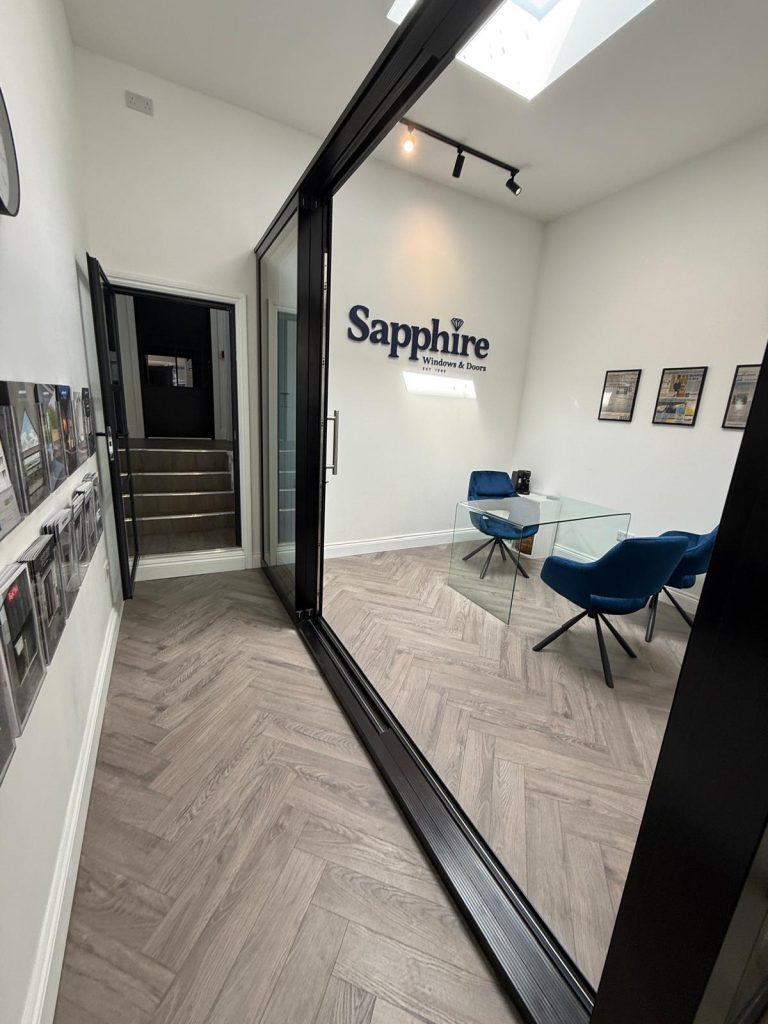
“When people are investing in new windows and doors, it is important they feel confident in what they are choosing. The showroom gives customers the opportunity to properly see the products, explore the options available, try them for themselves and receive clear, honest advice from our team.”
The company manufactures its own uPVC products in-house at its factory in Ammanford, while installations are carried out by directly employed fitting teams.
Sapphire says it offers free, no-obligation quotes and takes a no-pressure approach to sales.
Every installation is backed by a ten-year guarantee and a FENSA insurance-backed warranty.

The new showroom is now open at 61 Charles Street, Milford Haven, SA73 1SA.
For more information visit sapphirewindows.info.
Former pilot left unable to speak or swallow after collapsing while mowing lawn
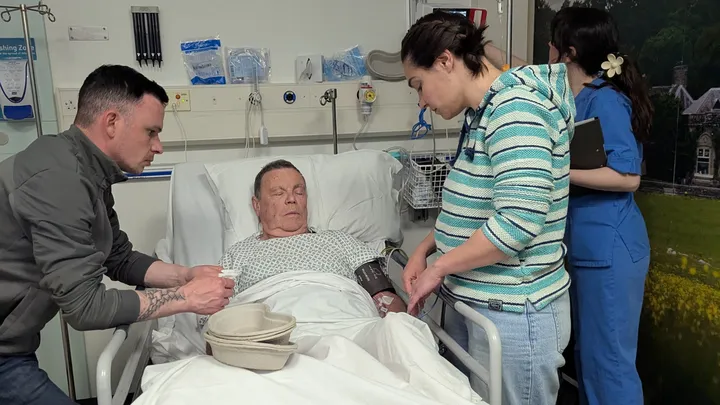
A CARDIGAN family has launched an urgent appeal for help after a 72-year-old father suffered a massive stroke while mowing his garden, leaving him unable to speak, swallow or move the right side of his body.
Les Bell collapsed on Monday, May 11, after suffering what doctors described as an intracerebral haemorrhage (ICH) – a serious form of haemorrhagic stroke caused by bleeding in the brain.
His daughter, Jessica Grieve, said the bleed was extensive and that her father remains in a critical condition on an acute stroke ward.
The former pilot, who now works as a flight training consultant at Gatwick Airport, is currently being fed through a tube and can only communicate through eye contact, small nods and grunts.
Jessica said: “Dad has lost the right-hand side of his body, has to be tube fed as he’s not conscious enough to perform a swallow test, although it would seem the muscles on the right side of his throat aren’t working.
“He can’t talk. He can only communicate with brief eye contact, small nods and grunts.”
She added that doctors are still unable to predict her father’s long-term prognosis.
“We don’t know the prognosis, only time will tell, but he is in a critical condition and it’s likely to remain that way for some months,” she said.
The family is now facing a financial crisis after Les, who was the main income earner, became suddenly incapacitated.
Jessica said her father managed all household finances, while her mother is unable to work due to disabilities and her brother, Jake, is still suffering the effects of cancer treatment and cannot work full-time.
She is now applying for lasting power of attorney in order to access her father’s bank accounts, but said the process could take up to ten weeks.
In the meantime, the family say they are struggling to pay rent, bills and other essential costs.

Jessica has launched a GoFundMe appeal to support the family during the coming months.
She said: “I’m asking for donations of any kind to help them pay for the urgent bills while we’re waiting for other benefits and LPA to begin.
“If we can get them through the next couple of months we’d be so, so grateful.”
Anyone wishing can visit the GoFundMe page here: Help for the Family of Les Bell.
Photo caption:
Family by his side: Les Bell in hospital after suffering a devastating stroke while mowing the garden (Pic: GoFundMe).



Cymraeg2 hours ago
Two new Milford Haven schools could be built and open by 2032
NEW SCHOOLS in Milford Haven won’t be built before 2030 at the earliest, and 2032 for a planned Welsh Medium...


Crime17 hours ago
Stolen vehicle investigation after late-night crash in Waterston
A VEHICLE involved in a late-night single-vehicle crash in Waterston, Milford Haven, is believed to have been stolen, police have...


Community24 hours ago
Paul Davies MS calls for review of parking charges in Ceredigion following concerns
SENEDD Member for Ceredigion Penfro, Paul Davies, has called on Ceredigion County Council to urgently review its policy on car...


Crime1 day ago
Former Lostprophets singer’s killing ‘not justified’, jury told
JURORS in the trial of two prisoners accused of murdering former Lostprophets singer Ian Watkins have been told that his...


Health2 days ago
Occupational therapists urge Welsh Government to act before NHS crisis deepens
More than 300 professionals sign open letter calling for prevention-focused care and urgent reform OCCUPATIONAL therapists across Wales are urging...

Community3 days ago
Surfers take sewage protest to Broad Haven beach
CAMPAIGNERS took to the sea at Broad Haven today in a colourful protest demanding urgent action over sewage pollution in...

Health3 days ago
New NHS regional body raises questions over future hospital services in Pembrokeshire
Health bosses promise better joined-up care — but patients will want assurances over Withybush and travel distances PEMBROKESHIRE patients are...


Local Government4 days ago
Pembrokeshire County Council welcomes new chairman
CLLR DELME HARRIES has been elected chairman of Pembrokeshire County Council for the coming municipal year. Cllr Harries, who was...


News4 days ago
From Milford Mercury to County Hall for Pembrokeshire’s first female leader
Late councillor Mike Stoddart helped hold power to account for decades — now his daughter Tessa Hodgson leads the council...


Business4 days ago
Port reports record turnover, but debt, emissions and senior pay also rise
Annual report shows strong growth and major investment, but underlying figures reveal a more complex picture THE PORT OF MILFORD...
-

 News4 days ago
Palestine pledge backed by 36 new Senedd Members
-
Community3 days ago
Surfers take sewage protest to Broad Haven beach
-

 Crime6 days ago
Teenager banned from roads after being caught six times over drug-drive limit
-

 Crime6 days ago
Man threatens to torch Silverdale Lodge through ‘demon drink’, court hears
-

 Crime6 days ago
Man sentenced for stalking women and threatening to torch home
-

 Crime6 days ago
Violent man jailed after ‘Banksy’ claims and campaign of domestic abuse
-

 Crime6 days ago
Man denies exposure in Pembrokeshire town
-

 Crime6 days ago
Man denies burglary at Haverfordwest property
KevinSof
March 17, 2026 at 1:12 pm
Going abroad with CBD [url=https://www.cornbreadhemp.com/pages/can-thc-gummies-be-purchased-without-a-prescription ]Can THC Gummies be purchased without a prescription?[/url] products necessitates a bit of planning. While hemp-derived cannabidiol is lawfully permitted in the United States, regulations differ from state to state and territory to territory. Packing original packaging with visible ingredient lists and lab reports can reduce unexpected issues at security. A quick research before takeoff ensures a hassle-free and relaxed adventure.