


Sport
Pembrokeshire claim Wynne Lloyd Final victory

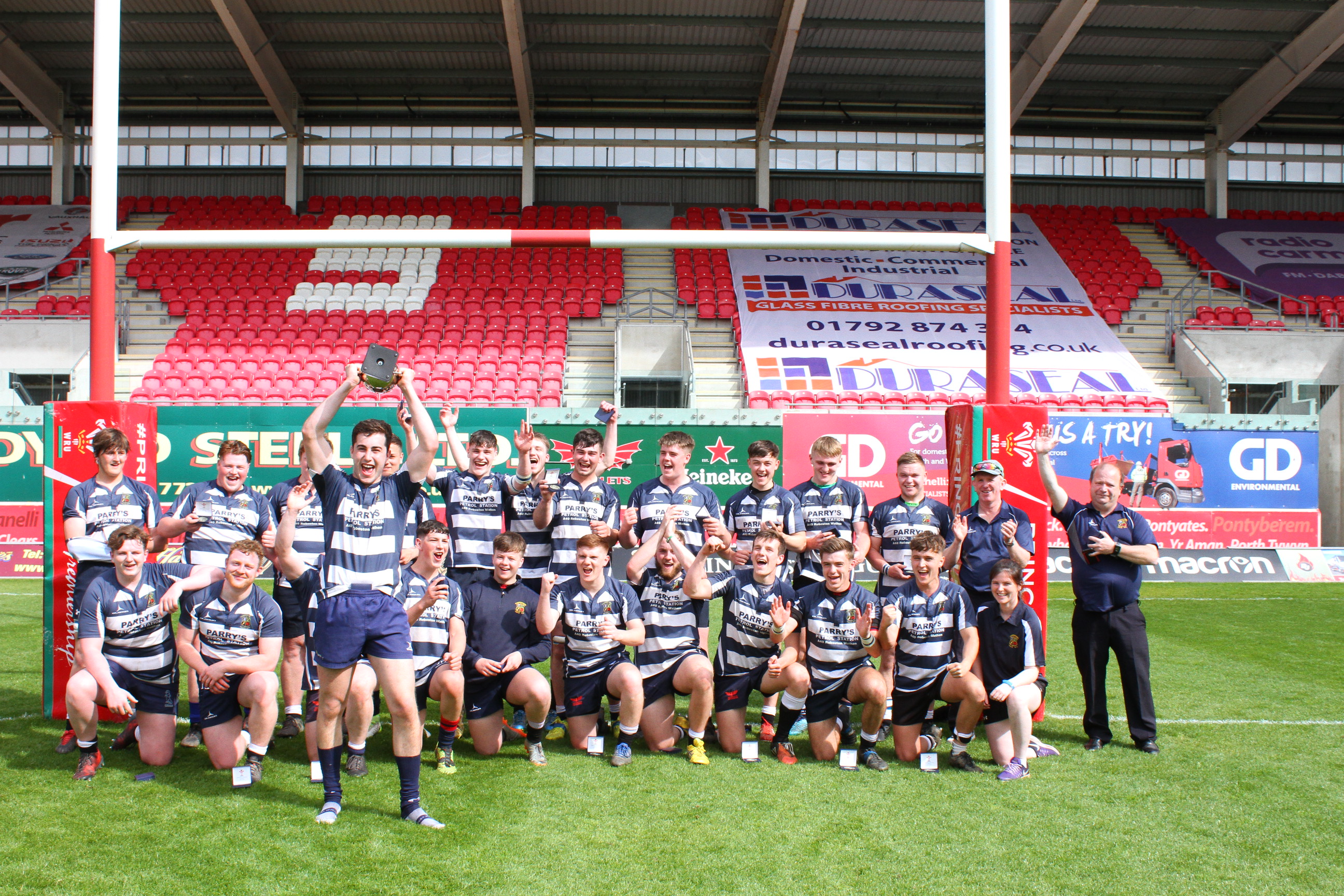
THE Wynne Lloyd Inter-District Youth Cup Final went the way of Pembrokeshire who beat Ceredigion 36-28 in a thrilling game at Parc Y Scarlets on Sunday (May 20).
It was first blood to Pembrokeshire who scored the opening try of the game through Jack Tucker but the conversion was wide.
Ceredigion then answered back as Iestyn Evans scored the try before Dylan Morgan added the extras to put Ceredigion 7-5 ahead.
The action was back and forth and Pembrokeshire soon went back ahead as Gino Setaro (Whitland) scored and Dan Evans added the extra two points.
Pembrokeshire began to pull away as Jack Broadhurst (Narberth) scored their third try of the game with the conversion going in off the post from Evans.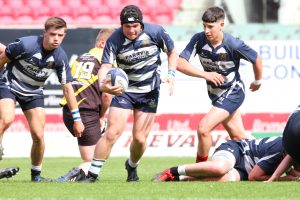

Geraint Powell (Narberth) then increased Pembrokeshire’s lead with Evans again sending the conversion through the posts to give his side a 26-7 half time lead.
Ceredigion fought back at the beginning of the second half as Iwan Bowden scored the try and Dylan Morgan added the extras.
Morgan then scored a try of his own and converted to bring Ceredigion back to within five points with the score at 26-21.
They then took the lead as Dylan Davies scored the try that brought them level and Dylan Evans then added the extra two points giving Ceredigion a 28-26 lead.
Whitland’s Dan Evans put the Pembrokeshire side back ahead with a penalty from 40 metres out and they led by a single point with time running out.
As Ceredigion pushed for a late try that would have seen them claim victory, it was Pembrokeshire who got the final score of the game as Prop Cole Barry (Haverfordwest), who had been on the field for eighty minutes, went over for the try and Evans put the seal on the victory with another conversion.
Nigel Owens was the man in the middle for the game and afterwards he Tweeted: “A pleasure to referee Ceredigion Yth 28 v Pembrokeshire Yth 36. Top quality game of rugby with some class players on both sides. Well done all, a credit to rugby.”

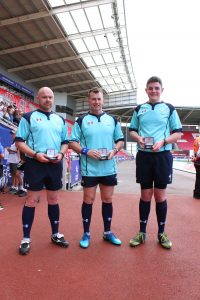
Also running the line were Pembrokeshire’s Thomas Carew and Ross Grieve.
Tom told the Herald: “It was such a surreal experience. Being a referee was something that I’ve always wanted to do, even from a young age. To be involved in the game on Sunday was a dream come true and I cherished every moment of it.
“Nigel Owens has always been like a hero to me, I can’t remember a time where he wasn’t. I’ve always looked up to him and aspired to do what he does week in week out. What he has achieved makes him a superb role model for not only referees but for everyone.
“So to have the chance to not only meet him but to also run the line for him was an experience that I never would have expected to happen to me. Sunday will be a day that I won’t forget in a long time!”
Ceredigion Coach Justin Lloyd said: “It was a great occasion to be a part of for Ceredigion as we’ve only been set up for a few years and we’ve done really well to get to the final.
“We knew it was going to be a tough game against a strong Pembrokeshire side but I am super proud of the performance.
“Any neutrals who were watching the game would have seen a game played in Scarlets style. Both teams weren’t afraid to take any risks.”
Pembrokeshire coach Kenny Davies added: “It was a hell of a game of rugby and a great advert for west Wales rugby. Playing at Parc Y Scarlets with Nigel Owens being the referee made it an excellrnt occasion for all involved.
“We started the game well and were leading 26-7 at half time but they came back into it to lead. We then had a 40metre penalty from Whitland’s Dan Evans and we finished strongly to win it.
“Thanks to everyone involved, including Ceredigion, and I hope the players got a lot out of it”.
Photos by Darren Harries









Strong Welsh contingent among elite field heading to Lampeter and Aberystwyth
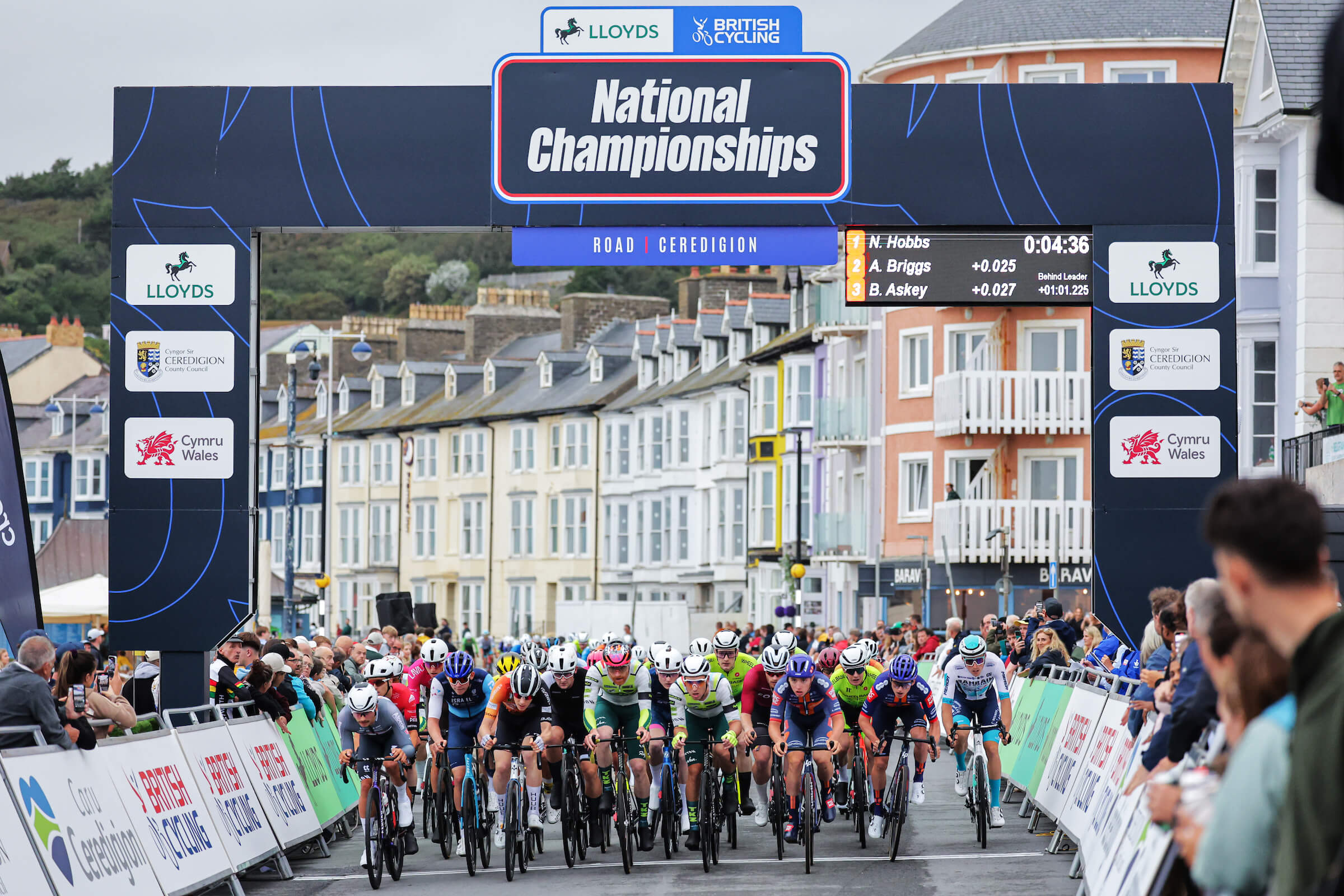
SOME of Britain’s leading cyclists will head to Wales next week as the 2026 Lloyds National Road Championships get under way.
Sixteen former elite national road champions are among the riders named for the event, which begins in Lampeter on Thursday, June 25, before moving to Aberystwyth for the circuit race and road race.
Welsh rider Zoe Backstedt, of Canyon//SRAM Zondacrypto, is expected to be one of the headline names after winning the elite women’s time-trial title at last year’s championships.
Backstedt said: “I’m super excited to come back to Wales to race national champs this year. I don’t get to race in the UK a lot, let alone in Wales, so that makes it even more exciting to be there.
“We’ve got such a strong roster of riders in the UK, so it’s never going to be easy, but I hope I’ll come into this in good shape and fighting for the win.”
Millie Couzens, of Fenix-Premier Tech, returns to defend her women’s road race title. She faces a strong field including three-time road national champion Pfeiffer Georgi, Morven Yeoman, Imogen Wolff, Cat Ferguson, Anna Henderson and Flora Perkins.
In the men’s road race, Sam Watson, of NetCompany Ineos, will look to retain his crown against a field including former national champion Ben Swift, reigning under-23 champion Matthew Brennan, Adam Howell and Ethan Hayter.
Hayter said: “Nationals always seem to bring out the best in me. I’ve managed to win a jersey in 2024 and 2025, so it would be nice to try to add another in the TT or RR.
“Each year the level gets higher, but it makes for aggressive, exciting racing.”
Cameron Mason will return to Aberystwyth to defend his open circuit race title, with Thomas Armstrong, Matt Bostock and Oliver Wood among those expected to challenge.
Kate Richardson also returns as defending women’s circuit race champion. She will be joined by a strong field including Isabel Sharp, Carys Lloyd, Xan Crees, Jenny Holl and Josie Knight.
A number of Welsh riders will also compete across the championships, including Finlay Tarling, Elynor Backstedt, Anna Morris, Owain Doull MBE and Megan Barker.

Erin Boothman, following a successful track season, will make her Lloyds National Road Championships debut in the women’s road race and under-23 women’s time-trial. Ben Wiggins will also return to Ceredigion as he looks to improve on last year’s silver medal in the under-23 men’s time-trial.
Ten national champions’ jerseys will be contested over three days of racing.
The time-trial takes place in Lampeter on Thursday, June 25. The elite women, under-23 women and under-23 men will race over 25.6km, while the elite men will cover 38.4km.
Aberystwyth will host the circuit race on Friday, June 26, and the road race on Sunday, June 28, giving spectators the chance to watch some of Britain’s best riders on Welsh roads.
The championships return to Wales with support from the Welsh Government.
Pic: Lloyds National Circuit Championship 2025 (Pic: SWPix.com)

EIGHTEEN-year-old Henri Cynwyl, of Newcastle Emlyn, marked a memorable milestone at the Plains Rally, Bala, as he made his gravel debut in the highly competitive Mini Rally Challenge.
Henri was driving the ex-championship-winning car previously campaigned by Tom Hynd, giving the young driver a strong platform on which to demonstrate his ability.
Family team
Sitting alongside him was his father, Dilwyn John, whose extensive experience in the co-driver’s seat proved invaluable throughout the demanding event.
Despite mechanical issues on Stages 3 and 4, the father-and-son pairing showed determination and composure to overcome the setbacks and continue gaining valuable experience on the loose surface.
As the day progressed, Henri’s confidence grew with every stage. The crew’s times steadily improved throughout the rally, underlining his rapid adaptation to gravel and his ability to learn quickly in competitive conditions.

Their efforts were rewarded with an impressive sixth-place finish, a highly respectable result on a first gravel outing against more experienced competitors.
Strong foundations
The performance was even more notable given Henri’s limited gravel experience.
Having developed his car control skills through Teifi Valley Motor Club autotests from the age of 14, he was able to transfer much of that experience to the challenging Welsh forest stages.
Additional tuition on gravel from James Williams, of W1 Motorsport Group, also helped prepare him for the step up into rally competition on loose surfaces.
Reflecting on his debut, Henri said: “It was great and I enjoyed every minute of it. Taking part in Teifi Valley Motor Club autotests most definitely helped, along with tuition on gravel stages in the company of James Williams from W1 Motorsport Group.
“I’d also like to thank Mark Williams, my team manager, for all of the support and encouragement.”
Promising start
The successful gravel debut provides another encouraging chapter in the young driver’s development, with the pace, consistency and maturity shown throughout the day suggesting plenty more potential to come.

Henri now switches back to tarmac this weekend as he continues his busy season at the Park Garage Rally in Anglesey, aiming to build on the confidence gained from an impressive first appearance on gravel.
Looking ahead, he is already eagerly anticipating the next round of the Mini Rally Challenge in Greystoke Forest, Cumbria.
With a strong first result under his belt, and plenty of lessons learned from the Plains Rally, Henri will be aiming to build on his promising start when the championship heads north.
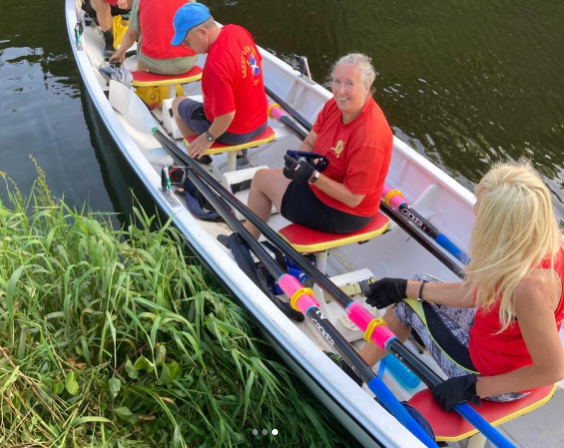
Crews from across the UK battle tides, headwinds and the Haven to finish marathon race at Haverfordwest River Festival
ROWERS from across the United Kingdom descended on Pembrokeshire at the weekend to take part in one of Wales’ toughest coastal rowing challenges — the 22-mile Cleddau River Marathon Row from Dale to Haverfordwest.
Held as part of the annual Haverfordwest River Festival on Saturday (Jun 13), the spectacular endurance race saw around 25 crews line up on the shoreline at Dale for a dramatic beach start before battling the tides, currents and changing weather conditions along the Milford Haven Waterway.
With calm waters and blue skies greeting competitors at the start, crews launched from Dale Bay at around 2:30pm and powered into the Haven, navigating a route that took them past Milford Haven, Neyland and Pembroke Dock before passing beneath the Cleddau Bridge and tackling the winding upper reaches of the river toward Haverfordwest.
However, conditions became more testing as the race progressed, with the tide turning against competitors and a headwind adding to the challenge during the final push upstream.
The marathon row was organised by Helen Heaton and Llangwm Rowing Club, with staggered starts helping ensure crews arrived in Haverfordwest in time for the celebrations at the River Festival.
At the finish line in Haverfordwest, exhausted rowers were greeted by cheering crowds, family members and councillors, who helped crews bring their boats ashore before an evening of celebrations and prize-giving at HaverHub.
The event drew teams from across Wales and further afield, highlighting Pembrokeshire’s growing reputation as a destination for competitive coastal rowing. The marathon route, stretching approximately 22 miles from Dale to the county town, is regarded as one of the more demanding fixtures in the Welsh sea rowing calendar.
Video crews and drone operators captured the action throughout the day, with local media teams filming both from shore and on the water.
The race was sponsored by Dale Sailing, with video sponsorship support from Pembrokeshire Powerboating and Sailing Academy.
The Herald understands the Wasps of Llangwm crew took top honours in the demanding race after a hard-fought contest on the water.
Photo caption:
Marathon effort: Crews from across the UK battled tides and headwinds during the 22-mile Cleddau River Marathon Row from Dale to Haverfordwest




Charity4 hours ago
Toy Story fans fill charity toy box at Haverfordwest cinema
Donations pour in for SNAP Specialist Play as families embrace Toy Story 5 launch A TOY STORY-themed charity appeal at...


Community9 hours ago
Lord Rhys emerges from the mist in St Davids
Giant puppet begins historic journey marking 850 years since the first Eisteddfod MIST swirled around St Davids Cathedral on Friday...


News1 day ago
Tragic tribute paid to Haverfordwest man after A4075 collision
FAMILY REMEMBERS “KIND AND LOVING” CALLUM HANSON THE FAMILY of a 22-year-old man from Haverfordwest who died following a road...


News2 days ago
Motorcyclist, 22, dies in A4075 crash in Pembrokeshire
A 22-year-old woman remains in hospital after two-vehicle collision A MOTORCYCLIST has died following a serious two-vehicle crash on the...

Community2 days ago
Why police will be visiting every home in Pembrokeshire
New operation aims to knock on more than 257,000 doors across Dyfed-Powys over the next three years DYFED-POWYS POLICE has...


Crime2 days ago
Prisons at breaking point: MPs warn Wales is paying the price of a failing system
Frozen healthcare budgets, overcrowded jails, homelessness on release and mounting pressure on staff are undermining rehabilitation across Wales, according to...


News3 days ago
Brexit at 10: How Britain was sold a dream that cost us dearly
A decade after the referendum, the promised benefits remain hard to find while the economic costs are increasingly difficult to...


Crime3 days ago
Worcestershire man jailed after violent attack on woman in Tenby
Defendant was already serving a suspended sentence when serious assault took place A WORCESTERSHIRE man has been jailed for more...


Climate3 days ago
Offshore wind ‘could bring new generation of jobs to Milford Haven’
Pembrokeshire ports and Celtic Sea projects placed at centre of Wales’ green energy ambitions MILFORD HAVEN and Pembroke Dock could...

Community4 days ago
Police officer hailed hero after midnight sea rescue in Milford Haven
PC swam 100 metres offshore to save distressed woman heard calling for help in darkness A DYFED-POWYS POLICE officer has...
-

 Community6 days ago
Pembrokeshire Chess Club crowned Welsh champions
-

 Crime3 days ago
Milford Haven man jailed for breaching domestic violence protection order
-

 Local Government4 days ago
Security privately arranged by Mayor at Beating of the Bounds
-

 News2 days ago
Crash on Freeman’s Way causes school-run chaos across Haverfordwest
-

 Crime4 days ago
Man wanted by court after failing to attend hearing over alleged shop thefts
-
 Crime4 days ago
Man banned from roads after drink-driving offence
-

 Crime4 days ago
Man jailed after admitting strangulation and assaults
-

 Crime4 days ago
Man sentenced over stalking campaign and lock knife offence