


News
Lidl to remove 9p plastic bags from stores in Wales to reduce plastic waste


LIDL has today (Mar 7) announced plans to remove 9p plastic bags from all its stores in Wales by 1st May, after seeing that its 9p reusable bags were increasingly being used as single-use. Through the trial, the supermarket will evaluate the customer response to the move and its environmental impact.
The discounter, which removed all 5p plastic bags from sale in 2018, is now taking further action to help cut down on plastic waste, by removing its next tier, 9p reusable bags, from its 54 Welsh stores. The move, which is thought to be the first of its kind by a supermarket in the UK, is expected to prevent the sale of over 5 million bags and to save over 150 tonnes of plastic waste each year in Wales, increasing to over 80 million bags and approximately 2,500 tonnes of plastic waste if extended across Great Britain.
This announcement builds on Lidl GB’s strong track record on plastic reduction, to which the discounter has long been committed. Since opening the first store in Great Britain, Lidl has charged for plastic carrier bags, and took the additional step to remove all single-use carrier bags from sale in 2017, followed by all 5p reusable bags in 2018. This resulted in 26 million fewer plastic bags being sold annually. This forms part of Lidl’s overall commitment to reducing plastic packaging by 20% by 2022, and to making sure 100% of its own-brand packaging is widely recyclable, reusable, refillable or renewable by 2025.
Christian Härtnagel, CEO of Lidl GB said: “We’re proud of our work at Lidl to reduce plastic across our stores, and particularly the steps we have taken over the years to reduce sales of plastic carrier bags. After seeing that our 9p reusable bag was increasingly being used as a single use option, we wanted to look at how we could mitigate this pattern. Through this trial, we will be able to fully assess the impact that removing our 9p plastic bags has in helping customers shift to a fully reusable option.”
A Welsh Government spokesperson said: “Wales was the first nation in the UK to bring in a charge on single use carrier bags and we are pleased that Lidl has chosen Wales as the location for an initiative which will help inform understanding of consumer behaviour and bag use. We will watch with close interest the effect of Lidl’s innovation and how this will encourage reuse.”

The supermarket will introduce new cotton and jute alternative bags into its range this summer and will still offer customers in Wales its 38p heavy duty bag and 65p freezer bag.











A SCAFFOLDER has been banned from driving for 14 months after an off-duty police officer smelt cannabis coming from his Volkswagen Transporter as it travelled through Slebech.
The report was made to police at around 10.30am on February 15. When officers located the vehicle, they discovered it was being driven by 46-year-old Christopher Bennett.
Further blood tests showed Bennett had 16.8 mcg of Delta-9 tetrahydrocannabinol in his system. The legal limit is 2.
This week Bennett, of Queensdown Gardens, Brislington, Bristol, pleaded guilty to drug-driving when he appeared before Haverfordwest magistrates. He was represented in court by Alaw Harries.
“The defendant is remorseful for his actions and recognises the seriousness of the offence,” Ms Harries told the Bench.
“He suffers significant pain following operations to his shoulders and has been prescribed codeine. But this causes drowsiness, so he began self-medicating using cannabis.
“On the day of the offence, he was in worse pain than usual, so he used cannabis earlier than he normally does.”
Ms Harries said the conviction would have serious financial consequences for Bennett, who works as a self-employed scaffolder.
“His driving licence is fundamental to his livelihood,” she said.
“The financial consequences are going to be significant to him, as well as to those who are dependent on him.”
Magistrates fined Bennett £600 and ordered him to pay a £240 surcharge and £85 costs.
He was disqualified from driving for 14 months.


Alison Walker had nearly five times the legal benzoylecgonine limit in her system
A PEMBROKESHIRE estate agent has been banned from the road after admitting driving through Milford Haven with nearly five times the legal limit of a cocaine metabolite in her system.
Alison Walker, 59, was arrested on February 2 after her white MG was involved in a two-car collision on Great North Road, Milford Haven.
“Fortunately there were no injuries, just damage to the vehicles,” Crown Prosecutor Sian Vaughan told Haverfordwest magistrates this week.
After providing a positive roadside drug swipe, Walker was arrested and asked to provide blood samples. These showed she had 240mcg of benzoylecgonine in her system. The legal limit is 50mcg.
Walker, of Woodland Crescent, Milford Haven, pleaded guilty to drug-driving and was represented in court by solicitor Tom Lloyd.
He told the bench that prior to the offence, Walker had been employed as an estate agent.
“She has a good relationship with her boss, and as soon as this conviction is dealt with and her sentence has been served, he will be happy for her to return to her employment,” he said.
After considering a comprehensive probation report, magistrates disqualified Walker from driving for 20 months.
She was fined £80 and ordered to pay a £114 court surcharge and £85 costs. Walker must also carry out a 12-month community order, during which she must complete 15 rehabilitation activity requirement days.


A PEMBROKE DOCK motorist has been banned from the roads after being caught driving with more than seven times the legal cocaine limit in her system.
Naomi Grant, 47, was stopped by police on the night of February 6 as she drove her Vauxhall Astra along the A477 near Pembroke Dock.
After providing a positive roadside drug swipe, Grant, of Cheriton Road, Pennar, Pembroke Dock, was taken for further tests.
Blood analysis showed she had 74mcg of cocaine in her system. The legal limit is 10mcg. She also had 1,200mcg of benzoylecgonine, a breakdown product of cocaine, where the legal limit is 50mcg.
This week Grant, who has no previous convictions, pleaded guilty to two charges of drug-driving when she appeared before Haverfordwest magistrates.
She was represented by solicitor Tom Lloyd, who told the court that his client is currently prescribed a considerable amount of medication for a number of medical issues.
“She also has her own personal assistant as a result of her medical needs,” he said.
“She has done everything that has been asked of her in relation to this offence and has engaged with the Dyfed Drug and Alcohol Service to help her move forward.”
Magistrates disqualified Grant from driving for 12 months and fined her £120.
She must also pay £85 court costs and a £48 surcharge.



Crime12 hours ago
Judge calls pensioner a ‘dirty old man’ as he avoids jail for exposing himself to women
Judge says 75-year-old Stewart Laugharne behaved ‘disgracefully’ as he avoids jail but is ordered to sign sex offenders register A...


Health13 hours ago
Stroke services consultation reaches halfway point as public urged to have say
HYWEL DDA University Health Board is urging people to take part in its consultation on the future of stroke services,...


Business14 hours ago
Welsh firms eye share of £5bn defence drone boom
WELSH defence and aerospace firms could be in line for a share of billions of pounds in new military spending...


Community2 days ago
Thousands line Cardigan streets for Lord Rhys homecoming parade
THOUSANDS of people lined the streets and quayside in Cardigan on Saturday as the town marked 850 years since Lord...


Crime3 days ago
Dyfed-Powys Police rated only ‘Adequate’ in organised crime inspection
A WATCHDOG has rated Dyfed-Powys Police only “Adequate” in its response to serious and organised crime, despite praise for the...


News4 days ago
Two taken to hospital after aircraft ditches in Cardigan Bay
Coastguard helicopter spotted two casualties after light aircraft came down off west Wales coast TWO people were taken to hospital...

Sport4 days ago
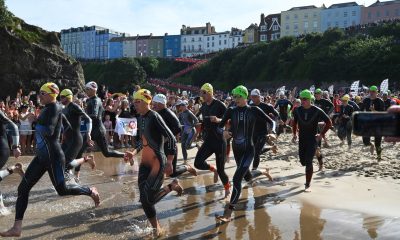
Long Course Weekend gets underway in Tenby as thousands head for county
Three days of swimming, cycling and running begin with The Wales Swim at North Beach THOUSANDS of athletes and supporters...


Climate4 days ago
Welsh waters, Westminster profits: Crown Estate row reignited in Wales
PLAID CYMRU has renewed calls for the Crown Estate to be devolved to Wales after figures showed income linked to...


News5 days ago
Reform MS: ‘I felt like shouting get out of the water’
Paul Marr says children playing in streams at Pembrokeshire beaches deserve better protection from pollution risks REFORM UK MS Paul...
Health6 days ago
Senedd backs call to rule out hospital downgrades after heated NHS debate
Reform UK amendment passes as West Wales hospital fears remain central political issue THE SENEDD has backed a call for...
-

 Crime7 days ago
Milford man threatened to smash parents’ windows, court hears
-

 Crime6 days ago
Haverfordwest father stole groceries amid cost-of-living struggle
-

 Crime6 days ago
Woman sentenced over neglect of child at Haverfordwest property
-

 Crime6 days ago
Police appeal after reported rape at Young Farmers rally
-

 Crime6 days ago
Dock woman given mental health treatment order after supermarket thefts
-

 Crime7 days ago
Hakin man stole Tesco goods to fund drink and gambling addictions
-

 Crime6 days ago
Grandmother banned after cocaine drug-drive offence
-
Crime3 days ago
Dyfed-Powys Police rated only ‘Adequate’ in organised crime inspection