


News
Businesses urged to prepare for NHS COVID-19 app


1. The NHS COVID-19 app currently being trialled will launch on Thursday 24 September in Wales and England including QR check-in at venues
2. Business venues urged to download NHS QR codes
3. QR codes will be an important way for individuals to record their movements helping the NHS Test, Trace, Protect system
4. Businesses across Wales and England like pubs, restaurants, hairdressers and cinemas, are being encouraged to have NHS QR code posters visible on entry, so customers who have downloaded the new NHS COVID-19 app can use their smartphones to easily check-in.
The move comes ahead of launching the NHS COVID-19 app across Wales and England on Thursday 24 September.

Checking in with the app will enable people to keep a diary of the locations they have visited, which will be held securely in the app. If there is a COVID-19 outbreak linked to their visit, users will get an early warning alert from the NHS. If they have a positive test for COVID-19, people will be able to use the diary to tell contact tracing teams where they have been, helping to manage COVID-19 and protecting other people.
With coronavirus cases rising in the UK in the last few weeks it is essential that businesses do all they can to protect their customers and control the spread of the virus. The NHS QR code and check in function is in addition to existing measures. Venues in Wales which are legally required to collect and keep a record of visitors will still need to do so.
Wales’ Health Minister, Vaughan Gething, said:
“The launch of the NHS COVID-19 app is an important part of coronavirus response, supporting our NHS Test, Trace, Protect programme in Wales. Working on a joint Wales and England basis is the most practical option here, as we know there is a lot of movement across our shared border. It makes sense to use the same app, working in exactly the same way, regardless of which country you’re in.
“The Welsh Government has worked closely with the NHS App team to ensure the app is easy-to-use and gives people the right advice and guidance, tailored to the country they reside in. I strongly encourage people in Wales to download and use the app when it launches.
“The more people download and use the NHS COVID-19 app, the more it will help us to prevent the spread of COVID-19.”
UK Government’s Health and Social Care Secretary, Matt Hancock, said:

“With coronavirus cases rising, we need to use every tool at our disposal to control the spread of the virus including cutting-edge technology. The launch of the app later this month across England and Wales is a defining moment and will undoubtedly aid our ability to contain the virus at a critical time.
“We are now urging businesses to download posters for their premises ahead of the launch of the NHS COVID-19 app. This will allow the public to seamlessly check-in to venues using the app when it launches.
“It is vital we are using the NHS Test and Trace system to reach as many people as possible to prevent outbreaks and stop this virus in its tracks. This function will make it simple and easy so we can keep this virus under control.”
The app has a range of additional, enhanced features that will help to reduce personal and public risk from COVID-19 as part of the wider test and tracing services.
1. Risk alert: letting users know the level of coronavirus risk in their postcode district
QR check in: alerting users if they have recently visited a venue where they may have come into contact with someone who later tests positive with COVID-19
2. Symptom check: allowing users to check if they have coronavirus symptoms and see if they need to order a free test – all in one place
3. Test: helping users book a free test through the app
4. Isolation countdown: if a user is told to self-isolate, a timer will help countdown that period and relevant advice will be provided
5. Businesses are just one sector encouraged to use the NHS system. Universities, hospitals, leisure premises, civic centres and libraries will also be urged to display posters in communal areas such as cafes.
Kate Nicholls, UK Hospitality CEO said:
“Hospitality’s top priority is to protect the health of our customers and staff but there’s also the added appetite to avoid a return to lockdown and loss of trade. It’s crucial that information is gathered and deployed both effectively and securely.
“We would urge all hospitality businesses to support the roll out of the app and download their QR posters to help defeat the virus.”
Venues should download the QR codes at www.gov.uk/create-coronavirus-qr-poster







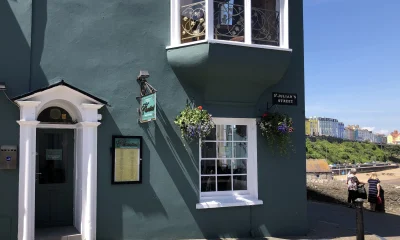


THOUSANDS of people lined the streets and quayside in Cardigan on Saturday as the town marked 850 years since Lord Rhys held the first recorded Eisteddfod at Cardigan Castle.
The spectacular procession formed the finale of the Journey of Lord Rhys, a week-long celebration which has travelled across west Wales before returning to Cardigan, where the story began in 1176.
At the centre of the event was a 5-metre-tall puppet of Lord Rhys, created as part of the Carreg Filltir Las project to celebrate the origins of the National Eisteddfod.

Crowds gathered around the castle, quayside and town centre as music, performance and pageantry brought the story of the first Eisteddfod back to life.
One of the most striking moments saw George, one of the Gentle Giants Shire Horses, given the honour of carrying this year’s Eisteddfod Chair to Cardigan Castle, 850 years after chairs were first awarded there for poetry and music.
The first recorded Eisteddfod was hosted by Lord Rhys ap Gruffudd at Cardigan Castle in 1176, with poets and musicians competing in what is widely regarded as the foundation of the modern Eisteddfod tradition.
This year’s National Eisteddfod, Eisteddfod y Garreg Las, will be held at Llantood from August 1 to 8. The location is less than four miles from Cardigan Castle, creating a direct link between the first recorded gathering and the modern festival.
The Eisteddfod has described the anniversary as a chance to celebrate 850 years of tradition while inspiring new audiences across Wales.
Saturday’s homecoming brought that history into the streets of Cardigan, with families, visitors and local residents turning out in large numbers for one of the most significant cultural moments in the town’s recent history.

Phillip Roberts stole cash from USA Chicken and returned the following day with intent to steal
A CARMARTHEN man has admitted a string of burglaries at the same takeaway business on consecutive days.
Phillip Roberts, 44, of Brewery Road, Carmarthen, appeared before Llanelli Magistrates’ Court after pleading guilty to three offences connected to USA Chicken on Blue Street.
The court heard that on June 4, Roberts entered the premises as a trespasser and stole a tip jar containing cash. He also admitted a second burglary at the same business on the same date, during which £50 cash was stolen.
A further offence took place on June 5, when Roberts entered USA Chicken as a trespasser with intent to steal.
Magistrates adjourned sentence for the preparation of a pre-sentence report. The report will consider all sentencing options, including possible committal to the Crown Court.
Roberts was granted conditional bail. He must not enter USA Chicken, Blue Street, and must not contact Mustafa Baksi, either directly or indirectly.
He is due to return to Llanelli Magistrates’ Court on July 1 for sentence.
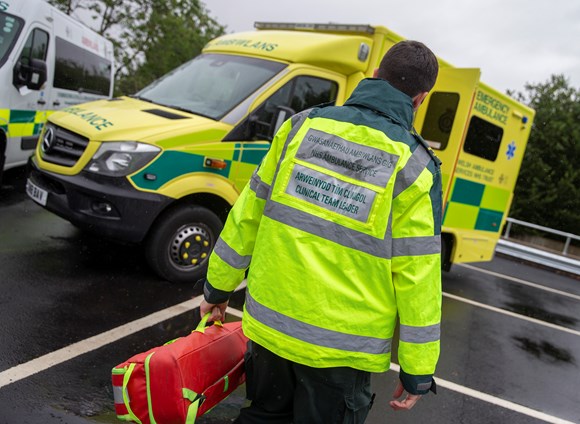
THE WELSH AMBULANCE SERVICE has issued a fresh appeal to the public following the declaration of a critical incident on Friday (June 26), as exceptionally high demand continues to place pressure on crews across Wales.
In a social media post published today (Saturday, June 27), the Trust warned that hot weather is contributing to a rise in ambulance call-outs, including incidents involving heat-related illness, falls, breathing difficulties and existing medical conditions worsened by the heat.
The message comes less than 24 hours after the service declared a critical incident amid unprecedented demand, with ambulance resources stretched across Wales.
The Trust is urging people to call 999 only for serious or life-threatening emergencies, contact NHS 111 Wales for urgent health advice, and use local pharmacies for minor illnesses and ailments.
It said choosing the right service can help ambulance crews reach the sickest patients more quickly while pressures remain high.



Community3 minutes ago
Thousands line Cardigan streets for Lord Rhys homecoming parade
THOUSANDS of people lined the streets and quayside in Cardigan on Saturday as the town marked 850 years since Lord...


Crime24 hours ago
Dyfed-Powys Police rated only ‘Adequate’ in organised crime inspection
A WATCHDOG has rated Dyfed-Powys Police only “Adequate” in its response to serious and organised crime, despite praise for the...


News1 day ago
Two taken to hospital after aircraft ditches in Cardigan Bay
Coastguard helicopter spotted two casualties after light aircraft came down off west Wales coast TWO people were taken to hospital...


Sport2 days ago
Long Course Weekend gets underway in Tenby as thousands head for county
Three days of swimming, cycling and running begin with The Wales Swim at North Beach THOUSANDS of athletes and supporters...


Climate2 days ago
Welsh waters, Westminster profits: Crown Estate row reignited in Wales
PLAID CYMRU has renewed calls for the Crown Estate to be devolved to Wales after figures showed income linked to...


News2 days ago
Reform MS: ‘I felt like shouting get out of the water’
Paul Marr says children playing in streams at Pembrokeshire beaches deserve better protection from pollution risks REFORM UK MS Paul...


Health3 days ago
Senedd backs call to rule out hospital downgrades after heated NHS debate
Reform UK amendment passes as West Wales hospital fears remain central political issue THE SENEDD has backed a call for...

News3 days ago
Coastguard callout payments axe sparks fears for coastal communities
VOLUNTEER coastguards across the UK are set to lose callout payments, prompting concern over the future resilience of emergency cover...


Farming3 days ago
Rural Wales ‘left out’ of net zero debate, warns carbon entrepreneur
A WELSH carbon entrepreneur has warned that rural Wales risks being left behind in the national conversation about net zero....


Local Government4 days ago
Tenby Spectacular row continues as organisers say key question remains unanswered
Round Table says legal clarity over pedestrian access is still holding up event plan TENBY ROUND TABLE has welcomed Pembrokeshire...
-

 Crime3 days ago
Police appeal after reported rape at Young Farmers rally
-
Health7 days ago
Welsh Government refuses to halt Withybush and Bronglais service review
-

 News7 days ago
Long Course Weekend set to bring thousands to Pembrokeshire
-

 Charity7 days ago
Voices at the Castle hailed a huge success for Paul Sartori Foundation
-

 News6 days ago
Rhun ap Iorwerth urges new deal for Wales after Starmer quits
-
 Crime5 days ago
Government fraud squad hunts down Covid loan scams
-

 Charity6 days ago
Sea shanties and street food bring crowds to Cardigan RNLI festival
-

 Community7 days ago
Campaigner’s MBE for supporting families affected by child-to-parent abuse