


News
Paul Davies MS quits as Leader of the Conservatives in the Senedd


PRESELI Pembrokeshire MS Paul Davies quit as Leader of the Conservatives in the Senedd this morning.
The Conservatives’ Chief Whip also quit his frontbench role.
The dramatic move comes only 24 hours after Mr Davies got the Conservative Senedd Group’s unanimous backing.
However, later yesterday (Friday, Jan 21) – as criticism poured in – the Welsh Conservatives’ Executive met. In that meeting, Constituency Chairs reported widespread disbelief and anger among the Party’s members. Conservative Party Chair, Lord Davies of Gower, received particular criticism for a lack of leadership. Simon Hart, Secretary of State for Wales, also attended the meeting and was left in no doubt of the strength of feeling within the Party.
In a statement issued via the Conservative Senedd media office, Mr Davies said: “I am truly sorry for my actions on the 8th and 9th December. They have damaged the trust and respect that I have built up over 14 years in the Welsh Parliament with my colleagues and the wider Conservative Party but more importantly with the people of Wales.
“Whilst using the Senedd facilities at all times my colleagues and I maintained social distancing. There was no drunk or disorderly behaviour. We did not have to be escorted out of the building as some reports have suggested. What we did was to have some alcohol with a meal we heated up in a microwave, which was a couple of glasses of wine on Tuesday and a beer on Wednesday.
I broke no actual Covid-19 regulations.

“For the last 10 months of the pandemic, I have followed the Covid-19 regulations to the letter. As with everyone across Wales, I have not seen family members or friends, I’ve not eaten at my favourite restaurants and, like you, we enjoyed a subdued Christmas compared to other years. I will continue to follow the Welsh Government’s Covid-19 Regulations and I would urge everyone to play their part in defeating this virus so that we can all return to normality.
“My priority as Leader of the Welsh Conservative Group in the Welsh Parliament has always been to bring the Conservatives into government in Wales. Our main focus as the Welsh Conservatives must always be on challenging and removing a failing Labour government.
“I am grateful for the support of colleagues in the Welsh Conservative Party for their support in this difficult time, and especially to my wife Julie and my Senedd colleagues who have offered empathy, trust and advice. They have treated me with the same courtesy and decency I hope I have always extended to others.
“Over the last couple of days, I have been speaking with colleagues in the Senedd and the wider Conservative Party. Whilst they have confirmed they do not wish to see me step down, I believe that my actions are becoming a distraction from holding this failing Welsh Labour-led Government to account, not just on their rollout of the Covid-19 vaccines but from more than 20 years of their dither, delay and failure. Yesterday I indicated to the Conservative group in the Welsh Parliament that I wished to resign, but they urged me to reflect further, and we agreed to meet again on Monday. However, for the sake of my party, my health and my own conscience, I simply cannot continue in post.
“Therefore, I am stepping down as Leader of the Welsh Conservatives in the Welsh Parliament with immediate effect.”
“It is for the group to decide how best to choose a new leader, but I hope that process will be seamless and speedy, and I pledge my support to whoever becomes leader.”
Darren Millar blamed ‘wildly inaccurate and unfair reports’ and said:

“There was a member of catering staff present in the tea room for a short time after my arrival on the 8th December but she did not serve me a drink, nor did I request one. In fact, I encouraged the member of staff to go home and close up the counter as it had been a long day for her. No members of catering staff were present on the 9th December and the counter was closed for the whole evening.
“While I am advised that I did not breach coronavirus regulations I am very sorry for my actions, especially given the impact of the tough restrictions that people and businesses are enduring.
“For this reason, and given that Paul Davies has resigned as Welsh Conservative Group Leader in the Senedd, I have decided to step down from my front bench role in the Welsh Parliament.
“I am cooperating fully with ongoing investigations and will continue to do so.”
Whoever replaces Paul Davies, the role is likely to an interim appointment ahead of a vote of the Party membership after the Senedd election.
Commenting on the latest developments, William Powell, Welsh Liberal Democrat Senedd Candidate for Brecon and Radnorshire and former AM for Mid and West Wales said: ‘Paul Davies & Darren Millar have now done the correct thing in stepping down, to allow due process to take place, both within Cardiff Council and within the Senedd.
‘While they both need to reflect and learn from recent events, the Welsh Conservatives must now be given the opportunity to select an interim leader to take their party forward into the upcoming Senedd elections.
‘Schadenfreude is one of the unattractive features of our current politics and I want no part of it. I will simply work with my Welsh Liberal Democrat colleagues to hold Welsh and UK Government to account on the management of the pandemic.
‘My own journey of Covid-19 illness and recovery is a reminder that we should unite to double down on the virus, support our NHS and other key workers and endeavour to do the right thing.’
Welsh Labour Senedd Candidate for Preseli Pembrokeshire has called out Paul Davies over his involvement in his apparent disregard of COVID rules in the Senedd and has expressed her concern that no actions have been taken to suspend him by his Party.
Commenting on the Welsh Conservative Group not taking any action against Paul Davies, Jackie Jones said: “I am flabbergasted that the Tory party is sitting on his hands and failed to recognise the public concern at the events described this week. The latest revelations suggest that he didn’t’ just breach the rules once but maybe twice. Now that this information has come to light, it is only right that the Tories look again at the decision they have taken today.
“As Leader of the Welsh Conservatives in the Senedd he should be setting an example, not flouting the strict pandemic rules by supposedly drinking till 2 am on Senedd premises. Paul Davies constantly criticises the First Minister and Health Minister for implementing rules that are there to protect all of us, but here he is reportedly drinking till who knows when – maybe on two occasions – totally hypocritical.”
Ms Jones added that “I’m sure the constituents of Preseli will be equally annoyed by his behaviour, when they have had to abide by the rules, not going to pubs, not seeing loved ones for months at a time. It is completely out of order.”
Elin Jones MS, said: “The Commission’s internal investigation has established that alcohol was consumed by five individuals in the Senedd’s licensed tearoom, four of whom are elected members.
“The investigation has concluded that a possible breach of regulations occurred and therefore the Chief Executive of the Senedd Commission has referred the matter to Cardiff Council.
“The Regulations in place at the time imposed strict restrictions on members of the public with regard to the consumption of alcohol.
“Given that the possible breach in question occurred as a result of the consumption of alcohol by Members of the Senedd, I have also written to the Standards Commissioner to ask him to investigate whether these Members acted in accordance with the duty in the Code of Conduct to conduct themselves in a manner which maintains and strengthens the public’s trust and confidence in the integrity of the Senedd.”











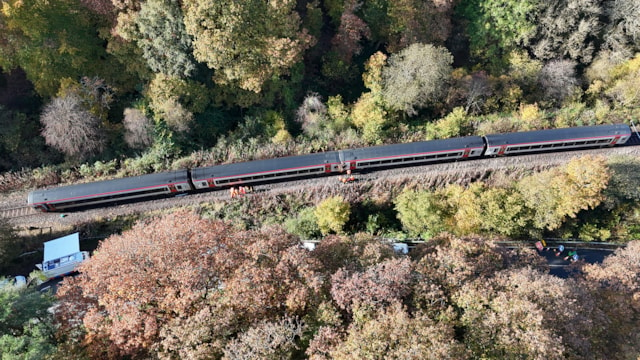
A FATAL train collision near Talerddig was caused when one passenger train failed to stop at a passing loop and entered a single-line section already occupied by another train, investigators have found.
A final report by the Rail Accident Investigation Branch has identified low wheel-rail adhesion, failed sanding equipment, train speed, and a lack of engineered overrun protection as key factors in the crash.
The collision happened at around 7:26pm on Monday (Oct 21), 2024, on the Cambrian line near Talerddig, Powys.
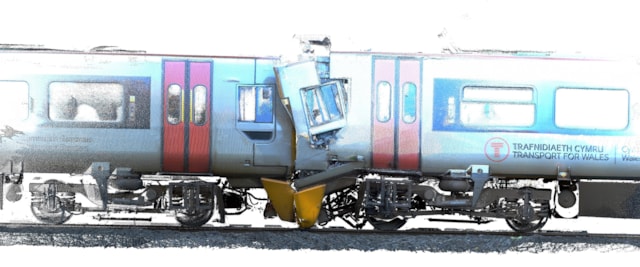
The 6:31pm Transport for Wales service from Shrewsbury to Aberystwyth, train 1J25, collided head-on with the 7:09pm Machynlleth to Shrewsbury service, train 1S71.
One passenger on train 1J25 suffered fatal injuries. Three others on the same train, including the guard, were seriously injured, and 18 people received minor injuries.
The driver of train 1S71 was also seriously injured, while the remaining five people on that train suffered minor injuries.
Investigators said train 1J25 should have stopped inside the Talerddig passing loop to allow the oncoming train to pass. Instead, it continued through the loop and entered the single-line section beyond.
By the time the collision happened, train 1J25 had travelled around 1,080 metres beyond its intended stopping position.
RAIB said the train was travelling at around 24mph at the point of impact, while the oncoming train was travelling at around 6mph. Neither train derailed, but both were extensively damaged and railway infrastructure at Talerddig loop was also damaged.
The line remained closed until October 28.
Low adhesion and failed sanding systems
The RAIB investigation found that train 1J25 passed its authorised stopping position because of a combination of factors.
Investigators said wheel-rail adhesion approaching the loop was low, although not exceptionally so for that area during October.

Two sanding systems fitted to the train, which could have helped improve grip and potentially avoid the accident, did not dispense sand.
The automatic sander did not work, probably because of electrical faults in its control circuit. The manually operated emergency sander was not activated by the driver.
The report also found that the train’s approach speed towards the eastern entry to the loop meant the level of braking needed could not be sustained with the grip available.
Once the train had passed its intended stopping position, it entered a section with exceptionally low adhesion and a steep downhill gradient. Although the brakes remained applied, the train did not slow as it approached the other service.
RAIB also found there were no engineered mitigations in place to prevent the train entering the occupied single-line section after the overrun.
Nine recommendations made
RAIB has made nine recommendations following the investigation.
These include improvements to the design, maintenance and testing of trainborne sanding equipment, a review of overrun risk on the Cambrian line, and changes to future software-based train control systems.
Network Rail has also been urged to improve its understanding of railhead treatment regimes and how these affect wheel-rail adhesion.
Transport for Wales Rail Limited has been asked to review driver training, while further recommendations cover emergency preparedness for on-train staff and the design of passenger train interior fittings to reduce injury risks in future accidents.
RAIB also identified a learning point relating to safety-critical communications between signallers and train drivers.
Andrew Hall, Chief Inspector of Rail Accidents, said: “The accident at Talerddig was a tragedy. One person lost their life and others were seriously injured in the first fatal train-to-train collision in more than 25 years.
“Widely varying levels of grip between steel wheels and steel rails is an inherent issue for railways and a lot of effort goes into managing this and its possible consequences.
“That can involve the way track and the surrounding area is maintained, the way trains and signalling systems are designed, and the way trains are operated and maintained.
“The Talerddig investigation found factors associated with several of these areas, and related to the way different parts of the overall railway system interacted.
“RAIB has made nine recommendations to reduce both the likelihood and mitigate the consequences of a similar event.
“I sincerely hope the lessons of this accident deliver lasting safety improvements on the Cambrian line, across the ongoing rollout of ERTMS, and on the wider railway network.”
RAIB stressed that its role is to improve railway safety and prevent future accidents. It does not determine blame, liability, or carry out prosecutions.
Shortage of specialist nurses could leave people without support needed to access fair healthcare
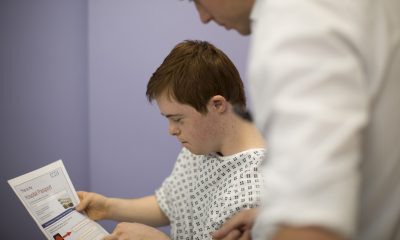
PEOPLE with learning disabilities are being denied fair access to health and care because of a growing crisis in specialist nursing, the Royal College of Nursing has warned.
A major new RCN review says health and care services across the UK are failing to consistently meet the needs of some of society’s most vulnerable people, despite legal duties designed to protect them.
The report, Safety, Equity and Expertise: A UK review of learning disability nursing, warns that shortages of specialist nurses mean some patients are being overlooked, excluded or harmed when mainstream services are unable to properly adapt to their needs.
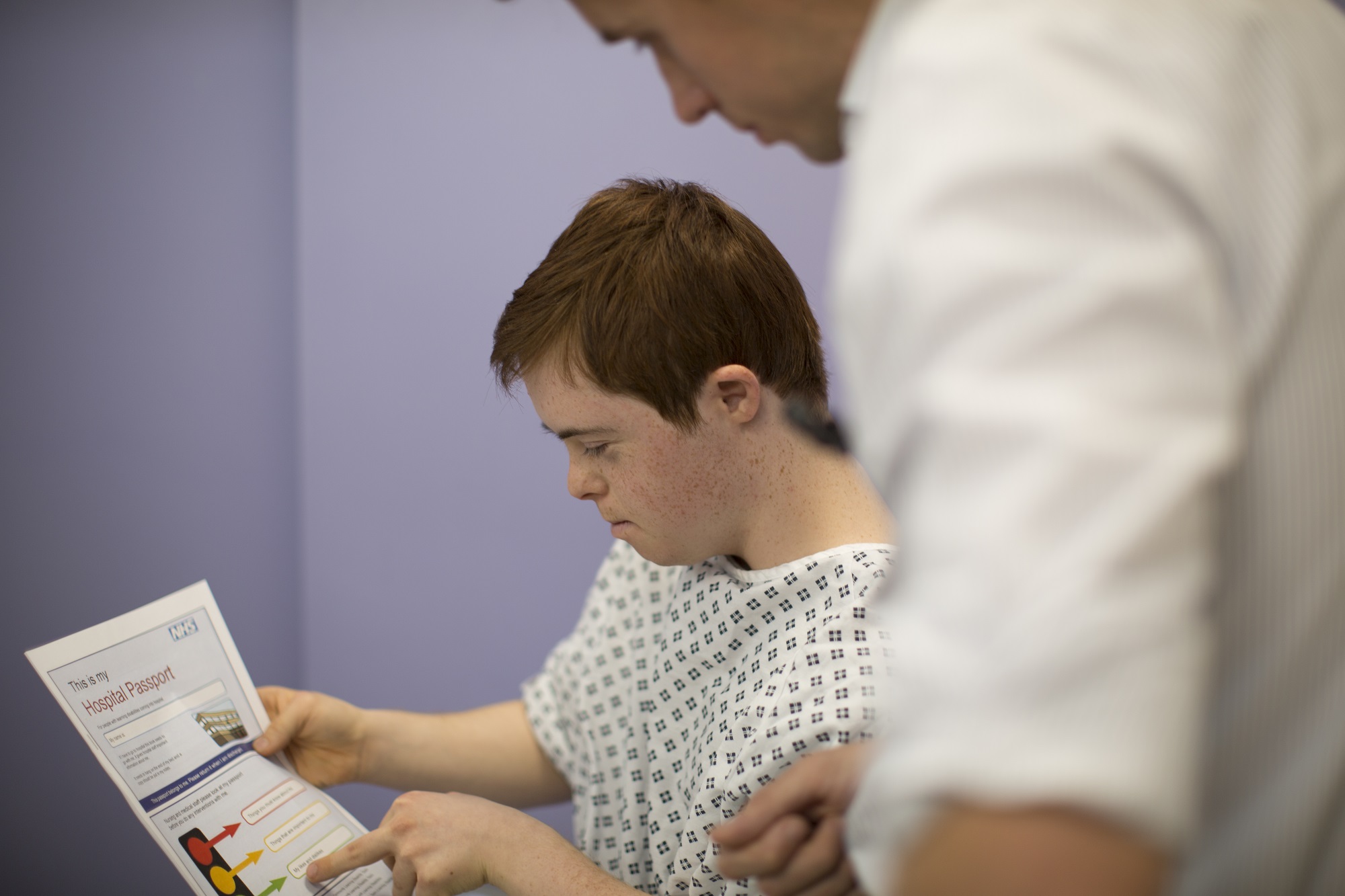
The RCN says learning disability nurses play a vital role in helping patients who may struggle to communicate symptoms, understand treatment, attend appointments, or cope with busy hospital and healthcare environments.
Their work includes supporting patients and families, helping services make reasonable adjustments, preventing health problems from escalating, and ensuring people with learning disabilities receive safe and appropriate care.
Workforce under pressure
Figures analysed by the RCN show the number of learning disability nurses employed by the NHS across the UK has fallen sharply over the past 16 years.
Numbers dropped by 33%, from 7,083 nurses in 2009 to 4,768 in 2025.
The college has also raised concerns about the future workforce, with fewer than 500 students enrolling on learning disability nursing courses across the UK in 2025. Over the past decade, the number of students accepted onto courses has fallen by around 40%.
In Wales, the RCN says almost 1,000 registered learning disability nurses live in the country, but fewer than 500 whole-time equivalent nurses are employed within NHS Wales.
The organisation has also highlighted a 32% decline in nursing roles across independent and social care providers, warning that course closures, an ageing workforce and ongoing vacancies are threatening the future of specialist support.
Health inequalities
The RCN says the shortage is particularly concerning because people with learning disabilities already experience significant health inequalities.
The latest Learning from Lives and Deaths report found the median age of death for people with a learning disability was just 62.5, compared with around 82 for the wider population.

Campaigners have long warned that people with learning disabilities can face barriers when accessing healthcare, including difficulties explaining symptoms, services failing to adjust communication, and health concerns being missed.
Under the Equality Act 2010, healthcare providers have a legal duty to make reasonable adjustments to ensure disabled people are not disadvantaged when accessing services.
The RCN says learning disability nurses are often central to making sure those rights are delivered in practice.
‘People deserve better’
RCN Chief Nursing Officer Professor Lynn Woolsey said the findings should serve as a warning.
She said: “We cannot continue this path where learning disability nursing is consistently undermined. It’s a profession that is central to the safety, equity and human rights of people with learning disabilities.
“Yet the learning disability nurse workforce is in absolute crisis, with workforce numbers falling while university student numbers also collapse.
“Their skills are too vital for this to be allowed to continue. The expertise of learning disability nurses has been poorly understood, inconsistently recognised, and insufficiently protected within health and care systems.
“People with learning disabilities deserve better. Learning disability nursing must be recognised by health leaders as the safety-critical profession it is and workforce planning must reflect their value and importance.”
Call for action in Wales
RCN Wales Executive Director Nicola Williams said learning disability nurses are essential in supporting vulnerable people and tackling inequalities.
She said: “Learning disability nurses play a vital role in supporting some of the most vulnerable people in our communities and helping to tackle the significant health inequalities they continue to experience.
“People with learning disabilities have the same right as everyone else to safe, effective and equitable health care.
“Yet this report highlights serious concerns about the future of the specialist workforce that is so often central to making that happen.
“We cannot allow learning disability nursing to become an afterthought. The Welsh government, health boards and education providers must work together to protect and grow this vital workforce so that people with learning disabilities receive the care, support and advocacy they deserve.”
The RCN is calling for long-term workforce planning, improved training opportunities, and action to increase the number of specialist nurses entering the profession.

A PEMBROKESHIRE pupil is celebrating after her design was chosen as the county’s new Active Travel logo.
Lillian Richards, a Year 6 pupil at Cleddau Reach Primary School, was named the overall winner of a Road Safety and Transport competition which invited pupils across Pembrokeshire to create a fresh logo for Active Travel.
Her design will now be used on Pembrokeshire County Council’s website and social media platforms.

Lillian’s entry was selected from a strong field of submissions, standing out for its bright, colourful style and for capturing a range of Active Travel options.
The winning design was later developed into a final logo by the council’s graphics team, with Tom Banner refining it into a professional format.
Lillian was presented with a certificate and prize at her school by Road Safety Officer Sally Jones.
Speaking after the presentation, Lillian said she was “extremely pleased” to have won and was impressed with how her design had been transformed.
Sally Jones praised Lillian and the wider field of entrants.
She said: “The standard of entries for this competition was incredible. We have some very talented pupils across Pembrokeshire.
“Lillian’s design was thoughtful, hit the brief and was eye-catching. She should be very proud of her work and we are excited to start using the logo moving forward.”
Caption:
Competition winner: Lillian Richards is pictured with council Road Safety Officer Sally Jones.




News11 hours ago
Motorcyclist, 22, dies in A4075 crash in Pembrokeshire
A 22-year-old woman remains in hospital after two-vehicle collision A MOTORCYCLIST has died following a serious two-vehicle crash on the...

Community11 hours ago
Why police will be visiting every home in Pembrokeshire
New operation aims to knock on more than 257,000 doors across Dyfed-Powys over the next three years DYFED-POWYS POLICE has...


Crime14 hours ago
Prisons at breaking point: MPs warn Wales is paying the price of a failing system
Frozen healthcare budgets, overcrowded jails, homelessness on release and mounting pressure on staff are undermining rehabilitation across Wales, according to...


News1 day ago
Brexit at 10: How Britain was sold a dream that cost us dearly
A decade after the referendum, the promised benefits remain hard to find while the economic costs are increasingly difficult to...


Crime1 day ago
Worcestershire man jailed after violent attack on woman in Tenby
Defendant was already serving a suspended sentence when serious assault took place A WORCESTERSHIRE man has been jailed for more...


Climate1 day ago
Offshore wind ‘could bring new generation of jobs to Milford Haven’
Pembrokeshire ports and Celtic Sea projects placed at centre of Wales’ green energy ambitions MILFORD HAVEN and Pembroke Dock could...

Community2 days ago
Police officer hailed hero after midnight sea rescue in Milford Haven
PC swam 100 metres offshore to save distressed woman heard calling for help in darkness A DYFED-POWYS POLICE officer has...


Local Government2 days ago
Security privately arranged by Mayor at Beating of the Bounds
HAVERFORDWEST TOWN COUNCIL has confirmed that security personnel seen at this year’s Beating of the Bounds were privately arranged and...


Business3 days ago
Celtic Freeport five-year plan puts Milford Haven at centre of green energy future
Strategy promises investment, skilled jobs and new supply chains, but major barriers remain over grid connections, planning and delivery THE...


Education4 days ago
Closure of Ysgol Clydau approved after emotional council debate
COUNCILLORS WARNED RURAL COMMUNITIES WILL REMEMBER DECISION PEMBROKESHIRE councillors have voted to close Ysgol Clydau following an emotional debate over...
-

 Community4 days ago
Pembrokeshire Chess Club crowned Welsh champions
-
Local Government2 days ago
Security privately arranged by Mayor at Beating of the Bounds
-

 Crime16 hours ago
Milford Haven man jailed for breaching domestic violence protection order
-

 Education6 days ago
Diocese threatens legal action as Manorbier school closure battle intensifies
-

 News11 hours ago
Crash on Freeman’s Way causes school-run chaos across Haverfordwest
-

 Crime2 days ago
Man wanted by court after failing to attend hearing over alleged shop thefts
-

 Local Government7 days ago
Taxi suspended after county-wide licensing checks
-

 Crime2 days ago
Man jailed after admitting strangulation and assaults