


Sport
Wales looking for third win in a row against England


WALES have won their first two games in the Six Nations Championship and on Saturday, February 27, they put that record on the line against great rivals England.
Having already beaten Ireland and Scotland, the Triple Crown will be on the line for Wales, a feat they last achieved in 2019 when they won the Grand Slam.
That will be incentive enough for Wayne Pivac’s men but to do it against England will make it that little bit sweeter.
With France’s game against Scotland on Sunday in doubt, it will also give the home side a great chance to extend their lead at the top of the table.
Wales do not have any fresh injury concerns going into the England game and it will likely provide a selection headache for Pivac.

George North could be set to make his 100th appearance for Wales if he plays against England, and is currently second in the list of all-time try scorers for his home country.
England lost their opening game of the tournament against Scotland but got back to winning ways with a resounding 41-18 win over Italy.
The 2020 Six Nations and Autumn Cup Champions will be eager to rediscover their winning form which brought them that success but they will not find it easy against Wales.
What happened the last time England visited the Principality Stadium?
Wales last welcomed England to the Principality on February 23, 2019, and it was a game which saw Wales earn a 21-13 victory.
Cory Hill and Josh Adams scored Wales’ tries in that match while Dan Biggar and Gareth Anscombe added the rest of the points from the boot.
Tom Curry scored England’s only try in that match while Farrell had a 100% success rate with his kicks.
What happened when the sides met in 2020?

It was an absolute classic last year with England triumphing by 33 points to 30 at Twickenham.
Anthony Watson, Elliot Daly and Manu Tuilagi got the tries for England on that day while Owen Farrell had again had a 100% record with the boot.
Justin Tipuric bagged two tries for Wales while Dan Biggar scored their other as the men in red came up short on this occasion.
Of course, the last two meetings between the two sides were played in front of capacity crowds but that will not be a factor this time around, owing to the current coronavirus pandemic.
Could that be a factor in the game or will both sides treat us to an excellent display of rugby?
After the England game, Wales travel to Italy on Saturday, March 13, while England will host France on the same day.
A win for either side this weekend will be crucial; a win for Wales and it sets them up for the Grand Slam while a win for England will reignite their hopes of retaining the Six Nations Championship.
Saturday’s game kicks off at 16:45 and can be seen on S4C as well as the BBC.
ENGLAND
Elliot Daly, Anthony Watson, Henry Slade, Owen Farrell, Jonny May, George Ford, Ben Youngs, Mako Vunipola, Jamie George, Kyle Sinckler, Maro Itoje, Jonny Hill, Mark Wilson, Tom Curry, Billy Vunipola.
Replacements: Luke Cowan-Dickie, Ellis Genge, Will Stuart, Charlie Ewels, George Martin, Ben Earl, Dan Robson, Max Malins.
WALES
Liam Williams; Louis Rees-Zammit, George North, Jonathan Davies, Josh Adams; Dan Biggar, Kieran Hardy; Wyn Jones, Ken Owens, Tomas Francis, Adam Beard, Alun Wyn Jones, Josh Navidi, Justin Tipuric, Taulupe Faletau.
Replacements: Elliot Dee, Rhodri Jones, Leon Brown, Cory Hill, James Botham, Gareth Davies, Callum Sheedy, Uilisi Halaholo.

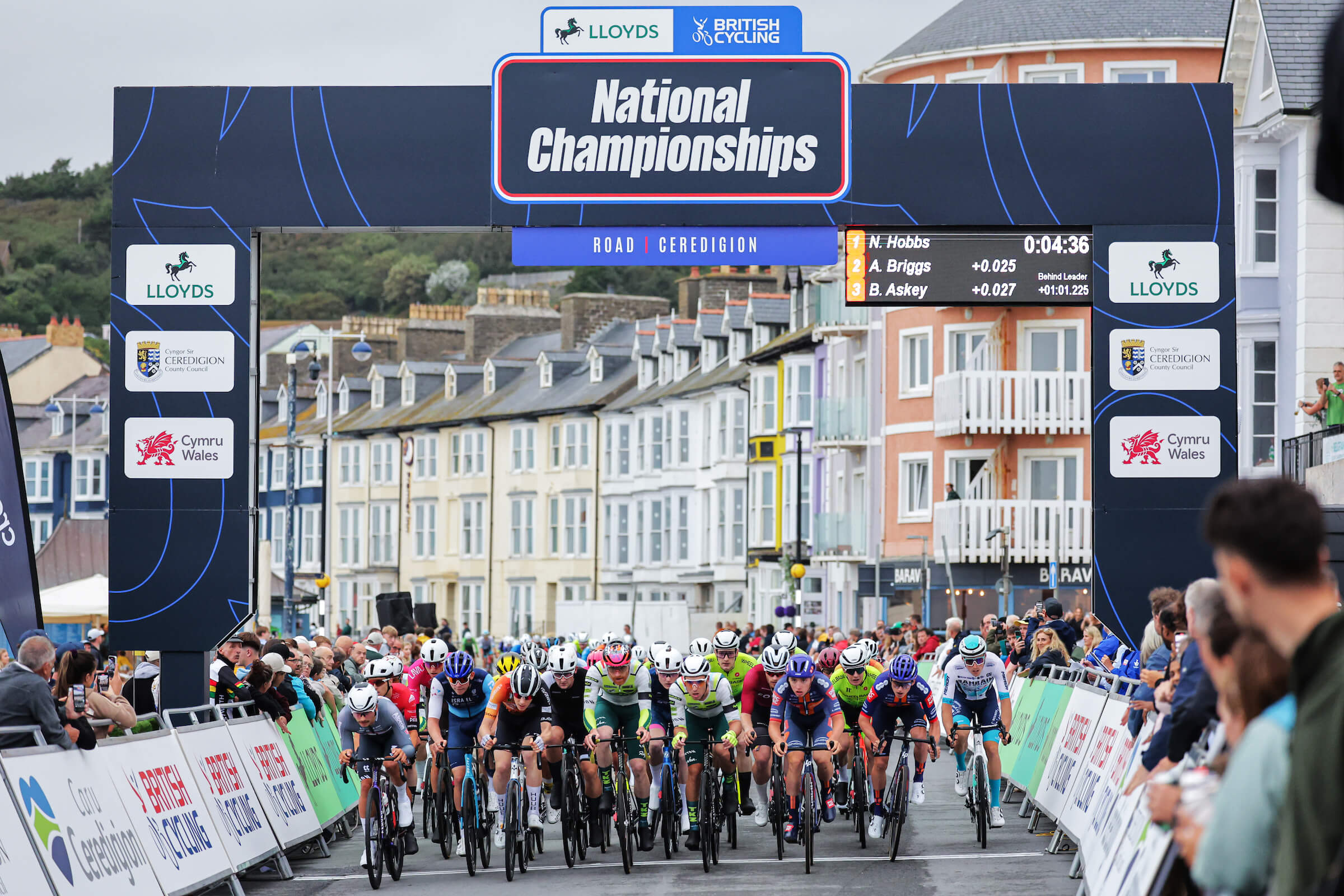
Strong Welsh contingent among elite field heading to Lampeter and Aberystwyth
SOME of Britain’s leading cyclists will head to Wales next week as the 2026 Lloyds National Road Championships get under way.
Sixteen former elite national road champions are among the riders named for the event, which begins in Lampeter on Thursday, June 25, before moving to Aberystwyth for the circuit race and road race.
Welsh rider Zoe Backstedt, of Canyon//SRAM Zondacrypto, is expected to be one of the headline names after winning the elite women’s time-trial title at last year’s championships.
Backstedt said: “I’m super excited to come back to Wales to race national champs this year. I don’t get to race in the UK a lot, let alone in Wales, so that makes it even more exciting to be there.
“We’ve got such a strong roster of riders in the UK, so it’s never going to be easy, but I hope I’ll come into this in good shape and fighting for the win.”
Millie Couzens, of Fenix-Premier Tech, returns to defend her women’s road race title. She faces a strong field including three-time road national champion Pfeiffer Georgi, Morven Yeoman, Imogen Wolff, Cat Ferguson, Anna Henderson and Flora Perkins.
In the men’s road race, Sam Watson, of NetCompany Ineos, will look to retain his crown against a field including former national champion Ben Swift, reigning under-23 champion Matthew Brennan, Adam Howell and Ethan Hayter.
Hayter said: “Nationals always seem to bring out the best in me. I’ve managed to win a jersey in 2024 and 2025, so it would be nice to try to add another in the TT or RR.
“Each year the level gets higher, but it makes for aggressive, exciting racing.”
Cameron Mason will return to Aberystwyth to defend his open circuit race title, with Thomas Armstrong, Matt Bostock and Oliver Wood among those expected to challenge.
Kate Richardson also returns as defending women’s circuit race champion. She will be joined by a strong field including Isabel Sharp, Carys Lloyd, Xan Crees, Jenny Holl and Josie Knight.
A number of Welsh riders will also compete across the championships, including Finlay Tarling, Elynor Backstedt, Anna Morris, Owain Doull MBE and Megan Barker.

Erin Boothman, following a successful track season, will make her Lloyds National Road Championships debut in the women’s road race and under-23 women’s time-trial. Ben Wiggins will also return to Ceredigion as he looks to improve on last year’s silver medal in the under-23 men’s time-trial.
Ten national champions’ jerseys will be contested over three days of racing.
The time-trial takes place in Lampeter on Thursday, June 25. The elite women, under-23 women and under-23 men will race over 25.6km, while the elite men will cover 38.4km.
Aberystwyth will host the circuit race on Friday, June 26, and the road race on Sunday, June 28, giving spectators the chance to watch some of Britain’s best riders on Welsh roads.
The championships return to Wales with support from the Welsh Government.
Pic: Lloyds National Circuit Championship 2025 (Pic: SWPix.com)

EIGHTEEN-year-old Henri Cynwyl, of Newcastle Emlyn, marked a memorable milestone at the Plains Rally, Bala, as he made his gravel debut in the highly competitive Mini Rally Challenge.
Henri was driving the ex-championship-winning car previously campaigned by Tom Hynd, giving the young driver a strong platform on which to demonstrate his ability.
Family team
Sitting alongside him was his father, Dilwyn John, whose extensive experience in the co-driver’s seat proved invaluable throughout the demanding event.
Despite mechanical issues on Stages 3 and 4, the father-and-son pairing showed determination and composure to overcome the setbacks and continue gaining valuable experience on the loose surface.
As the day progressed, Henri’s confidence grew with every stage. The crew’s times steadily improved throughout the rally, underlining his rapid adaptation to gravel and his ability to learn quickly in competitive conditions.

Their efforts were rewarded with an impressive sixth-place finish, a highly respectable result on a first gravel outing against more experienced competitors.
Strong foundations
The performance was even more notable given Henri’s limited gravel experience.
Having developed his car control skills through Teifi Valley Motor Club autotests from the age of 14, he was able to transfer much of that experience to the challenging Welsh forest stages.
Additional tuition on gravel from James Williams, of W1 Motorsport Group, also helped prepare him for the step up into rally competition on loose surfaces.
Reflecting on his debut, Henri said: “It was great and I enjoyed every minute of it. Taking part in Teifi Valley Motor Club autotests most definitely helped, along with tuition on gravel stages in the company of James Williams from W1 Motorsport Group.
“I’d also like to thank Mark Williams, my team manager, for all of the support and encouragement.”
Promising start
The successful gravel debut provides another encouraging chapter in the young driver’s development, with the pace, consistency and maturity shown throughout the day suggesting plenty more potential to come.

Henri now switches back to tarmac this weekend as he continues his busy season at the Park Garage Rally in Anglesey, aiming to build on the confidence gained from an impressive first appearance on gravel.
Looking ahead, he is already eagerly anticipating the next round of the Mini Rally Challenge in Greystoke Forest, Cumbria.
With a strong first result under his belt, and plenty of lessons learned from the Plains Rally, Henri will be aiming to build on his promising start when the championship heads north.
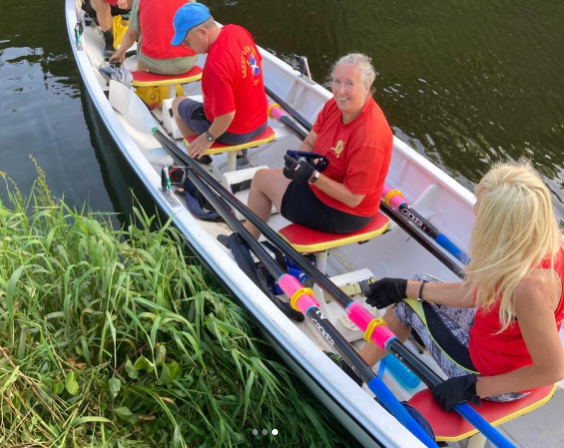
Crews from across the UK battle tides, headwinds and the Haven to finish marathon race at Haverfordwest River Festival
ROWERS from across the United Kingdom descended on Pembrokeshire at the weekend to take part in one of Wales’ toughest coastal rowing challenges — the 22-mile Cleddau River Marathon Row from Dale to Haverfordwest.
Held as part of the annual Haverfordwest River Festival on Saturday (Jun 13), the spectacular endurance race saw around 25 crews line up on the shoreline at Dale for a dramatic beach start before battling the tides, currents and changing weather conditions along the Milford Haven Waterway.
With calm waters and blue skies greeting competitors at the start, crews launched from Dale Bay at around 2:30pm and powered into the Haven, navigating a route that took them past Milford Haven, Neyland and Pembroke Dock before passing beneath the Cleddau Bridge and tackling the winding upper reaches of the river toward Haverfordwest.
However, conditions became more testing as the race progressed, with the tide turning against competitors and a headwind adding to the challenge during the final push upstream.
The marathon row was organised by Helen Heaton and Llangwm Rowing Club, with staggered starts helping ensure crews arrived in Haverfordwest in time for the celebrations at the River Festival.
At the finish line in Haverfordwest, exhausted rowers were greeted by cheering crowds, family members and councillors, who helped crews bring their boats ashore before an evening of celebrations and prize-giving at HaverHub.
The event drew teams from across Wales and further afield, highlighting Pembrokeshire’s growing reputation as a destination for competitive coastal rowing. The marathon route, stretching approximately 22 miles from Dale to the county town, is regarded as one of the more demanding fixtures in the Welsh sea rowing calendar.
Video crews and drone operators captured the action throughout the day, with local media teams filming both from shore and on the water.
The race was sponsored by Dale Sailing, with video sponsorship support from Pembrokeshire Powerboating and Sailing Academy.
The Herald understands the Wasps of Llangwm crew took top honours in the demanding race after a hard-fought contest on the water.
Photo caption:
Marathon effort: Crews from across the UK battled tides and headwinds during the 22-mile Cleddau River Marathon Row from Dale to Haverfordwest



News13 hours ago
Brexit at 10: How Britain was sold a dream that cost us dearly
A decade after the referendum, the promised benefits remain hard to find while the economic costs are increasingly difficult to...


Crime15 hours ago
Worcestershire man jailed after violent attack on woman in Tenby
Defendant was already serving a suspended sentence when serious assault took place A WORCESTERSHIRE man has been jailed for more...


Climate16 hours ago
Offshore wind ‘could bring new generation of jobs to Milford Haven’
Pembrokeshire ports and Celtic Sea projects placed at centre of Wales’ green energy ambitions MILFORD HAVEN and Pembroke Dock could...

Community2 days ago
Police officer hailed hero after midnight sea rescue in Milford Haven
PC swam 100 metres offshore to save distressed woman heard calling for help in darkness A DYFED-POWYS POLICE officer has...


Local Government2 days ago
Security privately arranged by Mayor at Beating of the Bounds
HAVERFORDWEST TOWN COUNCIL has confirmed that security personnel seen at this year’s Beating of the Bounds were privately arranged and...

Business3 days ago
Celtic Freeport five-year plan puts Milford Haven at centre of green energy future
Strategy promises investment, skilled jobs and new supply chains, but major barriers remain over grid connections, planning and delivery THE...


Education3 days ago
Closure of Ysgol Clydau approved after emotional council debate
COUNCILLORS WARNED RURAL COMMUNITIES WILL REMEMBER DECISION PEMBROKESHIRE councillors have voted to close Ysgol Clydau following an emotional debate over...


Education3 days ago
Manorbier school closure process to continue after narrow council vote
Questions remain over insurance, rebuilding costs and possible legal action by Diocese PEMBROKESHIRE councillors have voted to press ahead with...

Community3 days ago
The father, son and daughter lifeguard trio saving lives in Pembrokeshire
A FATHER, son and daughter are preparing to help keep beachgoers safe on the Pembrokeshire coast this summer as part...


Charity3 days ago
Children turn to Childline as loneliness cases rise
CHILDREN and young people struggling with loneliness are increasingly turning to Childline for support, new figures show. The NSPCC-run service...
-
 Community4 days ago
Pembrokeshire Chess Club crowned Welsh champions
-
Local Government2 days ago
Security privately arranged by Mayor at Beating of the Bounds
-

 Crime7 days ago
Pembroke Dock teenager sentenced over train strangulation attack
-

 Education6 days ago
Diocese threatens legal action as Manorbier school closure battle intensifies
-

 Crime7 days ago
Man accused of six rapes including alleged Haverfordwest offence
-

 Crime1 day ago
Man wanted by court after failing to attend hearing over alleged shop thefts
-

 Local Government6 days ago
Taxi suspended after county-wide licensing checks
-
 Crime1 day ago
Man banned from roads after drink-driving offence