

Business
Castell Howell Foods highlights sector concerns over Covid recovery


THE HOSPITALITY sector may be opening up, but transport and supply issues are hampering the industry’s recovery – according to Castell Howell Foods.
One of the UK’s largest independent food wholesalers, Castell Howell, has taken the step of contacting customers to highlight the significant challenges faced by the sector as it recovers from the pandemic.
While there is relief at easing lockdown and optimism for a busy summer with bookings for UK ‘staycations’ and leisure activities, pressing issues remain.
Shortages of key staff and problems faced by some suppliers have resulted in the Welsh wholesaler being forced to make some “uncomfortable” decisions and changes to its operation, including having to pass on some supply chain price increases.
In particular, a shortage of qualified delivery drivers has meant the Cross Hands based business has had to be resourceful to maintain its delivery frequency to its customers. To help bridge the gap in the short term, other Castell Howell staff who hold an HGV licence have been temporarily redeployed to the transport department. Among them are area sales managers.

Castell Howell Sales Director, Kathryn Jones, said “Unfortunately, due to the drastic reduction in sales in 2020, our workforce decreased by over 100 colleagues. Whilst we now need most to return to the workplace, many have found alternative employment; this is a common theme across the supply chain.
“We have been actively advertising and recruiting for several months. However, as highlighted in the press, there are over 75,000 vacancies across the UK for HGV drivers alone.
“We too are currently short of drivers, especially Class 2 HGV. Driving a multi-drop vehicle for Castell Howell is a very different proposition to driving a limited drop schedule. Consequently, as you can imagine, it has been challenging to fill these vacancies.”
Stock availability is also an issue, as some suppliers struggle to manufacture under new social distancing rules. Delivery to Castell Howell from suppliers is also being affected by the UK-wide shortage of haulage drivers.
Kathryn Jones said, “To build up buffer stocks, we are increasing our volume of orders, especially for commodity lines. We aim to mitigate future stock shortages the best we can. We are constantly seeking substitute products from manufacturers who have the capacity to deliver. However, this is becoming increasingly more difficult.”
Castell Howell has made changes to its ordering process to improve its own deliveries, with earlier cut-off times.
“These changes go against the grain and were extremely difficult decisions to take. However, it is imperative to implement these in order to continue operating under these difficult circumstances whilst still maintaining a high level of service. We are very grateful to our customers for their support, patience and understanding.”
For Castell Howell, the difficulties arising from the pandemic were exacerbated by the loss of business with SA Brain & Co. This loss occurred following the Welsh company’s deal with brewery giant Marston’s to operate SA Brains pubs from January 2021.

Before that date, Castell Howell had been the sole supplier to SA Brain since 2008, including supplying 80 of the Welsh brewery’s managed public houses.
Kathryn Jones said, “However, despite the challenges in the supply chain and deliveries, we remain optimistic that the sector in the UK will work together to navigate through these unprecedented times and have a successful summer.”













New industry report says county has received the second highest level of marine energy investment in Wales, supporting more than 500 jobs
PEMBROKESHIRE has emerged as one of Wales’ key marine energy hubs, with almost £98 million invested locally and more than 500 jobs supported, according to a new industry report.
Marine Energy Wales’ State of the Sector Report 2026 says £97.6 million has been invested in Pembrokeshire since 2015, the second highest figure of any Welsh local authority area after Anglesey.
The report says the county’s role is centred on port operations, marine services and the practical work needed to support renewable energy devices at sea.
It also highlights the Port of Milford Haven’s plans for a gigawatt-scale offshore wind operations and maintenance base at Pembroke Port, building on existing investment.
Across Wales, the marine energy and offshore wind sector has attracted an estimated £364.8 million since 2015, supporting 1,947 jobs.

Marine Energy Wales says much of the investment has gone into strengthening Wales’ supply chain, tidal stream projects, port infrastructure and manufacturing facilities.
Of the total invested, 40% relates to supply chain development, including port infrastructure and manufacturing facilities. Tidal stream technology and site development accounts for 33%, while research spending across Welsh universities, test facilities and collaborative programmes accounts for 12%.
Pembrokeshire forms part of the south west Wales cluster, alongside Carmarthenshire and Ceredigion, which together recorded £98.9 million of investment and 511 jobs.
Anglesey recorded the highest level of investment, with £114.5 million, driven largely by the Morlais tidal demonstration zone.
South Wales currently accounts for more than half of the sector’s Welsh employment, with the largest concentration of jobs in Cardiff. However, Pembrokeshire remains one of the most significant local authority areas for both jobs and investment.
The report says Wales’ marine energy and offshore wind sector is now moving from early-stage innovation towards commercial-scale deployment.
It says future growth prospects remain substantial, with offshore wind projects progressing in both the Irish Sea and Celtic Sea, while the first commercial tidal stream deployments at Morlais in North Wales are expected in 2027.

The figures underline Pembrokeshire’s growing importance in the Celtic Sea floating offshore wind sector, but the report warns that future growth will depend on continued investment, grid upgrades, supportive policy and the ability of Welsh industry to secure work as projects move from planning to delivery.
Tam Bardell, Chair of Marine Energy Wales, said Wales was beginning to realise its potential.
He said: “Wales is proving to be a credible and competitive location for both tidal stream and offshore wind, and against a backdrop of continuing global energy shocks, the sector is moving towards delivery.
“Projects like Morlais tidal demonstration zone are moving toward first power, while offshore wind in North Wales is accelerating and the Celtic Sea is progressing from test and demonstration to gigawatt-scale development.
“These are not incremental steps; they represent a step change in ambition, scale and impact.
“At Marine Energy Wales, we act as both facilitator and advocate, bringing together the organisations that make this sector work, ensuring Welsh voices are heard in national decision-making, and helping translate opportunity into delivery.
“There is still much to do. But for the first time, Wales is not just discussing its marine energy potential; we are beginning to realise it.”
The report says the next few years will determine whether Wales can capture the full economic and industrial value of the transition.
It says success will depend on continued investment, timely grid upgrades, supportive policy frameworks and the ability of Welsh industry to deliver at scale.

BARCLAYS has been urged to reopen bank branches in west Wales after reports that the banking giant is preparing to rebuild its high street presence.
Paul Davies MS, Senedd Member for Ceredigion Penfro, has written to Vim Maru, Chief Executive of Barclays UK, calling on the bank to restore full branch services in Pembrokeshire and Ceredigion.
Mr Davies said Haverfordwest and Aberystwyth should be treated as priority locations, with Tenby and Cardigan also considered as part of any future review.
The call comes after reports that Barclays is looking again at its high street network, including opening new branches, expanding some existing sites and reviving the traditional role of local bank manager.
Mr Davies said west Wales should not be overlooked if Barclays is serious about returning to communities.
Barclays closed its Haverfordwest branch in May 2024, while branches in Aberystwyth and Cardigan also shut that year. The closures left many customers in Pembrokeshire and Ceredigion without access to a full Barclays branch.
Mr Davies said the loss of face-to-face banking had hit residents, small businesses and community organisations across two largely rural counties.

He said: “It’s extremely disappointing that Barclays Bank currently has no branches in either Pembrokeshire or Ceredigion. This represents a significant reduction in service provision for both personal and business customers across the two counties.
“However, I welcome the bank’s recent announcement and have written to the Chief Executive to encourage Barclays to take this opportunity to restore banking services in our area by reopening branches in Pembrokeshire and Ceredigion.
“Access to face-to-face banking services remains vital for many residents, businesses and community organisations, and I hope the bank will give serious consideration to reopening the high street branches in west Wales.”

The withdrawal of bank branches has become a growing concern in towns across Wales, particularly for older residents, people without reliable internet access, rural customers who depend on public transport, and businesses that need to deposit cash.
While some banking services are available through the Post Office, Barclays Local sites and banking hubs, campaigners have argued that these do not always provide the same service as a fully staffed branch.

Mr Davies said Barclays now had an opportunity to show that rural communities would not be left behind.
He is asking the bank to place Haverfordwest and Aberystwyth at the front of the queue if it proceeds with plans to expand its branch network.
The Herald has contacted Barclays for comment.

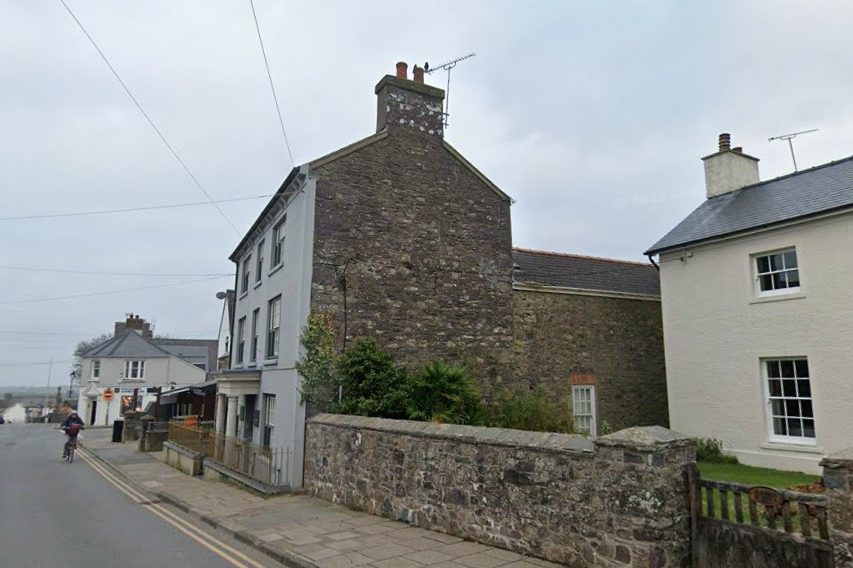
A PLANNING application has been approved to convert an outbuilding into a micro-bakery and carry out upgrades to a Grade II-listed property in St Davids.
The proposal, submitted to the Pembrokeshire Coast National Park Authority by Richard Francis and Sue Benge through agent Pembroke Design Ltd, relates to Manor House at 19 High Street, located within the St Davids conservation area.
The application sought permission for the refurbishment and change of use of an existing outbuilding to form a small-scale bakery, as well as a series of alterations and extensions to the main listed building.
The applicants aim to develop a plant-based bed and breakfast and micro-bakery business that serves the St Davids community, with a commitment to sustainability at the core of the project.
A supporting statement said: “It is the client’s goal to improve and upgrade the listed building, to reduce the carbon impact of the building by the removal of fossil fuel energy, improving energy efficiency and insulation, installing solar and heat pumps, thereby creating a sustainable, plant based bed and breakfast and micro bakery business serving the community of St Davids.”
The proposed bakery will be operated on a limited basis by the occupants of the property, typically opening two days a week.
Sales will be available through online order and collection only.
Other works include a modest single-storey rear extension, new heritage-appropriate timber double-glazed windows and doors, internal alterations, and the installation of rooflights.
Plans also include reinstating a historic window opening, fitting an air source heat pump, and other energy efficiency upgrades.
Additional proposals include solar panels on the outbuilding, a greenhouse in the rear garden, and other external works.
St Davids City Council supported the application, noting that it is unlikely to have a detrimental visual or environmental impact on the surrounding area.
Planning officers recommended approval, noting that the scheme has been carefully designed to respect the character and heritage value of the listed property.

An officer report stated: “The proposed development has been carefully designed to respect the character, appearance and significance of the listed building and its setting.
“The proposed rear extension is modest and subservient in scale, whilst the alterations to the existing building have been designed to improve its functionality, energy efficiency and long-term viability without causing unacceptable harm to its special architectural or historic interest.”
The micro-bakery was described as a “beneficial re-use” of the outbuilding.



Business3 hours ago
Pembrokeshire lands £98m share of Wales marine energy boom
New industry report says county has received the second highest level of marine energy investment in Wales, supporting more than...


Crime4 hours ago
First aider tells jury teacher was “crying, shaking” after classroom stabbing
A SCHOOL first aider has told a jury that teacher Vicki Williams was “crying, shaking” and in “complete shock” after...


Crime24 hours ago
Teacher feared she was dying after Milford Haven classroom stabbing
A TEACHER allegedly stabbed in the head at Milford Haven Comprehensive School told a jury she feared she was dying...


News1 day ago
Farage to resign as MP and fight Clacton by-election amid finance row
NIGEL FARAGE has announced he will resign as MP for Clacton and stand again in the by-election he intends to...
Crime1 day ago
Teacher tells jury there were ‘no issues’ with accused pupil hours before ‘stabbing’
Milford Haven teacher gives evidence as trial of 15-year-old continues at Swansea Crown Court A TEACHER allegedly stabbed at Milford...


News2 days ago
Major incident stood down after fire at Impala Terminal in Milford Haven
Fire involved decommissioned oil tank containing residual crude oil and around 60 cylinders A MAJOR incident declared during a fire...


News2 days ago
Large fire breaks out at Impala Terminal in Milford Haven
Black smoke seen for miles as emergency services respond to incident at former Puma Energy site A LARGE fire has...
Crime2 days ago
Prosecution outlines ‘planned attack’ as Milford Haven teacher stabbing trial opens
Jury hears teenager allegedly brought kitchen knife into school before teacher was stabbed in the head THE JURY in the...


Crime2 days ago
Boy, 15, denies attempted murder of Milford Haven teacher in ‘horrifying’ attack
Swansea Crown Court hears dramatic opening of trial over February stabbing A 15-YEAR-OLD boy from Milford Haven has gone on...


Crime3 days ago
Fishguard man cleared after five years in prison refused compensation again
Brian Buckle’s case raises fresh questions over justice system that says a man can be cleared by a jury but...
-

 Entertainment6 days ago
Pembrokeshire DJ lands record deal with London dance label
-

 Education7 days ago
Council deputy leader moves to halt Stepaside school closure plan
-

 News7 days ago
Bridge installation to begin at Tenby station as accessibility upgrade reaches key stage
-

 Crime6 days ago
Llandeilo man accused of rape sent to Crown Court
-

 Health7 days ago
Wales begins early NHS winter planning after long waits and ambulance pressure
-

 Charity7 days ago
Prince of Wales praises Wales Air Ambulance as charity marks 25 years
-

 Community6 days ago
Saundersfoot Harbour regeneration project wins national planning award
-

 Crime7 days ago
Fishguard man jailed after breaching order banning contact with mother