


Community
Bowel cancer screening age is being lowered to 55 in Wales

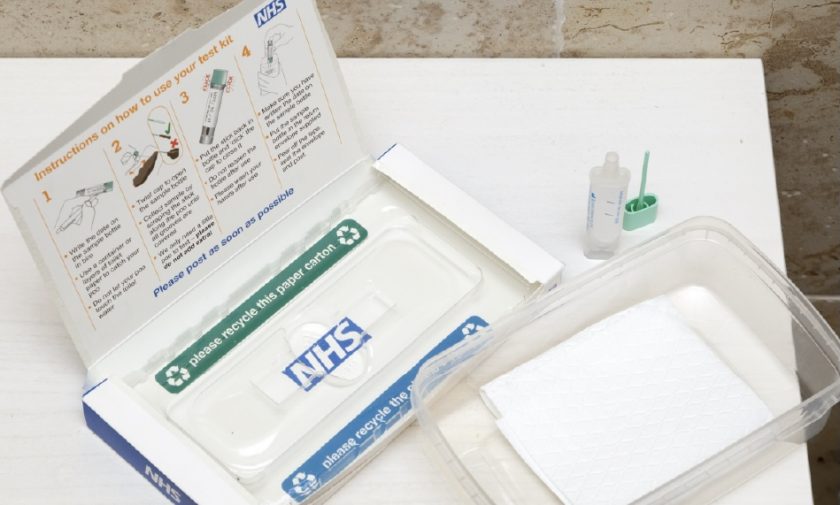
BOWEL cancer screening will be made available to more people in Wales as home testing is expanded to include 55-57 year olds.
The expansion will mean 172,000 more people in Wales will start to receive easy to use kits that test for the early stages of bowel cancer. The move is part of a phased approach to lowering the screening age to 50 by October 2024.
People aged 55, 56 and 57 will start to be invited for screening from Wednesday 5th October and will receive their home testing kits in the post. The programme will be rolled out to the newly eligible age group gradually over the next 12 months.
Part of a £16 million investment package by the Welsh Government, the funding has supported the introduction the new, easier to use, FIT (Faecal Immunochemical Test) at home testing kit.
The new home testing kits have helped improve screening uptake to 65% and have improved sensitivity to better detect those at risk of bowel cancer.

More than 2,500 people were diagnosed with bowel cancer in 2019. Screening plays an important role in detecting cancer earlier and helps to improve cancer outcomes in Wales.
The lowering of the screening age is based on the recommendation by the UK National Screening Committee.
Minister for Health and Social Services, Eluned Morgan said: “It is great to see the next phase of our plan to widen access to bowel cancer screening come into effect.
“We have previously introduced the more user-friendly test and started inviting those aged 58-59. This next phase of the programme widens access to those aged 55-57.
“This move will help us to identity more bowel cancer cases early and support improvement in survival rates.
“I’m also pleased to see that more people are taking part in the programme and that the uptake rate now meets the expected standard.
“In future, we plan to continue to optimise the programme by lowering the age range to 50 and increasing the sensitivity of the test until we come into line with UK recommendations.”

Genevieve Edwards, Chief Executive at Bowel Cancer UK says:
“This is a step in the right direction towards screening from 50 in Wales, which we’ve long campaigned for. Screening is one of the best ways to diagnose bowel cancer early, or in some cases prevent it from developing in the first place, and so inviting more people to take part is welcomed.
“Offering the home test to more people is just one of the ways to improve bowel screening, however, the biggest barrier to improving early diagnosis, and offering a world-class screening programme, is the long-standing workforce shortage in endoscopy and pathology services. We now urgently need to address this through a comprehensive workforce plan that can support the bowel cancer screening programme in Wales to achieve its full potential.”
Dr Sharon Hillier, Director of the Screening Division at Public Health Wales, said:
“I’m delighted that we are expanding the bowel cancer screening programme to include those aged 55, 56 and 57 in Wales.
“Bowel screening aims to find cancer at an early stage when treatment is likely to be more effective. Early detection is so important as at least 9 out of 10 people will survive bowel cancer if it’s found and treated early. Bowel screening also detects and removes pre-cancerous polyps that if left in the bowel could develop into cancer.
“The invitation and test kit will be arriving via post to those who are eligible over the next 12 months. The test kit is easy to complete and to send to our laboratory for analysis.
“I would urge everyone who receives an invitation to take up their offer as it could save their life.”













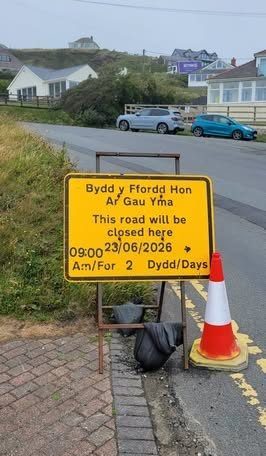
A STRETCH of road at Newgale will close for two days next week while resurfacing works are carried out.
The closure is planned for Tuesday (Jun 23) from 9:00am to 3:30pm, and Wednesday (Jun 24) from 9:00am to 4:00pm.
The affected section runs from Penycwm to just above Beachcroft bungalow in Newgale.
Traffic will be diverted via Roch Bridge and Eweston, between the Victoria Inn and Penycwm.
Businesses including the campsite, Landsker Line, Newsurf, Sands Café and the hardware shop are expected to remain open as normal. The car parks and the Welsh Road will also remain accessible, but traffic will not be able to travel up the hill towards Solva after the shop.
School buses are expected to run as normal, but the T11 service will operate to a special timetable between Haverfordwest and Roch. There will be no T11 service from Newgale to St Davids during the works. The 400 service will run as normal, but via the diversion route.
Cllr Mark Carter said he had asked for signs to be placed at Haverfordwest and St Davids, advising larger vehicles and those towing to consider using the A40 via Letterston, Mathry and St Davids instead.
An alternative route is via Crowhill, Hayscastle and Llandeloy crossroads, before rejoining the A487 at the top of Solva Hill.
Cllr Carter warned that the diversion route is likely to be busy, adding that drivers may need to reverse in places. He said the route had been cut back and overhanging branches removed.
Motorists are being urged to follow the signage and not to enter any road marked with a no-entry sign.
The closure times are a guide only, as resurfacing may take longer if the tarmac is slow to set in hot weather or if there is a mechanical breakdown.

New figures show rising employment across Wales while local teams support businesses, young people and the care sector
JOBCENTRE PLUS teams across South-West Wales are stepping up support for both employers and jobseekers as businesses prepare for the busy summer season.
The latest employment figures show that 1.494 million people are now in work across Wales – an increase of 9,000 over the last quarter and 18,000 compared to the same period last year. The Welsh employment rate now stands at 72.3%.
The Department for Work and Pensions (DWP) says Jobcentre Work Coaches and Recruitment Consultants are continuing to play a key role in helping people move into employment while supporting businesses struggling to fill vacancies.
Wyn Morris, DWP Recruitment Consultant Manager for South-West Wales, said: “During the busy summer season, Jobcentres remain focused on helping individuals take advantage of seasonal employment opportunities.
“We are working closely with employers to increase the supply of workers across sectors such as tourism, hospitality, retail and events, while also delivering job fairs and targeted initiatives to help young people secure suitable roles.”
He added that Neath Port Talbot had seen a 12 per cent reduction in Universal Credit claimants aged 50 and over, with specialist support continuing for older workers as well as people with disabilities and health conditions.
Focus on care sector recruitment
The care sector remains a major priority, with Jobcentre Plus working alongside organisations including Social Care Wales, Barcud Housing, the Care Society and the NHS to tackle recruitment challenges.
Recent initiatives, including childcare support and the Movement to Work programme, have helped increase the number of candidates entering care roles across Swansea, Neath Port Talbot and West Wales.
One recent recruitment campaign with M&D Care resulted in six candidates being interviewed, with all six offered jobs.
Another success involved a participant on an NHS vocational programme securing a permanent role within Support Services at Morriston Hospital.
The DWP said these outcomes demonstrate the value of tailored support and structured routes into employment.
Young people finding work
Supporting young people into sustainable employment remains a key focus.

One success story is Carlos, 18, who began claiming Universal Credit after leaving school in February and was unsure about his future career path.
Working closely with Jobcentre staff, he developed a CV, improved his interview skills and took part in the Movement to Work programme.
He later secured a permanent 30-hour-a-week position with A.F. Blakemore in Llantrisant.
Carlos said: “This experience really helped me understand the world of work. The support I received gave me the confidence and motivation I needed to secure a job. I’m very grateful for everything the Jobcentre has done for me.”
Lindsey Beasley, DWP Recruitment Consultant for Llantrisant, said personalised support can make a significant difference to young people’s prospects.
“When young people receive personalised support, they build confidence, develop skills and take meaningful steps into employment,” she said.
Transport concerns raised in Fishguard
Employment barriers in Pembrokeshire were also discussed during a recent meeting involving representatives from Fishguard and Goodwick Town Council, tourism businesses and local Senedd Member Kerry Ferguson.
A lack of public transport was identified as a significant obstacle for many jobseekers, particularly those under 25.
Discussions also explored the possibility of creating community-based facilities, including youth hubs, to support skills development and employment opportunities.
Partners attending the meeting pledged to strengthen engagement with local employers, particularly small and medium-sized businesses, and encourage more work experience opportunities.
£1.5 billion investment for young people
The Government has announced more than £1.5 billion of funding over the next three years to help young people aged 16 to 24 gain employment, education or training opportunities.
This includes £820 million for the Youth Guarantee and £725 million through the Growth and Skills Levy.
The Youth Guarantee aims to ensure every young person has access to work, training or education opportunities, helping them develop the skills needed for long-term employment.
Sian Davies, Recruitment Consultant Manager for South-West Wales, said employers could benefit from financial support when recruiting young people.
“Employers can access funding through two main routes: a six-month wage subsidy via the Youth Guarantee or a £3,000 job grant,” she said.
“Eligibility depends on the length of time a young person has been out of work.”
National picture
Commenting on the latest employment figures, Work and Pensions Secretary Pat McFadden said there were now 400,000 more people in work across the UK than a year ago.
He said the Government’s employment reforms and investment programmes were designed to create opportunities for young people while supporting disabled people and others facing barriers to work.
The DWP says Jobcentres will continue working with employers and community partners throughout the summer to help fill vacancies and support economic growth across Wales.
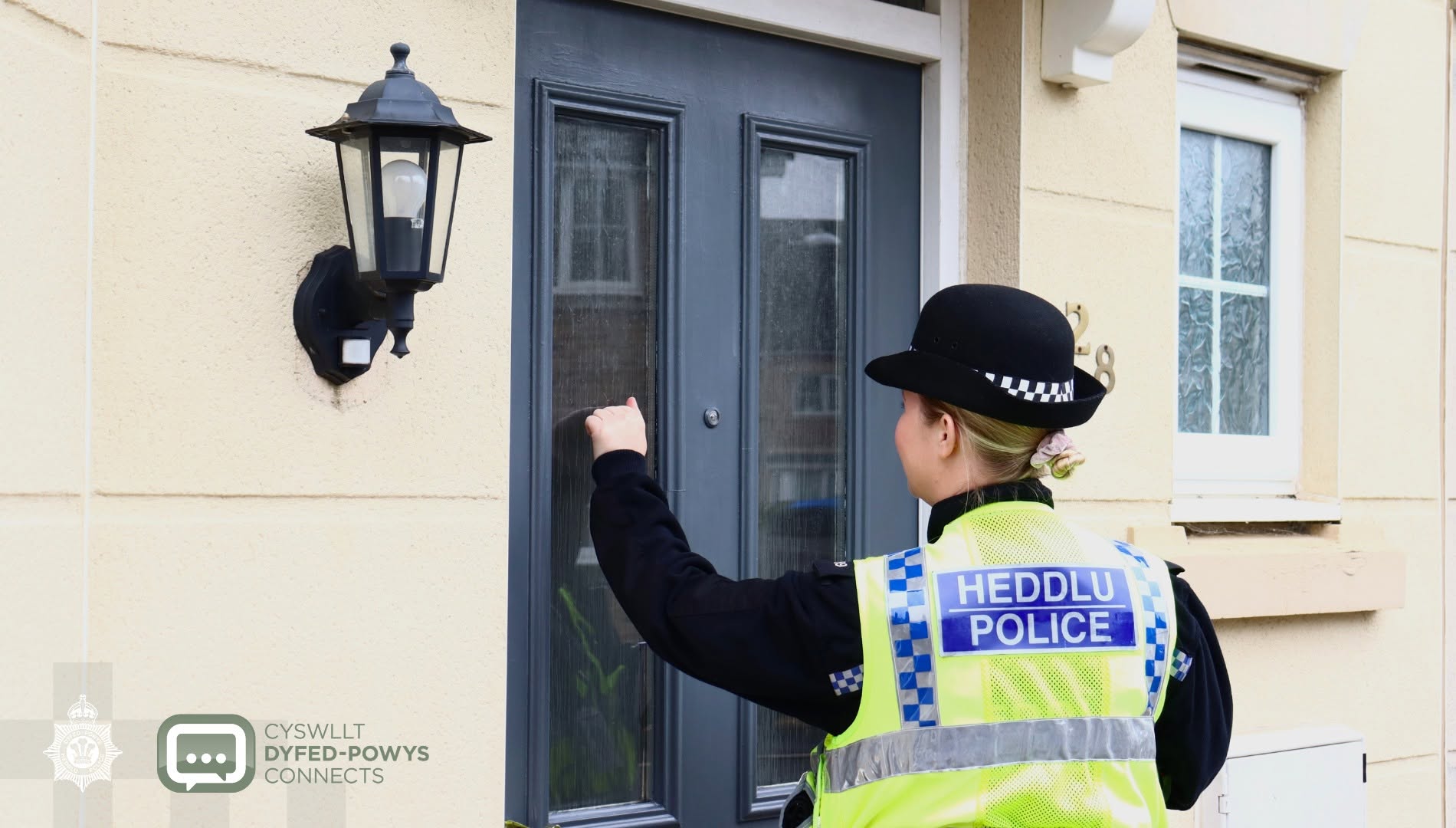
New operation aims to knock on more than 257,000 doors across Dyfed-Powys over the next three years
DYFED-POWYS POLICE has launched a major new community engagement operation aimed at visiting every home across the force area within the next three years.
Operation Connect will see neighbourhood policing and prevention teams proactively call at residential properties across Pembrokeshire, Carmarthenshire, Ceredigion and Powys.
The force says the initiative is designed to increase visibility, improve communication, and give residents a direct opportunity to raise local concerns with officers and PCSOs.

According to Dyfed-Powys Police, there are 257,416 residential properties across the force area currently active on local authority council tax systems. The aim is for officers and staff to knock on every one of those doors over the course of the operation.
The scheme follows the launch of Dyfed-Powys Connects in September 2025, a two-way messaging system intended to improve contact between police and local communities.
Chief Inspector Dominic Jones said: “It is vital that we make every effort to connect with those who live and work in our communities, as our public deserves to know their local police teams and feel a genuine sense of trust and confidence in Dyfed-Powys Police.
“I know how much our neighbourhood policing teams care about their areas, and we are undertaking this work because we truly care about the communities we serve.”
During visits, PCSOs will also help residents complete priority surveys. The force says these will allow local concerns to be recorded and used to shape future policing activity.
Dyfed-Powys Police says the surveys will provide measurable data to help maintain community confidence and support problem-solving with partner agencies.

The force currently has 189 full-time equivalent officers and staff deployed in neighbourhood teams. This includes 131 PCSOs and 58 police constables, made up of 29 existing officers and a further 29 through the Neighbourhood Guarantee uplift.
To cover the whole force area, each officer or staff member would need to visit around 1,362 properties. Dyfed-Powys Police says this would equate to approximately six properties per officer or staff member each day over a 12-month period.
Chief Inspector Jones added: “By reporting back on our progress through ‘You Said, We Did,’ we will continue to build, solve problems, and maintain lasting relationships with the communities we serve.”

The force says Operation Connect will help it build stronger relationships by listening to local issues, addressing concerns through targeted policing, and sharing progress with communities.



News23 hours ago
Motorcyclist, 22, dies in A4075 crash in Pembrokeshire
A 22-year-old woman remains in hospital after two-vehicle collision A MOTORCYCLIST has died following a serious two-vehicle crash on the...


Community1 day ago
Why police will be visiting every home in Pembrokeshire
New operation aims to knock on more than 257,000 doors across Dyfed-Powys over the next three years DYFED-POWYS POLICE has...


Crime1 day ago
Prisons at breaking point: MPs warn Wales is paying the price of a failing system
Frozen healthcare budgets, overcrowded jails, homelessness on release and mounting pressure on staff are undermining rehabilitation across Wales, according to...


News2 days ago
Brexit at 10: How Britain was sold a dream that cost us dearly
A decade after the referendum, the promised benefits remain hard to find while the economic costs are increasingly difficult to...


Crime2 days ago
Worcestershire man jailed after violent attack on woman in Tenby
Defendant was already serving a suspended sentence when serious assault took place A WORCESTERSHIRE man has been jailed for more...


Climate2 days ago
Offshore wind ‘could bring new generation of jobs to Milford Haven’
Pembrokeshire ports and Celtic Sea projects placed at centre of Wales’ green energy ambitions MILFORD HAVEN and Pembroke Dock could...


Community3 days ago
Police officer hailed hero after midnight sea rescue in Milford Haven
PC swam 100 metres offshore to save distressed woman heard calling for help in darkness A DYFED-POWYS POLICE officer has...


Local Government3 days ago
Security privately arranged by Mayor at Beating of the Bounds
HAVERFORDWEST TOWN COUNCIL has confirmed that security personnel seen at this year’s Beating of the Bounds were privately arranged and...


Business4 days ago
Celtic Freeport five-year plan puts Milford Haven at centre of green energy future
Strategy promises investment, skilled jobs and new supply chains, but major barriers remain over grid connections, planning and delivery THE...


Education4 days ago
Closure of Ysgol Clydau approved after emotional council debate
COUNCILLORS WARNED RURAL COMMUNITIES WILL REMEMBER DECISION PEMBROKESHIRE councillors have voted to close Ysgol Clydau following an emotional debate over...
-

 Community5 days ago
Pembrokeshire Chess Club crowned Welsh champions
-

 Crime1 day ago
Milford Haven man jailed for breaching domestic violence protection order
-
Local Government3 days ago
Security privately arranged by Mayor at Beating of the Bounds
-

 News23 hours ago
Crash on Freeman’s Way causes school-run chaos across Haverfordwest
-

 Education7 days ago
Diocese threatens legal action as Manorbier school closure battle intensifies
-

 Crime3 days ago
Man wanted by court after failing to attend hearing over alleged shop thefts
-

 Crime3 days ago
Man jailed after admitting strangulation and assaults
-
 Crime3 days ago
Man banned from roads after drink-driving offence