


Business
Home repossessions on the decline despite rising mortgage costs


THE LASTEST market analysis from property purchasing specialist, House Buyer Bureau, reveals that since the Bank of England started raising interest rates at the end of 2021, the number of homes being repossessed by money lenders has significantly decreased, bucking the expected trend that more and more people would lose their homes as mortgage payments go up.
In December 2021, the Bank of England started increasing interest rates to try and bring stability to the nation’s economy in the wake of the pandemic, a trend that has continued into 2022 as energy prices and war in Ukraine continue to cause economic turbulence.
As a result of these increases, the number of monthly mortgage approvals in the UK since December 2021 has fallen by -19.2% as borrowing becomes more expensive and prospective homebuyers decide to postpone their ambitions until a more stable time.
But despite this, the impact on the housing market has not been entirely negative because, as Home Buyer Bureau’s research reveals, the rate increase has not yet resulted in a rise in the number of people having their homes repossessed. Instead, there has actually been a significant drop.
In the eight months preceding December 2021, there were 1,739 repossessions across England and Wales.

The latest available data shows that in the months following the rates increase, this number has fallen by -26.1% to a total 1,285 repossessions.
The biggest fall in repossessions has been reported in the East of England where a pre-rates increase total of 70 repossessions has dropped to just 19. This is a -72.9% decrease.
In the South West, 114 repossessions in the eight months before the rates increase has fallen to just 73 in the months since; a drop of -36%. And in the North West, a total of 403 repossessions has dropped by -32.5% to just 272.
The fall in repossessions has also been significant in the North East (-30.8%), South East (-28.2%), London (-25.7%), and West Midlands (-22.7%).
Meanwhile, the drop has been smaller in Yorkshire & Humber (-2%), Wales (-6.4%), and the East Midlands (-9.3%).
Managing Director of House Buyer Bureau, Chris Hodgkinson, commented:
“Interest rate increases are never welcome news for homeowners with mortgages, so it’s going to be a relief for many to see that repossessions have not become more frequent as a result.

But this sharp decrease in repossessions doesn’t necessarily mean that homeowners are having no problem with fulfilling their mortgage. Instead, a key factor will be the fact that lenders are being advised to avoid rash repossessions in the case of payment shortfalls.
They are, for example, being advised to allow homeowners to stay in possession of the property for a reasonable time to enable them to sell the property rather than have it taken away.
So, while this drop in repossessions is preferable to a rise, it doesn’t necessarily mean that people aren’t struggling with payments and we could well see a spike in repossessions over the coming months, as the patience of lenders wears thin when it comes to those unable to fulfil their repayment obligations.”


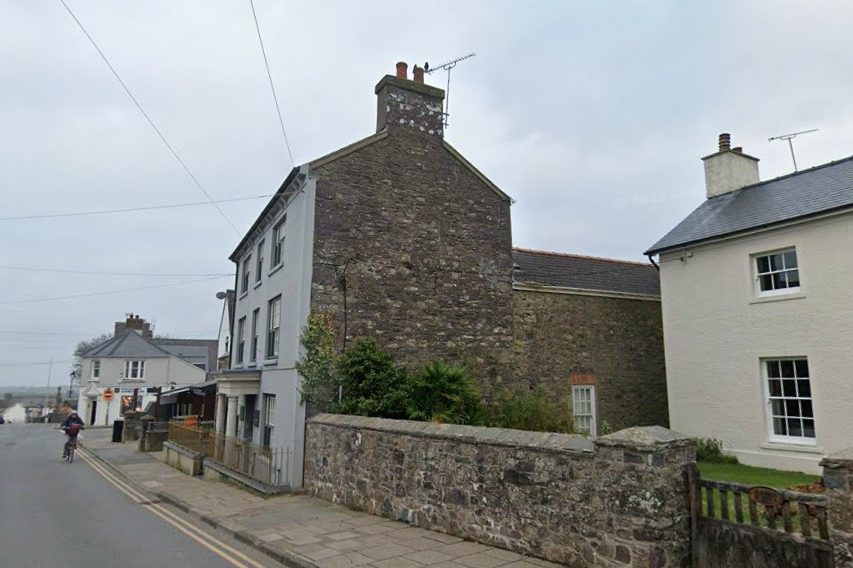
A PLANNING application has been approved to convert an outbuilding into a micro-bakery and carry out upgrades to a Grade II-listed property in St Davids.
The proposal, submitted to the Pembrokeshire Coast National Park Authority by Richard Francis and Sue Benge through agent Pembroke Design Ltd, relates to Manor House at 19 High Street, located within the St Davids conservation area.
The application sought permission for the refurbishment and change of use of an existing outbuilding to form a small-scale bakery, as well as a series of alterations and extensions to the main listed building.
The applicants aim to develop a plant-based bed and breakfast and micro-bakery business that serves the St Davids community, with a commitment to sustainability at the core of the project.
A supporting statement said: “It is the client’s goal to improve and upgrade the listed building, to reduce the carbon impact of the building by the removal of fossil fuel energy, improving energy efficiency and insulation, installing solar and heat pumps, thereby creating a sustainable, plant based bed and breakfast and micro bakery business serving the community of St Davids.”
The proposed bakery will be operated on a limited basis by the occupants of the property, typically opening two days a week.
Sales will be available through online order and collection only.
Other works include a modest single-storey rear extension, new heritage-appropriate timber double-glazed windows and doors, internal alterations, and the installation of rooflights.
Plans also include reinstating a historic window opening, fitting an air source heat pump, and other energy efficiency upgrades.
Additional proposals include solar panels on the outbuilding, a greenhouse in the rear garden, and other external works.
St Davids City Council supported the application, noting that it is unlikely to have a detrimental visual or environmental impact on the surrounding area.
Planning officers recommended approval, noting that the scheme has been carefully designed to respect the character and heritage value of the listed property.

An officer report stated: “The proposed development has been carefully designed to respect the character, appearance and significance of the listed building and its setting.
“The proposed rear extension is modest and subservient in scale, whilst the alterations to the existing building have been designed to improve its functionality, energy efficiency and long-term viability without causing unacceptable harm to its special architectural or historic interest.”
The micro-bakery was described as a “beneficial re-use” of the outbuilding.
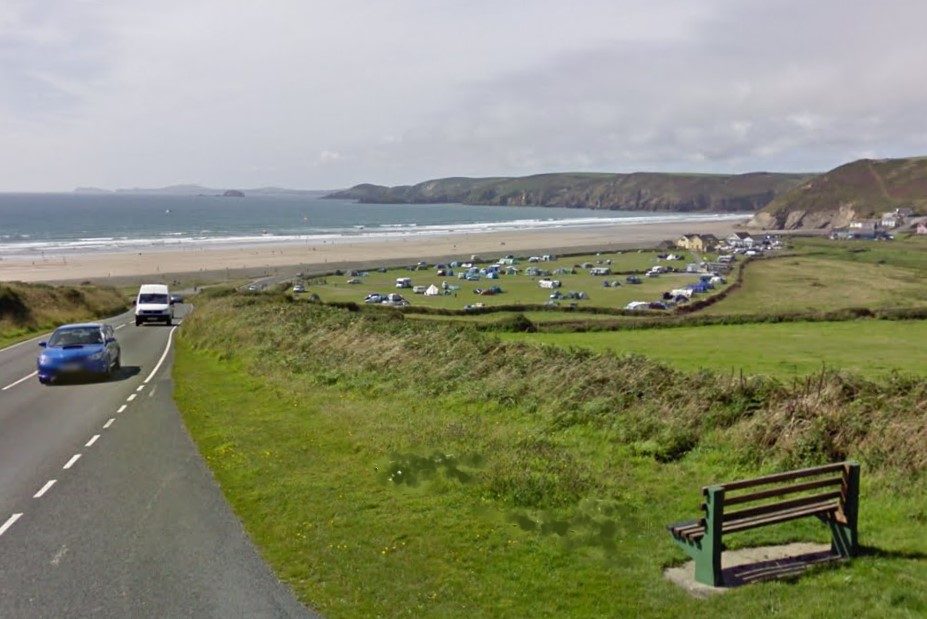
A SCHEME to improve a Pembrokeshire seaside village home and surf shop, while also removing an unlawful part that was subject to an enforcement notice, has been given the go-ahead.
In an application to Pembrokeshire Coast National Park, Bruce Sanderson of New Surf, through agent A D Architectural Design Consultants LTD sought permission for internal and external alterations to dwelling and surf shop, at New Surf, Newgale, including the removal of an un-lawful use of part of the ground floor as a shop.
The proposals were supported by Nolton and Roch Community Council.
An officer report recommending approval said: “The proposal returns the dwelling building to full residential use only. The application site is in a particularly sensitive location and appropriate mitigation has been sought and conditions imposed to preserve protected sites and species.”
It added: “The property known as Newsurf is a two-bedroom dormer bungalow with adjoining surf shop opposite the shingle bank of Newgale beach. The surf shop is positioned southeast of the bungalow and comprises a pair of pitched roof store buildings with linking flat roof section to the dwelling. Prior to being a surf shop, the application site was a filling station.
“The southern ground floor area of the dormer bungalow has been in retail use without planning authorisation and the remaining ground floor as residential use. Plans show two bedrooms and a storage area on the first floor of the dwelling.”
It detailed the proposals addressed the unauthorised aspects of development relating to a 2022 national park enforcement notice.
It concluded: “The proposed scheme is considered acceptable in how it responds to landscape setting, visual, aesthetic, historical, cultural and ecological aspects and also the physical characteristics of the site.
“The proposal preserves and enhances the character of the dwelling and by doing so will not create an unacceptably detrimental impact on the special qualities of the National Park. It is not considered that the development will cause an unacceptable impact upon privacy or amenity of neighbouring properties.”
The application was conditionally approved.
The Newsurf site also features in plans by a Vodafone phone company subsidiary to bring fibreoptic cables across the sea from Ireland to Pembrokeshire; the onshore part of a project to bring a fibreoptic cable onshore from Kilmore Quay, Wexford, Ireland to a site at Newsurf shop car park, Sands Café Car Park and the Duke of Edinburgh Inn, Newgale.
No decision has yet been made on that application.

First Milk site secures four major trophies as co-operative celebrates 26 awards at International Cheese & Dairy Awards
FIRST MILK’S Haverfordwest Creamery has celebrated major success at this year’s International Cheese & Dairy Awards, after helping the farmer-owned co-operative secure 26 awards at the world’s largest cheese show.
First Milk won eight gold medals, 11 silver medals, one bronze medal and six major trophies at the prestigious awards, with cheese produced at Haverfordwest Creamery securing four of the competition’s top honours.
The Pembrokeshire creamery won the CHR Hansen Trophy for Champion Double Gloucester, the Tetra Pak Tebel Award for Best Extra Mature Creamery Block Cheddar, the ICDA Award for Best Medium Creamery Block Cheddar and the First Milk Past Masters Trophy.
The results underline the quality and consistency of the cheese produced at the Haverfordwest site, which continues to play a key role in First Milk’s award-winning cheesemaking operation.
Held annually, the International Cheese & Dairy Awards attracted its highest number of entries in several years, with many of the creamery cheddar classes receiving between 30 and 40 entries.
First Milk was recognised across a wide range of cheddar and regional cheese categories, including Double Gloucester, Red Leicester, Welsh cheese, vegetarian cheese and English creamery cheddar.
Jack Eade, Customer Quality Manager at First Milk, said the awards reflected the hard work of teams across the business.
He said: “These awards are incredibly hard won and reflect the dedication, expertise and passion of everyone involved in producing our cheese.
“To receive recognition across so many categories at one of the world’s most respected cheese competitions is something everyone at First Milk can be enormously proud of.
“While our grading team selects and prepares the entries, none of these achievements would be possible without the commitment of our farmer members producing exceptional quality milk, and the highly skilled teams at our creameries transforming it into consistently award-winning cheese.”
The latest success continues First Milk’s long-standing record at the International Cheese & Dairy Awards and reinforces Haverfordwest Creamery’s reputation as one of the leading producers of award-winning British cheese.
Photo caption:

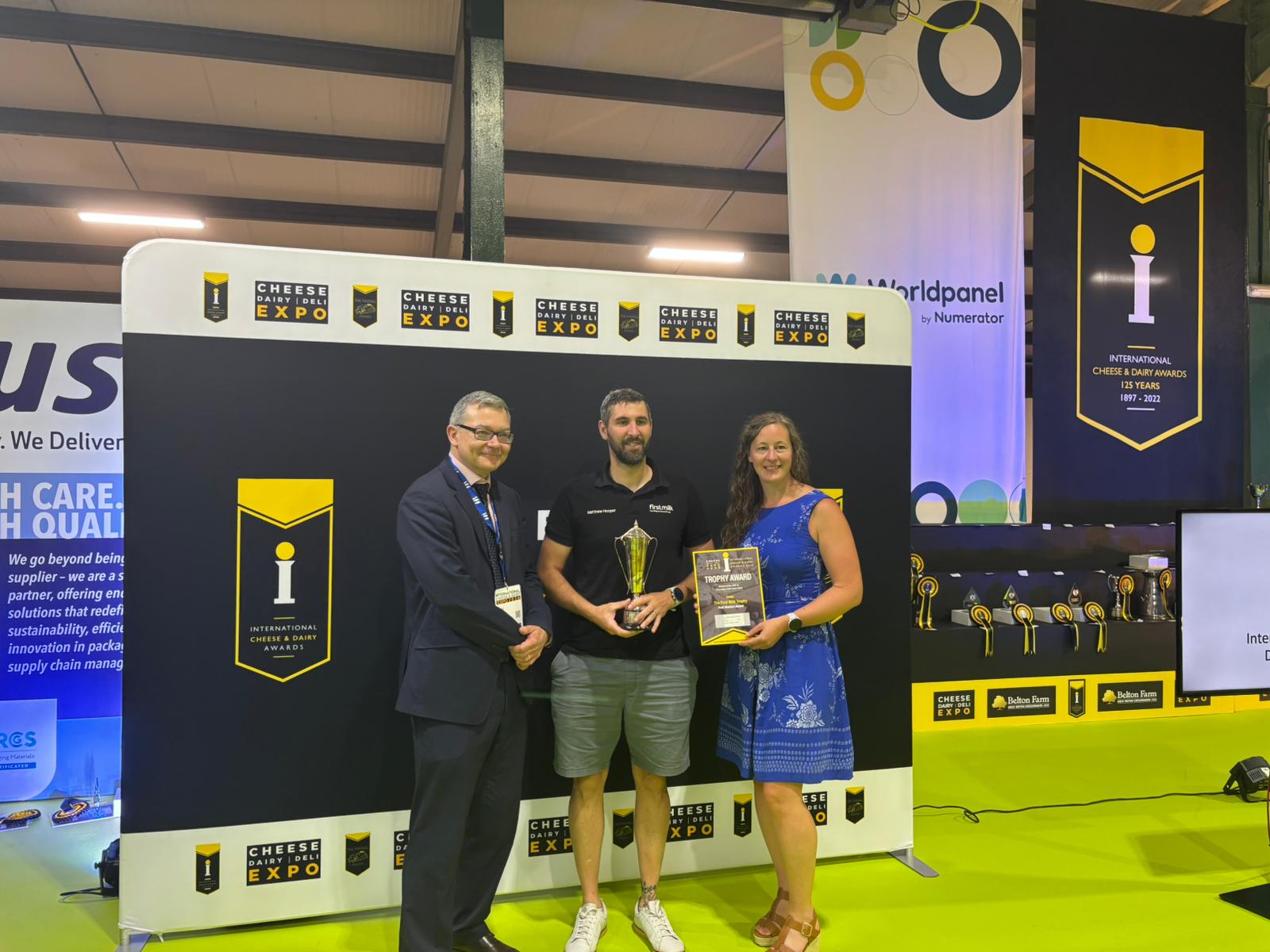
Rod Addy, Director General of the Provision Trade Federation, with First Milk’s Matthew Hooper and Dawn Mason at the International Cheese & Dairy Awards



News6 hours ago
Major incident stood down after fire at Impala Terminal in Milford Haven
Fire involved decommissioned oil tank containing residual crude oil and around 60 cylinders A MAJOR incident declared during a fire...


News9 hours ago
Large fire breaks out at Impala Terminal in Milford Haven
Black smoke seen for miles as emergency services respond to incident at former Puma Energy site A LARGE fire has...


Crime12 hours ago
Prosecution outlines ‘planned attack’ as Milford Haven teacher stabbing trial opens
Jury hears teenager allegedly brought kitchen knife into school before teacher was stabbed in the head THE JURY in the...


Crime15 hours ago
Boy, 15, denies attempted murder of Milford Haven teacher in ‘horrifying’ attack
Swansea Crown Court hears dramatic opening of trial over February stabbing A 15-YEAR-OLD boy from Milford Haven has gone on...


Crime1 day ago
Fishguard man cleared after five years in prison refused compensation again
Brian Buckle’s case raises fresh questions over justice system that says a man can be cleared by a jury but...


Crime2 days ago
Wales’ police commissioners to face MPs over future of policing
WALES’ four Police and Crime Commissioners are to be questioned by MPs next week as major changes to the way...


Crime2 days ago
Man in critical condition after serious assault in New Quay
A 20-YEAR-OLD man remains in a critical condition in hospital after being seriously assaulted in New Quay. Dyfed-Powys Police said...


Community2 days ago
Kilgetty and Begelly tractor run raises funds for local charities
Around 70 tractors joined the annual charity road run, hosted by the Begelly Arms Hotel THE ANNUAL Kilgetty and Begelly...


Community2 days ago
Milford Haven Carnival brings colour, music and crowds to the town
MILFORD HAVEN was filled with colour, music and community spirit on Saturday as the town’s annual carnival brought crowds onto...


News3 days ago
A40 closed near Llandeilo following collision
A SECTION of the A40 in Carmarthenshire has been closed in both directions following a collision. The road is currently...
-

 Crime6 days ago
Estate agent banned after drug-drive crash in Milford Haven
-

 Crime7 days ago
Eight guilty over ‘industrial scale’ cocaine conspiracy into Pembrokeshire and Carmarthenshire
-

 Crime6 days ago
Men threatened to have prisoner killed in chilling phone call to his father
-
Crime7 days ago
Judge calls pensioner a ‘dirty old man’ as he avoids jail for exposing himself to women
-

 Entertainment5 days ago
Pembrokeshire DJ lands record deal with London dance label
-
 Education5 days ago
Council deputy leader moves to halt Stepaside school closure plan
-

 Education7 days ago
School leaders call for more support after Estyn finds RSE provision varies across Wales
-

 Crime6 days ago
Pembrokeshire dairy farmer banned after drink-drive offence