


Community
Community asset bids sought for former John Nash designed Foley House


COMMUNITY groups who want to take over a Grade II-listed Georgian town house in Haverfordwest have just a few days to submit bids to Pembrokeshire County Council.
The council is proposing to dispose of the John Nash-designed Foley House via a Community Asset Transfer (CAT), and is inviting applications from the community, charitable or not-for-profit organisations who will use the asset to benefit the community, or for social aims.
The closing date for applicants submitting a business plan to [email protected] is just a few days away, March 24.
Following that, it is expected any recommendations for a CAT transfer will be considered at the April meeting of Pembrokeshire County Council’s Cabinet.
One of those in the running is Adam’s Bucketful of Hope Cancer Support Centre.

The family of Adam Evans-Thomas has been fundraising for almost 30 years for various areas of the NHS.
Adam, who died of leukaemia started the fundraising by raising £45,000 in 1993 to test 3,000 potential Bone Marrow Donors from Pembrokeshire for the Welsh Bone Marrow Donor Register.
Since his death, in 2007 a High Dependency Room called the “Pembrokeshire Room” in Cardiff’s Heath Hospital was funded by his charity, and in 2009 Adam’s Bucketful of Hope Cancer Support Centre was opened.
In November 2021, the charity started looking for new premises, eventually deciding that Foley House had the space inside and out to allow the charity to expand from supporting cancer patients to supporting patients with all life-limiting conditions.
The charity approached Pembrokeshire County Council and has entered into a CAT bid for Foley House.
For any prospective bidders, Pembrokeshire County Council states there should be support within the community for the proposal and optimum use of the asset for the community should be made.
There should be both a need and demand for the proposed activities and consideration will be given as to whether or not these are being satisfactorily addressed by another organisation.

The proposal will need to demonstrate how it benefits as wide and diverse a range of local people as possible, with an inclusive approach to all members of the community.
The business plan submitted must answer a string of criteria, including the applicants being able to restore, repair and maintain the building, in keeping with the legal requirements of its Grade II listing.
All costs will be the applicant’s liability and all current illegal alterations must be rectified, the council has said.
Prospective parties are advised to contact Pembrokeshire County Council Planning Department on Haverfordwest 01437 764551.


FOLLOWING a recent Church in Wales legal threat against Pembrokeshire’s council over plans to remove church status from Cilgerran’s school, Wales Humanists has supported the council plans.
The Humanist support comes after the Church in Wales issued a formal notice that it will take legal action against Pembrokeshire County Council if it presses ahead with plans to remove church status from Cilgerran Voluntary Controlled Primary School.
Back in May, the council voted to remove the Voluntary Controlled status of the Welsh-speaking rural school and to establish it as a 3-11 community school despite 97 per cent of the responses to a consultation about its potential discontinuation opposing it.
That consultation followed a review which “considered the extent of surplus school places in the area, set against a significant decline in the pupil population,” the council has previously said.
Hundreds opposed the proposed changes, with a petition on the council’s own website gaining 391 signatures.
During the consultation, 203 responses were received; 97 per cent (197 responses) against the proposal, with just 1.5 per cent (three) in favour.
Following this, a letter was sent to council officers on behalf of the Diocese of St Davids and the Church in Wales saying that, if the council persists with this course, the Church will take legal action on the grounds of claims of “public misrepresentation and unqualified legal assertions made by Pembrokeshire County Council officers,” and “discrimination against faith schooling”.
The letter also says that, if the council removes VC status from the school, the Church will not make the site available for a successor school, which it says will render “the case on which the proposed removal of VC status is based untenable”.
The legal warning described “the gratuitous attack on the church status of Ysgol Cilgerran” as amounting to “a targeted assault on the inclusive Christian education which Church in Wales schools have provided to their communities for generations”.
Since then, Wales Humanists has welcomed the move, which would remove church status from Cilgerran Voluntary Controlled Primary School, and has written to Pembrokeshire County Council expressing its support for the proposal “on behalf of the area’s substantial non-religious community”.
It says, according to the 2021 Census, almost half of people in Pembrokeshire identified as having no religion.
Kathy Riddick, Campaigns and Policy Manager for Wales Humanists, said: “Schools should exist to serve their whole community. Where publicly funded schools no longer reflect the beliefs of the communities they serve, it is entirely appropriate for local authorities to consider whether they should continue to have a religious character.

“The question is whether publicly funded schools should continue to be legally designated as belonging to one particular religion when they serve increasingly diverse communities.
“We believe education should be equally welcoming to every child, regardless of their religion or belief, and call on local authorities across Wales to keep the religious character of maintained schools under review so that school organisation reflects local demographics and the needs of modern communities.”

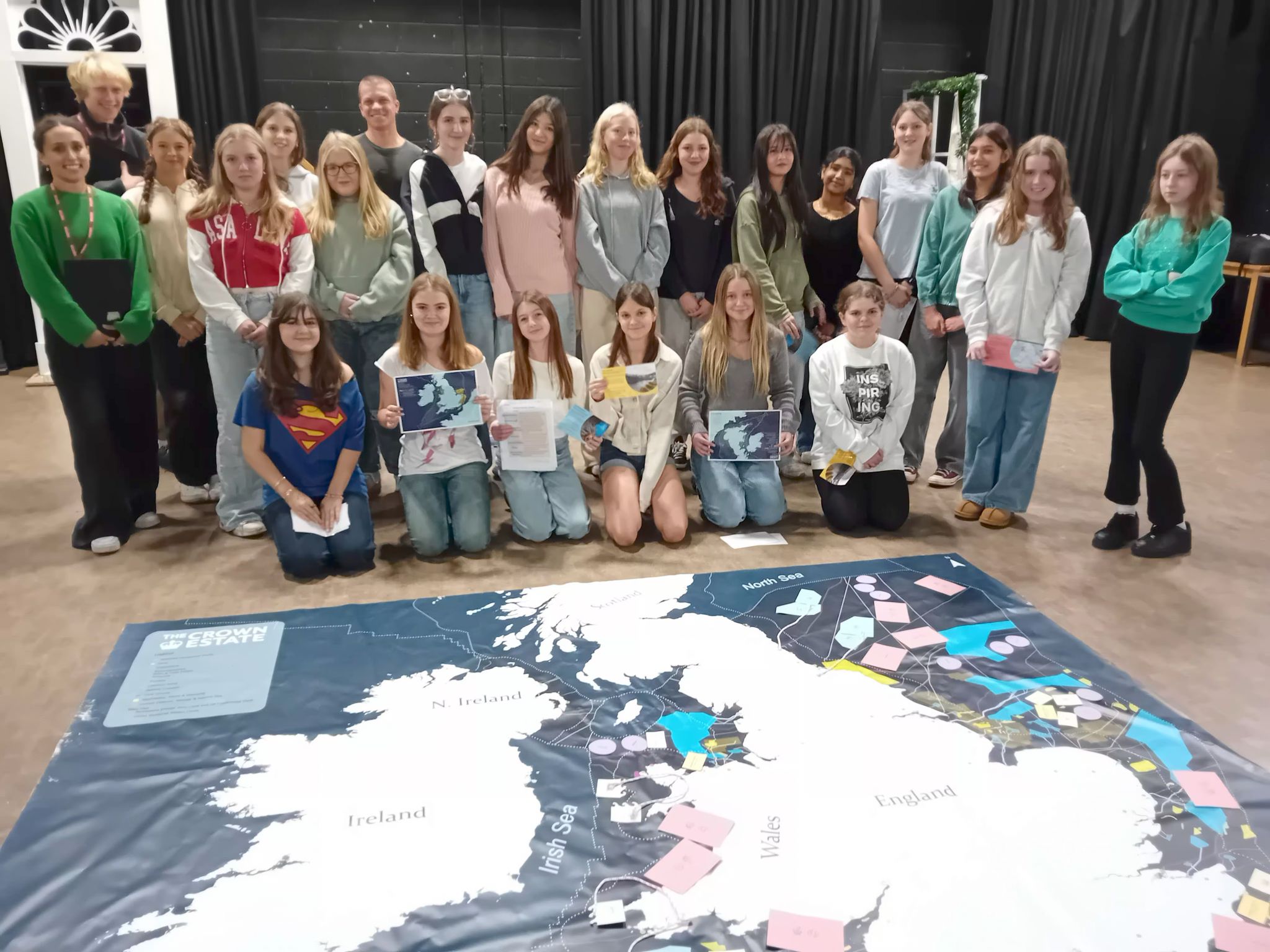
A PIONEERING Pembrokeshire skills initiative encouraging young women to consider careers in sustainable power, renewable energy and construction has welcomed The Crown Estate as its newest partner.
The SPARC Alliance works with secondary schools across the county to bring future local career opportunities to life for girls aged 12 to 14, with a particular focus on STEM-related pathways.
The programme is already supported by RWE Generation and RWE Renewables at Pembroke Power Station, the Port of Milford Haven, Blue Gem Wind and Ledwood Engineering.
It has now announced new backing from The Crown Estate, the independent organisation which manages land, property and the seabed across England, Wales and Northern Ireland.
The Crown Estate is playing a key role in the development of floating offshore wind in the Celtic Sea, with South West Wales expected to be at the centre of a new clean energy industry.
Three sites for new windfarms are being taken forward by some of the world’s leading offshore wind companies, creating major opportunities for the region and its supply chain.
The Crown Estate has also awarded funding through its £50m Supply Chain Accelerator Programme, including projects in Pembrokeshire, and is co-funding the regional Fit For Offshore Renewables programme in South Wales with the Offshore Renewable Energy Catapult.
Supporters say the growth of the sector could create significant demand for engineers, welders, construction workers, environmental specialists, business support professionals, maritime experts and port operatives.
Current forecasts suggest more than 5,000 jobs could be created through new Celtic Sea windfarms and their associated supply chains.
However, with an ageing population and changing demographics, there is increasing pressure to ensure local young people have the skills and confidence needed to take advantage of these opportunities.
SPARC aims to help meet that challenge by engaging young women who have historically been underrepresented in engineering, construction, manufacturing and clean energy careers.
Through direct contact with industry, pupils are given insight into the range of roles being created by renewable energy, from traditional power generation to offshore wind and hydrogen technologies.

Hayley Williams, of Pembrokeshire College, the lead partner for SPARC, said: “The Crown Estate’s commitment to SPARC will enable the programme to expand its reach across more schools and strengthen its support for young women aspiring to become STEM professionals.
“This includes enhanced mentoring opportunities, helping participants explore both university pathways and work-based apprenticeships as routes into the industries that will shape Pembrokeshire’s future.”
SPARC Alliance partners say the programme is helping ensure local young people are informed, inspired and equipped to seize the opportunities presented by one of the most significant economic developments Wales has seen in a generation.

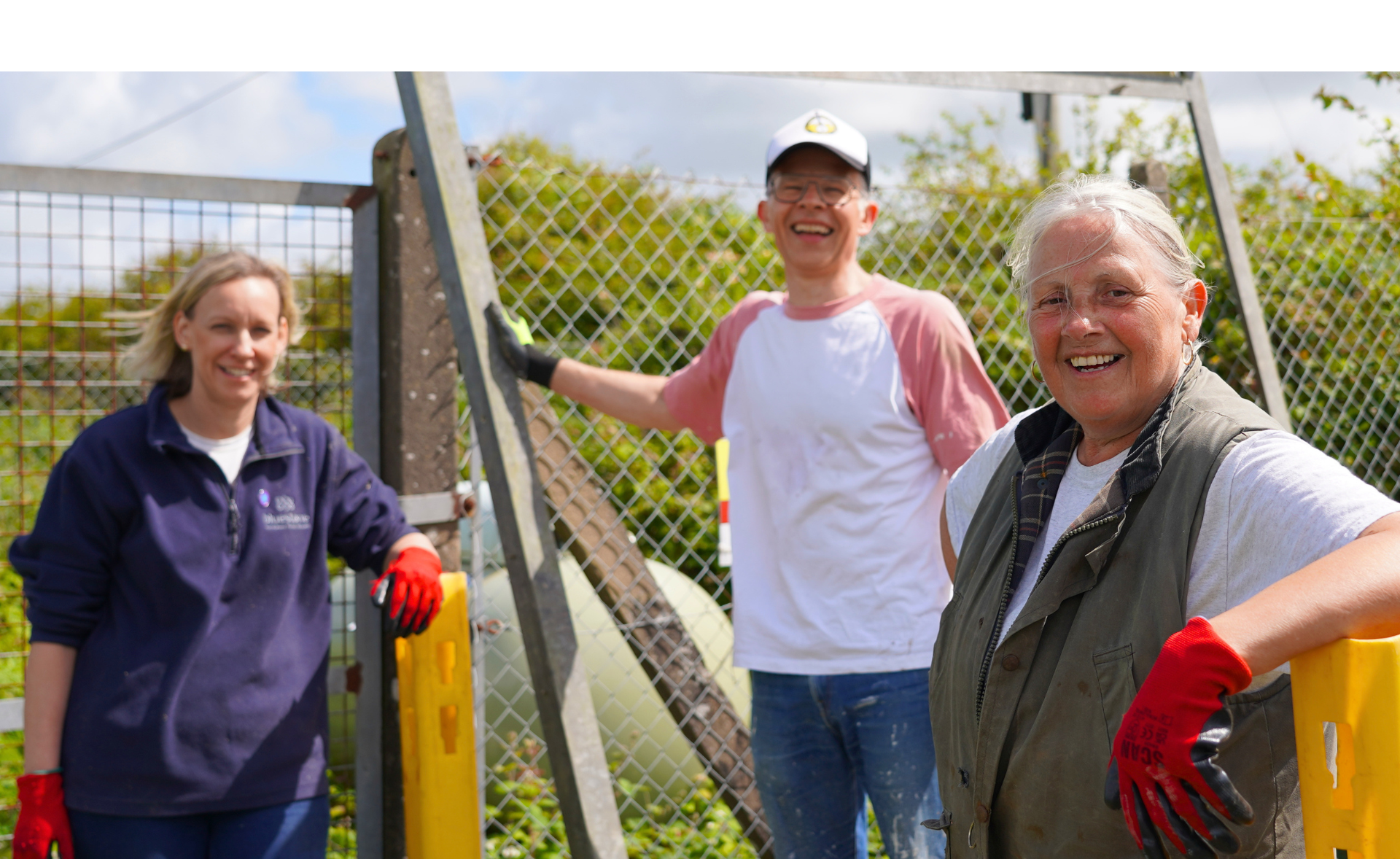
VOLUNTEERS’ Week this year (June 1-7) brought organisations together across Carmarthenshire, Ceredigion and Pembrokeshire, to celebrate and say a heartfelt “thank you” to the incredible people who give their time to support others.
Volunteering brings wide-reaching benefits – for organisations, for the communities they serve, and for the volunteers themselves.
This contribution is recognised in the Social Model for Health and Wellbeing Charter, adopted by partners across the region, including Hywel Dda University Health Board, in March 2025.
Senior leaders from the Health Board joined celebrations across the three counties to show their appreciation in person.
Professor Phil Kloer, Chief Executive of Hywel Dda University Health Board, attended a vibrant multi-agency event hosted by Carmarthenshire Association of Voluntary Services (CAVS). The event, held at Parc Dewi Sant, was organised and funded by CAVS and supported by Lucy Cummings, New Business Development Officer.
The gathering brought together a wide range of organisations supporting local communities, including Dolen Teifi, Angor, People Speak Up and many more. Carmarthenshire County Council Chair, Councillor Giles Morgan, was also in attendance.
Professor Kloer said: “Health Services make just a small contribution to our health and wellbeing – connection, belonging, education and opportunity make a significant contribution to our health and wellbeing.
“The Health Board is keen to recognise and celebrate the fact that everyone has a contribution to make. I want to thank organisations and our partners across the region who work together to grow this understanding and important work on behalf of the Health Board.”
In Pembrokeshire, Dr Bruce Bolam, Deputy Director of Public Health, took part in a community event at Simpson’s Community Hall and Gardens. The event was organised and funded by Pembrokeshire Association of Voluntary Services (PAVS) and brought together partners including Community Connectors, Bluestone, South Hook, 2Wish and the VC Gallery, who provided a much-enjoyed lunch for attendees.
Meanwhile, in Ceredigion, Megan Harris, Consultant in Public Health, joined one of the eight multi-agency celebrations in Ceredigion, in Llandysul to thank volunteers for their invaluable contributions. The event was organised by Arts4Wellbeing and funded by Ceredigion Association of Voluntary Organisations (CAVO), with contributions from organisations including Dolen Teifi and Pont Tyweli.
Across all three counties, the events were marked by warmth, gratitude and a shared recognition of the essential role volunteers play in supporting health and wellbeing in local communities.



Community2 days ago
Thousands line Cardigan streets for Lord Rhys homecoming parade
THOUSANDS of people lined the streets and quayside in Cardigan on Saturday as the town marked 850 years since Lord...


Crime3 days ago
Dyfed-Powys Police rated only ‘Adequate’ in organised crime inspection
A WATCHDOG has rated Dyfed-Powys Police only “Adequate” in its response to serious and organised crime, despite praise for the...


News3 days ago
Two taken to hospital after aircraft ditches in Cardigan Bay
Coastguard helicopter spotted two casualties after light aircraft came down off west Wales coast TWO people were taken to hospital...


Sport3 days ago
Long Course Weekend gets underway in Tenby as thousands head for county
Three days of swimming, cycling and running begin with The Wales Swim at North Beach THOUSANDS of athletes and supporters...


Climate4 days ago
Welsh waters, Westminster profits: Crown Estate row reignited in Wales
PLAID CYMRU has renewed calls for the Crown Estate to be devolved to Wales after figures showed income linked to...

News4 days ago
Reform MS: ‘I felt like shouting get out of the water’
Paul Marr says children playing in streams at Pembrokeshire beaches deserve better protection from pollution risks REFORM UK MS Paul...

Health5 days ago
Senedd backs call to rule out hospital downgrades after heated NHS debate
Reform UK amendment passes as West Wales hospital fears remain central political issue THE SENEDD has backed a call for...

News5 days ago
Coastguard callout payments axe sparks fears for coastal communities
VOLUNTEER coastguards across the UK are set to lose callout payments, prompting concern over the future resilience of emergency cover...


Farming5 days ago
Rural Wales ‘left out’ of net zero debate, warns carbon entrepreneur
A WELSH carbon entrepreneur has warned that rural Wales risks being left behind in the national conversation about net zero....


Local Government6 days ago
Tenby Spectacular row continues as organisers say key question remains unanswered
Round Table says legal clarity over pedestrian access is still holding up event plan TENBY ROUND TABLE has welcomed Pembrokeshire...
-

 Crime6 days ago
Milford man threatened to smash parents’ windows, court hears
-

 Crime6 days ago
Haverfordwest father stole groceries amid cost-of-living struggle
-

 Crime6 days ago
Woman sentenced over neglect of child at Haverfordwest property
-

 Crime5 days ago
Police appeal after reported rape at Young Farmers rally
-

 Crime6 days ago
Dock woman given mental health treatment order after supermarket thefts
-

 Crime6 days ago
Hakin man stole Tesco goods to fund drink and gambling addictions
-

 Crime6 days ago
Grandmother banned after cocaine drug-drive offence
-

 Crime6 days ago
Government fraud squad hunts down Covid loan scams