


News
Torch Theatre faces uncertain future amidst drastic funding shortfall


FOR NEARLY half a century, the Torch Theatre has illuminated the arts in Pembrokeshire, consistently placing the community’s well-being at its core. Today, as it grapples with a substantial funding deficit, the Torch Theatre is turning to the community for support.
A significant 93% reduction in our allocation from the Pembrokeshire County Council, a repercussion of broader budget cuts, combined with the economic ramifications of the Covid-19 pandemic, has resulted in a concerning £250,000 funding gap. The Torch, a registered charity, relies on the generosity of its core funders for basic operations, but the lion’s share of our resources is self-generated. Now, more than ever, we need community support to continue enriching lives.
Annually, the Torch offers a plethora of 2000 events, welcoming over 100,000 visitors. Recognised throughout Wales, we’ve been a hub for arts, an independent cinema, and an award-winning theatre. From our inclusive Youth Theatre to our community choir Torch Voices and our support for the Welsh National Opera Cradle Choir, we’re committed to providing enriching, accessible experiences for all.s
In these challenging times, many cherished regional venues have already shut their doors. While the Torch has never before sought public assistance on this scale, we believe in the strength of community spirit.
Contributions can take various forms – be it a single donation, regular patronage, volunteering, joining our membership, leaving a legacy, or simply enjoying what the Torch offers. For businesses, collaboration can span from sponsorships to advertising, reaching audiences across Pembrokeshire.

Supporting us extends beyond the theatre; it’s an investment in Pembrokeshire’s economy. We bolster local businesses, educational institutions, and tourism. Our commitment to over 50 local suppliers, unique employment initiatives, and contributions to the hospitality sector has solidified our role in Milford Haven.

To discuss your contribution, reach out at [email protected], call the Torch on 01646 401714, or visit their Box Office. Every gesture, big or small, can help the Torch’s flame burn brighter, the organisation said today.










Shortage of specialist nurses could leave people without support needed to access fair healthcare
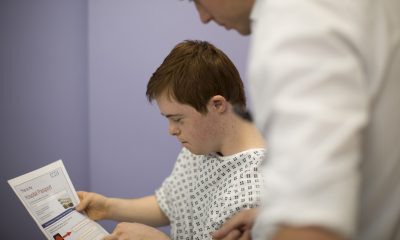
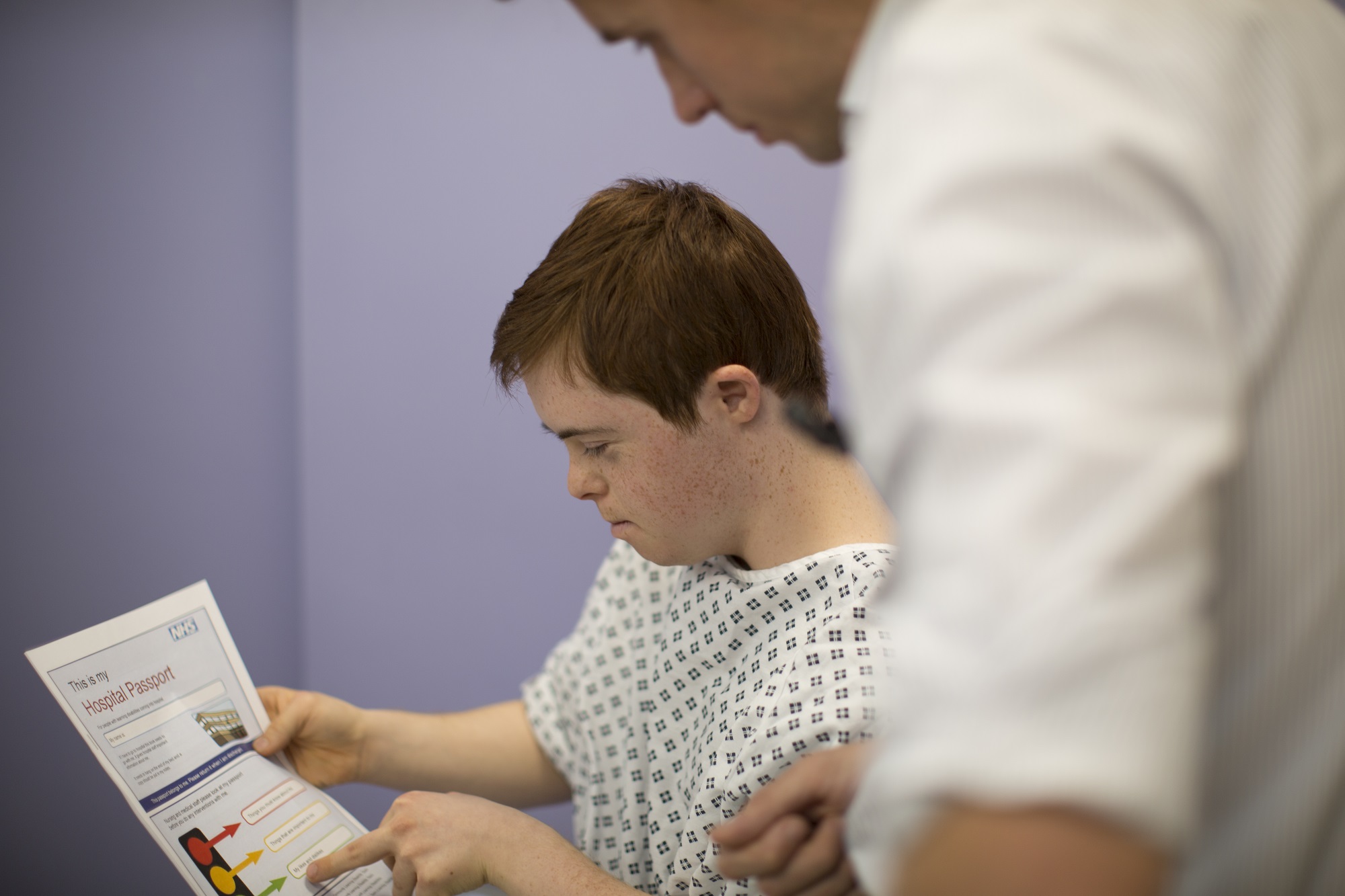
PEOPLE with learning disabilities are being denied fair access to health and care because of a growing crisis in specialist nursing, the Royal College of Nursing has warned.
A major new RCN review says health and care services across the UK are failing to consistently meet the needs of some of society’s most vulnerable people, despite legal duties designed to protect them.
The report, Safety, Equity and Expertise: A UK review of learning disability nursing, warns that shortages of specialist nurses mean some patients are being overlooked, excluded or harmed when mainstream services are unable to properly adapt to their needs.
The RCN says learning disability nurses play a vital role in helping patients who may struggle to communicate symptoms, understand treatment, attend appointments, or cope with busy hospital and healthcare environments.
Their work includes supporting patients and families, helping services make reasonable adjustments, preventing health problems from escalating, and ensuring people with learning disabilities receive safe and appropriate care.
Workforce under pressure
Figures analysed by the RCN show the number of learning disability nurses employed by the NHS across the UK has fallen sharply over the past 16 years.
Numbers dropped by 33%, from 7,083 nurses in 2009 to 4,768 in 2025.
The college has also raised concerns about the future workforce, with fewer than 500 students enrolling on learning disability nursing courses across the UK in 2025. Over the past decade, the number of students accepted onto courses has fallen by around 40%.
In Wales, the RCN says almost 1,000 registered learning disability nurses live in the country, but fewer than 500 whole-time equivalent nurses are employed within NHS Wales.
The organisation has also highlighted a 32% decline in nursing roles across independent and social care providers, warning that course closures, an ageing workforce and ongoing vacancies are threatening the future of specialist support.
Health inequalities
The RCN says the shortage is particularly concerning because people with learning disabilities already experience significant health inequalities.
The latest Learning from Lives and Deaths report found the median age of death for people with a learning disability was just 62.5, compared with around 82 for the wider population.

Campaigners have long warned that people with learning disabilities can face barriers when accessing healthcare, including difficulties explaining symptoms, services failing to adjust communication, and health concerns being missed.
Under the Equality Act 2010, healthcare providers have a legal duty to make reasonable adjustments to ensure disabled people are not disadvantaged when accessing services.
The RCN says learning disability nurses are often central to making sure those rights are delivered in practice.
‘People deserve better’
RCN Chief Nursing Officer Professor Lynn Woolsey said the findings should serve as a warning.
She said: “We cannot continue this path where learning disability nursing is consistently undermined. It’s a profession that is central to the safety, equity and human rights of people with learning disabilities.
“Yet the learning disability nurse workforce is in absolute crisis, with workforce numbers falling while university student numbers also collapse.
“Their skills are too vital for this to be allowed to continue. The expertise of learning disability nurses has been poorly understood, inconsistently recognised, and insufficiently protected within health and care systems.
“People with learning disabilities deserve better. Learning disability nursing must be recognised by health leaders as the safety-critical profession it is and workforce planning must reflect their value and importance.”
Call for action in Wales
RCN Wales Executive Director Nicola Williams said learning disability nurses are essential in supporting vulnerable people and tackling inequalities.
She said: “Learning disability nurses play a vital role in supporting some of the most vulnerable people in our communities and helping to tackle the significant health inequalities they continue to experience.
“People with learning disabilities have the same right as everyone else to safe, effective and equitable health care.
“Yet this report highlights serious concerns about the future of the specialist workforce that is so often central to making that happen.
“We cannot allow learning disability nursing to become an afterthought. The Welsh government, health boards and education providers must work together to protect and grow this vital workforce so that people with learning disabilities receive the care, support and advocacy they deserve.”
The RCN is calling for long-term workforce planning, improved training opportunities, and action to increase the number of specialist nurses entering the profession.

A PEMBROKESHIRE pupil is celebrating after her design was chosen as the county’s new Active Travel logo.
Lillian Richards, a Year 6 pupil at Cleddau Reach Primary School, was named the overall winner of a Road Safety and Transport competition which invited pupils across Pembrokeshire to create a fresh logo for Active Travel.
Her design will now be used on Pembrokeshire County Council’s website and social media platforms.

Lillian’s entry was selected from a strong field of submissions, standing out for its bright, colourful style and for capturing a range of Active Travel options.
The winning design was later developed into a final logo by the council’s graphics team, with Tom Banner refining it into a professional format.
Lillian was presented with a certificate and prize at her school by Road Safety Officer Sally Jones.
Speaking after the presentation, Lillian said she was “extremely pleased” to have won and was impressed with how her design had been transformed.
Sally Jones praised Lillian and the wider field of entrants.
She said: “The standard of entries for this competition was incredible. We have some very talented pupils across Pembrokeshire.
“Lillian’s design was thoughtful, hit the brief and was eye-catching. She should be very proud of her work and we are excited to start using the logo moving forward.”
Caption:
Competition winner: Lillian Richards is pictured with council Road Safety Officer Sally Jones.

Concerns raised over Manorbier VC School and Ysgol Clydau
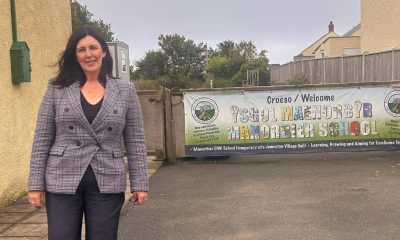
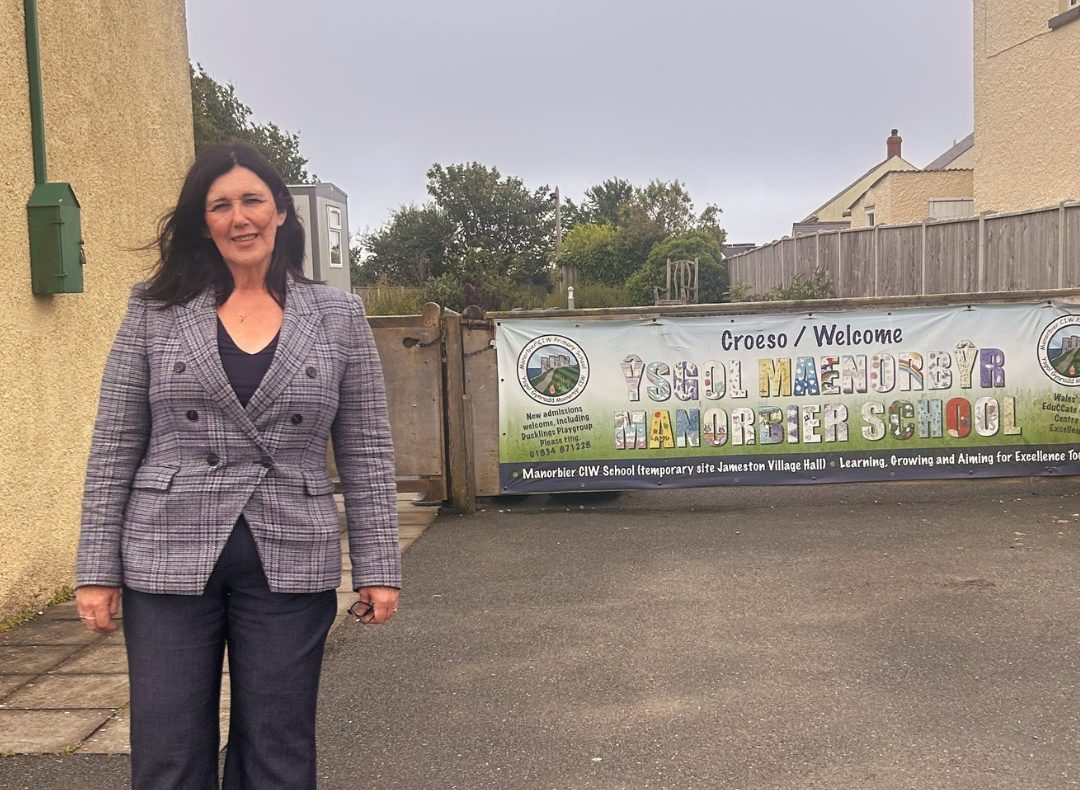
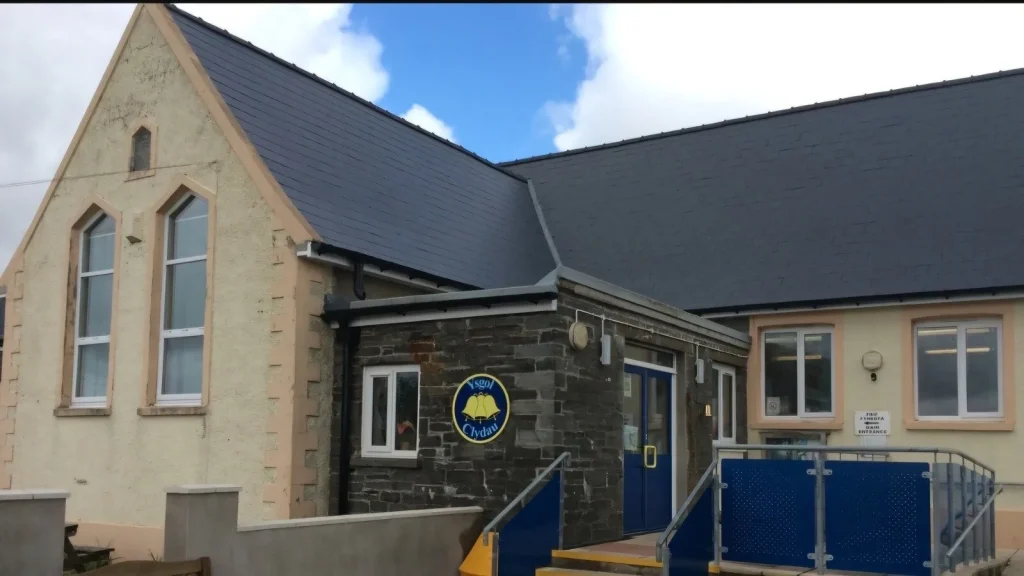
CLAIRE ARCHIBALD MS has raised concerns in the Senedd over the future of rural village schools, following proposals affecting Manorbier Church in Wales VC School and Ysgol Clydau in Pembrokeshire.
The Reform UK Member of the Senedd for Ceredigion Penfro raised the issue during the Business Statement, asking for the Education Minister to come before the Senedd with clear answers on rural school closures.
She said communities facing the loss of a local school deserved to know what protection was in place, and whether the current rules were strong enough.
Ms Archibald warned that village schools play a vital role in rural life, particularly for children who benefit from smaller, calmer and more familiar settings.
Speaking in the Senedd, she said: “When a village school closes, the village does not just lose a building, it loses its heart. Families are drawn away, and often the shops, services and community spaces close too.”
She also highlighted the importance of smaller schools for children with additional learning needs, autism, anxiety or sensory difficulties.
Ms Archibald said: “Smaller schools can offer a calmer, more familiar environment. For some children, especially those with additional learning needs, autism, anxiety or sensory difficulties, that is where they are best able to cope and learn.”
She said the issue was especially important at a time when more children were struggling with anxiety, stress and school attendance.
Following her contribution, Ms Archibald said: “Village schools are often central to the life of rural communities. They are places where children are known, families are supported, and communities still have a shared point of connection.
“Once a rural school closes, it is very unlikely to reopen. That is why these decisions must be treated with great care.
“The Welsh Government says rural schools should be protected. But if schools such as Manorbier VC School and Ysgol Clydau can still close despite strong local concern, communities will rightly ask what that protection actually means.
“I am asking the Education Minister to set out clearly whether the current safeguards are strong enough, and what action the Welsh Government will take to ensure councils properly explore every alternative before a village school is lost.”
Ms Archibald had also written to Pembrokeshire councillors before the vote on the future of Manorbier VC School and Ysgol Clydau, urging them to consider the long-term impact on children, families and rural communities.


News10 hours ago
Motorcyclist, 22, dies in A4075 crash in Pembrokeshire
A 22-year-old woman remains in hospital after two-vehicle collision A MOTORCYCLIST has died following a serious two-vehicle crash on the...

Community11 hours ago
Why police will be visiting every home in Pembrokeshire
New operation aims to knock on more than 257,000 doors across Dyfed-Powys over the next three years DYFED-POWYS POLICE has...


Crime14 hours ago
Prisons at breaking point: MPs warn Wales is paying the price of a failing system
Frozen healthcare budgets, overcrowded jails, homelessness on release and mounting pressure on staff are undermining rehabilitation across Wales, according to...


News1 day ago
Brexit at 10: How Britain was sold a dream that cost us dearly
A decade after the referendum, the promised benefits remain hard to find while the economic costs are increasingly difficult to...


Crime1 day ago
Worcestershire man jailed after violent attack on woman in Tenby
Defendant was already serving a suspended sentence when serious assault took place A WORCESTERSHIRE man has been jailed for more...


Climate1 day ago
Offshore wind ‘could bring new generation of jobs to Milford Haven’
Pembrokeshire ports and Celtic Sea projects placed at centre of Wales’ green energy ambitions MILFORD HAVEN and Pembroke Dock could...

Community2 days ago
Police officer hailed hero after midnight sea rescue in Milford Haven
PC swam 100 metres offshore to save distressed woman heard calling for help in darkness A DYFED-POWYS POLICE officer has...


Local Government2 days ago
Security privately arranged by Mayor at Beating of the Bounds
HAVERFORDWEST TOWN COUNCIL has confirmed that security personnel seen at this year’s Beating of the Bounds were privately arranged and...


Business3 days ago
Celtic Freeport five-year plan puts Milford Haven at centre of green energy future
Strategy promises investment, skilled jobs and new supply chains, but major barriers remain over grid connections, planning and delivery THE...


Education4 days ago
Closure of Ysgol Clydau approved after emotional council debate
COUNCILLORS WARNED RURAL COMMUNITIES WILL REMEMBER DECISION PEMBROKESHIRE councillors have voted to close Ysgol Clydau following an emotional debate over...
-

 Community4 days ago
Pembrokeshire Chess Club crowned Welsh champions
-
Local Government2 days ago
Security privately arranged by Mayor at Beating of the Bounds
-

 Crime15 hours ago
Milford Haven man jailed for breaching domestic violence protection order
-

 Education6 days ago
Diocese threatens legal action as Manorbier school closure battle intensifies
-

 News10 hours ago
Crash on Freeman’s Way causes school-run chaos across Haverfordwest
-

 Crime2 days ago
Man wanted by court after failing to attend hearing over alleged shop thefts
-

 Local Government7 days ago
Taxi suspended after county-wide licensing checks
-

 Crime2 days ago
Man jailed after admitting strangulation and assaults