

News
Leisure facilities costs could rise by more than 10 per cent


THE COST of using leisure centres and similar council-run facilities in Pembrokeshire could soon rise by more than 10 per cent to help cash-strapped Pembrokeshire County Council balance its budget.
Members of the county council’s Cabinet, meeting on February 12, are recommended to increase fees for leisure services by inflation plus four per cent, a rise of 10.7 per cent in total.
A report for Cabinet members says: “In line with the authority’s budget strategy there is a requirement for fees and charges to increase in line with CPI (Inflation) annually.
“Due to the significant financial pressures facing the local authority, an inflationary increase alone will be insufficient to contribute towards the authority’s statutory requirement to set a balanced budget.”
It says that, historically, Pembrokeshire fees and charges have been lower than neighbouring authorities, but that gap has narrowed over the past two years, but it is “considered preferable to increase fees and charges rather than reduce service provision, such as reductions to opening hours or facility closures”.

The proposal to increase charges follows a recent public consultation on the 2024/25 county council budget, at a time when the council is facing a shortfall of £31.9m, and may well increase the level of council tax by as much as 21 per cent.
That consultation included a question on possible rises in leisure charges of approximately 10 per cent, with the majority agreeing to a rise if needed, the report says.
During this financial year, the service has seen significant growth in both usage and income, with an extra 140,000 visits and a nine per cent growth in membership numbers.
“Whilst setting leisure fees and charges, it is essential to consider the cost of provision alongside the marketplace and sector position,” the report says.
“In particular, avoiding setting fees that we believe the market will not bear, as this risks diminishing returns. With this in mind, the proposed fees have been benchmarked against other local authority providers in the region.”
The proposal also maintains the Passport to Leisure scheme, with charges frozen for those who are eligible.
Three options are to be considered by Cabinet members

- A 6.7 per cent inflation rate increase, which would raise £281,000, but would only cover inflationary pressures
- An inflation plus four per cent rate, as an average across services – the favoured – which would raise an additional £198,000
- An inflation plus five per cent rate which would raise an additional £248,000.
The last option is not recommended as it could lead to a drop in users, generating no more income than the plus-four per cent option.
The report concludes: “Increases to fees and charges need to be considered carefully, balancing the need to generate additional income, with the importance of avoiding setting charges, which are unaffordable.
“From our analysis, an overall increase of around 10 per cent [including inflation] is achievable, but going beyond that level risks a double impact of reduced income and less people using our facilities to improve their well-being. We are broadly in line with other leisure services in the region and remain competitive overall.”


Seventy-year-old failed to seek prompt veterinary treatment for bulldog suffering from dry eye and a skin infection
A KILGETTY man has been banned from keeping animals for seven years after admitting that he caused unnecessary suffering to his bulldog.
Michael John Edward McGartland, aged 70, of Woodlands, Kilgetty, appeared before Haverfordwest Magistrates’ Court on Monday, July 13.
The court heard that between July 12 and December 20, 2025, McGartland failed to seek prompt veterinary treatment for a bulldog named George.
The animal had been showing signs of ill health, including dry eye and a skin infection.
McGartland admitted causing unnecessary suffering to a protected animal by failing to act when he knew, or ought reasonably to have known, that his failure was likely to cause suffering.
He had entered a guilty plea at an earlier hearing on May 26.
Magistrates fined McGartland £769 and ordered him to pay £400 in prosecution costs and a £308 victim surcharge, bringing the total financial penalty to £1,477.
He was also disqualified for seven years from owning, keeping, dealing in or transporting animals.
The order also prevents him from participating in the keeping of animals or becoming involved in any arrangement allowing him to control or influence how an animal is kept.
McGartland will not be permitted to apply for the disqualification order to be lifted for at least five years.
The outstanding balance will be paid at a rate of £100 per month, beginning on August 10.
:::


A MAJOR operation to remove a former fishing vessel which ran aground off the Pembrokeshire coast is nearing completion.
The 24-metre Resolute became stranded on rocks near Fishguard after drifting ashore during rough seas in the early hours of December 11 last year.
The vessel had been working as a guard boat for an offshore wind farm near Ireland when it got into difficulty. All four crew members were safely rescued by lifeboat.
After remaining on the rocks for more than six months, specialist marine contractors Jevington Logistics began dismantling the wreck on June 29.

The Pembroke Dock-based company has positioned a 36-metre barge alongside the wreck, using an excavator fitted with powerful metal-cutting shears to break the vessel into large sections.
These sections are then lifted onto the barge and cut into smaller pieces using oxy-propane torches before being transported to a local recycling company.
Around 110 tonnes of steel are expected to be recovered from the heavily built vessel.
Steve Bradley, operations director at Jevington Logistics, said the condition and position of the wreck meant dismantling it in sections was the safest and most practical way of removing it.
The Resolute had suffered several substantial holes to its hull, while access to the wreck was restricted by rocks and a narrow channel.

A shallow-draught barge equipped with legs which can be driven into the seabed was brought in to provide a stable working platform.
Mr Bradley said the vessel was being systematically divided into five main sections, which were then being lifted onto the barge for further dismantling.
The operation has presented a number of challenges, including manoeuvring the barge close enough to the wreck and dealing with changing sea conditions.

Work had to be suspended for two days after the swell became too large for the salvage operation to continue safely.
Environmental protection measures have also been put in place, including a containment boom around the wreck.
The Maritime and Coastguard Agency has monitored the operation and was said to be satisfied with the pollution prevention arrangements.

Most of the Resolute’s remaining fuel was removed and transferred ashore earlier this year. A small amount of pollution was initially identified following the grounding, but no further pollution incidents have been reported.
Once the main structure has been removed, salvage teams will inspect the surrounding rocks and seabed to make sure no pieces of the vessel or other debris have been left behind.
The stranded ship has attracted considerable attention from residents and visitors since it was washed onto the rocks near Fishguard last winter.

Boy accused of attempting to murder Milford Haven teacher says he ‘never wanted to injure’ her
A TEENAGE boy accused of attempting to murder his teacher with a kitchen knife has told a jury he took the blade to school to “show off” to his friends, but never intended to use it violently.
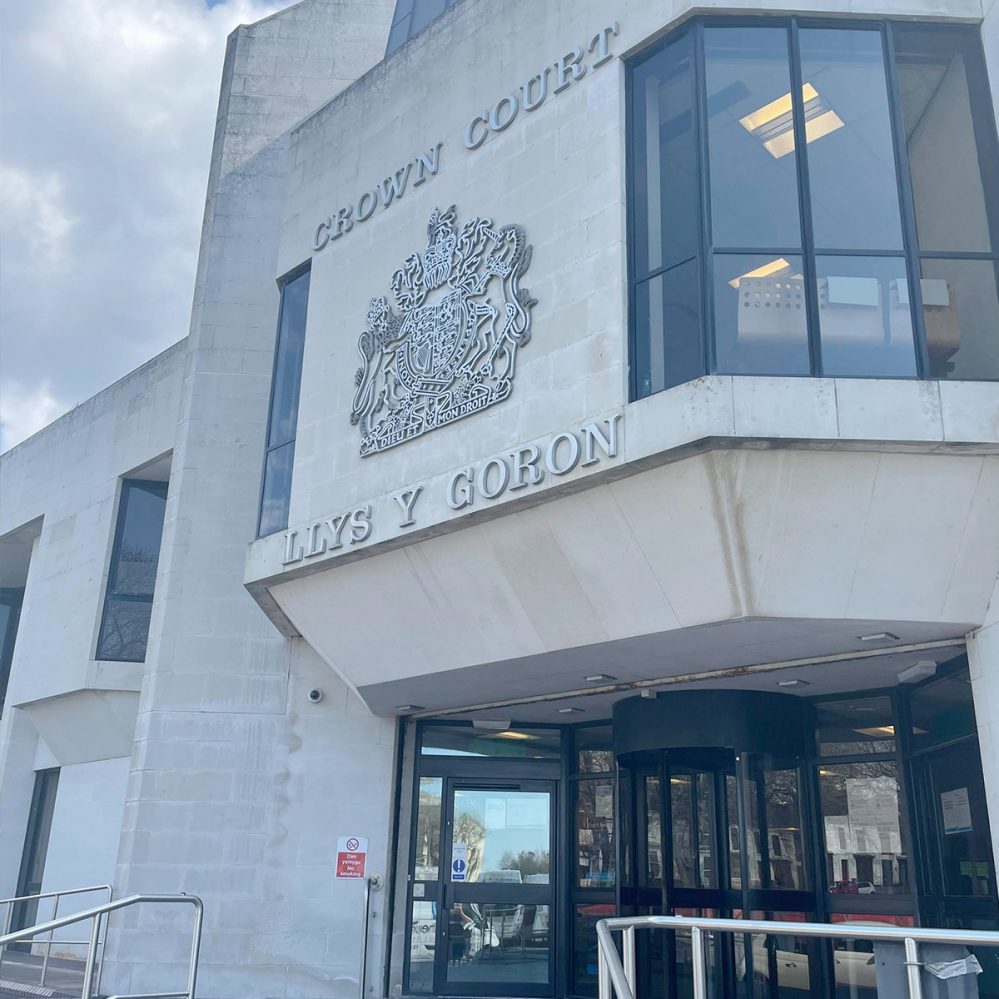
The 16-year-old, who cannot be named for legal reasons, was giving evidence at Swansea Crown Court on Monday afternoon (Jul 13).
He is accused of attacking history teacher Vicki Williams inside a classroom at Milford Haven School on Thursday, February 5.
The boy, who was 15 at the time, denies attempted murder, wounding with intent and unlawful wounding. He has admitted possessing a knife on school premises.
The trial has heard that Mrs Williams suffered a stab wound to the top of her head, as well as injuries to her hands.
Giving evidence, the defendant described walking into Mrs Williams’ classroom after the end of the school day with a rucksack on his arm. Inside the bag was a large kitchen knife, which he said he had taken from his parents’ kitchen.
He told the jury he had gone into the room to ask Mrs Williams to check his history work.
CCTV footage played to the court showed the defendant standing outside the classroom at around 3:13pm.
“I knew she wasn’t in there because the light was off and from where I was standing you could see her at her desk,” he told the court.
The footage showed him leaving the area before returning minutes later.
“The door was now open and when I went in, Miss Williams was sitting down at her desk looking at her laptop,” he said.
“I didn’t say anything but walked in and closed the door, and walked up to her desk. My rucksack was on my left arm.
“When I got to her desk I got my history book out and the first thing I said to her was, ‘Can you check my work, please?’”
The defendant claimed Mrs Williams then saw the knife in the same inner compartment of his bag as his history book.
“She asked me what it was and I didn’t say anything back,” he said.
“She asked me to take it out, and I took the knife out by the handle, with my right hand. I held it, still facing downwards and Miss Williams looked shocked. Her mouth was open and her eyes were wide.”
The boy said Mrs Williams then asked him to hand over the knife.
“She said, ‘Give it here’, and I said, ‘No’,” he told the jury.
“I didn’t want to get in trouble by having a knife in school.
“She then tried to grab the knife off me with both hands, and her hands made contact with the blade.
“The knife was going everywhere as I tried to get it off her.”
The defendant denied deliberately stabbing Mrs Williams in the head.
He told the court he did not see the knife make contact with her head, although he accepted that it must have done so because of her injuries.
“We were struggling for ten seconds and then she started screaming,” he said.
“This was when the whole situation got too much for me so I let go of the knife and ran out.”
Asked whether he had planned to attack Mrs Williams, the defendant said he had “never wanted to injure Miss Williams”.
He told the jury he had chosen GCSE history because it interested him, and denied having any ill feeling towards his teacher.
He also denied being argumentative towards her, falling out with her, or deliberately using the knife on her.
Earlier in his evidence, the defendant said he had taken the knife into school as part of what he described as a game among friends.
“Me and my friends used to bring in random stuff like tools, household items, all of that kind of stuff, to see what we could get away with bringing into school,” he said.
“I got the knife from my kitchen and it was the largest one in the knife block. I took it because it would have been the most impressive one to show my friends.
“I didn’t want the teachers to find it and I didn’t want to use it in a violent way.”
But when questioned by the Crown, the defendant accepted that none of his friends were shown the knife on February 5.
“Not all of my friends were in school that day and I wanted to show it to the whole group during break or lunch, rather than individually,” he said.
The court was also shown CCTV footage of the defendant in a school corridor two days before the alleged attack.
The footage showed him loitering and waving his arms towards a classroom.
“I should have been in lessons but I was waving at my friend to come home with me and skip lessons,” he told the court.
Further footage showed the defendant smiling with friends after one of them donkey-kicked a classroom door, causing it to shatter.
“We found it funny that he’d smashed the door,” the defendant said.
The jury also heard that the defendant and his friends had previously removed tools from the school’s technology department and taken them home.
These included a power drill and a spanner.
“It was a game we were doing, to see how many tools we could steal from a class before the teacher realised,” he said.
Earlier in the trial, Mrs Williams told the jury that the defendant had followed her into the classroom after asking for help with his history work.
She said he then “lunged” at her with a knife and stabbed her in the head.
The prosecution alleges that the attack was deliberate and planned.
The defence says the injuries were caused accidentally during a struggle after the boy refused to hand over the knife.
The trial continues tomorrow, Tuesday, July 14.



Crime1 hour ago
Teenager tells jury he took knife to school to ‘show off’ to friends
Boy accused of attempting to murder Milford Haven teacher says he ‘never wanted to injure’ her A TEENAGE boy accused...


Local Government16 hours ago
Calls grow for independent investigation into Manorbier school closure
Councillor alleges misleading figures, inadequate insurance and poor treatment of staff CALLS for an independent investigation into the controversial closure...


Community22 hours ago
Neyland Carnival hailed a huge success after streets fill with colour and crowds
NEYLAND CARNIVAL organisers have thanked the community, volunteers and local businesses who helped make this year’s event a memorable success....


Community1 day ago
Tenby Summer Spectacular: Anger grows over ‘disaster waiting to happen’ warning
A growing backlash has followed police calls for the event’s licence to be revoked, with supporters questioning why authorities failed...


Charity2 days ago
RSPB secures ‘missing link’ to reconnect wildlife habitats in Carmarthenshire
RSPB CYMRU has purchased a 96-hectare upland site in Carmarthenshire, describing it as a vital step towards reconnecting one of...


Crime3 days ago
Ann Widdecombe: Welsh politicians pay tribute as murder probe launched
Prime Minister Sir Keir Starmer has praised the former minister’s “conviction and dedication”, while political figures in Wales remembered her...


News3 days ago
Solardo pulls out of Haverfordwest show as organisers offer full refunds
Headline act confirms non-appearance as Park House Series announces major event changes DANCE music duo Solardo will no longer perform...


Local Government3 days ago
Conservatives win Pembroke Dock seat as Reform stalls and Dowson polls just 11
Jamie Street takes Market ward with a 43-vote majority as Reform finishes fourth despite its major Senedd breakthrough two months...


Health3 days ago
Hospital ward closed after highly contagious scabies outbreak
Hywel Dda confirms wider rise in cases across Carmarthenshire, Pembrokeshire and Ceredigion as patients and staff are offered treatment A...
Crime4 days ago
Teacher stabbing trial: The first week of evidence
Jury hears accounts of alleged planned classroom attack, teacher’s fear she was dying, and boy’s words after leaving school A...
-

 Farming6 days ago
Pembrokeshire slaughterhouse given urgent improvement rating after audit failure
-

 Entertainment5 days ago
Swing and big band classics heading to Torch Theatre
-

 News6 days ago
From boccia to boxing: ALN multisport events give youngsters chance to try activities
-

 News7 days ago
Large fire breaks out at Impala Terminal in Milford Haven
-

 News6 days ago
Questions raised over Hamilton Accies finances after club’s Haverfordwest friendly
-

 Farming4 days ago
Working Carmarthenshire farm opens gates to visitors with new holiday cottages
-
 Community6 days ago
British Empire Medal ceremony held at County Hall
-

 Crime4 days ago
Greenacres confirms seized dogs are safe as investigation continues