

Business
VAT cut critical for survival by three-quarters of small hospitality firms

IN A STARK warning to the Treasury, a sweeping survey conducted by the National Caterers Association (NCASS) has unveiled that a staggering 75% of independent hospitality businesses view a reduction in VAT as essential for their survival amidst the severe inflationary pressures besieging the sector.
In Pembrokeshire we have already seen the closure of some well known local businesses including The Welsh Bakery, Madison’s Restaurant and many more.
The survey, which gathered insights from both members and the broader independent hospitality community, paints a grim picture of the challenges faced by small cafés, restaurants, bars, hotels, and street food vendors. With a clarion call for immediate action, the results underscore the urgent need for measures to protect the livelihoods of thousands operating within this critical industry.
Discontent is rife among the respondents, with 78% expressing dissatisfaction with the level of support provided by the government. A further 80% reported that the Autumn Budget’s measures failed to offer any relief, highlighting a disconnect between policy and the practical needs of these businesses.
Alarmingly, 37% of those surveyed indicated that their operations might not be sustainable over the next year, citing a dramatic 30% decrease in gross profit. The survey also revealed unanimous concern over rising costs, including staff wages, energy bills, and rent, forcing businesses to adopt drastic measures such as reducing staff hours, increasing prices, and accruing debt to stay afloat.


One member’s testimony encapsulates the despair within the sector, questioning the viability of continuing their business under the current conditions, especially in light of what they perceive as governmental negligence.
The crisis not only threatens the existing fabric of the UK’s independent hospitality scene but also stifles the growth of emerging businesses, many of which have been instrumental in revitalizing high streets across the nation. Despite the government’s promotion of hospitality-led regeneration initiatives, the current economic environment jeopardizes the emergence of future success stories akin to established brands like Meat Liquor, Pizza Pilgrims, and Bao.
The situation is dire, with an estimated 10 businesses closing daily within the hospitality sector. The NCASS reports a doubling in the closure rate among its members in 2023, with new startups hitting a standstill.
Amid calls for intervention, the plight of these small and micro businesses underscores a broader issue: the need for a conducive operating environment that nurtures community, supports families, and fosters economic growth. The increase in VAT and corporation tax, coupled with the cost-of-living crisis, has left many businesses operating on razor-thin margins, if any.
Highlighting the perverse incentive created by the current VAT threshold, which has not been reviewed since 2016, the NCASS argues for a recalibration to account for inflation and ease the burden on businesses teetering on the brink of viability.
The plea for a fairer VAT rate is a testament to the sector’s resilience and innovation, especially in the wake of the COVID-19 pandemic. With the treasury benefiting from increased tax receipts due to inflationary pressures, there’s a compelling case for leveraging this fiscal space to support the independent hospitality sector, thereby safeguarding high streets and the very essence of local communities.
As the industry stands at a crossroads, the consensus is clear: a reduction in VAT could be the lifeline needed for these businesses to weather the storm and contribute to the UK’s economic and social fabric. The government’s response, or lack thereof, could very well determine the fate of countless independent hospitality ventures teetering on the edge of survival.



WELSH financial, legal and technology businesses could gain improved access to the Swiss market under a major new trade agreement announced by the UK and Switzerland.
The UK Government estimates the agreement could increase British services exports to Switzerland by £5.2 billion a year in the long term, although no separate estimate has been published for the potential benefit to Wales.
However, Wales already has an established services trading relationship with Switzerland.
UK Government analysis found that Welsh businesses exported £175 million of services to Switzerland in 2020, with financial and insurance services making up the largest category.
The new Free Trade Agreement is intended to make it easier for lawyers, accountants, architects, consultants and digital businesses to sell their expertise in Switzerland.
It will also reduce barriers for businesses transferring employees between the two countries and provide greater certainty for firms considering investment or expansion.
Cardiff-based Capital Law, which already works in Switzerland and advises Swiss clients, said the agreement could strengthen the Welsh capital’s position as a growing professional services centre.
Christopher Nott, senior partner at Capital Law, said: “This FTA is a terrific result for Capital Law, our clients and Cardiff’s growing reputation as a leading professional services hub.
“The agreement locks in legal market access, reduces unnecessary barriers and provides the certainty we need to pursue opportunities in Switzerland.
“As a firm that already works in Switzerland and advises Swiss clients, with one of our partners based there, we understand the value of a strong and predictable trading relationship.
“It’s exactly the kind of practical, modern trade deal that helps UK businesses compete and succeed internationally.”
The agreement could also create opportunities for Welsh businesses operating in life sciences, financial technology, cyber security, digital services and the creative industries.

Switzerland is the UK’s sixth-largest services export market, with bilateral services trade worth more than £30 billion during 2025.
Services account for around 81 per cent of UK economic output and 83 per cent of employment, making improved access particularly significant for regions seeking to grow professional and technology-based businesses.
Secretary of State for Wales Jo Stevens said the agreement would open new doors for businesses across Wales.
She said: “The UK-Switzerland trade deal shows how the UK Government is delivering real results for businesses in Wales and across the UK.
“Wales already has a thriving services sector. This landmark agreement supports further economic growth and encourages job creation by opening new doors for businesses and enhancing Wales’s reputation on the world stage.”
Under the agreement, UK services professionals will be able to travel visa-free to Switzerland for up to 90 days a year.
British businesses will also be able to transfer employees to work in Switzerland for periods of up to five years without being subjected to some of the economic needs tests currently applied to work permit applications.
The Government said this would make it easier for British professionals and graduates working in areas including finance, insurance and consultancy to obtain Swiss work permits.
The deal also aims to reduce paperwork, support digital payments and remove requirements for certain back-office functions to be physically based in Switzerland.
Provisions will lock in future liberalisation of Swiss services markets, meaning British companies would automatically benefit from further easing of trading rules.
British travellers are also expected to receive practical benefits.
Under a separate initiative announced alongside the agreement, UK passport holders will soon be able to use electronic passport gates at Swiss airports.
The UK and Switzerland also intend to remove international mobile roaming surcharges, allowing tourists and business travellers to use their phones as part of their normal contracts without additional charges.
Around 800,000 visits are made to Switzerland by UK residents each year.
Prime Minister Sir Keir Starmer said: “Whether you’re growing a business or travelling for work, this agreement is about making life easier and creating more opportunity for people across the UK.
“It means British firms will find it easier to sell their expertise in one of our most important markets in Europe, supporting jobs and investment here at home.
“British people will also be able to enjoy using their mobile in Switzerland without extra roaming charges and, alongside the FTA, they will soon also have quicker trips through Swiss airports.”
Trade Secretary Peter Kyle described it as the most significant services trade agreement negotiated by the UK.
He said: “This deal will mean faster journeys through the border, cheaper phone use for families and business travellers to Switzerland, and new opportunities for British firms selling their world-class services overseas.”
Government figures estimate that exports to Switzerland supported 171,400 UK jobs in 2022, including 144,800 linked to services exports.
Those employment figures are based on economic modelling and include people employed directly by exporters and those working for businesses within their supply chains.
While ministers have presented the agreement as a major opportunity for Welsh businesses, its precise economic value to Wales remains uncertain.
The £5.2 billion estimate applies to the whole of the UK and the Government has not yet published a Wales-specific assessment of the expected increase in trade, investment or employment.
The agreement will now move towards formal signature and implementation, subject to the usual parliamentary scrutiny.

A CALL for Pembrokeshire to again push Welsh Government for a review of the contentious 182-day rule for self-catering holiday properties in order to avoid paying second homes tax is to be heard next week.
Self-catering businesses not meeting the 182-day criteria end up paying the second homes council tax premium, currently 125 per cent on top of the general rate, in the county, along with similar premiums for the other elements of the overall bill such as the police precept.
In a submitted question to be heard at the July 16 meeting of Pembrokeshire County Council, Cllr Huw Murphy asks: “Most councillors are aware that much of Pembrokeshire relies on tourism and hospitality for its economic success. A key element of a successful Pembrokeshire tourism industry is the self-catering sector.
“Plaid Cymru in its manifesto made several pledges for its first 100 days in office, one under the headline of ‘Unleashing Wales Economic Potential’ which made no specific mention of the 182 letting day rule that was introduced by the previous Labour Government under their co-operation agreement with Plaid Cymru.
“However, Plaid Cymru prior to Senedd elections in May 2026, stated that they would review the 182-day threshold which has been a disaster for many self-catering businesses, many of whom are in rural and coastal communities. I have raised this matter on several occasions since being elected.
“Through speaking to those operating in the self-catering sector there is a clear need to reduce the 182-day threshold. I should point out that in the past I have suggested it be reduced to 140 days and still hold that view.
“Over 50 days have now passed since the Senedd Elections, but we have not heard any details of a review of the 182-day letting rule. Therefore, will the Leader write off to the First Minister outlining the concerns of many Pembrokeshire county councillors with regards to the 182 days letting rule and ask for a reply setting out when Welsh Government intend to commence a review of this policy, which is much needed?”
Back in 2023, Cllr Murphy submitted an unsuccessful notice of motion to full council calling for the 182-day rule in Pembrokeshire to be lowered, proposing a figure of 140 days.
At the time of the 2023 call it was instead agreed to review the situation and for the council to raise its concerns to Welsh Government.
A LOCAL pet treat business has celebrated a major milestone after opening its second shop on Narberth High Street.
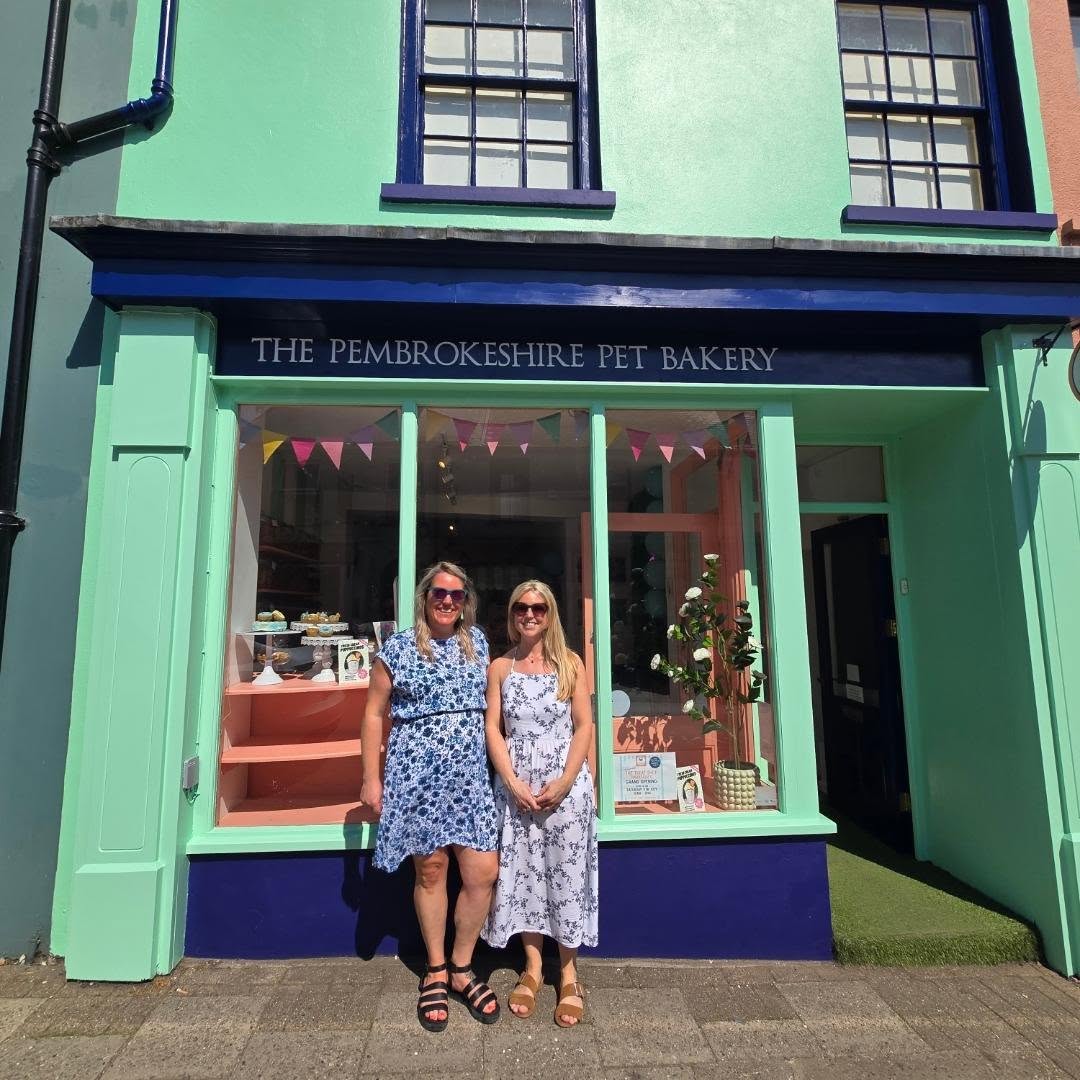
The Pembrokeshire Pet Bakery welcomed customers through the doors of its new Narberth store on Saturday, marking the latest stage in the growth of the independent business founded by Ali and Kelly.
Despite the hot weather, the opening attracted a strong turnout, with customers visiting to explore the bakery’s range of nutritious and colourful treats for dogs, cats and other much-loved pets.
The new premises joins the company’s established Haverfordwest store, allowing the team to serve customers from two Pembrokeshire town centres.
Ali and Kelly said the opening had been the result of years of hard work, determination and belief in their business.
They said: “What started as a big dream is now a reality, and seeing everyone flock through the doors on Saturday, despite the heat, has been one of our proudest moments to date.
“We are still pinching ourselves, to be honest, and it probably won’t sink in for a while yet.”
The pair also thanked residents and neighbouring businesses for the warm welcome they had received since arriving in Narberth.
They added: “The response and support from our friends, followers, customers and visitors has been absolutely incredible.
“Thank you doesn’t seem to cut it, but thank you all so very much. We are a little overwhelmed.”
The Pembrokeshire Pet Bakery specialises in fun and nutritious handmade treats, with products available for a range of animals including dogs, cats, rabbits, horses, birds and small pets.
The owners said they were now looking forward to building on the success of the opening weekend and continuing to serve customers in both Narberth and Haverfordwest.

The new shop adds another independent name to Narberth’s busy High Street, which is widely known for its mix of locally owned shops, cafés and specialist businesses.
Picture caption: Ali and Kelly outside the new Pembrokeshire Pet Bakery shop on Narberth High Street.



Crime1 hour ago
Teenager tells jury he took knife to school to ‘show off’ to friends
Boy accused of attempting to murder Milford Haven teacher says he ‘never wanted to injure’ her A TEENAGE boy accused...


Local Government16 hours ago
Calls grow for independent investigation into Manorbier school closure
Councillor alleges misleading figures, inadequate insurance and poor treatment of staff CALLS for an independent investigation into the controversial closure...


Community22 hours ago
Neyland Carnival hailed a huge success after streets fill with colour and crowds
NEYLAND CARNIVAL organisers have thanked the community, volunteers and local businesses who helped make this year’s event a memorable success....


Community1 day ago
Tenby Summer Spectacular: Anger grows over ‘disaster waiting to happen’ warning
A growing backlash has followed police calls for the event’s licence to be revoked, with supporters questioning why authorities failed...


Charity2 days ago
RSPB secures ‘missing link’ to reconnect wildlife habitats in Carmarthenshire
RSPB CYMRU has purchased a 96-hectare upland site in Carmarthenshire, describing it as a vital step towards reconnecting one of...


Crime3 days ago
Ann Widdecombe: Welsh politicians pay tribute as murder probe launched
Prime Minister Sir Keir Starmer has praised the former minister’s “conviction and dedication”, while political figures in Wales remembered her...


News3 days ago
Solardo pulls out of Haverfordwest show as organisers offer full refunds
Headline act confirms non-appearance as Park House Series announces major event changes DANCE music duo Solardo will no longer perform...


Local Government3 days ago
Conservatives win Pembroke Dock seat as Reform stalls and Dowson polls just 11
Jamie Street takes Market ward with a 43-vote majority as Reform finishes fourth despite its major Senedd breakthrough two months...


Health3 days ago
Hospital ward closed after highly contagious scabies outbreak
Hywel Dda confirms wider rise in cases across Carmarthenshire, Pembrokeshire and Ceredigion as patients and staff are offered treatment A...
Crime4 days ago
Teacher stabbing trial: The first week of evidence
Jury hears accounts of alleged planned classroom attack, teacher’s fear she was dying, and boy’s words after leaving school A...
-

 Farming6 days ago
Pembrokeshire slaughterhouse given urgent improvement rating after audit failure
-

 News6 days ago
From boccia to boxing: ALN multisport events give youngsters chance to try activities
-

 News7 days ago
Large fire breaks out at Impala Terminal in Milford Haven
-

 Entertainment5 days ago
Swing and big band classics heading to Torch Theatre
-

 News6 days ago
Questions raised over Hamilton Accies finances after club’s Haverfordwest friendly
-

 Farming4 days ago
Working Carmarthenshire farm opens gates to visitors with new holiday cottages
-

 Community6 days ago
British Empire Medal ceremony held at County Hall
-

 Crime4 days ago
Greenacres confirms seized dogs are safe as investigation continues